DIY Chicken Coop Greenhouse Tool Shed Combo Sustainable Backyard Homestead Idea
Imagine stepping into your backyard and finding everything you need for a self-sufficient lifestyle housed within a single, beautifully designed structure. No more trekking across the lawn from the tool shed to the garden or carrying heavy bags of feed from the garage to the coop. The concept of a multifunctional backyard hub is taking the homesteading world by storm because it solves the biggest hurdle for modern growers: space and efficiency. By integrating a professional-grade greenhouse, a secure chicken coop, and an organized tool shed into one footprint, you are not just building a shed; you are creating a closed-loop ecosystem that works with nature rather than against it.
The Evolution of the Modern Backyard Homestead
For decades, backyard gardening and keeping chickens were treated as separate hobbies. You had a garden in one corner and a coop in the other. However, as the movement toward sustainable living and permaculture grows, homeowners are looking for ways to streamline their efforts. The all-in-one structure featured in our latest design represents a shift toward “smart homesteading.” It recognizes that the needs of your plants, your poultry, and your productivity are deeply interconnected. This design isn’t just about aesthetics, though it looks incredible in any landscape. It is about reducing the physical labor of daily chores and maximizing the output of your land, no matter how small your lot might be.
What is a Closed-Loop System?
A closed-loop system is the holy grail of sustainable living. In this specific design, the proximity of the greenhouse to the chicken coop creates a symbiotic relationship. Chickens produce carbon dioxide and heat, which, if vented properly, can benefit the plants in the greenhouse during cooler months. Conversely, the “waste” from your greenhouse—think overgrown kale, tomato suckers, or spent pea vines—becomes a nutrient-dense snack for your hens. Their manure, once composted in the nearby shed area, turns into the “black gold” that fuels your next harvest. This cycle minimizes external inputs and maximizes the health of your entire backyard environment.
Deconstructing the Design: The Three Essential Zones
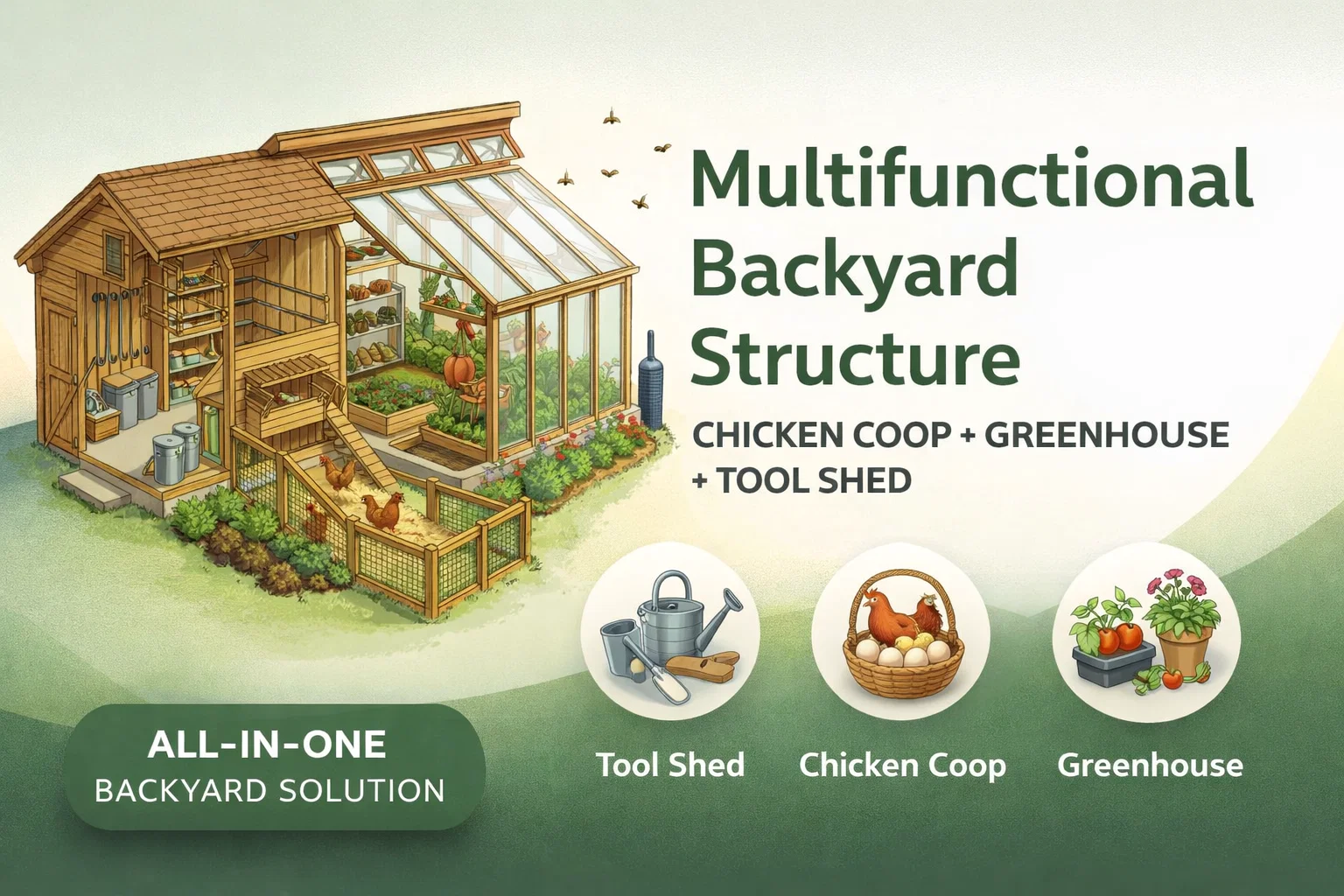
To understand why this structure is so effective, we have to look at how each zone is tailored to its specific function while remaining part of the larger whole. The beauty of this architectural plan lies in its transitions. Each section is partitioned for safety and hygiene, yet they share a structural integrity that makes the entire unit more durable than three separate buildings.
The Tool Shed: Your Command Center
Every successful project begins with the right tools, and the tool shed portion of this build is designed for the high-frequency gardener. Rather than a dark, cramped corner, this space features vertical storage for long-handled tools like shovels, rakes, and hoes. By keeping these off the ground, you prevent rust and make it easy to grab what you need in seconds. The inclusion of shelving for seed starts, organic fertilizers, and watering cans means you can transition from “planning” to “planting” without leaving the structure. A sturdy workbench inside the shed serves as a potting station, allowing you to work comfortably regardless of the weather outside.
The Chicken Coop and Indoor Run: Happy Hens, Fresh Eggs
The middle section of the structure is dedicated to your feathered friends. A raised nesting box area makes egg collection a breeze—no more bending over or crawling into tight spaces. Below the coop, the indoor run provides a shaded, protected area for the birds to dust bathe and socialize. The clever use of hardware cloth and sturdy timber ensures that predators like raccoons or foxes stay out, while the chickens enjoy plenty of fresh air. Having the coop integrated into the main building also means that your feed storage is just a few steps away in the shed, keeping the heavy lifting to a minimum.
The Greenhouse: Growing Beyond the Seasons
The crown jewel of the structure is the glass-enclosed greenhouse. With a steep roof pitch and clerestory windows for ventilation, this space is designed to capture maximum sunlight and manage heat effectively. It features raised beds for permanent plantings and tiered shelving for seed trays and potted herbs. Because it is attached to the heavier timber frame of the shed and coop, the greenhouse benefits from added structural stability and wind protection. This is where you will start your peppers in February and keep your greens growing well into November, effectively doubling your growing season.
Key Features That Make a Difference
When you look closely at the architectural details of this multifunctional unit, you see that it was designed by people who actually spend time in the garden. It is the small details that elevate a DIY project into a professional-grade homesteading hub.
Clerestory Windows for Natural Ventilation
One of the biggest mistakes in greenhouse design is poor airflow. Without proper ventilation, temperatures can skyrocket, wilting your delicate seedlings in minutes. The clerestory windows—the high, narrow windows located at the top of the roofline—allow hot air to escape through the highest point of the building. This creates a chimney effect, drawing cooler air in through the lower vents and keeping the environment stable for both your plants and any chickens that might be nearby.
The Indoor Run for Weather Protection
While chickens love to forage in the grass, they also need a dry place to stay when it rains or snows. The integrated indoor run is a lifesaver during the winter months. It keeps the birds active and prevents them from getting bored or cold-stressed. Plus, having a roofed run means the ground stays dry, which significantly reduces odors and keeps the coop much cleaner over the long term.
Benefits of an Integrated Structure
If you are debating whether to build three separate units or one combined structure, consider the practical benefits of the “All-in-One” approach. Beyond the obvious aesthetic appeal, there are financial and functional reasons to go big with a single build.
- Reduced Construction Costs: By sharing walls and a continuous foundation or base, you save significantly on materials like siding, framing timber, and roofing.
- Simplified Foundation: It is much easier to level one large area for a single structure than it is to prep three different sites in your yard.
- Enhanced Property Value: A custom, well-built multifunctional structure is a permanent improvement that adds significant “curb appeal” and functional value to your home.
- Streamlined Chore Routine: When everything is in one place, you can feed the chickens, water the starts, and put away your tools in a single ten-minute loop.
Planning Your Build: Site Selection and Orientation
Before you pick up a hammer, you must consider the placement of your multifunctional structure. Because it serves three different purposes, you need to find a “Goldilocks” spot in your yard. The greenhouse needs at least six to eight hours of direct sunlight, preferably from the south. However, you also want the chicken coop to have some shade during the hottest part of the day so the birds don’t overheat. Orienting the building so the greenhouse faces south while the shed provides a buffer on the north side is often the most efficient setup. You also want to ensure the site has good drainage; chickens and water-clogged soil are a recipe for health issues.
Permits and Zoning
Because this structure is often larger than a standard 8×10 garden shed, it is vital to check your local building codes. Some municipalities have specific rules about how close a chicken coop can be to a property line or whether a structure with glass panels requires a specific type of permit. Doing your homework now prevents a headache later.
Sustainable Materials and Maintenance
To truly embrace the spirit of the closed-loop system, consider using sustainable or reclaimed materials for your build. Pressure-treated lumber is common for the frame to prevent rot, but for the interior of the chicken coop and the raised beds in the greenhouse, many gardeners prefer cedar or hemlock, which are naturally rot-resistant and chemical-free. Maintenance is straightforward: keep the glass clean for maximum light penetration, refresh the bedding in the coop weekly, and oil your garden tools at the end of every season. A well-maintained structure can easily last twenty years or more.
Conclusion: The Future of Your Backyard
Building a multifunctional backyard structure is more than just a weekend project; it is an investment in a more intentional, productive way of living. It turns your outdoor space into a sanctuary where you can connect with the rhythms of the seasons. Whether you are harvesting a basket of sun-warmed tomatoes, gathering a dozen eggs for a family brunch, or simply enjoying the organized peace of your tool shed, this all-in-one design provides the framework for success. By centralizing your homesteading efforts, you free up more time to enjoy the fruits of your labor. Start planning your layout today and take the first step toward a more sustainable, self-sufficient future right outside your back door.
Would you like me to generate a specific material list or a step-by-step assembly guide for this type of structure?