DIY Clove Herbal Toothpaste Recipe for Gum Health
Welcome to the wonderful world of natural oral care! If you have ever flipped over a tube of conventional toothpaste and felt overwhelmed by the unpronounceable chemical ingredients, you are certainly not alone. Many of us are looking for safer, more holistic alternatives to incorporate into our daily hygiene routines. Crafting your own dental care products at home is surprisingly simple, highly effective, and incredibly rewarding. Today, we are diving deep into a fantastic recipe for a DIY clove herbal toothpaste. This natural blend leverages the incredible historical and scientifically backed power of cloves to keep your smile bright, your gums healthy, and your breath exceptionally fresh. Let us explore exactly why this herbal recipe might just become your new favorite bathroom staple.
The Shift Towards Natural Self-Care in Dentistry
In recent years, the natural self-care movement has gained massive momentum across the globe. Consumers are becoming much more conscious about what they put into and onto their bodies. Your mouth is a highly absorbent environment. The delicate mucosal tissues in your oral cavity can easily take in the substances they are exposed to every single day, which means the ingredients in your toothpaste matter a great deal. By switching to a homemade herbal toothpaste, you take complete control over your dental health. You effortlessly eliminate artificial dyes, synthetic foaming agents like sodium lauryl sulfate, and artificial sweeteners that do absolutely nothing to improve your oral hygiene. Instead, you replace those questionable chemicals with wholesome, bioactive ingredients provided directly by nature.
Furthermore, making your own toothpaste is a fantastic way to reduce your environmental footprint. Millions of plastic toothpaste tubes end up in landfills every year because their mixed-material construction makes them incredibly difficult to recycle. By mixing your own herbal paste and storing it in a reusable glass jar, you are taking a meaningful step toward a zero-waste lifestyle while simultaneously upgrading your self-care routine.
The Remarkable Benefits of Clove for Your Smile
Clove is not just a fragrant, warm spice reserved for holiday baking or hot teas. It has been a cornerstone of natural dentistry and traditional Ayurvedic medicine for centuries. The primary active compound in clove is eugenol, which is a powerful natural anesthetic and antibacterial agent. Long before modern dental clinics existed, healers relied on clove to treat toothaches and oral infections. Let us break down exactly how this incredible spice benefits your mouth today.
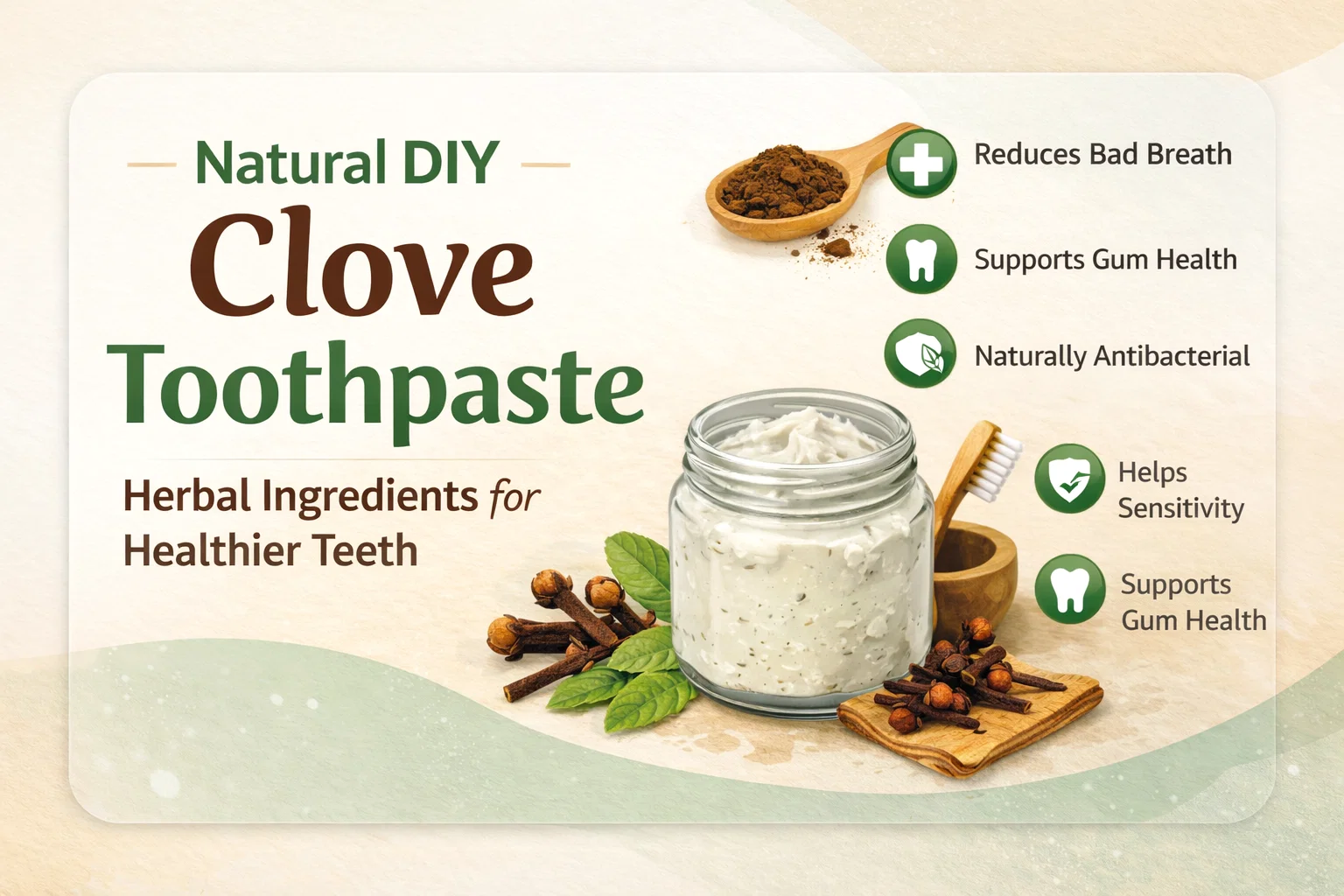
Reduces Bad Breath Naturally
No one wants to deal with chronic bad breath. Halitosis is typically caused by an overgrowth of volatile sulfur-producing bacteria in the mouth. Clove powder works aggressively to neutralize these odor-causing bacteria right at the source. Rather than just temporarily masking the smell with artificial mint flavors, clove purifies the oral environment. This purification process leaves you with a genuinely fresh and clean feeling that lasts throughout the day.
Supports Overall Gum Health
Healthy gums are the absolute foundation of a healthy smile. If your gums are inflamed, tender, or prone to bleeding during brushing, the antibacterial and anti-inflammatory properties of clove can provide significant relief. Regular use of clove-infused oral care products can help tighten gum tissue, reduce redness, and promote a much healthier, more balanced environment for your teeth to thrive in.
Helps Alleviate Tooth Sensitivity
Tooth sensitivity can quickly turn the simple act of enjoying your favorite hot coffee or cold ice cream into a painful experience. Because clove contains high levels of eugenol, it acts as a mild, natural numbing agent. While it will not cure underlying structural dental decay, it can provide soothing relief for sensitive nerve endings. This makes your daily brushing routine much more comfortable and less stressful on your teeth.
Ingredient Spotlight: What Goes Into Our Herbal Toothpaste
Every single ingredient in this DIY recipe serves a specific, highly beneficial purpose. There are no fillers or artificial preservatives here. Let us take a much closer look at what you will be mixing together to create this potent herbal blend.
Coconut Oil (2 Tablespoons)
Coconut oil serves as the perfect creamy, nourishing base for your homemade toothpaste. Beyond its smooth texture, coconut oil is famous worldwide for its impressive antimicrobial properties. It is naturally rich in lauric acid, a medium-chain fatty acid known to attack harmful bacteria in the mouth that cause bad breath, tooth decay, and gum disease. Coconut oil is also the traditional lipid used in the ancient practice of oil pulling, making it a proven ally in holistic dental care.
Baking Soda (1 Tablespoon)
Baking soda, formally known as sodium bicarbonate, is a classic natural teeth whitener and gentle cleanser. It is mildly abrasive, which means it helps scrub away daily surface stains from coffee, tea, and food without severely damaging your precious tooth enamel. Furthermore, baking soda is highly alkaline. It helps neutralize the harmful, enamel-eroding acids in your mouth that lead to cavities, creating a basic environment where healthy oral flora can flourish.
Clove Powder (1 Teaspoon)
As the absolute star of the show, clove powder brings all the incredible antibacterial and soothing benefits we discussed earlier. You can also use a few drops of food-grade clove essential oil as an alternative if you prefer, but the finely ground powder provides a wonderful, earthy texture and is often much gentler for daily use. It provides a warm, slightly spicy flavor that wakes up the mouth beautifully.
Xylitol or Honey (1 Teaspoon)
A little touch of sweetness makes the brushing experience significantly more pleasant, especially if you are transitioning from commercial toothpastes. Xylitol is a natural sugar alcohol highly recommended by holistic dentists. Unlike regular sugar, it cannot be processed or fermented by the bacteria that cause cavities. In fact, xylitol actively starves these harmful bacteria and helps remineralize your teeth. If you do not have xylitol on hand, a small amount of raw, natural honey can be used instead for its soothing texture and well-documented antibacterial properties.
Calcium Carbonate (2 to 3 Tablespoons)
This is the secret ingredient that takes your DIY toothpaste from a runny, oil-based mixture to a thick, professional-feeling paste. Calcium carbonate is a naturally occurring earth mineral that provides excellent, safe cleaning power. It gently polishes the surface of the teeth and supplies vital minerals to the oral cavity, which can help strengthen your tooth enamel over time through the process of remineralization.
The Optional Power-Ups: Turmeric and Peppermint Oil
If you want to customize your herbal paste even further, consider adding a half teaspoon of turmeric powder. While it sounds entirely counterintuitive to put a bright yellow spice on your teeth, turmeric is actually an ancient remedy for natural teeth whitening and dramatically reducing oral inflammation. Finally, a few drops of high-quality peppermint essential oil can be added if you miss that classic, cooling mint flavor traditionally associated with brushing your teeth.
Step-by-Step Guide: Crafting Your Herbal Toothpaste
Gathering your supplies is genuinely the hardest part of this entire process. Once you have your natural ingredients lined up on the counter, the actual process of making this toothpaste will take you less than five minutes from start to finish.
- Step 1: In a small, clean mixing bowl, combine the 2 tablespoons of coconut oil with the 1 tablespoon of baking soda. If your home is cool and your coconut oil is completely solid, you may want to mash it slightly with a fork or warm it very briefly until it becomes a workable, soft paste.
- Step 2: Add in the 1 teaspoon of clove powder and your chosen sweetener, either the xylitol or the raw honey. Stir the mixture thoroughly until the dark powder is evenly distributed throughout the white base.
- Step 3: Gradually add the calcium carbonate. Start with 2 tablespoons and mix very well. The powder will begin to bind the oils together. If the consistency is still too thin for your liking, add the third tablespoon and continue stirring until you reach a thick, satisfying toothpaste texture.
- Step 4: If you are choosing to use the optional ingredients like turmeric powder or peppermint essential oil, fold them into the mixture right now and give it one final, vigorous stir.
- Step 5: Transfer your beautifully finished herbal toothpaste into a small, airtight glass jar for easy storage on your bathroom counter. Glass is always preferred over plastic to preserve the integrity and purity of the natural essential oils and ingredients.
How to Use Your Homemade Toothpaste
Using DIY toothpaste is a slightly different experience from using commercial brands, mostly because it absolutely will not foam up in your mouth. Commercial brands rely heavily on synthetic detergents to create massive amounts of foam, which is completely unnecessary for actually cleaning your teeth. It is simply a psychological cue we have been trained to expect.
To use your new herbal paste, simply scoop a small, pea-sized amount onto your toothbrush. It is highly recommended to use a small cosmetic spoon or a clean wooden popsicle stick to apply the paste to the bristles. This prevents you from dipping your wet toothbrush directly into the storage jar, which could introduce unwanted water or bacteria into your pristine mixture. Brush your teeth thoroughly for a full two minutes, making sure to reach all the front, back, and chewing surfaces of your teeth while gently massaging your gum line. For the best possible results, use this powerful clove toothpaste once daily, perhaps alternating with another mild natural paste or as a supplement to your regular dental routine.
Important Safety Notes and Precautions
While natural ingredients are undeniably fantastic for your body, they are also highly potent and must be used with proper respect and care. Please keep the following important safety notes in mind as you embark on your DIY oral care journey.
- Do Not Use Too Much Clove Oil: If you decide to substitute the ground powder for clove essential oil, be incredibly sparse. Essential oils are extraordinarily concentrated, and too much clove oil can actually burn or severely irritate your delicate gums and oral mucosal tissues. Stick to just one or two drops for the entire batch.
- Not for Young Children: This specific clove and baking soda formulation is not recommended for young children under the age of six. Young kids frequently swallow their toothpaste, and the active, highly potent compounds in clove, along with the high sodium content of the baking soda, are not meant to be ingested in large quantities.
- Listen to Your Body: The label natural does not automatically mean allergy-free or universally tolerated. If you experience any burning sensations, increased tooth sensitivity, or tissue discomfort, discontinue use immediately. Furthermore, if you are experiencing severe dental pain, throbbing, or swelling, this homemade toothpaste is not a substitute for professional medical care. Always see a licensed dentist if pain persists or worsens.
Conclusion: Embrace the Power of Natural Self-Care
Making the intentional switch to a DIY herbal toothpaste is a wonderful, empowering step toward a more natural, holistic lifestyle. By taking just a few short minutes out of your week to mix up this simple yet brilliant recipe, you are providing your body with safe, recognizable ingredients that genuinely support your long-term oral hygiene. The unique combination of antibacterial coconut oil, mildly cleansing baking soda, mineral-rich calcium carbonate, and deeply soothing clove creates a restorative powerhouse product right in your own kitchen. Give this easy recipe a try, feel free to customize it to fit your personal flavor preferences with mint or turmeric, and thoroughly enjoy the incredibly fresh, clean feeling of a naturally healthy, vibrant smile!