DIY Hair Care Routine for Wavy Frizzy Dry Hair Natural Hair Mask Oil Massage Tips
Wavy hair is often described as the best of both worlds, offering the volume of curls with the manageability of straight hair. However, any wavy-haired individual knows that this hair type comes with its own set of unique challenges. Because the natural oils from your scalp have a harder time traveling down a curved hair shaft compared to a straight one, wavy hair is prone to dryness, frizz, and a loss of definition. If you have been struggling with a dull mane that feels more like straw than silk, it is time to put down the chemical-laden products and look toward your kitchen pantry. A natural, DIY approach to hair care is often the most effective way to restore moisture without weighing down your delicate waves.
The Science of Why Wavy Hair Gets Frizzy and Dry
Before diving into the routine, it is essential to understand why wavy hair behaves the way it does. The cuticle, or the outer layer of the hair strand, of wavy and curly hair tends to be more raised than that of straight hair. When the cuticle is raised, moisture escapes easily, leading to chronic dryness. Furthermore, when the air is humid, these open cuticles soak up moisture from the atmosphere, causing the hair shaft to swell and create that dreaded halo of frizz. By using natural humectants and emollients, you can seal the cuticle, lock in hydration, and ensure your waves remain defined and shiny regardless of the weather.
Weekly Deep Moisture Hair Mask: Your Hydration Foundation
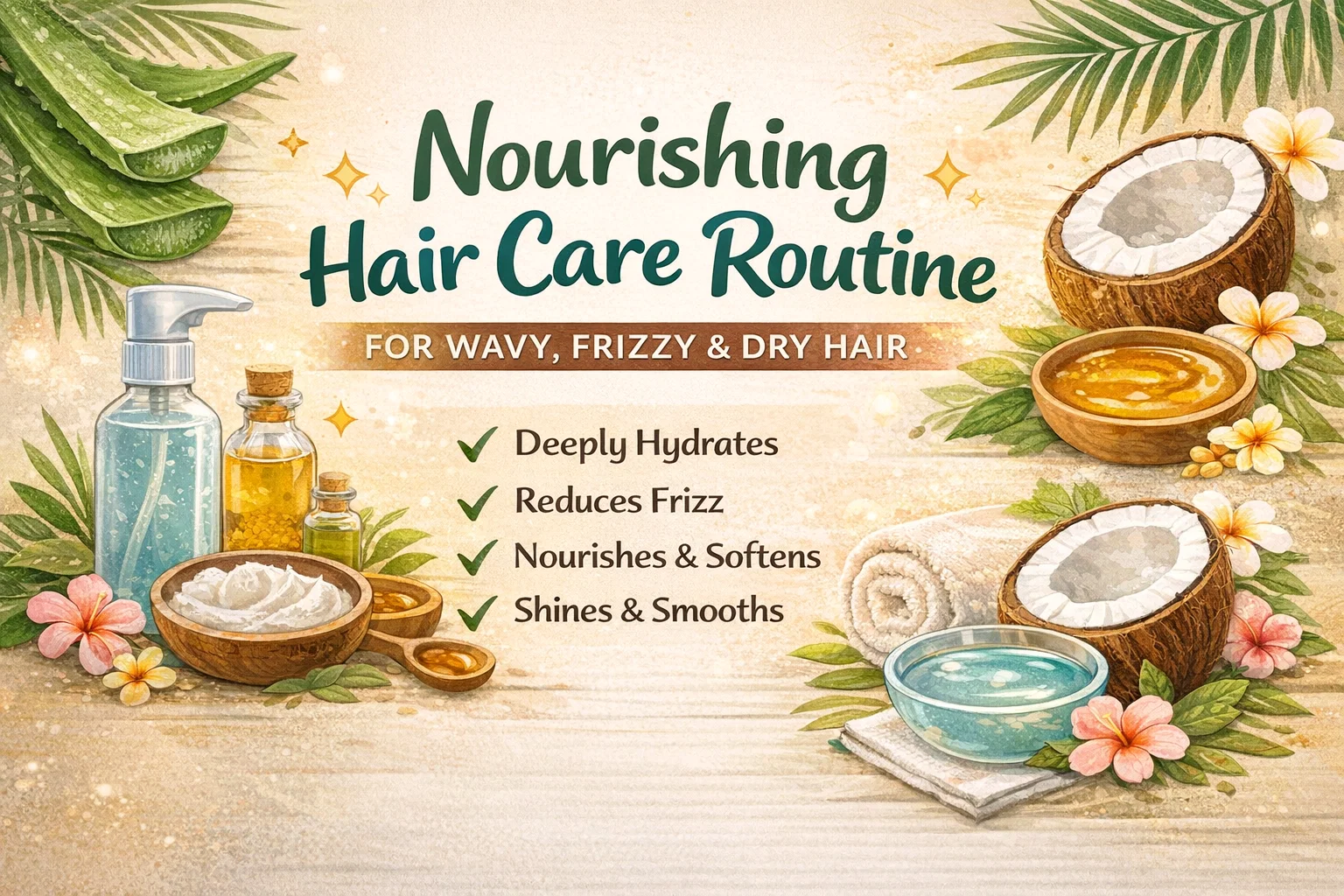
The cornerstone of a solid wavy hair routine is a deep conditioning treatment. While store-bought masks often contain silicones that provide a temporary “fake” shine, a homemade mask penetrates the hair shaft for long-lasting health. For best results, you should aim to apply this mask twice a week.
The Powerhouse Ingredients
Each ingredient in this DIY mask serves a specific purpose for wavy and frizzy hair:
- 2 tbsp Curd (Yogurt): Curd is rich in lactic acid, which helps cleanse the scalp and clear away dead skin cells. It acts as a natural conditioner that softens the hair fibers.
- 1 tbsp Coconut Oil: Known for its ability to penetrate the hair shaft better than most oils, coconut oil prevents protein loss and provides deep nourishment.
- 1 tbsp Fresh Aloe Vera Gel: Aloe vera is a proteolytic enzyme powerhouse. It repairs dead skin cells on the scalp and acts as a superb humectant to keep strands hydrated.
- 1 tsp Honey: As a natural humectant, honey attracts moisture from the air and binds it to your hair, providing an incredible boost of shine.
How to Apply the Mask for Maximum Absorption
To get the most out of these ingredients, mix them into a smooth, creamy paste. Start by applying the mixture to your scalp, massaging gently to stimulate blood flow, and then work it through the entire length of your hair. Pay extra attention to the ends, as they are the oldest and driest parts of your hair. Once applied, tie your hair in a loose bun and leave it for 30 to 40 minutes. This allows enough time for the nutrients to soak in. Finally, rinse with lukewarm water and use a mild, sulfate-free shampoo to ensure you don’t strip away the newfound moisture.
The Art of the Weekly Oil Massage
Many people with wavy hair fear oil because they worry it will make their hair look greasy or flat. However, a targeted oil massage once or twice a week is vital for scalp health and hair strength. The key is in the selection of oils and the application technique.
Choosing the Right Oils
Coconut oil is a fantastic base because of its lightweight nature and high affinity for hair proteins. To take it to the next level, add a few drops of castor oil. Castor oil is thick and rich in ricinoleic acid, which helps increase circulation to the scalp and promotes thicker, stronger hair growth. Because castor oil is quite viscous, mixing it with coconut oil makes it much easier to distribute through your hair.
Application Tips
Warm the oil slightly before application. Use your fingertips to massage the oil into your scalp using circular motions. This not only feels relaxing but also helps in de-stressing the hair follicles. Leave the oil in for at least an hour, or overnight if your hair is extremely dry, before washing it out.
After-Wash Care: The Frizz Control Spray
The most critical time for wavy hair is immediately after washing. This is when the hair is most vulnerable to frizz. Instead of reaching for heavy creams that might pull the bounce out of your waves, a DIY After-Wash Frizz Control Spray is a game-changer.
Creating Your DIY Leave-In Spray
You can create a lightweight, refreshing spray using 1 cup of water, 2 tablespoons of aloe vera gel, and 4 to 5 drops of coconut oil. Shake the bottle well before each use to emulsify the oil. This spray acts as a protective barrier, boosting shine and strengthening the roots while controlling dryness throughout the day. Simply mist it lightly onto damp hair and let your waves soak it up.
Essential Lifestyle Tips for Wavy Hair Success
A great routine is only as good as your daily habits. Wavy hair is fragile, and small changes in how you handle it can make a massive difference in the “Result You Will See.”
Detangling and Drying
Never use a fine-tooth comb or a standard brush on dry wavy hair, as this will immediately break the wave pattern and create a frizzy mess. Instead, use a wide-tooth comb only when your hair is damp. When it comes to drying, ditch the rough terry cloth towels. These towels create friction that ruffles the hair cuticle. Instead, use an old cotton T-shirt to gently scrunch the water out of your hair. This technique, often called “plopping,” helps maintain the natural shape of your waves.
Heat and Sleep
Avoid using very hot water in the shower, as it strips the natural oils from your scalp. Stick to lukewarm or even cool water for your final rinse to seal the cuticles. Whenever possible, let your hair air dry rather than using a blow dryer. Finally, protect your hair while you sleep by using a silk or satin pillowcase. Unlike cotton, which absorbs moisture and causes friction, silk allows your hair to glide smoothly, preventing morning tangles and breakage.
The Transformation: What to Expect
Consistency is the secret ingredient in any hair care journey. If you stick to this routine, you will begin to notice significant changes in the texture and appearance of your hair. Your waves will feel softer to the touch and appear much less frizzy even in humid conditions. Most importantly, you will see more defined waves that have a healthy, natural glow. Instead of fighting against your natural texture, you will be embracing it and giving it exactly what it needs to thrive.
Conclusion: Embracing Your Natural Waves
Caring for wavy, frizzy, and dry hair does not have to be an expensive or complicated ordeal. By returning to simple, natural ingredients like curd, honey, and aloe vera, you are providing your hair with the pure nourishment it craves. This routine is about more than just aesthetics; it is about building the health of your hair from the inside out. Start small, be patient with your progress, and enjoy the process of pampering yourself. Your waves are a beautiful, unique feature, and with the right care, they will become your favorite accessory. Would you like me to help you create a specific weekly schedule for these treatments?