DIY Herbal Hair Rinse for Strong 4C Hair Growth Moisture Natural Hair Care Routine
Maintaining the health and vibrancy of 4C hair can often feel like a full time job. Between managing shrinkage, ensuring moisture retention, and preventing breakage, the journey to long and strong coils requires a dedicated and thoughtful approach. While the market is flooded with synthetic conditioners and heavy creams, there is a growing movement toward returning to nature. Using an herbal hair rinse is one of the most effective yet overlooked ways to transform your hair care routine. By harnessing the power of botanicals like hibiscus and fenugreek, you can provide your scalp and strands with the concentrated nutrients they crave without the buildup of heavy waxes or silicones.
The Magic of Herbal Rinses for 4C Hair
For those with 4C hair textures, the primary challenge is almost always moisture. Because the tight coil pattern makes it difficult for natural scalp oils to travel down the hair shaft, the ends often become brittle and prone to snapping. An herbal rinse acts as a liquid gold treatment, penetrating the hair cuticle more easily than thick pastes. It balances the pH level of your scalp, flushes out mineral deposits from hard water, and leaves a fine film of plant based goodness that seals in hydration.
Using a botanical tea as a final step in your wash day routine is not just about aesthetics. It is about biology. The scalp is highly absorbent, and by applying a nutrient dense liquid, you are feeding the hair follicles directly at the source. This leads to better elasticity and a noticeable reduction in shedding over time.
Deep Dive Into the Powerhouse Ingredients
What makes this specific herbal blend so effective? Each ingredient has been selected for its unique ability to address the common struggles of highly textured hair. When combined, they create a synergistic effect that promotes both length retention and scalp health.
Hibiscus Petals: The Natural Conditioner
Hibiscus is often referred to as the secret to glowing hair in many tropical cultures. These vibrant petals are rich in vitamin C and amino acids. Vitamin C boosts collagen production, which is essential for hair growth, while the amino acids provide the strength needed to prevent thinning. Hibiscus also has a natural mucilage content, which provides a slight slip. This is incredibly helpful for 4C hair, making the detangling process much smoother and less damaging.
Fenugreek Seeds: The Strength Builder
If you are struggling with thinning edges or slow growth, fenugreek is your best friend. These seeds are a high source of protein and nicotinic acid, which are known to be beneficial against hair fall and dandruff. They contain a large amount of lecithin, which hydrates the hair and strengthens the roots. For 4C hair, which is naturally more fragile, the protein boost from fenugreek helps to reinforce the hair structure from the inside out.
Rosemary and Cloves: Scalp Stimulation and Protection
Rosemary is perhaps the most well researched herb for hair growth. It improves circulation to the scalp, ensuring that follicles receive the oxygen they need to produce healthy hair. Cloves complement this by acting as an antifungal and antibacterial agent. A clean, healthy scalp is the foundation for growth. Cloves also add a wonderful warmth to the scent of the rinse, making the entire experience feel like a high end spa treatment.
Step by Step Guide to Crafting Your Herbal Rinse
Creating this rinse at home is a simple, therapeutic process. It allows you to control exactly what goes onto your body, ensuring there are no hidden chemicals or preservatives. Follow these steps to create a potent batch for your next wash day.
The Simmering Process
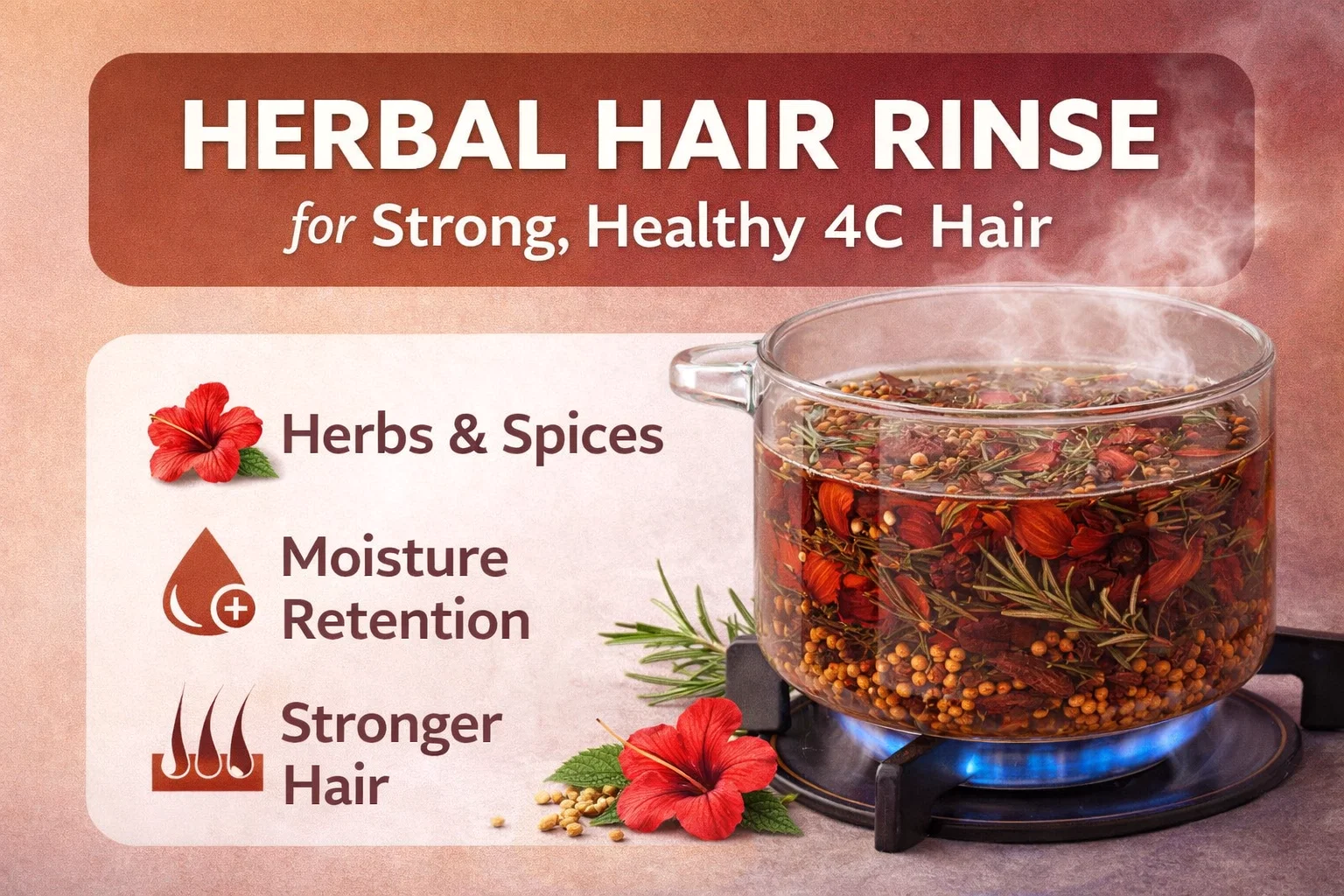
Start with two cups of filtered water in a clean glass or stainless steel pot. Add two tablespoons of hibiscus petals, one tablespoon of fenugreek seeds, and a teaspoon each of rosemary and cloves. Bring the mixture to a gentle simmer. You do not want a rolling boil, as excessive heat can break down some of the delicate antioxidants in the herbs. Let it simmer for 15 to 20 minutes. You will notice the water turning a deep, rich red color as the hibiscus and cloves release their essence.
Steeping and Straining
Once the simmering time is up, remove the pot from the heat. This is the most important part: let it steep as it cools. Steeping allows the water to fully absorb the minerals and oils from the seeds and dried leaves. Once the liquid has reached room temperature, strain it through a fine mesh sieve or a cheesecloth into a glass jar. You want the liquid to be completely clear of debris to avoid getting seeds caught in your curls.
How to Integrate the Rinse Into Your Wash Day
Knowing how to use the rinse is just as important as knowing how to make it. To get the best results, you should use this as the final step in your cleansing process. After you have shampooed and conditioned your hair, take the room temperature herbal rinse into the shower with you.
- Focus on the Scalp: Tilt your head back and slowly pour the rinse over your scalp. Use your fingertips to massage it in, ensuring every inch of your skin is covered.
- Saturate the Ends: Make sure the liquid runs down the entire length of your hair. Since 4C hair is porous, it will soak up the herbal tea quickly.
- Leave It In: For maximum benefit, do not rinse it out with plain water afterward. Let the herbs sit on your hair. This allows the nutrients to continue working as you apply your leave in conditioner and oils.
The Long Term Benefits of Botanical Hair Care
Consistency is the key to seeing real change. While you might notice an immediate increase in shine and softness after the first use, the true benefits of an herbal rinse appear after a few weeks of regular application. Using this rinse two or three times a week can lead to a significant transformation in the resilience of your 4C hair.
Enhanced Moisture Retention
Because this rinse helps to flatten the hair cuticle, moisture stays locked inside the hair shaft for longer. This means you will not have to re-moisturize your hair as frequently throughout the week, which reduces the amount of manipulation your hair endures. Less manipulation always leads to more length retention.
Natural Shine and Color Vibrancy
Synthetic products often leave a dulling film on 4C hair. In contrast, the acidity of an herbal rinse removes dulling buildup and restores the natural luster of your curls. If you have dark hair, the hibiscus and cloves can even provide a very subtle, natural deepening of your hair tone, making your coils look rich and healthy.
Customizing Your Recipe for Specific Needs
While the hibiscus and fenugreek blend is an incredible all rounder, you can easily tweak the recipe based on what your hair needs most at any given time. The beauty of DIY hair care is the ability to be your own scientist.
For Extra Hydration
If your hair feels exceptionally dry or “crunchy,” try adding a teaspoon of vegetable glycerin or a tablespoon of aloe vera juice to the cooled, strained mixture. These humectants will pull even more moisture from the air into your hair strands.
For Scalp Irritation
If you struggle with an itchy or flaky scalp, adding a few drops of peppermint oil or steeping some dried lavender with your herbs can provide immediate relief. Peppermint provides a cooling sensation that reduces inflammation, while lavender acts as a soothing antiseptic.
Common Mistakes to Avoid
Even with natural ingredients, there are a few pitfalls to watch out for. To ensure your herbal journey is a success, keep these tips in mind.
Always make sure the rinse has cooled down completely before applying it to your head. Using hot liquid can irritate the scalp and potentially damage the hair fiber. Additionally, because this recipe does not contain preservatives, it is best to make a fresh batch every time or store any leftovers in the refrigerator for no more than 3 to 5 days. Fresh is always better when it comes to botanical nutrients.
Embracing the Ritual of Self Care
Transitioning to a more natural hair care routine is about more than just the results. It is about the ritual. Taking the time to simmer herbs, smell the aromatic steam, and carefully treat your hair is an act of self love. For many in the 4C community, hair care has historically been associated with struggle or frustration. By introducing herbal rinses, you turn your wash day into a celebration of your natural texture and the power of the earth.
As you continue to use these traditional methods, you will likely find that your hair becomes more manageable and your scalp feels more balanced. You are not just masking problems with chemicals; you are healing and strengthening your hair from the root to the tip.
Conclusion
The journey to strong, healthy 4C hair does not require a bathroom cabinet full of expensive, synthetic products. Often, the most powerful solutions are the ones found in your kitchen or garden. This herbal hair rinse, with its blend of hibiscus, fenugreek, rosemary, and cloves, provides a gentle yet effective way to boost growth and moisture retention. By incorporating this simple step into your weekly routine, you are giving your curls the botanical support they need to thrive. Whether you are a long time natural or just beginning your healthy hair journey, nature is always ready to provide the best care possible. Give this rinse a try on your next wash day and watch your hair flourish.
Would you like me to generate a list of 10 SEO-friendly meta descriptions for this WordPress post?