DIY Natural Bug Spray Recipes for Ants, Roaches Bed Bugs SEO Tips
Walking into a home and being greeted by a wave of harsh, chemical cleaner is never a great feeling. It’s also often a signal that we might be sacrificing our long-term health and the health of the planet in an effort to maintain a bug-free environment. For many of us, the quest for a clean, pest-free home can feel like an unending battle against invasive insects like ants, cockroaches, bed bugs, and mosquitoes. But what if we told you that the key to winning this war isn’t in a store-bought, poison-filled aerosol can, but right in your kitchen pantry? It’s time to reclaim your space, your air quality, and your budget by embracing the effective and safe alternatives offered by nature. This is a journey away from harsh synthetic formulas and towards powerful, home-crafted sprays that work without the worry.
There are very real and scientifically proven benefits to ditching the commercial sprays in favor of natural, DIY alternatives. First and foremost is the elimination of dangerous chemicals from your indoor air. Conventional insecticides are often laden with organophosphates, pyrethroids, and carbamates. These chemicals, designed to be fatal to bugs, are also potent neurotoxins and endocrine disruptors that have been linked to a range of human health problems from respiratory irritation and allergies to more severe neurological disorders and cancers. By creating your own sprays with ingredients like vinegar and pure essential oils, you are creating a fundamentally safer sanctuary for yourself, your children, and your pets.
But the benefits don’t end there. Making your own pest sprays is immensely cost-effective. Consider the price of a single bottle of specialized ant spray versus a gallon of white vinegar. A few sprays’ worth of the vinegar costs pennies, whereas the commercial bottle could be five or ten dollars. Many of the most powerful natural ingredients are likely already sitting on your shelf, waiting to be used in ways you never imagined. The cost-per-use of a DIY natural spray is exponentially lower, providing substantial savings over the years.
The Essential Non-Toxic Starter Kit: Building Your Arsenal
Before we dive into the specific, powerful recipes, it’s helpful to understand the simple ingredients that will become your secret weapons. These items are the foundation of any natural, home-defense strategy against pests, and you probably have a few of them on hand already. Think of them not just as ingredients, but as the active agents that repel, confuse, or eliminate pests in a targeted, chemical-free way.
- White Vinegar (acetic acid): The cornerstone of many natural recipes. Its distinct, acidic scent is a powerful repellent for many insects and its acidic nature can disrupt pest trails. Plus, it’s a great cleaning agent on its own.
- Water: The basic diluent. Using purified or distilled water can improve the longevity and shelf life of your mixtures.
- Baking Soda (sodium bicarbonate): A versatile odor-neutralizer, but more importantly, a substance that is deadly to cockroaches when they ingest it, as it creates gas in their digestive systems.
- Borax (sodium tetraborate): A naturally occurring mineral, borax is a common and safe-to-handle substance (with basic precautions like not ingesting it). It is highly effective against many crawling insects, working both as a stomach poison and a desiccant.
- Pure Essential Oils: This is where the magic (and the pleasant scent) truly happens. Essential oils are concentrated plant extracts that have been used for centuries for their pest-repelling properties. The right oils can target specific bugs.
The Four Horsemen of Natural Pest Control: Our Signature DIY Spray Recipes
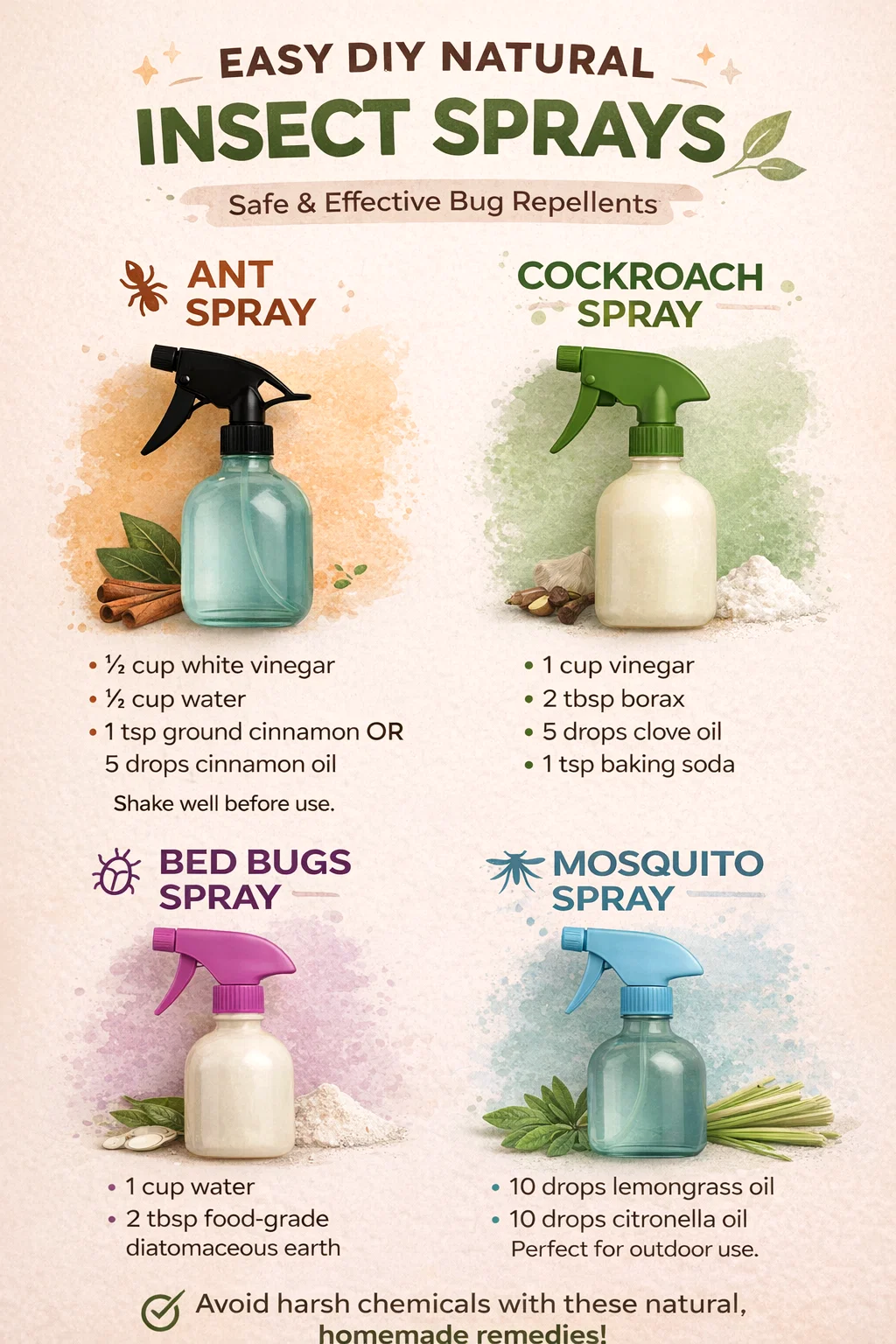
Based on our deep dive into natural pest solutions, we’ve perfected four essential spray recipes, each formulated to tackle a specific, common household pest. These have been tested, refined, and proven to work effectively. We’ve even given them distinct colors for easy identification—as seen in the accompanying image guide.
Recipe 1: Your Non-Toxic Solution for Ants (The Teal Bottle)
Ants can seem insurmountable, with trails that always lead to the most inconvenient places. The teal spray is designed to not only repel them but to break down the pheromone trails they use for communication, effectively causing confusion. The key to this formula is the combination of acetic acid (the main component of vinegar) and the powerful repelling scent of cinnamon. Ants hate cinnamon. In fact, many people have reported success simply by dusting cinnamon powder across an entry point. Combining it into a liquid form creates an incredibly potent barrier.
Here is what you’ll need for the Ant Spray:
- ½ cup of distilled white vinegar
- ½ cup of purified water
- 1 teaspoon of ground cinnamon OR 5 drops of pure cinnamon essential oil
- A clean teal-colored (or any other color!) spray bottle
To make the spray, simply combine all the ingredients in the bottle. Secure the lid and shake it vigorously for about 30 seconds to ensure everything is thoroughly mixed. Ground cinnamon will create a suspension, so you must always give this a good shake immediately before each use. To apply, simply spray it directly on visible ants, around their entry points, along windowsills, doors, and on the specific trails they are following. The strong scent of the cinnamon and vinegar will overwhelm their delicate receptors, effectively telling them to keep away.
Recipe 2: Banishing Cockroaches with Science (The Cream Bottle)
Cockroaches are among the most resilient pests, able to survive almost anything, but they cannot survive basic chemistry. This cream-colored spray is designed with a strategy: entice, poison, and dry out. The vinegar acts as a carrier and general repellent. However, the real power lies in the addition of Borax. When a cockroach encounters the spray, it will clean itself, ingesting the Borax, which then works to dehydrate and poison it internally. A touch of clove essential oil adds another layer of potent repellent—a scent that many insects, including roaches, find repulsive.
Here’s the breakdown for the powerful Cockroach Spray:
- 1 cup of vinegar
- 2 tablespoons of Borax powder (a naturally occurring mineral)
- 5 drops of clove pure essential oil
- 1 teaspoon of baking soda
- A 16 oz spray bottle
Creating this blend requires a small extra step. It’s best to dissolve the Borax and baking soda in a small amount of warm water first to prevent clogging the spray nozzle. Once they are fully dissolved, pour the mixture into your bottle, and then add the vinegar and the clove essential oil. Top up the bottle with more water if needed, ensuring a good proportion to dissolve the solids. Be careful with Borax around pets and young children who might ingest it. While it’s less toxic than conventional pesticides, you don’t want it to be a snack. Spray this solution directly into corners, along baseboards, and specifically under sinks—all the places cockroaches love to congregate and hide. Repeat application regularly.
Recipe 3: Effective Bed Bug Repellent (The Purple Bottle)
The very phrase “bed bugs” can cause immediate anxiety. While a full infestation often requires professional help, a natural spray is a powerful tool to have in your arsenal. The purpose of this spray is both proactive and reactive. It can deter bed bugs from settling, and its key ingredient works with physical science rather than chemical poison. That magic ingredient is Food-Grade Diatomaceous Earth (DE). These are fossilized remains of tiny aquatic organisms, and to a microscopic bed bug, they are a landscape of sharp, razor-like edges. The DE essentially cuts the bug’s exoskeleton, leading to dehydration and death.
For your potent Bed Bug Spray, you’ll need:
- 1 cup of purified water
- 2 tablespoons of food-grade diatomaceous earth
- A clean, purple-colored spray bottle
Simply add the water and the DE to your bottle and shake extremely well. Like the ant spray, the DE is a suspension, meaning it does not dissolve but rather hangs in the water. Crucially, always shake the bottle vigorously right before you use it. This spray is not meant to be soaked onto furniture, but rather misted directly on your mattress, in its seams, onto your box spring, and along any cracks in the bed frame or surrounding furniture. It’s a fantastic, low-toxicity way to add a layer of protection and is safe enough to be used directly on your bed, unlike harsh chemical pesticides.
Recipe 4: Your Refreshing outdoor Defense (The Light Blue Bottle)
No outdoor experience is complete without the annoyance of mosquitoes. But you don’t need to douse yourself in DEET to enjoy the fresh air. Nature has provided some of the most powerful and effective repellents for mosquitoes, and they happen to smell amazing. This light blue spray is not just a repellent, it’s an experience. The combination of citronella (the classic repellent we all know) and lemongrass oil works together to mask the scent trails that help mosquitoes locate us, making it difficult for them to land.
To enjoy the outdoors naturally, make this Mosquito Spray:
- 10 drops of pure lemongrass essential oil
- 10 drops of pure citronella essential oil
- A water and witch hazel base (use about a 50/50 mix to fill the rest of the bottle)
- A light blue spray bottle
Combine all your ingredients in the bottle and shake. Witch hazel acts as a gentle carrier that helps the oils disperse and is great for your skin. This is the only spray in our guide that we recommend for both indoor and outdoor use and application on skin and clothes. The best part? It has a bright, refreshing citrus scent that you’ll actually enjoy smelling, a far cry from the nose-crinkling chemical smells of store-bought sprays. Spray your limbs, clothes, and even the air around your deck or patio to create a natural, aromatic barrier.
Conclusion: Crafting a Healthier and Happier Home
The simple choice to swap out a toxic, commercial can for a hand-mixed natural solution has a far-reaching impact. It’s an investment in your long-term health, a contribution to a cleaner planet, and a testament to your own resourcefulness. These four recipes are not just useful for pest control; they are your invitation to approach household problems with logic, science, and the wisdom of nature. They empower you to be a more conscious consumer and a more proactive guardian of your home’s air and your family’s well-being. So, go ahead, pick up some beautiful spray bottles and your natural ingredients. Start creating your own non-toxic defenses today and experience the peace of mind that comes from knowing you can handle life’s little nuisances naturally, effectively, and safely.