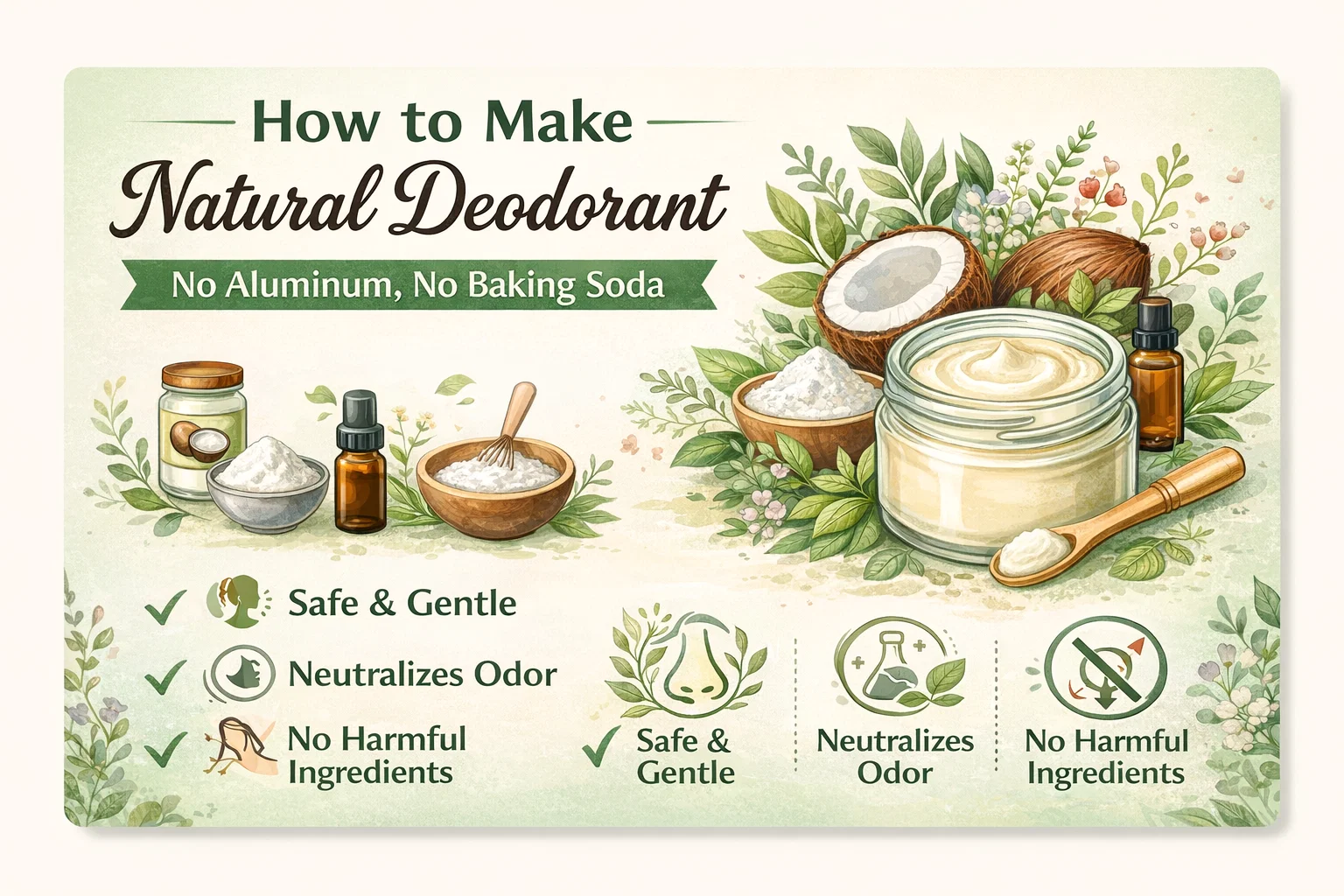
DIY Natural Deodorant Recipe for Sensitive Skin – Aluminum Baking Soda Free Paste
Transitioning to a natural lifestyle often starts with the most personal products in our bathroom cabinets. For many, the first switch is deodorant. However, if you have ever tried a natural brand only to end up with a painful, red, itchy rash, you are not alone. Most DIY and store bought natural deodorants rely heavily on baking soda to neutralize odor. While effective at killing bacteria, baking soda is highly alkaline, which can wreak havoc on the delicate pH balance of your underarm skin. That is why finding a gentle, effective, and baking soda free alternative is a total game changer for your daily self care routine.
The Science of Natural Deodorant That Actually Works
Most people assume that sweat itself smells bad, but that is a common misconception. Sweat is actually odorless. The smell occurs when the proteins and fats in your sweat meet the bacteria living on your skin. Traditional antiperspirants use aluminum salts to physically plug your sweat glands, preventing moisture from reaching the surface. While this keeps you dry, it interferes with your body’s natural detoxification process.
A high quality natural deodorant paste focuses on two things: absorbing moisture and neutralizing odor causing bacteria without blocking your pores. By using magnesium instead of baking soda, you can achieve the same odor protection without the inflammatory side effects. This approach works with your body chemistry rather than against it, allowing your skin to breathe while keeping you smelling fresh from morning until night.
Why These Specific Ingredients Matter
When you look at the recipe for this natural deodorant paste, every single ingredient serves a specific purpose. There are no fillers or synthetic preservatives here. Understanding what goes into your products is the first step toward true clean beauty.
Coconut Oil as a Powerful Base
Coconut oil is the foundation of this recipe for a good reason. It has inherent antibacterial and antifungal properties thanks to its high lauric acid content. This helps to naturally limit the growth of odor causing bacteria right at the source. Additionally, it provides a smooth, creamy texture that makes the paste easy to apply, leaving your skin feeling hydrated rather than stripped.
Arrowroot Powder for Moisture Control
One of the biggest concerns people have when switching from antiperspirant is the feeling of wetness. Arrowroot powder is a natural starch derived from tropical plants. It is incredibly effective at absorbing excess moisture. While it won’t stop you from sweating entirely, it helps keep your underarms feeling dry and comfortable throughout the day.
The Magic of Magnesium Hydroxide
Magnesium hydroxide is the secret weapon in this formula. It is a naturally occurring mineral that effectively neutralizes odor by altering the pH of the skin just enough to discourage bacteria, but not so much that it causes irritation. Unlike baking soda, which has a very high pH, magnesium is much closer to the skin’s natural acidity. This makes it the perfect choice for anyone with sensitive skin or a history of deodorant rashes.
Step by Step Guide to Making Your Deodorant Paste
Making your own hygiene products might sound intimidating, but this process is actually simpler than baking a batch of cookies. You don’t need any specialized laboratory equipment. Just a few kitchen staples and about ten minutes of your time are all it takes to create a three month supply of deodorant.
1. Melting the Coconut Oil
Start by gently melting 1/4 cup of coconut oil. You can do this using a double boiler method or a very short burst in the microwave. You want the oil to be liquid but not boiling hot. If the oil is too hot, it can degrade the quality of your essential oils later in the process. Once it is clear and fluid, you are ready for the next step.
2. Incorporating the Arrowroot
Whisk in 1/4 cup of arrowroot powder. It is important to stir thoroughly to ensure there are no clumps. The mixture should start to look like a thin, milky liquid. This starch is what gives the finished product its velvety feel upon application.
3. Adding the Odor Neutralizer
Now, add 2 tablespoons of magnesium hydroxide. This is usually found in powder form. Whisk the mixture vigorously until it is completely smooth. You are looking for a consistency that resembles a thick frosting. If you find the mixture is too runny, you can add a tiny bit more arrowroot, but remember that it will firm up significantly as the coconut oil cools.
4. Customizing with Essential Oils
This is where you can get creative. Adding about 10 drops of essential oil not only provides a lovely scent but can also boost the efficacy of the deodorant. Lavender is a classic choice for its soothing properties, while tea tree oil offers additional antibacterial benefits. You could also try citrus oils for a refreshing morning boost or sandalwood for a more earthy, grounded aroma.
How to Apply for Best Results
Using a paste is a bit different than using a traditional stick, but once you get the hang of it, you might find you prefer it. Because this formula is concentrated, a little goes a long way. You only need a pea sized amount for both underarms.
First, ensure your underarms are clean and dry. Take a small amount of the paste on your fingertip and warm it between your fingers for a second or two. This softens the coconut oil and makes it spread effortlessly. Rub it gently into your skin until it is fully absorbed. It should feel soft and powdery, not greasy or hard. If you feel a greasy residue, you are likely using too much product.
Navigating the Underarm Detox Period
If you are switching from a lifetime of using clinical strength antiperspirants, your body might go through a transition phase. This is often called the detox period. It is completely normal and is actually a sign that your body is regulating itself again.
During the first two weeks, you might notice that you are sweating more than usual. This is because your sweat glands are finally clear of aluminum plugs and are flushing out built up impurities. You might also notice a temporary change in your natural body odor. Stick with it. By week three, most people find that their body adjusts, their sweat levels normalize, and the natural deodorant works even better than the chemical versions they used to rely on.
Storing and Maintaining Your DIY Creation
Because this recipe uses coconut oil, its consistency will change based on the temperature of your home. In the summer, it might become a bit softer, and in the winter, it may firm up. To keep it at the perfect consistency, store it in a small glass jar with a tight lid. Glass is ideal because it does not leach chemicals into your product and keeps the essential oils potent.
One batch of this recipe typically lasts about three months. Since there is no water in this recipe, it has a long shelf life and does not require synthetic preservatives. However, always use clean fingers or a small wooden spatula to scoop out the product to prevent introducing bacteria into the jar.
The Long Term Benefits of Going Aluminum Free
Choosing a natural deodorant is about more than just avoiding a rash. It is about reducing your overall toxic load. Our skin is our largest organ, and it absorbs much of what we put on it. By eliminating aluminum, parabens, and synthetic fragrances, you are supporting your endocrine system and reducing your exposure to potential hormone disruptors.
Furthermore, making your own products is a wonderful step toward a zero waste lifestyle. You can reuse your glass jars indefinitely, significantly reducing the amount of plastic waste that ends up in landfills. It is a win for your body and a win for the planet.
Conclusion: A Gentler Way to Stay Fresh
Switching to a DIY natural deodorant paste is a simple act of self care that yields massive benefits. By moving away from harsh chemicals and irritating baking soda, you give your skin the chance to heal and function as nature intended. Whether you are looking to solve a chronic skin irritation or simply want to clean up your beauty routine, this magnesium based recipe offers a reliable, effective, and soothing solution.
Remember that everyone’s body chemistry is unique. Feel free to experiment with different essential oil blends to find the scent that makes you feel most confident. With a little patience during the detox phase, you will soon find that you don’t need harsh chemicals to stay fresh and dry. Give this gentle recipe a try and enjoy the peace of mind that comes with knowing exactly what is going on your skin every single day.