DIY Natural Lip Care Routine Scrub, Mask Moisturizer for Soft Lips
Achieving soft, supple, and naturally rosy lips is a goal for many, yet the lips are often the most neglected part of a skincare routine. While we spend significant time and money on serums for our face and lotions for our bodies, our lips endure harsh weather, dehydration, and constant movement without much support. If you have been struggling with dryness, peeling, or dullness, it is time to shift your focus. The secret to a perfect pout does not lie in expensive, chemical-laden products but in a consistent, natural approach. By using simple ingredients found in your kitchen, you can transform your smile and maintain healthy lip skin year-round.
The Importance of a Dedicated Lip Care Routine
The skin on our lips is significantly thinner and more delicate than the skin on the rest of our face. Unlike other areas, lips do not contain oil glands, which means they cannot moisturize themselves. This makes them incredibly susceptible to external factors such as wind, cold air, sun exposure, and even the ingredients in our favorite lipsticks. When the lips lose moisture, they become chapped and cracked, which can be painful and unsightly. A dedicated routine ensures that you are manually providing the hydration and protection that your lips lack naturally.
Understanding the Three Pillars of Lip Health
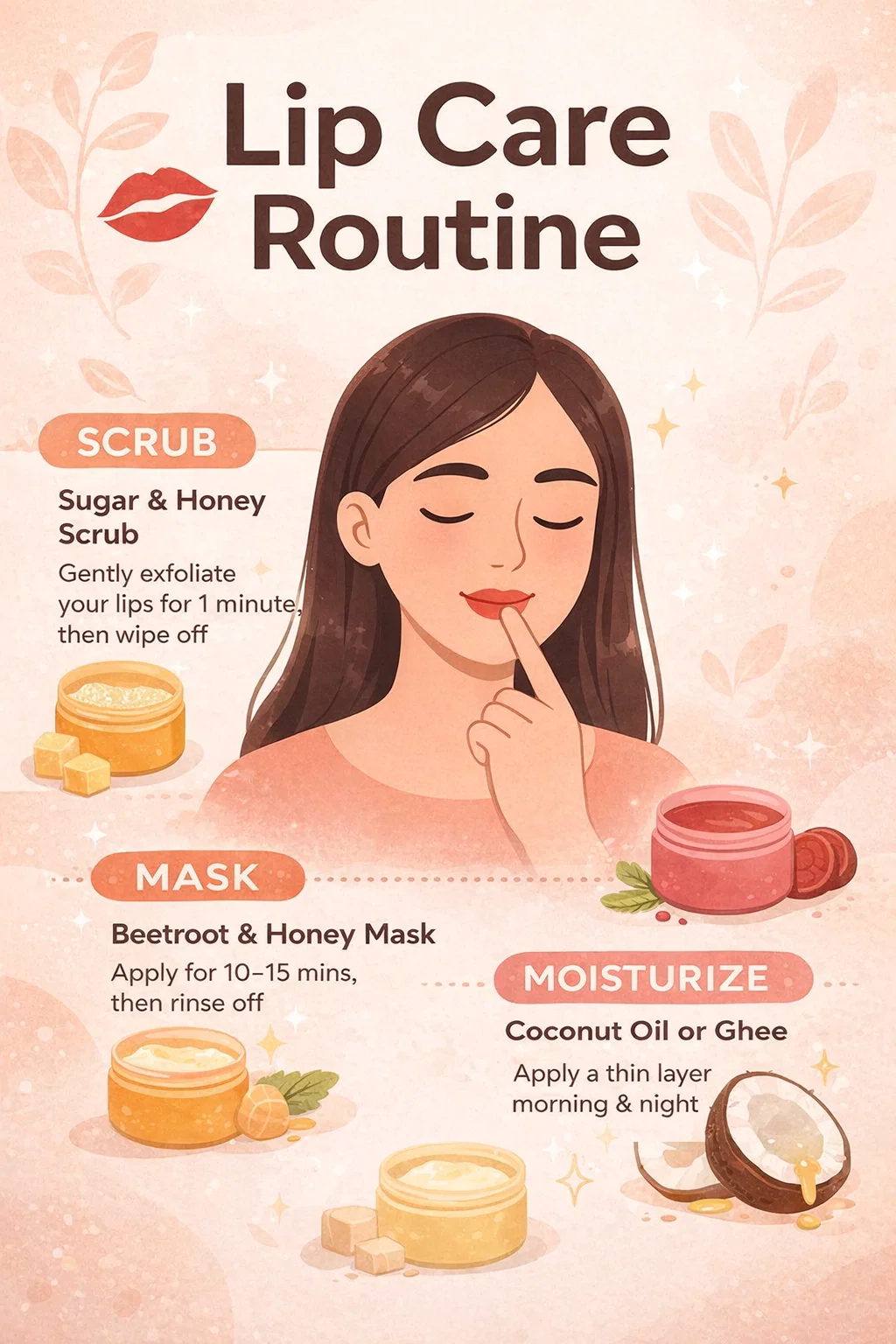
To truly care for your lips, you must follow a structured process that covers all the bases: exfoliation, deep conditioning, and daily protection. Think of it like a facial for your mouth. You cannot simply apply balm over dead, flaky skin and expect results. You first need to clear the surface, then treat the underlying tissue, and finally seal everything in. Following the steps of scrubbing, masking, and moisturizing creates a comprehensive cycle that keeps the skin barrier intact and the texture smooth.
Step 1: The Sugar and Honey Scrub for Gentle Exfoliation
The first step in any effective lip care routine is exfoliation. Dead skin cells tend to build up on the surface of the lips, creating a rough texture that makes it difficult for moisturizers to penetrate. A physical scrub helps to slough off these cells, revealing the fresh, healthy skin underneath. One of the best ways to do this naturally is with a sugar and honey mixture.
How to Create and Use Your Scrub
To make this at home, simply mix a small amount of granulated sugar with a teaspoon of raw honey. The sugar acts as a natural humectant and a mechanical exfoliant, while the honey provides antibacterial properties and initial hydration. Take a small amount of the mixture on your fingertip and rub it gently over your lips in circular motions for about one minute. It is crucial to be gentle; the goal is to polish the skin, not irritate it. After one minute, wipe the scrub off with a soft, damp cloth or rinse it with lukewarm water.
Benefits of Regular Exfoliation
When you exfoliate regularly, you improve the blood circulation in your lips, which can naturally enhance their color and make them appear slightly fuller. Furthermore, removing the dry layer ensures that your lipsticks and glosses apply smoothly without settling into cracks. For most people, exfoliating two to three times a week is sufficient to maintain a smooth surface without over-sensitizing the area.
Step 2: The Beetroot and Honey Mask for Deep Nourishment
Once your lips are freshly exfoliated, they are in the perfect state to absorb nutrients. This is the ideal time for a lip mask. While a scrub is a quick fix for texture, a mask is a deep-treatment phase designed to infuse the skin with vitamins and antioxidants. A combination of beetroot and honey is a powerhouse for achieving that sought-after natural pink tint.
Why Beetroot is a Skincare Superstar
Beetroot is naturally rich in vitamins and minerals, but its most famous attribute in lip care is its pigment. The natural staining properties of beetroot can help lighten dark or pigmented lips over time, giving them a healthy, flushed look without the need for makeup. When mixed with honey, it creates a soothing paste that calms the skin after exfoliation.
Application and Timing
To use this mask, grate a small piece of fresh beetroot and extract the juice, mixing it with a bit of honey. Apply a generous layer to your lips and let it sit for 10 to 15 minutes. This allows the skin to drink in the moisture and the natural pigments to settle. After the time is up, rinse it off with cool water. You will notice an immediate difference in how soft and vibrant your lips look. This step is particularly effective if done in the evening, allowing your lips to recover while you rest.
Step 3: Moisture Retention with Coconut Oil or Ghee
The final and perhaps most critical step is moisturizing. After exfoliating and masking, your lips are hydrated, but that moisture will quickly evaporate if you do not seal it in. This is where natural fats like coconut oil or ghee come into play. These ingredients act as occlusives, forming a protective barrier that prevents transepidermal water loss.
Choosing Your Natural Moisturizer
- Coconut Oil: Known for its medium-chain fatty acids, coconut oil is incredibly penetrative. It has antimicrobial properties that can help heal small cracks or cuts on the lips.
- Ghee (Clarified Butter): A staple in traditional beauty rituals, ghee is exceptionally rich in fat-soluble vitamins and provides a heavy-duty moisture barrier. It is particularly effective for those with chronically dry or severely chapped lips.
The Daily Habit
Consistency is the key to success. You should apply a thin layer of your chosen natural oil every morning as part of your get-ready routine and every night before you go to bed. Overnight is when your body undergoes its natural repair processes, so applying a thick layer of ghee or coconut oil before sleep ensures you wake up with incredibly soft lips. Unlike commercial lip balms that often contain waxes or alcohols that can actually dry out the skin further, these pure fats provide genuine, long-lasting nourishment.
Natural vs. Commercial Lip Care: Why Go Natural?
Many store-bought lip products contain ingredients like menthol, camphor, or salicylic acid. While these might provide a temporary cooling sensation or help with immediate peeling, they can be irritating in the long run and lead to a cycle of “addiction” where your lips feel even drier once the product wears off. By sticking to natural ingredients like honey, sugar, and plant oils, you are avoiding synthetic fragrances and preservatives that can cause allergic reactions.
Environmental and Ethical Benefits
Beyond the health of your skin, a natural routine is better for the planet. You are reducing plastic waste by not constantly buying small plastic tubes of balm, and you are in total control of the quality of the ingredients. Most of the items needed for this routine are likely already in your pantry, making it a sustainable and cost-effective beauty solution.
Lifestyle Tips for Healthy Lips
While a topical routine is vital, your internal health also reflects on your lips. If you are dehydrated, your lips will be the first to show it. Drinking plenty of water throughout the day is the best thing you can do for your skin from the inside out. Additionally, avoid the habit of licking your lips. Saliva contains digestive enzymes that can break down the thin skin of the lips, leading to more dryness and irritation.
Protecting Your Lips from the Elements
Sun protection is another overlooked aspect. The lips can get sunburned just like any other part of your body. If you are going to be outdoors for an extended period, try to find a natural lip balm that includes zinc oxide or another form of mineral SPF. Similarly, during the winter months, wearing a scarf that covers your mouth can protect your lips from biting winds that strip away moisture.
Common Mistakes to Avoid
One of the most common mistakes people make is over-exfoliating. While it feels great to have smooth lips, doing a sugar scrub every day can thin the skin and cause sensitivity. Stick to the recommended two to three times a week. Another mistake is using a scrub on lips that are already bleeding or severely cracked. In those cases, skip the scrub and go straight to the moisturizing phase with ghee or coconut oil until the skin has healed.
Watch Your Diet
Deficiencies in B vitamins, iron, or essential fatty acids can lead to cracked corners of the mouth and pale lips. Incorporating a balanced diet rich in leafy greens, nuts, and healthy fats will support your topical efforts and ensure your lips stay healthy and naturally colorful.
Conclusion: Consistency Leads to Results
Transforming your lip care from an afterthought into a deliberate ritual does not have to be complicated or expensive. By following the simple three-step process of scrubbing with sugar and honey, treating with a beetroot mask, and sealing with coconut oil or ghee, you are giving your lips the specialized attention they deserve. This routine addresses the immediate need for smoothness while building long-term health and resilience. Start this routine today, and within just a week, you will likely find yourself reaching for lipstick less often as your natural, soft, and pink lips become your favorite feature. Beautiful lips are just a few kitchen ingredients away, so embrace the power of nature and enjoy the confidence that comes with a healthy, radiant smile.