DIY Natural Sunscreen for Sensitive Skin Zinc Oxide Recipe
Finding the perfect sunscreen for sensitive skin often feels like an impossible quest. Many over the counter options are packed with synthetic fragrances, chemical filters like oxybenzone, and harsh preservatives that lead to redness, itching, or breakouts. If you have been struggling to protect your face and body from the sun without causing a secondary skin crisis, turning to a DIY natural recipe might be the best decision you ever make. By taking control of the ingredients, you eliminate the mystery and ensure that only soothing, protective elements touch your dermis. This guide explores how to create a high quality, mineral based sunblock right in your own kitchen using simple, wholesome ingredients like shea butter and non nano zinc oxide.
The Benefits of Making Your Own Natural Sunscreen
One of the primary reasons people switch to homemade sun protection is the desire for transparency. When you read the back of a commercial sunscreen bottle, you are often met with a long list of unpronounceable chemicals. Many of these act as hormone disruptors or environmental pollutants. By contrast, a DIY approach uses food grade oils and natural minerals.
Physical blockers, also known as mineral sunscreens, work by sitting on top of the skin and reflecting UV rays away like a mirror. This is vastly different from chemical sunscreens which absorb into the skin and convert UV rays into heat. For those with inflammatory conditions like eczema or rosacea, the cooling, reflective nature of a zinc based cream is far superior. Additionally, making your own batches is cost effective and allows you to customize the texture and scent to your liking.
Key Ingredients for Sensitive Skin Protection
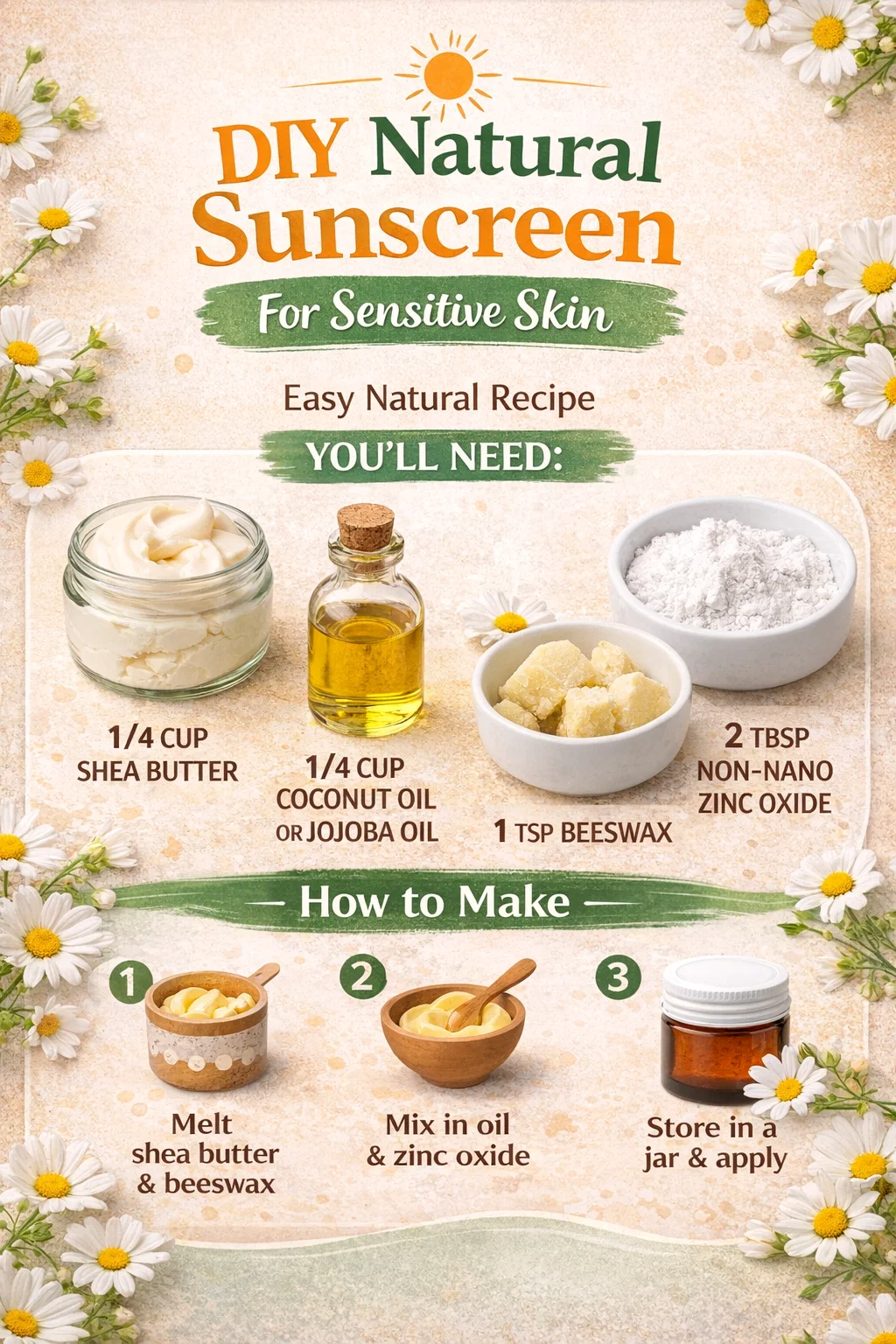
The recipe featured in our guide relies on four powerhouse ingredients. Each plays a specific role in either protecting the skin from radiation or nourishing the skin barrier to prevent dehydration.
Raw Shea Butter
Shea butter is the soul of this recipe. Extracted from the nuts of the shea tree, it is naturally rich in vitamins A and E. It provides a thick, creamy base that helps the sunscreen spread evenly. Beyond its texture, shea butter has a very low natural SPF of its own, approximately level six, and is incredibly moisturizing. This helps counteract the drying effect that some minerals can have on the skin.
Carrier Oils: Coconut or Jojoba
You have a choice here depending on your skin type. Coconut oil is beloved for its antibacterial properties and pleasant scent. However, if you are prone to acne, you might prefer jojoba oil. Jojoba is technically a liquid wax that closely mimics the natural sebum produced by human skin. It absorbs quickly without clogging pores, making it an excellent choice for facial sunscreens.
Beeswax Pellets
Beeswax acts as the binding agent and provides a level of water resistance. Without beeswax, your sunscreen would melt off the moment you start to sweat or step into the water. It creates a breathable barrier on the skin that locks in moisture while keeping the protective minerals in place. If you are looking for a vegan alternative, candelilla wax can be used in slightly smaller quantities.
Non Nano Zinc Oxide
This is the most critical component for actual sun protection. Zinc oxide is a powdered mineral that provides broad spectrum protection against both UVA and UVB rays. It is essential to use non nano zinc oxide. This means the particles are large enough that they cannot be absorbed into your bloodstream through the skin. It is the safest choice for both humans and coral reefs.
Step by Step Guide to Crafting Your Sunscreen
Creating this cream is similar to making a high quality body butter. The process requires a gentle touch to ensure the ingredients blend perfectly without losing their beneficial properties to high heat.
Step 1: Melting the Base
Begin by setting up a double boiler. If you do not have one, simply place a glass bowl over a pot of simmering water. Add your 1/4 cup of shea butter and 1 teaspoon of beeswax to the bowl. Let them melt slowly together. Avoid using high heat or putting the ingredients directly on a burner, as this can scorch the shea butter and give it a grainy texture. Stir occasionally until the mixture is a clear, uniform liquid.
Step 2: Integrating the Oils and Zinc
Once the butter and wax have melted, remove the bowl from the heat. Stir in your 1/4 cup of coconut or jojoba oil. While the mixture is still warm and liquid, add 2 tablespoons of non nano zinc oxide. It is helpful to wear a mask during this step to avoid inhaling the fine mineral dust. Use a whisk or a handheld milk frother to blend the powder thoroughly. You want to ensure there are no clumps of white powder left, as this would result in uneven protection.
Step 3: Storage and Application
Pour the liquid mixture into a dark glass jar. Using dark glass helps protect the natural oils from light degradation, which can make them go rancid faster. Let the jar sit at room temperature until the sunscreen solidifies into a creamy consistency. You can also pop it in the fridge for thirty minutes to speed up the process. Once set, it is ready to use. Apply it generously to any exposed skin before heading outdoors.
Understanding SPF in Homemade Recipes
It is important to manage expectations regarding the Sun Protection Factor (SPF) of homemade batches. Because this is not tested in a laboratory, the exact SPF can vary based on the thickness of the application and the specific brand of zinc oxide used. Generally, a recipe with 20 percent zinc oxide provides an SPF of approximately 15 to 20.
If you need higher protection for a long day at the beach, you can increase the amount of zinc oxide slightly. However, keep in mind that more zinc will result in a whiter, thicker paste that may stay visible on the skin. Because natural sunscreens do not contain the same synthetic fixatives as commercial brands, you should reapply every 60 to 90 minutes, especially after swimming or heavy sweating.
Why Non Nano Zinc is a Game Changer
For years, people avoided mineral sunscreens because they left a thick, chalky white ghosting effect on the skin. While modern technology created nano particles to make the cream invisible, safety concerns arose regarding those tiny particles entering the body. Non nano zinc oxide is the gold standard for health conscious individuals.
It provides a physical shield that stays on the surface. While it may leave a very slight white tint, this is actually a helpful visual indicator. It shows you exactly where you have applied the product and where you might have missed a spot. For those with sensitive skin, this mineral is also known for its healing properties. In fact, zinc oxide is the primary ingredient in many diaper rash creams because it is so effective at calming irritation and protecting the skin barrier.
Customizing Your Recipe for Different Needs
Once you master the basic recipe, you can tweak it to suit your specific lifestyle. If you spend a lot of time in a very hot climate, you might want to add an extra half teaspoon of beeswax to keep the consistency firm so it does not turn into oil in your bag.
If you want a pleasant scent, you can add a few drops of skin safe essential oils. Lavender and sandalwood are excellent choices for sensitive skin because they have soothing properties. However, avoid citrus oils like lemon or bergamot in your sunscreen. These are photosensitive and can actually cause the skin to burn faster when exposed to sunlight.
Practical Tips for Sun Safety
While this DIY sunscreen is a powerful tool, it should be part of a broader sun safety strategy. Natural skin is delicate, and no cream provides 100 percent protection.
First, try to avoid the sun during peak hours, usually between 10 AM and 4 PM, when UV radiation is at its strongest. Second, embrace sun protective clothing. A wide brimmed hat and UV rated sunglasses provide effortless protection that never needs to be reapplied. Finally, remember to apply your homemade sunscreen at least 15 minutes before you go outside. This gives the oils time to settle into the skin so the zinc can form a solid protective layer on the surface.
The Environmental Impact of Your Choice
By choosing to make your own sunscreen, you are also making a vote for the health of our oceans. Traditional chemical sunscreens contain ingredients that contribute to coral bleaching and the disruption of marine life. When you swim in the ocean wearing a zinc based, biodegradable sunscreen, you are leaving no harmful footprint behind. The ingredients in this recipe are earth friendly and break down naturally without harming aquatic ecosystems.
Conclusion
Taking care of sensitive skin does not have to be a source of stress or high expense. By following this DIY natural recipe, you can create a luxurious, effective, and safe sunscreen that pampers your skin while shielding it from the sun. The combination of nourishing shea butter, versatile oils, and protective zinc oxide offers a holistic approach to skincare that commercial products rarely match.
Embrace the process of making your own beauty products. There is a unique satisfaction in knowing exactly what is in the jar on your bathroom vanity. Not only will your skin feel softer and calmer, but you will also have the peace of mind that comes with using clean, non toxic ingredients. Give this recipe a try and experience the difference that natural, homemade protection can make for your sensitive skin.