DIY Sage Mandarin Body Balm Recipe for Glowing Skin Soothing Aromatherapy Tutorial
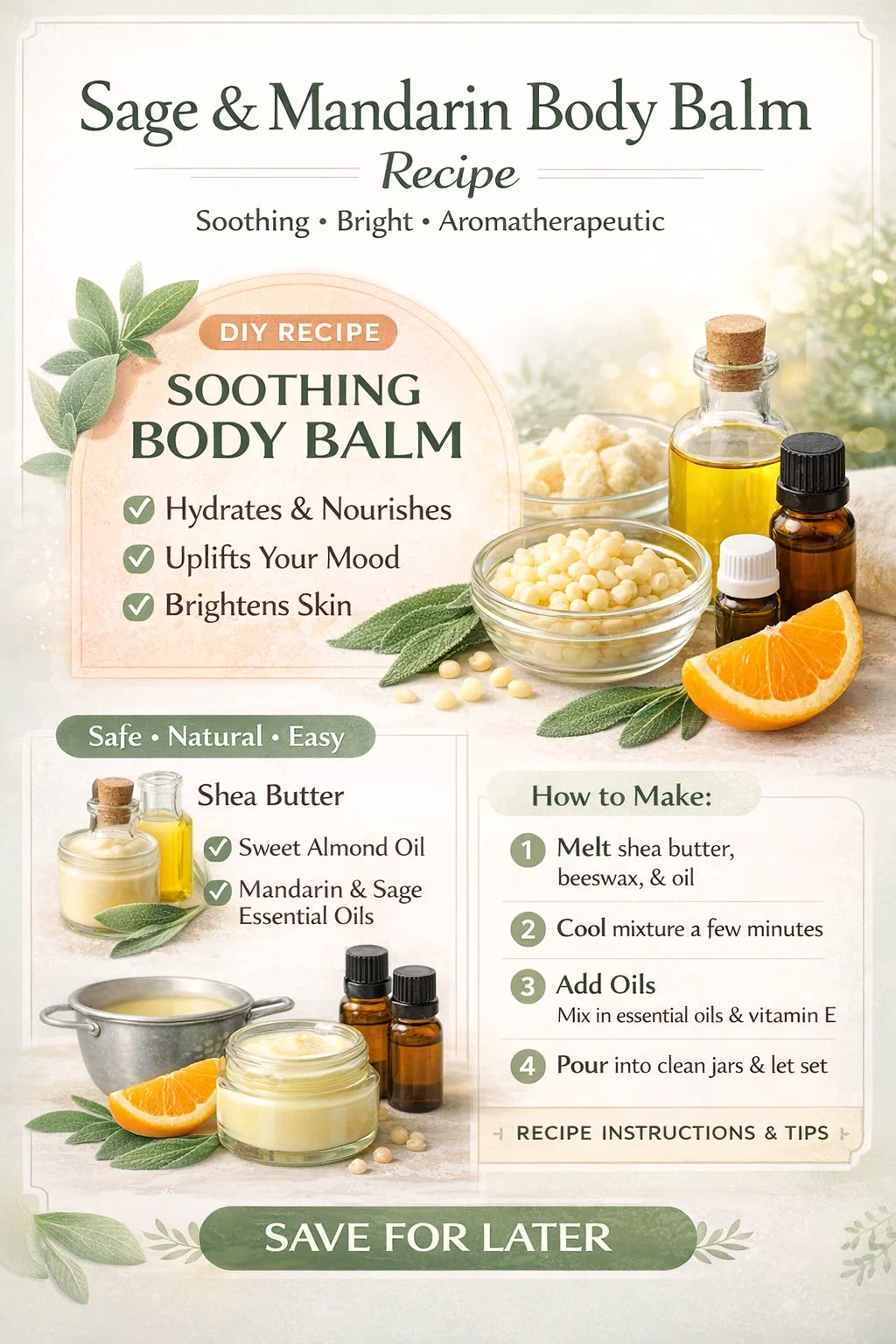
Step into the world of botanical bliss with a recipe that transforms your daily skincare routine into a spa-like ritual. There is something profoundly satisfying about creating your own beauty products from scratch. Not only do you know exactly what is going into the jar, but you also have the power to customize the scents and textures to suit your personal needs. This Sage and Mandarin Body Balm is a masterclass in balance, pairing the grounding, earthy notes of sage with the vibrant, sun-kissed aroma of mandarin. It is a thick, luxurious salve designed to rescue dry skin and provide a moment of aromatherapy in an otherwise busy day. Whether you are a seasoned DIY enthusiast or a curious beginner, this guide will walk you through the art of crafting a professional-quality balm right in your own kitchen.
The Magic of the Ingredients
The secret to any high-performing skincare product lies in the quality and synergy of its components. For this recipe, we have selected ingredients that offer both physical protection for the skin and emotional benefits through scent. By understanding how each element works, you can appreciate why this balm feels so different from mass-produced lotions that often rely on water and synthetic fillers.
Shea Butter: The Deep Nourisher
Shea butter is the soul of this recipe. Derived from the nuts of the shea tree, this ivory-colored fat has been used for centuries to protect skin from harsh environments. It is incredibly rich in vitamins A and E, as well as essential fatty acids. Unlike thinner oils, shea butter provides a physical barrier that stays on the skin longer, making it the perfect base for a “balm” rather than a “cream.” It melts at body temperature, allowing it to glide on smoothly while sinking deep into the dermis to heal cracks and soothe irritation.
Beeswax: Nature’s Protective Seal
If shea butter is the nourisher, beeswax is the protector. In this formulation, beeswax pellets serve two purposes. First, they provide the structural integrity needed to keep the balm solid at room temperature. Second, beeswax is a humectant, meaning it helps draw moisture into the skin. It forms a breathable layer that prevents transepidermal water loss without clogging pores. This is particularly important for areas like the heels and elbows, where the skin is thicker and prone to severe dehydration.
Sweet Almond Oil or Jojoba Oil
To ensure the balm is spreadable and not too heavy, we incorporate a liquid carrier oil. Sweet almond oil is a classic choice because it is hypoallergenic and packed with zinc. If you prefer something that mimics the skin’s natural sebum even more closely, jojoba oil is an excellent alternative. These oils help “carry” the essential oils into the skin, ensuring the active botanicals are distributed evenly throughout the mixture.
Aromatherapy Benefits: Sage and Mandarin
The combination of sage and mandarin is more than just a pleasant scent; it is a functional blend designed to harmonize the senses. In the world of essential oils, we often look for a “top note” and a “middle or base note” to create a well-rounded fragrance profile. Here, mandarin provides the immediate brightness, while sage provides the lasting, herbal depth.
- Mandarin Essential Oil: Known as the “happy oil,” mandarin is famous for its ability to reduce stress and boost the mood. It has a sweeter, softer profile than lemon or orange, making it less sharp and more comforting. It also possesses mild astringent properties that can help brighten the appearance of the skin.
- Sage Essential Oil: Sage is often used in aromatherapy for its clarifying and grounding properties. It helps to clear mental fog and promote a sense of resilience. On the skin, it is known for being antibacterial and anti-inflammatory, making it a great addition for anyone dealing with minor skin irritations or redness.
Step-by-Step Guide to Crafting Your Balm
Creating this balm is a straightforward process, but it requires patience and a gentle hand. The goal is to preserve the integrity of the natural oils by avoiding excessive heat. Follow these steps to ensure a smooth, grit-free finish every time.
1. Setting Up Your Double Boiler
Precision is key when working with delicate fats like shea butter. Instead of placing your ingredients directly over a flame, use a heat-safe glass bowl set over a pot of simmering water. This “double boiler” method ensures that the shea butter does not overheat, which can sometimes lead to a grainy texture once the balm cools. Place your shea butter, beeswax pellets, and carrier oil in the bowl and stir gently as they begin to liquefy.
2. The Cooling Phase
Once the mixture is completely clear and liquid, remove it from the heat. This is a crucial step that many beginners skip. If you add your essential oils while the base is boiling hot, the heat can cause the volatile compounds in the oils to evaporate, stripping them of their scent and therapeutic benefits. Let the mixture sit for two to three minutes until it is still liquid but no longer steaming.
3. Infusing the Actives
Now it is time to add the magic. Count out your drops of mandarin and sage essential oils carefully. If you have chosen to include Vitamin E oil, add it now as well. Vitamin E acts as a powerful antioxidant that not only benefits your skin but also helps extend the shelf life of the oils in your balm by preventing oxidation. Stir the mixture thoroughly with a clean spatula to ensure the oils are fully integrated.
4. The Pour and Set
Slowly pour the liquid gold into your clean glass jars or tins. Glass is always preferred for products containing essential oils, as some oils can react with plastic over time. Leave the jars undisturbed on a flat surface. As the balm cools, it will transition from a translucent yellow to an opaque, creamy ivory. Resisting the urge to move the jars during this phase will ensure a perfectly smooth surface on the top of your balm.
Pro-Tips for the Perfect DIY Balm
While the recipe is simple, there are a few “insider” secrets that can elevate your homemade skincare from good to professional. First, always ensure your equipment is bone-dry. Even a single drop of water introduced into an oil-based balm can encourage mold growth and ruin the entire batch. Since this recipe does not use water, it does not strictly require a heavy preservative, but cleanliness is vital.
If you live in an especially warm climate, you might find that your balm becomes too soft. In this case, you can slightly increase the amount of beeswax in your next batch to give it a higher melting point. Conversely, if you are in a very cold region and the balm feels too hard to scoop, add an extra tablespoon of almond oil to keep it supple.
How to Integrate the Balm into Your Routine
This Sage and Mandarin Body Balm is incredibly versatile. While it is excellent for general body moisturizing, here are a few specific ways to get the most out of it:
- Overnight Foot Treatment: Apply a generous layer to your feet before bed and put on cotton socks. You will wake up with incredibly soft skin.
- Post-Shower Sealant: While your skin is still slightly damp from the shower, massage the balm into your legs and arms. The beeswax will lock in the water remaining on your skin for extra hydration.
- Hand Rescue: Keep a small tin at your desk. The scent of mandarin provides a quick mental “pick-me-up” during a long workday while protecting your hands from frequent washing.
- Cuticle Care: Dab a tiny amount onto your nail beds to keep cuticles soft and prevent hangnails.
Storage and Longevity
Because this balm is made of stable fats and oils, it has a surprisingly long shelf life of six to nine months. To keep it fresh, store your jars in a cool, dark place away from direct sunlight. Sunlight can degrade the essential oils and cause the carrier oils to go rancid more quickly. If you notice any change in the scent or see spots of discoloration, it is time to whip up a fresh new batch!
The Joy of Natural Skincare
Making your own skincare is a radical act of self-care. It encourages you to slow down, engage your senses, and be mindful of what you are putting on your body. When you use this balm, you aren’t just moisturizing; you are experiencing the benefits of plants that have been used for healing for millennia. The bright citrus notes will remind you of summer mornings, while the sage keeps you centered and calm.
This recipe is also a wonderful gift idea. Because it yields about 200 grams, you can easily split the batch into several smaller tins to share with friends and family. A handmade gift that smells this good and works this well is always appreciated. Plus, you can feel proud knowing you have created something truly clean and effective.
Wrapping Up Your DIY Journey
The transition to natural, homemade beauty does not have to happen overnight. Starting with a foundational product like this Sage and Mandarin Body Balm is the perfect way to build confidence in your crafting abilities. It is a forgiving recipe that delivers high-impact results, proving that you do not need a laboratory or a long list of chemicals to achieve glowing, healthy skin. As you become more comfortable with the process, feel free to experiment with different essential oil blends, but always come back to this reliable base of shea and beeswax. Happy making, and enjoy the radiant, scented results of your hard work!