DIY Stinging Nettle Fertilizer Tea Organic Plant Food
Have you ever been weeding your garden, accidentally brushed against a spiky plant, and felt that familiar, uncomfortable sting? Stinging nettles are often dismissed as pesky, painful weeds that need to be eradicated. However, they hold a remarkable secret. For organic gardeners, permaculture enthusiasts, and herbalists alike, this resilient plant is actually pure liquid gold. Instead of throwing them in the yard waste bin, you can transform these common weeds into a potent, nitrogen-rich organic feed that will help your garden thrive.
Welcome to the world of the Nettle Nutrient Tonic. This traditional fermented liquid tea acts as a powerful bio-stimulant for your vegetables, herbs, and ornamental plants. By utilizing what nature already provides in abundance, you can ditch synthetic chemicals, save money, and cultivate a deeply healthy ecosystem right in your own backyard.
Why Stinging Nettle is a Gardener’s Best Friend
To understand why nettle tea is so effective, we have to look at the biology of the plant itself. Stinging nettles are dynamic accumulators. This means they send their roots deep into the soil to mine for essential nutrients and trace minerals that other shallow-rooted plants simply cannot reach. They draw these vital elements up and store them in their lush, green leaves. When we harvest these leaves and break them down through fermentation, we unlock a treasure trove of plant nutrition.
The resulting liquid fertilizer provides a massive growth surge. Because nettles are exceptionally high in nitrogen, this tonic acts as a rapid trigger for leafy development and promotes deep, vibrant green foliage. Nitrogen is the engine of plant growth, specifically crucial during the early vegetative stages of a plant’s life cycle. If you are growing leafy greens like spinach, kale, lettuce, or heavy feeders like cabbage and broccoli, a nitrogen boost is exactly what they crave.
But the benefits do not stop at nitrogen. This homemade plant food supplies vital minerals, most notably magnesium and iron. Magnesium is the central atom in the chlorophyll molecule, making it absolutely non-negotiable for photosynthesis. Without adequate magnesium, plants will display yellowing leaves and stunted growth. Iron plays a critical role in enzyme functions and the synthesis of chlorophyll. By providing these trace minerals in a highly bioavailable liquid form, you are actively supporting long-term soil health and plant resilience.
The Eco-Friendly Advantage of a Closed-Loop System
One of the most compelling reasons to brew your own Nettle Nutrient Tonic is the positive impact it has on the environment. Making this recipe at home is a perfect example of a closed-loop system. You are taking a resource generated on your land, processing it, and returning the nutrients directly back to the soil.
This simple practice replaces the need for expensive, petroleum-based chemical fertilizers that can degrade soil microbiology over time. Furthermore, by crafting your own plant food, you completely eliminate the carbon footprint associated with the manufacturing, shipping, and purchasing of plastic-bottled garden products. It is a sustainable, empowering approach to gardening that respects the earth.
How to Forage and Harvest Nettles Safely
Before you can brew your tea, you need to gather your ingredients. If you do not have nettles growing in your garden, you can often find them foraging in damp, nitrogen-rich soils along woodland edges, ditches, and meadow borders. When harvesting, safety is the top priority. The tiny hairs on the stems and leaves act like hypodermic needles, injecting a mixture of histamine and formic acid into the skin upon contact.
Always wear thick gardening gloves, long sleeves, and sturdy trousers when harvesting. Bring a pair of sharp scissors or pruners and a large bucket. The best time to harvest nettles for your nutrient tonic is in the spring and early summer before the plants go to seed. Once a plant goes to seed, it directs its energy away from the leaves and into reproduction, lowering the nutrient density of the foliage. Additionally, you want to avoid accidentally introducing nettle seeds into your garden beds through your liquid fertilizer.
Simply snip the top half of the plants, leaving the roots intact so they can regrow for future harvests or benefit the local wildlife that relies on them.
The Nettle Nutrient Tonic Recipe
Creating this fermented tea is an incredibly simple, hands-off process. You only need two basic ingredients and a bit of patience.
Ingredients You Will Need
- Fresh Nettles: You will need enough to fill your chosen container about three-quarters of the way full. Remember to harvest these before they flower and go to seed.
- Water: The quality of your water matters. It is highly preferable to use collected rainwater. If you must use municipal tap water, fill your buckets and let them sit uncovered for 24 to 48 hours to allow the chlorine to off-gas. Chlorine can inhibit the beneficial bacteria required for the fermentation process.
Step-by-Step Brewing Instructions
Step 1: Prep the Nettles. Take your freshly harvested nettles and roughly chop or bruise them. You can crush them with your gloved hands or snip them into smaller pieces with your pruners. Bruising the plant material breaks down the cell walls, which helps to speed up the fermentation and nutrient extraction process.
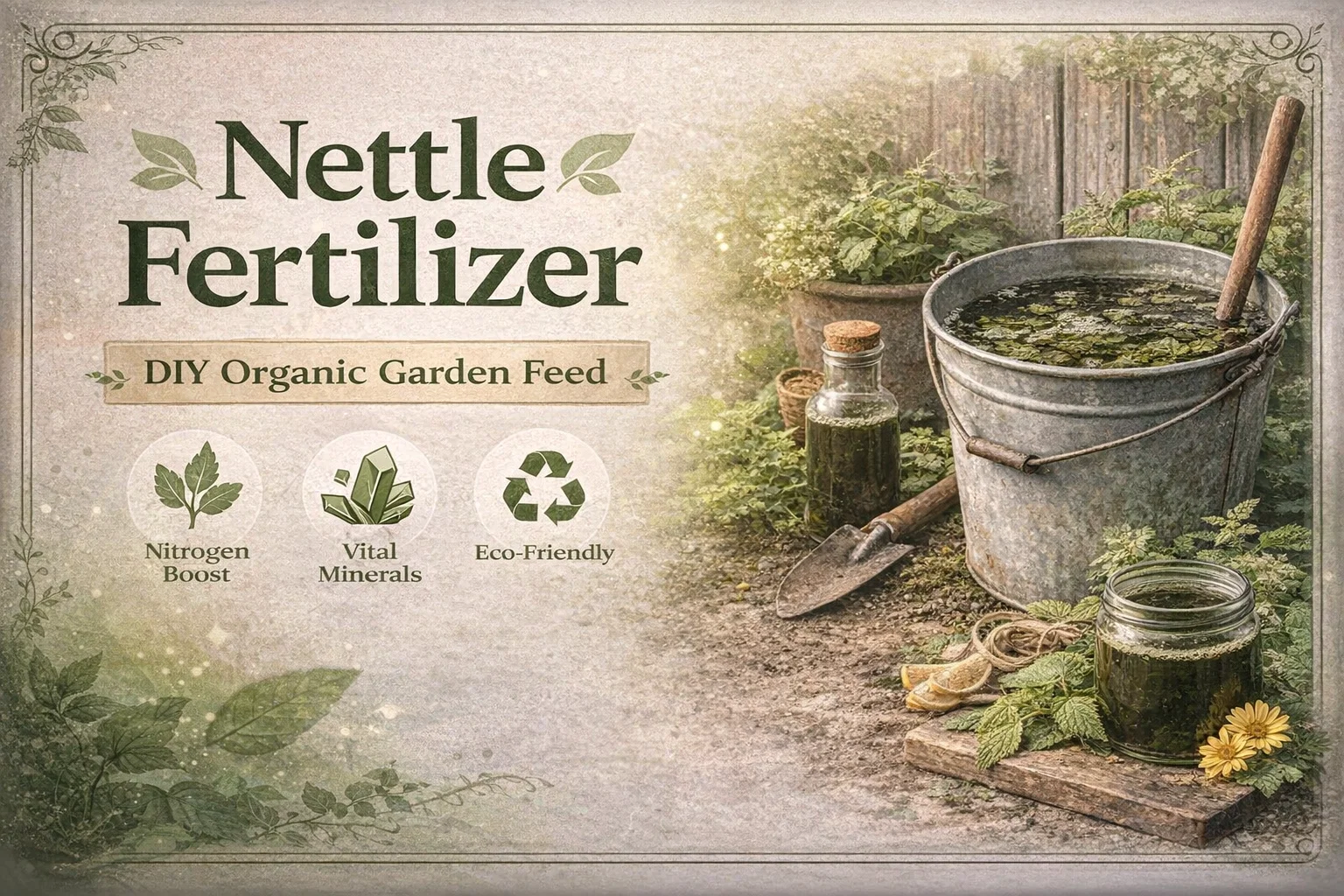
Step 2: Pack the Bucket. Place your bruised nettles into a large bucket or barrel, packing them down gently until the container is roughly three-quarters full. It is important to leave some space at the top to prevent the mixture from bubbling over during active fermentation.
Step 3: Add Water. Pour your rainwater or dechlorinated tap water over the nettles until the plant material is completely submerged. The water acts as the solvent that will draw out the nitrogen, magnesium, and iron.
Step 4: Ferment in the Sun. Move your bucket to a sunny spot in your garden. The warmth of the sun will encourage the bacteria to multiply and break down the organic matter. You will need to let it ferment for 2 to 4 weeks. You may want to place a loose lid, a piece of wood, or a fine mesh screen over the top. This keeps debris and mosquitoes out while still allowing the natural gases to escape.
Step 5: Stir the Brew. Every few days, take a sturdy stick and give the mixture a vigorous stir. You will notice bubbles rising to the surface, which is a fantastic sign. The bubbling indicates that active fermentation is taking place. Be warned, the mixture will develop a very strong, pungent odor reminiscent of a barnyard. This smell means it is working perfectly!
Straining, Storing, and Diluting Your Liquid Gold
You will know your Nettle Nutrient Tonic is ready when the active bubbling finally stops and the liquid has turned a very dark, rich color. The plant material will look like dark sludge at the bottom of the bucket.
Straining the Mixture
Once fermentation is complete, you must strain the liquid to prevent the remaining plant matter from continuing to rot in your storage container. Pour the mixture through a fine sieve, a piece of burlap, or an old pillowcase into a clean bucket. Squeeze out as much liquid as possible from the leftover plant matter. Do not throw the leftover nettle sludge away. It is incredibly rich in microbial life and makes a fantastic compost activator. Toss it straight into your compost bin.
Proper Storage
Keep your strained, dark liquid concentrate in a sealed container, such as a large glass jar or a repurposed plastic jug. Store it in a cool, dark place like a shed, garage, or basement. When stored correctly away from direct sunlight and extreme heat, this concentrate will keep for up to 6 months, giving you a steady supply of fertilizer throughout the entire growing season.
The Crucial Dilution Ratio
Never apply the neat concentrate directly to your plants. It is far too strong and the high levels of nitrogen can actually burn the roots and leaves of delicate plants. You must always dilute the tonic before use.
The golden rule for the Nettle Nutrient Tonic is a 1 to 10 ratio. Mix one part of your dark nettle concentrate with ten parts of water. For example, add one cup of nettle tea to ten cups of water in your watering can. The resulting mixture should look like a weak, pale cup of drinking tea.
How to Apply Your Nettle Fertilizer
Now that you have your diluted mixture, how should you use it? There are two primary methods of application, and both are highly effective.
Root Drenching
The most common method is to use the diluted tea as a root drench. Simply water the soil around the base of your plants, focusing on the root zone. This delivers the nitrogen, iron, and magnesium directly to the soil food web, where microbes can further process the nutrients and make them available to the plant roots. Apply this liquid feed once every two to three weeks during the active growing season. It is especially beneficial for young seedlings that have just been transplanted into the garden to help them establish strong roots and push out new leaves.
Foliar Feeding
You can also use the diluted mixture as a foliar spray. Plants can absorb nutrients directly through the stomata on their leaves. Fill a spray bottle or a pump sprayer with your 1 to 10 diluted mixture and mist the leaves of your plants early in the morning or late in the evening. Avoid foliar feeding during the heat of the midday sun, as the liquid droplets can act like tiny magnifying glasses and burn the foliage. Foliar feeding provides a very rapid, almost immediate nutrient boost if you notice signs of yellowing or stress.
Which Plants Benefit Most?
While most plants will appreciate a mild nutrient boost, some will respond spectacularly to nettle tea. As mentioned earlier, leafy greens like Swiss chard, kale, spinach, and lettuce will thrive on the high nitrogen content. Heavy feeding fruiting plants like tomatoes, peppers, and cucumbers will also benefit greatly during their early growth stages.
However, once your fruiting plants begin to develop blossoms and set fruit, you should stop applying nettle tea. At the flowering stage, plants need more potassium and phosphorus rather than nitrogen. Too much nitrogen during the flowering stage will encourage the plant to produce massive amounts of green leaves at the expense of producing actual fruits or vegetables. For flowering and fruiting plants, you would switch to a potassium-rich fertilizer, like a homemade comfrey tea, later in the season.
Embracing Sustainable Garden Practices
Creating your own Nettle Nutrient Tonic is a beautifully rewarding process. It shifts our perspective from viewing certain plants as enemies to recognizing them as valuable allies in the garden ecosystem. By investing just a little bit of time and utilizing free, natural resources, you can radically improve the health of your soil and the vigor of your plants.
This closed-loop approach to garden fertility not only saves you money but also protects the local environment from chemical runoff and reduces your reliance on plastic packaging. The next time you spot a patch of stinging nettles, do not reach for the weed killer. Reach for your gardening gloves and a bucket instead. Your plants, your soil, and the planet will thank you.
Would you like me to generate some Pinterest pin titles and meta descriptions to accompany this blog post?