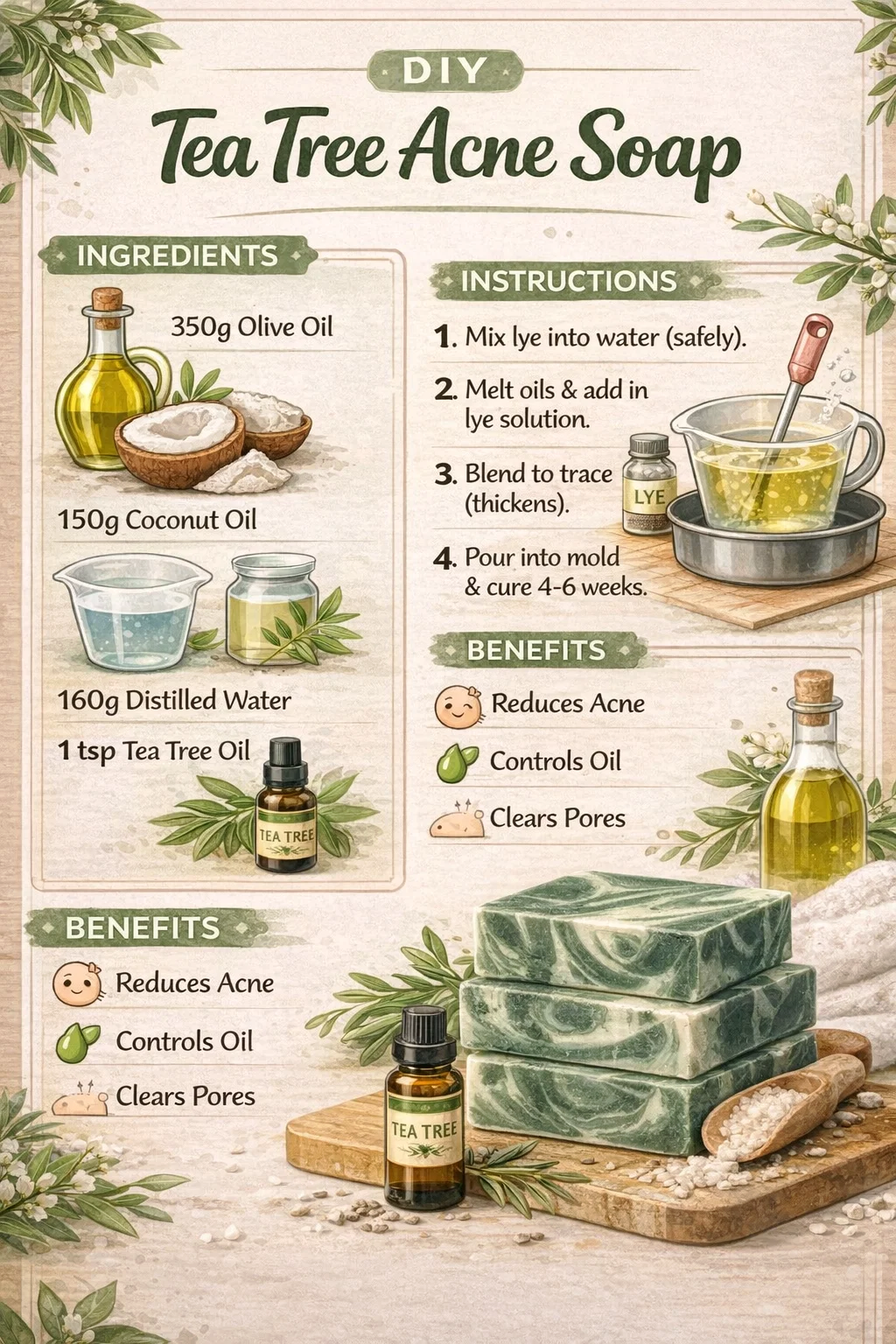
DIY Tea Tree Oil Acne Soap Recipe Easy Cold Process Soap for Clear Skin
In the world of natural skincare, few ingredients command as much respect as tea tree oil. If you have ever struggled with stubborn breakouts, oily skin, or pores that just will not stay clear, you have likely seen this potent essential oil sitting on the shelf of your local health store. But why settle for store-bought bars filled with synthetic fragrances and harsh detergents when you can craft your own? Making your own Tea Tree Acne Soap is more than just a DIY project. It is a way to take full control over what touches your skin, ensuring that every ingredient serves a specific, healing purpose. This guide will walk you through the art of cold process soap making, specifically tailored to combat acne and restore your skin’s natural glow.
The Power of Tea Tree Oil for Problem Skin
Tea tree oil, derived from the Melaleuca alternifolia plant native to Australia, has been used for centuries as a natural antiseptic. In the context of skincare, it acts as a powerful antibacterial agent that targets the specific bacteria responsible for acne flare-ups. Unlike many over-the-counter benzoyl peroxide treatments that can leave the skin feeling parched and flaky, tea tree oil works to disinfect the skin while maintaining a more balanced environment.
When you incorporate tea tree oil into a cold process soap, you are creating a delivery system that cleanses without stripping. The soap helps to dissolve excess sebum (the oil your skin produces) and lifts away dead skin cells that often clog pores. This dual action is why tea tree soap is frequently recommended for those with teenage skin, hormonal acne, or even “maskne” caused by wearing face coverings.
Understanding the Ingredients: Why This Recipe Works
The beauty of this particular recipe lies in its simplicity and the synergy of its fats. We are not just making bubbles; we are formulating a functional skin treatment. Let us break down the “Big Three” base ingredients shown in our guide.
350g Olive Oil: The Gentle Hydrator
Olive oil is the backbone of many high-quality soaps. It is rich in antioxidants and vitamins, but its primary role here is to provide a “conditioning” bar. While we want to fight acne, we do not want to dry the skin out so much that it overcompensates by producing even more oil. Olive oil ensures the soap feels silky and leaves a breathable, protective layer on the skin.
150g Coconut Oil: The Cleansing Powerhouse
If olive oil is the moisturizer, coconut oil is the heavy lifter. Coconut oil is what gives the soap its big, fluffy bubbles and its high cleansing ability. It contains lauric acid, which has its own antimicrobial properties. In an acne-focused bar, coconut oil is essential for breaking through the tough oils on the face and body to ensure a deep clean.
160g Distilled Water and Lye
Lye (sodium hydroxide) is the “magic” ingredient that turns oils into soap through a chemical process called saponification. Using distilled water is crucial because tap water contains minerals that can interfere with the chemical reaction or leave a film on your skin. Once the lye and oils have fully reacted and cured, no lye remains in the final bar of soap.
Step-by-Step Guide to Crafting Your Tea Tree Soap
Making soap at home requires a bit of patience and a focus on safety, but the results are incredibly rewarding. Follow these steps to ensure a successful batch.
Step 1: Safety First with Lye
Before you begin, put on your safety gear, including gloves and eye protection. Lye is a caustic substance. Always pour your lye into your distilled water, never the other way around, to prevent a “volcano” effect. Do this in a well-ventilated area, as the mixture will heat up and produce temporary fumes. Let the solution cool down while you prepare your oils.
Step 2: Melting and Mixing
Gently melt your coconut oil until it is a clear liquid and combine it with your olive oil. Ideally, you want your oils and your lye water to be within 10 degrees of each other (usually around 100 to 110 degrees Fahrenheit). Slowly pour the lye solution into the oils. Using a stick blender, pulse the mixture. You are looking for a state called “trace,” where the mixture thickens to the consistency of a thin pudding and leaves a visible trail when you drizzle it across the surface.
Step 3: Adding the Tea Tree Magic
Once you have reached a light trace, it is time to add your 1 teaspoon of tea tree essential oil. This is also the point where you can add natural colorants if you want that beautiful green swirl. Using a small amount of green oxide or French green clay can enhance the “herbal” look of the soap while the clay provides extra oil-absorbing benefits. Stir the essential oil in thoroughly by hand to ensure it is evenly distributed.
Step 4: Pouring and Curing
Pour the soap batter into your mold. Tap the mold firmly on the counter to release any trapped air bubbles. Cover the mold and let it sit for 24 to 48 hours until it is firm. Once hard, unmold the soap and cut it into bars. Now comes the hardest part: the wait. Cold process soap must “cure” for 4 to 6 weeks in a cool, dry place. During this time, the water evaporates, making the bar harder and longer-lasting, and the pH levels balance out to be perfectly gentle for your skin.
The Top 3 Benefits of Tea Tree Acne Soap
If you are wondering if this soap is right for your routine, consider these three primary benefits that make it a staple in natural medicine cabinets.
1. Naturally Reduces Acne
By killing the bacteria inside the pores, tea tree soap helps to flatten existing pimples and prevent new ones from forming. It is an excellent choice for “backne” or body acne as well as facial spots.
2. Expert Oil Control
One of the biggest struggles for acne-prone individuals is the midday shine. The combination of coconut oil and tea tree oil helps to regulate sebum production. Over time, your skin learns that it doesn’t need to over-produce oil because it isn’t being stripped by harsh chemicals.
3. Clears and Refines Pores
Regular use of this soap helps to lift away the microscopic debris that leads to blackheads. Because it cleanses so deeply, your pores will actually appear smaller and the texture of your skin will look much smoother in photos and in person.
Customizing Your Recipe
Once you have mastered the basic recipe, you can start to get creative. Many herbalists like to add dried botanicals to the top of their bars for a rustic look. Dried calendula petals or a sprinkle of dried mint leaves can add a beautiful touch. You might also consider replacing a portion of the distilled water with cooled green tea for an extra boost of antioxidants. If your skin is particularly sensitive, you could swap 50g of the olive oil for shea butter to create an even creamier, more luxurious lather.
Tips for Longevity: How to Store Your Handmade Soap
Handmade soap is different from the “beauty bars” you buy at the grocery store. Because it is rich in natural glycerin (a humectant that pulls moisture to the skin), it can get soft if left sitting in a puddle of water. To make your tea tree soap last as long as possible, always use a self-draining soap dish. Allowing the bar to dry out between uses will ensure you get the most out of every gram of those precious oils.
Embracing the Ritual of Natural Skincare
There is something deeply satisfying about using a product you made with your own two hands. When you wash your face with this tea tree soap, you aren’t just cleaning your skin; you are participating in a ritual of self-care that dates back generations. You are choosing ingredients that are biodegradable, sustainable, and effective. Whether you are making this for yourself or as a thoughtful, handmade gift for a friend struggling with skin issues, this recipe is a proven winner.
Conclusion: Your Path to Clearer Skin Starts Here
The journey to clear skin does not have to be paved with expensive prescriptions or complicated 10-step routines. Sometimes, the most effective solutions are the ones that keep it simple. By focusing on high-quality oils and the time-tested benefits of tea tree, you are giving your skin exactly what it needs to heal itself. This tea tree acne soap recipe is the perfect entry point into the world of cold process soap making. It is functional, beautiful, and incredibly effective. So, clear off your counter, grab your safety goggles, and start mixing. Your skin will thank you for it in four to six weeks!
Would you like me to generate a specific ingredient shopping list or a troubleshooting guide for your first batch of soap?