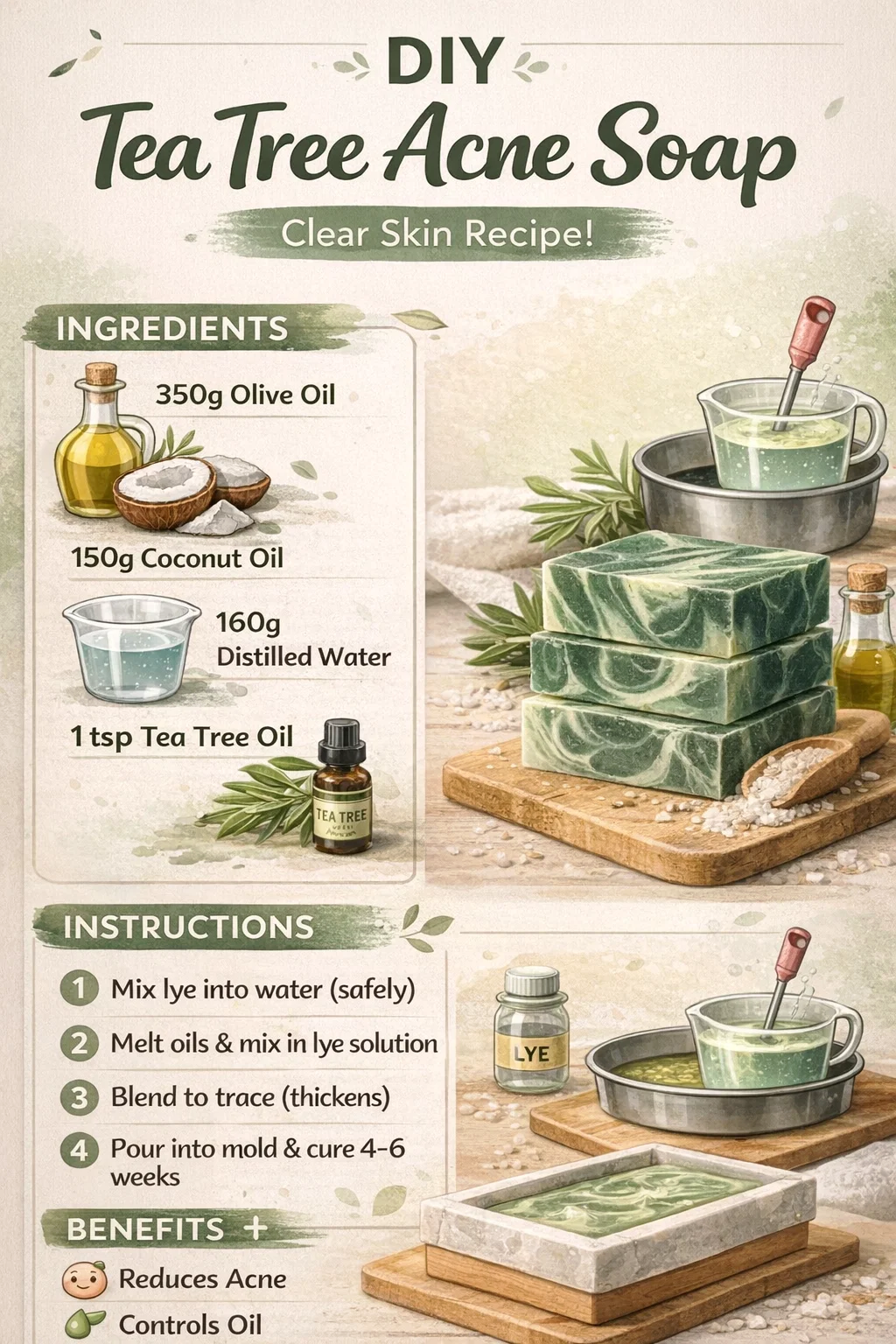
DIY Tea Tree Oil Soap Recipe for Acne Clear Pores Control Oily Skin naturally
Finding the perfect balance for acne-prone skin often feels like an endless cycle of harsh chemicals and disappointing results. If you have ever stared at a drugstore shelf full of synthetic face washes and wondered if there is a cleaner, more sustainable way to manage breakouts, you are in the right place. Crafting your own skincare allows you to control exactly what goes onto your body, and this Tea Tree Acne Soap is the gold standard for natural clarity. By combining the antimicrobial power of tea tree essential oil with the deep-cleansing properties of coconut oil, you can create a professional-grade bar that targets blemishes while keeping your skin barrier intact.
The Science of Tea Tree Oil for Acne
Tea tree oil, derived from the Melaleuca alternifolia plant, has been used for centuries as a natural remedy for skin ailments. In the world of modern dermatology, it remains one of the few plant-based ingredients that can genuinely compete with benzoyl peroxide. The primary active component, terpinen-4-ol, is a potent antimicrobial agent that destabilizes the cell walls of bacteria. When you use a soap infused with this oil, you are actively reducing the population of Propionibacterium acnes on your skin surface.
Beyond its antibacterial prowess, tea tree oil is a natural anti-inflammatory. This means it does more than just kill germs; it helps to bring down the redness and swelling associated with cystic acne. Unlike many over-the-counter spot treatments that can cause extreme peeling and irritation, tea tree oil in a saponified soap form offers a metered, gentle delivery system that cleanses without causing a “rebound” effect where the skin produces even more oil to compensate for dryness.
Understanding the Base: Why Olive and Coconut Oil?
Every great bar of soap starts with a balanced blend of fats. In this recipe, we use a specific ratio of 350 grams of Olive Oil and 150 grams of Coconut Oil. This is not an arbitrary choice; it is a calculated decision to balance “slip” and “strip.”
The Conditioning Power of Olive Oil
Olive oil is a humectant, meaning it helps draw moisture into the skin. In soap making, a high percentage of olive oil creates a “Castile-style” feel that is incredibly mild. It provides a dense, lotion-like lather that ensures your face feels soft after every wash. Since acne-prone skin is often actually dehydrated skin in disguise, the olive oil provides the necessary fatty acids to repair the skin’s lipid barrier.
The Cleansing Power of Coconut Oil
While olive oil conditions, coconut oil does the heavy lifting. Coconut oil contains high levels of lauric acid, which contributes to a fluffy, bubbly lather and exceptional cleansing abilities. It is effective at breaking down the excess sebum and environmental pollutants that clog pores throughout the day. By mixing these two oils, we create a bar that is hard enough to last in the shower but gentle enough for daily facial use.
The Essential Equipment for Cold Process Soap Making
Before you begin mixing your ingredients, you need to ensure you have the right tools. Cold process soap making is a chemical reaction called saponification, and it requires specific materials for safety and success.
- Digital Scale: Soap making is a game of precision. You must measure by weight in grams, not volume, to ensure the lye-to-oil ratio is exact.
- Stainless Steel or Heat-Safe Plastic Pitchers: Never use aluminum, as lye reacts violently with it.
- Immersion Blender (Stick Blender): This is the secret to reaching “trace” in minutes rather than hours.
- Safety Gear: Always wear goggles and gloves. Lye is a caustic base that can cause burns if handled improperly.
- Silicone Molds: These make it easy to pop the finished bars out once they have set.
Step-by-Step Guide to Crafting Your Tea Tree Soap
Creating soap is a meditative process that rewards patience. Follow these steps carefully to ensure a high-quality finished product.
Step 1: Preparing the Lye Solution
Measure 160 grams of distilled water into a heat-safe container. In a separate dry container, weigh out your lye (sodium hydroxide). Always add the lye to the water, never the other way around, to prevent a “lye volcano.” Stir gently until the crystals are dissolved. The mixture will become very hot and may release fumes, so do this in a well-ventilated area. Set it aside to cool to about 100 degrees Fahrenheit.
Step 2: Melting the Oils
Combine your 350 grams of olive oil and 150 grams of coconut oil in a large pot. Heat them gently until the coconut oil is fully melted and the mixture is clear. Ideally, you want your oils and your lye water to be within 10 degrees of each other when you combine them. This ensures a smooth emulsion and prevents “false trace.”
Step 3: Mixing and Reaching Trace
Once the temperatures are aligned, slowly pour the lye water into the oils. Use your immersion blender to pulse the mixture. You will see the liquid transform from translucent to opaque. Continue blending until you reach “trace.” You will know you are there when you lift the blender and the soap batter that drips off leaves a visible trail or “trace” on the surface for a few seconds before sinking back in.
Step 4: Adding the Tea Tree Oil
Now is the time to add your 1 teaspoon of Tea Tree Essential Oil. Adding the scent at trace ensures that the volatile oils are not scorched by the initial high heat of the lye reaction. Stir it in thoroughly by hand to ensure the medicinal properties are distributed evenly throughout the entire batch.
The Importance of the Curing Phase
After you pour your soap into the mold, the work is not quite finished. The soap needs to sit in the mold for 24 to 48 hours to fully saponify and harden. Once you remove the bars and cut them into your desired shape, they must “cure” for 4 to 6 weeks in a cool, dry place with good airflow.
During the curing process, the remaining water evaporates, making the bar harder and longer-lasting. More importantly, the pH level of the soap stabilizes during this time. Using the soap too early can result in a bar that disappears quickly in the water or, worse, irritates the skin because it is still too alkaline. Patience here results in a professional-quality lather that is safe for the most sensitive complexions.
Advanced Tips for Aesthetic and Function
While the basic recipe is highly effective, you can customize your Tea Tree Acne Soap to suit your specific skin needs or aesthetic preferences. Some soap makers like to add a teaspoon of French Green Clay at the trace stage. The clay helps draw out impurities from the pores and provides the beautiful green swirl often associated with tea tree products.
If you find your skin is particularly oily, you might consider replacing a small portion of the distilled water with aloe vera juice. Aloe provides additional soothing properties that can help calm the “heat” of active acne flare-ups. Just remember that any change to the oil weights requires a recalculation of the lye amount using a soap calculator to ensure safety.
Maintaining Your Clear Skin Results
Using a tea tree soap is a powerful step, but it should be part of a holistic approach to skincare. For the best results, use your handmade soap twice daily. In the morning, it removes the oils produced overnight, and in the evening, it clears away the debris of the day. Always follow up with a lightweight, non-comedogenic moisturizer. Even though this soap is conditioning, acne-prone skin needs a signal that it is hydrated so it does not overproduce oil.
Additionally, make sure to keep your handmade bar on a well-drained soap dish. Natural soaps do not contain the synthetic hardening agents found in commercial bars, so if they sit in a pool of water, they will become soft. Keeping the bar dry between uses will ensure you get every bit of value out of your handcrafted creation.
Conclusion: The Path to Natural Clarity
Embarking on the journey of making your own Tea Tree Acne Soap is about more than just saving money or being crafty; it is about taking agency over your health and wellness. By choosing high-quality oils and potent botanicals, you are providing your skin with the nutrients it needs to heal itself. There is a unique satisfaction that comes from using a product you made with your own hands, knowing exactly what is inside every bubble of lather.
As you move forward, remember that skincare is a marathon, not a sprint. Give your skin time to adjust to this new, natural routine. Within a few weeks of consistent use, you will likely notice fewer breakouts, reduced redness, and a healthier, more balanced glow. So, gather your ingredients, clear off your counter, and start your first batch today. Your skin will thank you for the transition to a cleaner, more intentional way of cleansing.