Easy 3-Ingredient Banana Bread Recipe Simple Healthy No-Sugar Added Baking Guide
Imagine walking into your kitchen on a slow Sunday morning, the air filled with the comforting, sweet aroma of baking bread. You look at your counter and see those three overripe bananas you almost threw away yesterday. Instead of letting them go to waste, you are about to turn them into a golden, moist loaf of heaven with almost zero effort. This is the magic of the three ingredient banana bread recipe. It is a minimalist masterpiece that proves you do not need a pantry full of specialized baking supplies to create something truly spectacular for your family.
In a world where recipes often feel like a complex chemistry project, there is something deeply refreshing about a method that focuses on the basics. This recipe is not just about convenience; it is about celebrating the natural sweetness and texture of the fruit itself. Because there is no added granulated sugar or heavy oils, you get a clean, cake-like consistency that feels light enough for breakfast but satisfying enough for a late-night treat. Let us dive into why this specific ratio of ingredients works so well and how you can master this bake in your own kitchen.
The Science of Simplicity: Why Three Ingredients Work
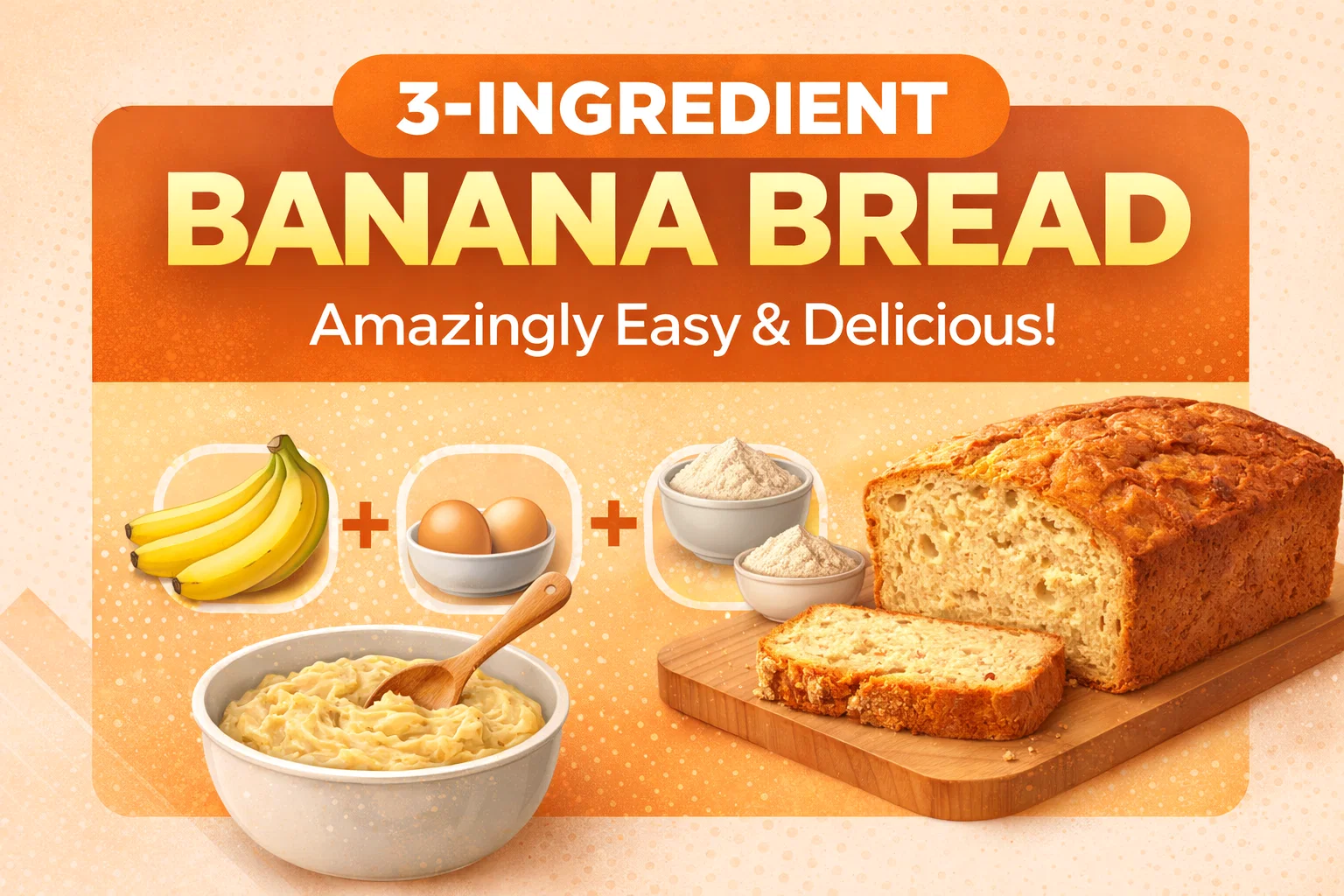
Many people are skeptical when they first hear about a three ingredient bake. They wonder how a loaf can rise or hold its structure without baking powder, butter, or milk. The secret lies in the biological makeup of the ingredients themselves. When you use very ripe bananas, they provide the moisture, the natural sugars for browning, and a significant amount of the structural bulk. The eggs act as the binding agent and the leavening powerhouse, providing the lift needed to keep the bread from becoming a dense brick. Finally, the all-purpose flour provides the gluten framework that traps the air bubbles created by the whisked eggs.
It is a perfect trifecta of culinary physics. By mashing the bananas into a smooth liquid state, you create a base that integrates perfectly with the proteins in the eggs. When the heat of the oven hits the batter, the water content in the bananas turns to steam while the egg proteins set, resulting in a soft, airy crumb that defies its own simplicity. It is the ultimate “back to basics” approach that reminds us that quality ingredients often speak louder than a long list of additives.
Choosing Your Stars: The Importance of Ripe Bananas
If there is one rule you must follow for this recipe to be a success, it is all about the bananas. You cannot use bright yellow or green-tipped bananas for this bread. For the best results, you want bananas that look like they are past their prime. We are talking about skins that are covered in brown speckles or are almost entirely black. At this stage, the starches in the fruit have fully converted into glucose and fructose, making them incredibly sweet and easy to mash into a silk-like consistency.
The weight matters too. In this recipe, we aim for about 12 ounces of peeled fruit, which usually equates to three medium-sized bananas. If your bananas are on the smaller side, feel free to add a fourth. The more “liquefied” the bananas are, the more moisture your bread will retain throughout the baking process. If you have ripe bananas now but are not ready to bake, you can always peel them, mash them, and freeze them in a sealed bag until your next baking craving hits.
The Role of Large Eggs
Eggs are the unsung heroes of minimalist baking. For this loaf, you want two large eggs, roughly 4 ounces in total weight. It is best to have them at room temperature before you start whisking. Room temperature eggs incorporate more air and emulsify better with the fruit mash. This creates a more uniform batter and helps the bread rise evenly in the tin. The fat in the yolks also adds a necessary richness that replaces the need for added butter or oil, ensuring the final product does not taste dry or floury.
Flour Power: Getting the Texture Right
We use 8 ounces of all-purpose flour to provide the structure. While it might be tempting to use self-rising flour, a standard all-purpose flour works beautifully when combined with the natural lift of the eggs. The key is how you handle the flour. Over-mixing is the enemy of a soft banana bread. Once you add the flour to your wet mixture, you want to fold it in gently with a spatula. You should stop the moment you no longer see white streaks of flour. This prevents the gluten from becoming too tough, ensuring your bread remains “cake-like” rather than “bread-like” in the traditional chewy sense.
Step-by-Step Guide to the Perfect Loaf
One of the best parts about this recipe is that it only requires one bowl and a fork or whisk. Start by preheating your oven to 350 degrees Fahrenheit (175 degrees Celsius). While the oven warms up, prepare your loaf tin. You can use a light coating of butter or a non-stick spray, but lining it with parchment paper is a professional tip that makes it incredibly easy to lift the bread out once it is cooled.
First, place your peeled bananas in a large mixing bowl and mash them with a fork until they are a smooth, liquid consistency. Next, crack in your two eggs and whisk them vigorously into the banana mash. You want to see some bubbles forming, as this air will help the bread rise. Finally, weigh out your 8 ounces of flour and fold it in. The batter will be thick and fragrant. Pour it into your prepared tin and smooth the top with your spatula. Slide it into the center rack of the oven and bake for 40 to 45 minutes. You will know it is done when the top is a deep golden brown and a toothpick inserted into the center comes out clean.
Texture and Taste: What to Expect
Because this recipe lacks the heavy fats and processed sugars of traditional banana bread, the flavor profile is remarkably pure. It tastes like real bananas, not a synthetic flavoring. The sweetness is mild and sophisticated, making it a perfect base for toppings. If you prefer a very sweet dessert, you might find this version a bit subtle, but for those who enjoy the natural flavor of fruit, it is a revelation.
The texture is soft and moist. It does not have the greasy residue that some bakery-style banana breads have. Instead, it feels clean on the palate. It is the type of bread that toasts beautifully. If you take a slice the next morning and pop it in the toaster, the natural sugars on the surface will caramelize slightly, creating a crisp exterior that contrasts perfectly with the soft interior. Spread a little salted butter or a drizzle of honey on top, and you have a gourmet breakfast in seconds.
Level Up Your Loaf: Optional Add-Ins
Once you have mastered the basic three-ingredient version, you might want to start experimenting. The beauty of this recipe is its versatility. It acts as a blank canvas for your favorite flavors. Even with a few additions, the recipe remains simple and straightforward. Here are a few ways you can “level up” your banana bread:
- The Classic Spice: Add a teaspoon of cinnamon or a dash of vanilla extract to the wet ingredients for a warmer, more traditional aroma.
- The Crunch Factor: Fold in half a cup of chopped walnuts or pecans just before baking to add texture and healthy fats.
- The Sweet Tooth: If you want more decadence, a handful of dark chocolate chips or semi-sweet morsels will turn this into a dessert loaf that kids will adore.
- A Touch of Salt: A pinch of fine sea salt added to the flour can actually enhance the perception of sweetness from the bananas.
Common Mistakes to Avoid
Even with only three ingredients, there are a few pitfalls that can affect your final result. The most common mistake is using bananas that are too firm. If they are yellow, they will not have enough liquid or sugar, and your bread will turn out dry and bland. Another error is over-mixing the batter. If you stir too much once the flour is in, the bread will come out dense and rubbery. Think of “folding” the flour rather than stirring it.
Lastly, be careful not to overbake. Every oven is a little bit different. Start checking your bread at the 35 minute mark. If the top is browning too quickly but the center is still wet, you can loosely cover the top with a piece of aluminum foil for the final 10 minutes of baking. This protects the crust while allowing the interior to finish cooking through.
Why This Recipe is a Life Changer
In our busy lives, we often sacrifice homemade quality for convenience. We buy pre-packaged snacks filled with preservatives because we think we do not have time to bake. This 3-ingredient banana bread challenges that notion. It takes five minutes to prep and uses items you likely already have in your kitchen. It is an economical way to reduce food waste and a healthier alternative to store-bought muffins.
Beyond the practical benefits, there is a psychological joy in baking. The act of mashing, mixing, and watching a loaf rise in the oven is a form of mindfulness. It brings a sense of accomplishment and fills your home with a scent that signifies warmth and care. Whether you are a college student with a tiny kitchen, a busy parent looking for a healthy school snack, or someone just starting their baking journey, this recipe is for you.
Conclusion: Your New Kitchen Staple
The 3-ingredient banana bread is proof that less truly can be more. By focusing on the quality of your bananas and the simplicity of the process, you can create a delicious, wholesome loaf that rivals any complicated recipe. It is easy, simply delicious, and incredibly satisfying to make. The next time you see those brown bananas sitting on your counter, do not see them as old fruit. See them as the foundation of your next favorite snack.
Give this recipe a try this week and see how easy it is to bring a bit of homemade magic into your routine. You might find that you never go back to the complex versions again. Happy baking, and remember to save this recipe for the next time those bananas start looking a little too ripe!