Easy Homemade DIY Calm Lavender Soap Recipe with Essential Oils and Shea Butter
Stepping into a warm shower after a long, exhausting day is one of life’s simplest pleasures. But what if you could transform that daily routine into a high-end spa experience right in your own bathroom? Making your own soap is more than just a craft project. It is an act of self-care that allows you to control exactly what goes onto your skin. This July, we are focusing on the ultimate botanical luxury: Calm Lavender Soap. Infused with rich shea butter and the timeless scent of lavender, this recipe is designed to soothe your senses and nourish your body from head to toe.
The Magic of Lavender and Shea Butter
There is a reason why lavender has remained the gold standard of aromatherapy for centuries. Its ability to reduce stress and promote a sense of tranquility is unmatched. When you incorporate dried lavender buds and pure essential oils into a cold process soap, you are creating a product that works on both a physical and emotional level. The scent lingers on the skin, providing a subtle calming effect throughout the day.
To balance the cleansing power of the soap, we have included a generous amount of shea butter. Shea butter is packed with fatty acids and vitamins, making it incredibly moisturizing. Unlike commercial soaps that often strip the skin of its natural oils, this handmade version leaves a protective barrier that keeps your skin soft and hydrated. Whether you have dry, sensitive, or oily skin, the combination of olive oil, coconut oil, and shea butter creates a balanced bar that suits almost everyone.
Gathering Your Ingredients and Tools
Before you begin the process, it is important to have all your supplies measured and ready. Soap making is a science, and precision is key to ensuring your bars turn out perfectly every time. For this recipe, you will need a mix of hard and soft fats to achieve the perfect lather and hardness.
The Oil Blend
The foundation of this soap consists of three main fats:
- Olive Oil (540g): This provides a gentle, conditioning quality to the soap. It creates a low, creamy lather that is very kind to the skin.
- Coconut Oil (300g): This is what gives the soap its cleansing power and big, fluffy bubbles.
- Shea Butter (100g): Added for its luxurious feel and skin-softening properties.
The Lye Solution
To turn these oils into soap, you need a chemical reaction called saponification. This requires:
- Sodium Hydroxide (128g): Also known as caustic soda or lye.
- Distilled Water (280g): Always use distilled water to avoid minerals that can interfere with the reaction.
Botanicals and Fragrance
Finally, to give the soap its “Calm” identity, you will need:
- Lavender Buds (20g): These provide a beautiful aesthetic and a very light exfoliation.
- Lavender Essential Oil (30g): For that deep, relaxing floral aroma.
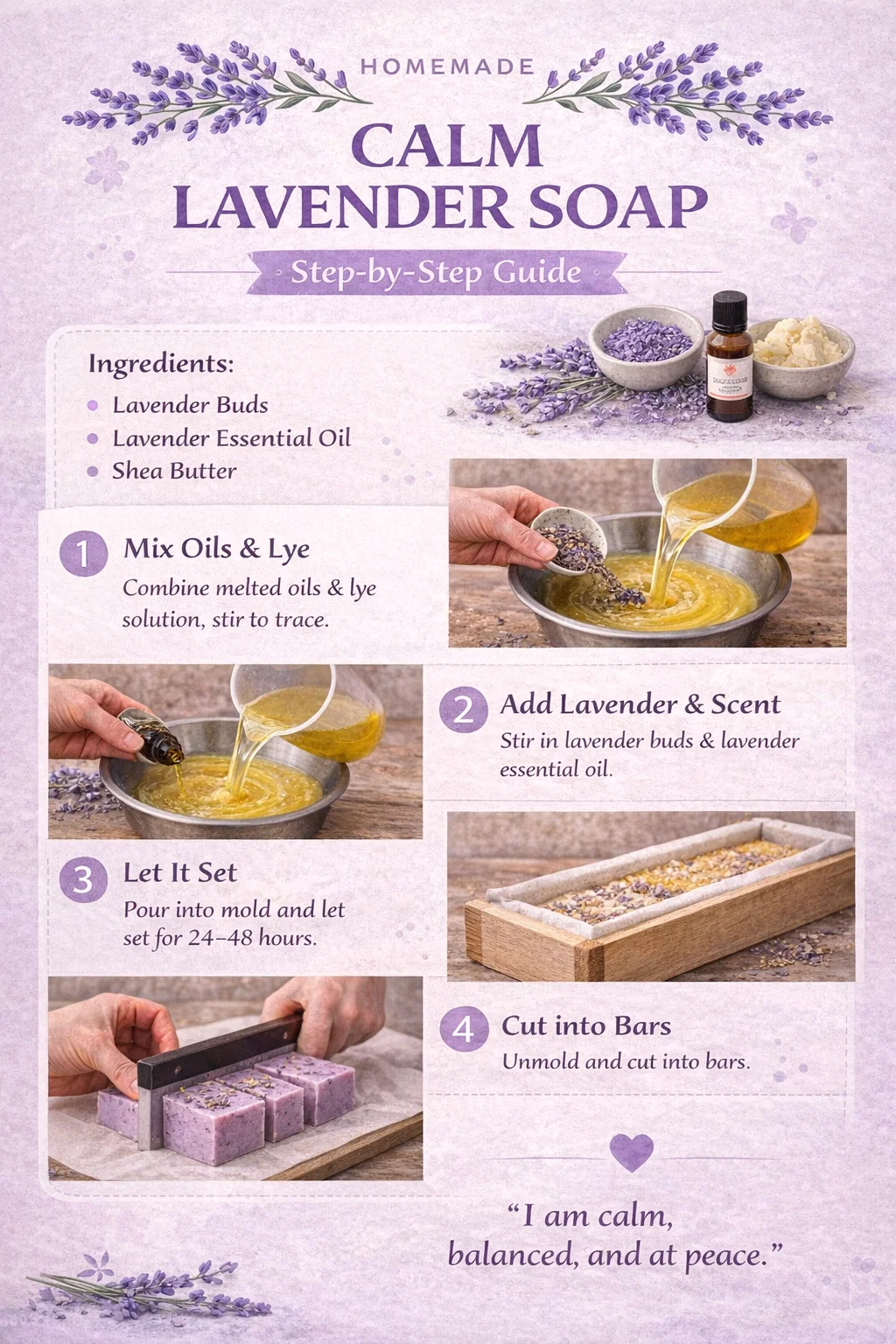
Step 1: Mixing the Oils and Lye
Safety is the most important part of this first step. Always wear gloves and eye protection when working with lye. Begin by slowly adding your sodium hydroxide to the distilled water. Never pour the water into the lye, as this can cause a dangerous reaction. Stir the mixture until it is clear and set it aside to cool in a well-ventilated area.
While the lye cools, melt your coconut oil and shea butter over low heat. Once they are liquid, stir in the olive oil. You want both your lye solution and your oil mixture to be within a similar temperature range, usually between 100 and 110 degrees Fahrenheit. When they are ready, slowly pour the lye solution into the oils. Use a stick blender to mix the ingredients. You are looking for a state called “trace,” where the mixture thickens to the consistency of a thin pudding and leaves a visible trail when you drizzle it over the surface.
Step 2: Adding the Lavender Soul
Once you have reached a light trace, it is time to add the personality of the soap. Pour in your lavender essential oil and stir it in thoroughly. You will immediately notice the scent filling the room, creating an instant sense of relaxation in your kitchen. Next, fold in your dried lavender buds. Some makers prefer to keep the buds only on the top of the soap, but mixing them throughout the bar provides a rustic, textured look that feels very artisanal.
If you want to get creative, you can even add a tiny bit of purple clay or botanical colorant at this stage to give the soap a soft violet hue. However, the natural oils and the lavender buds often provide a beautiful, earthy tone all on their own.
Step 3: Pouring and Setting
Prepare your soap mold by lining it with parchment paper if it is made of wood, or simply ensure your silicone mold is clean and dry. Pour the soap batter into the mold, smoothing the top with a spatula. For an extra touch of beauty, sprinkle a few additional lavender buds across the surface. This gives the finished bars a professional, “gift-ready” appearance.
Now comes the hardest part: waiting. You need to let the soap sit undisturbed for 24 to 48 hours. During this time, the saponification process finishes, and the soap hardens enough to be handled. Keep the mold in a cool, dry place away from direct sunlight.
Step 4: Cutting and Curing
After the initial setting period, gently unmold your soap block. It should feel firm but still slightly like a block of hard cheese. Using a sharp knife or a dedicated soap cutter, slice the block into individual bars. This recipe typically yields about 8 to 10 generous bars depending on the width of your cuts.
Even though the soap is now in bar form, it is not quite ready for the shower. Handmade soap requires a “cure” time. Place the bars on a drying rack in a well-ventilated area for 4 to 6 weeks. During this time, the remaining water evaporates, making the bar harder and longer-lasting. The pH level also stabilizes, ensuring the soap is as mild and gentle as possible for your skin.
Tips for Success
If you are new to soap making, do not be intimidated! Here are a few quick tips to ensure your first batch of Lavender Calm soap is a total success:
- Keep it Clean: Use dedicated stainless steel or heat-safe plastic tools that are not used for food preparation.
- Watch the Trace: Do not over-blend with the stick blender. If the soap gets too thick, it becomes difficult to pour smoothly into the mold.
- Quality Matters: Use high-quality essential oils. Synthetic fragrances can sometimes cause the soap to “seize” or harden instantly, while pure lavender essential oil behaves beautifully.
Why Handmade Soap Makes the Best Gift
In a world of mass-produced goods, receiving something handmade feels incredibly special. These Lavender Shea Butter bars make wonderful gifts for birthdays, holidays, or bridal showers. You can wrap them in simple brown kraft paper, tie them with a piece of twine, and tuck a small sprig of dried lavender into the knot. It is a thoughtful, sustainable, and useful gift that everyone can appreciate.
Moreover, the affirmation “I am calm, balanced, and at peace” is a beautiful sentiment to share with friends and family. By giving them a bar of this soap, you are essentially giving them an invitation to slow down and take a moment for themselves.
Final Thoughts on Your Soap Making Journey
Creating your own Lavender Calm Soap is a rewarding journey that blends chemistry with artistry. There is something deeply satisfying about taking raw oils and turning them into a beautiful, functional product. Not only do you save money in the long run, but you also gain the peace of mind that comes from knowing exactly what is in your skincare products. As you move through the steps of mixing, pouring, and cutting, let the process be as meditative as the scent of the lavender itself. Enjoy the rhythm of the craft, and soon you will have a stash of luxurious soap that turns every bath into a peaceful escape.