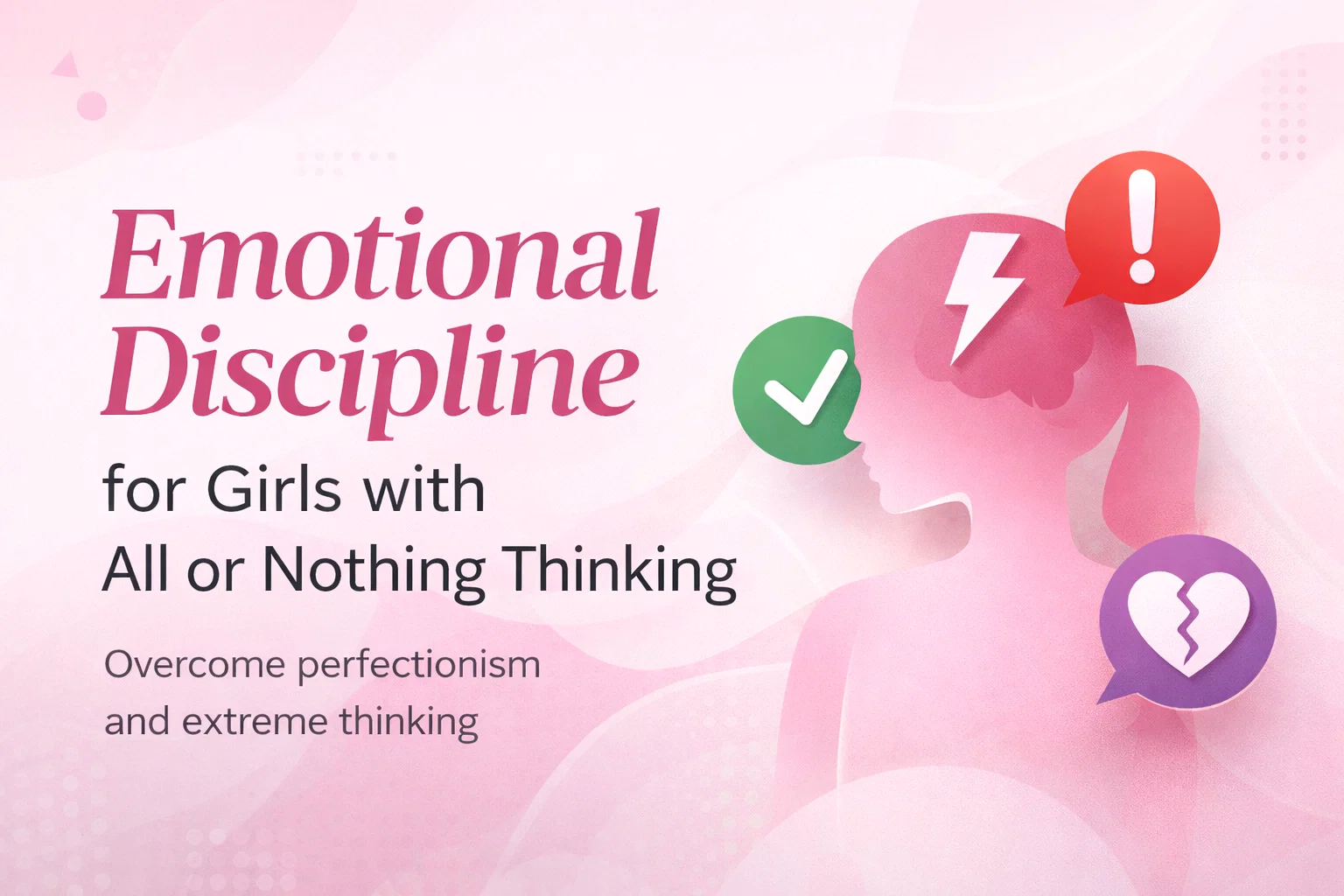
Emotional Discipline How to Overcome All or Nothing Thinking Burnout
Breaking free from the shackles of all or nothing thinking is one of the most transformative shifts a person can make for their mental health. Many of us fall into the trap of believing that if we cannot do something perfectly, it is not worth doing at all. This binary mindset creates a cycle of intense productivity followed by total burnout, leaving us feeling exhausted and perpetually behind. The Emotional Discipline Guide for Girls in All or Nothing Thinking offers a refreshing roadmap for navigating these internal pressures. By focusing on consistency rather than perfection, we can learn to regulate our emotions and maintain a steady pace toward our goals without the dramatic highs and lows that characterize extreme thinking patterns.
Understanding the Trap of All or Nothing Thinking
All or nothing thinking, often referred to as black and white thinking, is a cognitive distortion that forces us to see the world in extremes. There is no middle ground, no gray area, and certainly no room for human error. For many girls and women, this manifests as a crushing pressure to excel in every area of life, from career and fitness to social relationships and personal habits. When we operate under this mindset, a single mistake feels like a total failure. If we miss one day at the gym, we decide the entire week is ruined. If we make one small error at work, we convince ourselves we are bad at our jobs.
This way of thinking is deeply tied to our emotional discipline. Without the ability to regulate our response to setbacks, we become victims of our own expectations. Developing emotional discipline means learning how to stay centered when things do not go exactly according to plan. It involves recognizing that life is inherently messy and that our value is not tied to a flawless execution of our daily to-do list. By identifying these extreme thoughts as they happen, we can begin to dismantle the rigid structures we have built for ourselves and replace them with a more fluid, sustainable approach to life.
The Power of Catching Extreme Thoughts Immediately
The first step in any emotional discipline practice is awareness. You cannot change a habit you do not notice. When you feel a surge of frustration because something went wrong, take a moment to pause. Ask yourself if you are looking at the situation through an all or nothing lens. Are you using words like always, never, or ruined? These are red flags for extreme thinking. By catching these thoughts the moment they arise, you prevent them from spiraling into a full blown emotional crisis. You give yourself the space to breathe and reframe the narrative before you decide to quit or abandon your efforts.
Replacing Perfect with Consistent Effort
Perfection is a mirage. It is an unattainable standard that serves only to make us feel inadequate. Emotional discipline teaches us to pivot our focus toward consistency. Consistency is the quiet, steady engine of long term success. It is not about doing things perfectly every day; it is about showing up in whatever capacity you have available. Some days you will have 100 percent to give, and other days you might only have 20 percent. Emotional discipline is giving that 20 percent and being proud of it, rather than berating yourself for the missing 80 percent.
Shrinking Goals to Prevent Overwhelm
One of the main triggers for all or nothing thinking is overwhelm. When our goals are too large or our expectations are too high, our brains look for an exit strategy. This often leads to the dramatic quitting speeches we know all too well. To combat this, we must learn the art of shrinking our goals. If a task feels too big, break it down into the smallest possible increment. By lowering the barrier to entry, you make it easier to maintain momentum. A small goal achieved is infinitely better than a massive goal abandoned halfway through.
Developing a Flexible Structure for Daily Life
Rigidity is the enemy of progress. When we build routines that are too strict, we leave no room for the unpredictability of real life. A flexible structure allows you to stay grounded in your daily anchors without feeling suffocated by them. This means having a general idea of your priorities while remaining open to adjustments. If an unexpected meeting ruins your morning routine, a person with emotional discipline does not throw away the rest of the day. Instead, they adapt. They find a new way to integrate their habits into the remaining hours, accepting that the day looks different than planned but is still valuable.
Allowing for Imperfect Execution
We must give ourselves permission to be mediocre on occasion. Not every workout needs to be a personal best, and not every meal needs to be perfectly balanced. Allowing for imperfect execution daily is an act of self compassion. It removes the heavy weight of expectation and allows us to actually enjoy the process of living. When you stop demanding perfection from yourself, you find that you actually get more done because you are no longer paralyzed by the fear of doing it wrong.
Accepting Messy Real Life Rhythms
Life does not happen in a straight line. There are seasons of high energy and seasons of deep rest. There are days when everything clicks and days when everything feels like a struggle. Emotional discipline is about accepting these rhythms rather than fighting against them. Instead of trying to force a high energy output on a low energy day, try to normalize the ebb and flow of your productivity. This acceptance prevents the burnout cycles that occur when we try to sustain an unnatural level of intensity for too long.
Detaching Identity from Daily Outcomes
One of the most dangerous aspects of all or nothing thinking is that we often tie our self worth to our daily achievements. If we had a productive day, we are a good person. If we were unproductive, we are a failure. This creates an unstable foundation for our mental health. Part of the emotional discipline journey is learning to detach your identity from your outcomes. You are a human being with inherent value, regardless of how much you checked off your list today. When you stop measuring your worth by your output, you gain the emotional stability needed to handle setbacks with grace.
Choosing Balance Over Burnout
Burnout is often the result of an extended period of all or nothing behavior. We push ourselves to the absolute limit until we eventually snap, leading to a period of total inactivity. To break this cycle, we must actively choose balance. This means setting boundaries with ourselves and others. It means knowing when to push and when to pull back. Choosing balance is a long term strategy that ensures you stay in the game for years to come, rather than burning out in a few months.
Normalizing Low Energy Days
It is perfectly okay to have days where you just don’t have it in you. Instead of viewing these days as a failure, view them as a necessary part of the human experience. When you normalize low energy days, you take away their power to derail your progress. You can rest without guilt, knowing that your energy will eventually return. This perspective allows you to move through life with much more ease and less internal conflict.
The Importance of Forgiveness and Moving Forward
Mistakes are inevitable. You will slip up, you will revert to old patterns, and you will have days where the all or nothing thinking wins. When this happens, the most important thing you can do is forgive yourself quickly. Dwelling on a mistake only keeps you stuck in the past and fuels the cycle of shame. Emotional discipline is the ability to acknowledge a mistake, learn what you can from it, and immediately refocus on the present moment. The faster you can move from failure to forgiveness, the more consistent your progress will be.
- Avoid Dramatic Quitting Speeches: Resist the urge to announce that you are giving up on a goal just because of a temporary setback.
- Reward Showing Up: Celebrate the fact that you did the work, even if the result wasn’t exactly what you hoped for.
- Focus on Progress: Look at how far you have come over the last month rather than focusing on the mistakes of the last 24 hours.
Staying Steady Emotionally
At the core of this guide is the goal of staying steady. Emotional steadiness is not about being a robot or never feeling emotions. It is about having a stable core that is not easily shaken by external circumstances. It is the ability to navigate the highs and lows of life without losing your sense of self. When you practice emotional discipline, you become the anchor in your own life. You are no longer tossed about by the changing winds of your moods or the unpredictable nature of your daily schedule.
Building Long Term Vision
All or nothing thinking is very shortsighted. It focuses on the immediate result and forgets the big picture. To counter this, we must train ourselves to think long term. One bad day is insignificant in the context of a year. One missed habit is a tiny blip in a lifetime of effort. By keeping your eyes on the long term vision, you can maintain perspective when things go wrong in the short term. This long term thinking is what allows you to keep going even when you aren’t seeing immediate results.
Conclusion: Embracing the Middle Ground
The journey toward emotional discipline is not about reaching a destination where you are perfectly disciplined and never struggle again. Instead, it is about learning to live in the middle ground. It is about embracing the gray areas of life and finding peace in the messiness. By replacing perfectionism with consistency, shrinking your goals to avoid overwhelm, and detaching your worth from your productivity, you create a sustainable and joyful way of living. Remember that consistency beats perfection every single time. Stay steady, be kind to yourself, and continue to move forward, one small and imperfect step at a time. You have the power to break the cycle and build a life rooted in balance and resilience.