Fresh vs. Dried Pineapple Which is Healthier Nutrition, Benefits Key Differences
When you are strolling through the produce aisle or browsing the dried fruit section, the humble pineapple often stands out as a vibrant, tropical star. It is a fruit that feels like a vacation in every bite, but there is a long standing debate among health enthusiasts: is it better to eat it fresh or dried? While they both come from the same spiky plant, the nutritional profile, sugar concentration, and digestive benefits change significantly once the water is removed. Understanding these differences is key to making sure your tropical snack aligns with your wellness goals.
The Tropical Powerhouse: Why Pineapple Matters
Pineapple is more than just a sweet treat. It is a functional food packed with a very specific set of nutrients that you cannot easily find elsewhere in the fruit kingdom. At the heart of its fame is bromelain, a powerful enzyme that helps your body break down proteins. This makes pineapple a literal digestive aid, often recommended after a heavy meal to help your stomach process everything more efficiently. Beyond digestion, it is a massive source of Vitamin C, which is essential for skin health, collagen production, and keeping your immune system sharp.
However, the way you consume this fruit dictates exactly how much of that “magic” you actually get. Fresh pineapple is like a high-octane fuel for hydration, while dried pineapple acts more like a concentrated battery of energy. To decide which one belongs in your grocery cart, we need to peel back the layers and look at the science of what happens during the drying process.
Fresh Pineapple: The Hydration Hero
If you are looking for a snack that supports your body during a hot summer day or after a tough workout, fresh pineapple is the undisputed champion. Because it is roughly 86 percent water, it serves as a delicious way to stay hydrated. This high water content does more than just quench your thirst; it also creates volume in your stomach, helping you feel full and satisfied without a massive calorie load.
The Bromelain Factor
One of the biggest advantages of eating pineapple in its raw, fresh state is the preservation of enzymes. Bromelain is heat-sensitive. When pineapple is processed or dried using high heat, some of this enzyme activity is lost. Fresh pineapple ensures you get the maximum anti-inflammatory benefits. This is why many athletes reach for fresh pineapple to help manage exercise-induced inflammation and muscle soreness.
Low Calorie Density
For those mindful of their weight, fresh pineapple is incredibly forgiving. You can eat a relatively large bowl of fresh chunks for a fraction of the calories found in a handful of the dried version. Because the sugar is diluted by all that natural water, it has a gentler effect on your blood sugar levels, preventing the sharp spikes and subsequent crashes that can leave you feeling fatigued.
- Supports Hydration: High water content keeps cells plump and skin glowing.
- Rich in Active Enzymes: Provides the full dose of bromelain for gut health.
- Naturally Lower in Sugar: Lower sugar per volume compared to dried varieties.
- Anti-Inflammatory: Helps reduce swelling and supports joint health.
Dried Pineapple: The Convenient Energy Boost
Dried pineapple often gets a bad reputation in the health world, but it is actually a fantastic tool when used correctly. When you remove the water from the fruit, you are left with a nutrient-dense powerhouse. Think of it as the “distilled” version of the fruit. For hikers, travelers, or anyone with a busy lifestyle, the convenience of a snack that won’t bruise in a bag and doesn’t require a knife to prep is a major win.
Concentrated Nutrients and Minerals
While some Vitamin C is lost during the drying process, other nutrients become more concentrated. You are getting more fiber, minerals, and antioxidants per gram than you would in the fresh version. This makes it an excellent source of quick natural energy. If you are hitting a mid-afternoon slump at the office, a few pieces of dried pineapple can provide the glucose your brain needs to sharpen its focus.
Shelf Life and Versatility
The biggest hurdle with fresh fruit is the ticking clock. Fresh pineapple goes from perfectly ripe to fermented and mushy in a matter of days. Dried pineapple solves this problem entirely. It can sit in your pantry for months, making it a reliable way to add tropical flavor to your morning oatmeal, yogurt parfaits, or homemade trail mixes without worrying about spoilage.
A Note on Added Sugars
This is where you have to be a bit of a detective. Many commercial dried pineapples are “candied,” meaning they have been soaked in a sugar syrup before drying to make them taste like candy. To keep your snack healthy, always look for “unsweetened” or “no added sugar” on the label. The fruit is naturally sweet enough on its own!
Head-to-Head Comparison: Fresh vs. Dried
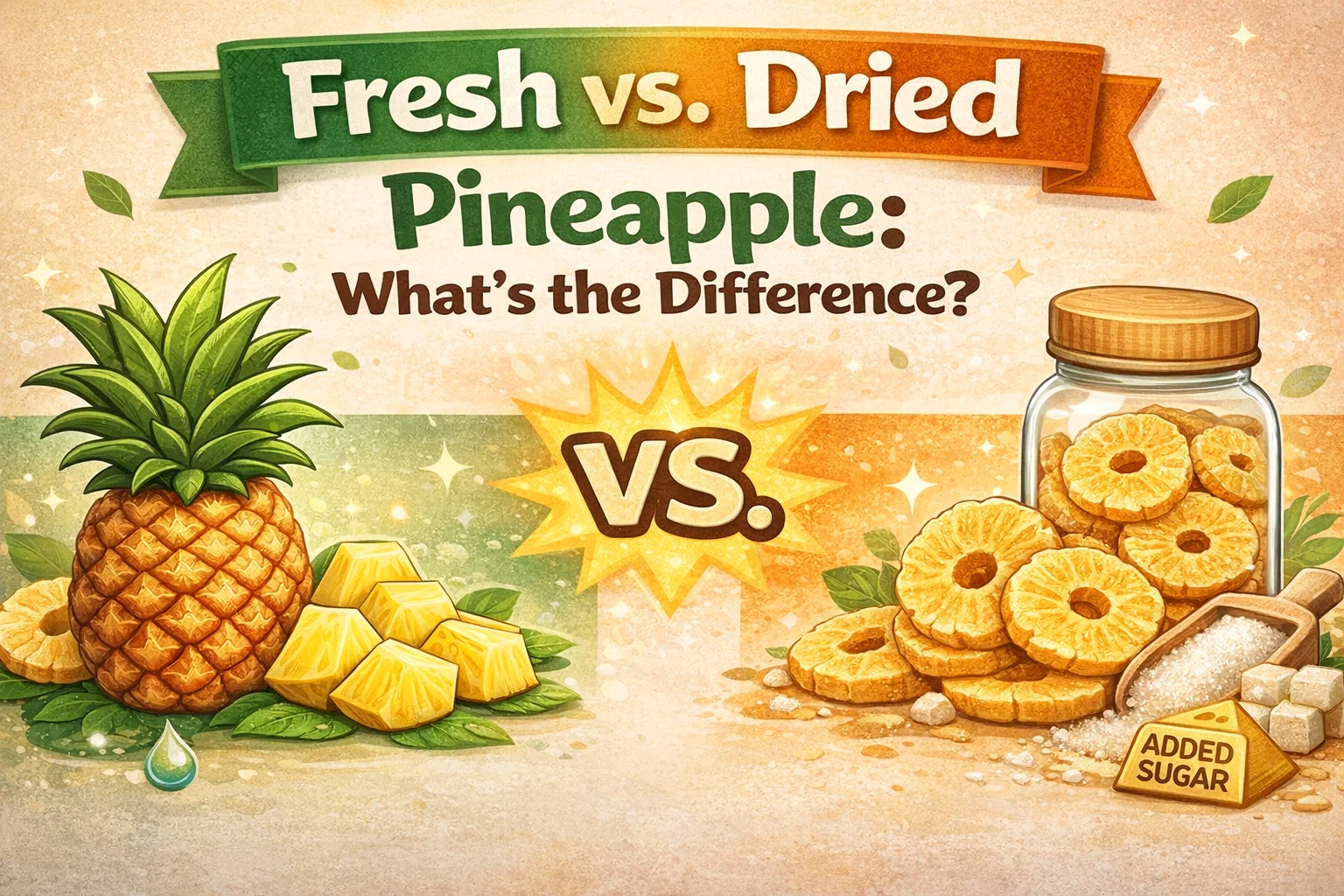
To give you a clearer picture of how these two stack up, let us look at the key metrics that matter most for your daily nutrition. Seeing them side by side helps highlight why “better” is usually a matter of context rather than a simple yes or no answer.
Caloric Density
In the fresh corner, you have a light, airy snack. In the dried corner, you have a dense, heavy-hitter. One cup of fresh pineapple chunks contains about 80 calories. That same volume of dried pineapple could easily soar over 400 calories. If you are trying to lose weight, the fresh version allows for “volume eating,” whereas the dried version requires strict portion control.
Vitamin Retention
Fresh pineapple is superior for Vitamin C and Bromelain. Drying, especially if done at high temperatures, reduces the potency of these specific nutrients. However, dried pineapple remains a good source of manganese and B-vitamins, which are more stable and don’t disappear just because the water does.
Sugar Impact
Fresh pineapple has a moderate Glycemic Index. However, because the fiber is intact and the water is plentiful, the “Glycemic Load” is actually quite low. Dried pineapple has a much higher concentration of sugar. This is great if you need immediate energy for a marathon, but less ideal if you are sitting at a desk all day. The key is to treat dried pineapple as a supplement or a topper, rather than the main event.
How to Choose the Best Option for Your Lifestyle
Choosing between fresh and dried does not have to be an all or nothing decision. In fact, most nutritionists recommend incorporating both into your routine at different times. It all depends on what your body needs in the moment.
When to Reach for Fresh Pineapple
If you are sitting down for a meal at home, fresh is almost always the better choice. It serves as a great appetizer to jumpstart your digestion. It is also the perfect ingredient for smoothies, where the water content helps create a better consistency without needing to add extra liquids. If you struggle with inflammation or joint pain, the raw enzymes in fresh pineapple will be your best friend.
When to Reach for Dried Pineapple
If you are heading out for a long bike ride, a hike, or a road trip, the dried version is your MVP. It won’t leak in your bag, and it provides a steady stream of carbohydrates to keep your muscles moving. It is also a great way to satisfy a sweet craving in a way that is still “real food” compared to a processed candy bar. Just remember the golden rule: check the ingredients for hidden sugars and keep the serving size to about a quarter cup.
Creative Ways to Use Both in Your Kitchen
Beyond just snacking on chunks, pineapple is incredibly versatile. You can use its unique flavor profile to elevate both sweet and savory dishes.
Fresh Pineapple Ideas
- Grilled Garnish: Throw fresh slices on the grill for a few minutes to caramelize the sugars. This makes an amazing topping for chicken or fish tacos.
- Salsa with a Kick: Dice fresh pineapple with red onion, cilantro, lime juice, and jalapeños for a refreshing tropical salsa.
- Morning Zest: Add fresh chunks to your cottage cheese or Greek yogurt for a high-protein, enzyme-rich breakfast.
Dried Pineapple Ideas
- DIY Trail Mix: Combine unsweetened dried pineapple with macadamia nuts and coconut flakes for a Hawaiian-themed snack mix.
- Baking Brightener: Chop dried pineapple into small bits and add them to muffins or carrot cake for bursts of chewy sweetness.
- Tea Infusion: Drop a piece of dried pineapple into your hot herbal tea. As it rehydrates, it releases a subtle, natural sweetness into the brew.
The Final Verdict on the Pineapple Debate
At the end of the day, whether you choose fresh or dried pineapple, you are making a much better choice than reaching for a bag of processed chips or a sugary soda. Both versions offer significant health benefits that can support a vibrant, holistic lifestyle. Fresh pineapple wins on the hydration and enzyme front, making it the perfect daily staple for a healthy gut and glowing skin. Dried pineapple wins on convenience and energy density, making it a reliable companion for an active life.
The secret to success is mindfulness. Enjoy the juicy, refreshing crunch of fresh pineapple whenever you can, and use the concentrated sweetness of dried pineapple as a strategic boost when you are on the move. By paying attention to labels and listening to your body’s energy needs, you can enjoy the best of both worlds. So, the next time you see those yellow rings or chunks, don’t overthink it—just enjoy the tropical goodness!