Ginger Facts Health Benefits, Ancient History Growing a Rhizome Not a Root
When you reach for that gnarled, sandy colored specimen in the produce aisle, you are holding much more than just a kitchen staple. Ginger is a botanical wonder with a history that stretches back through the mist of ancient spice routes and into the medicine cabinets of medieval Europe. While most of us know it as the zesty kick in a stir fry or the soothing heat in a cup of tea, the true nature of ginger is filled with surprising secrets. From its unique biological structure to its legendary status as a form of currency, there is an entire world of heritage hidden beneath that papery skin. Understanding the complexity of this plant not only makes you a better cook but also gives you a deeper appreciation for the natural world and the ancient traditions that still influence our health today.
The Botanical Mystery: Why Ginger Is Not a Root
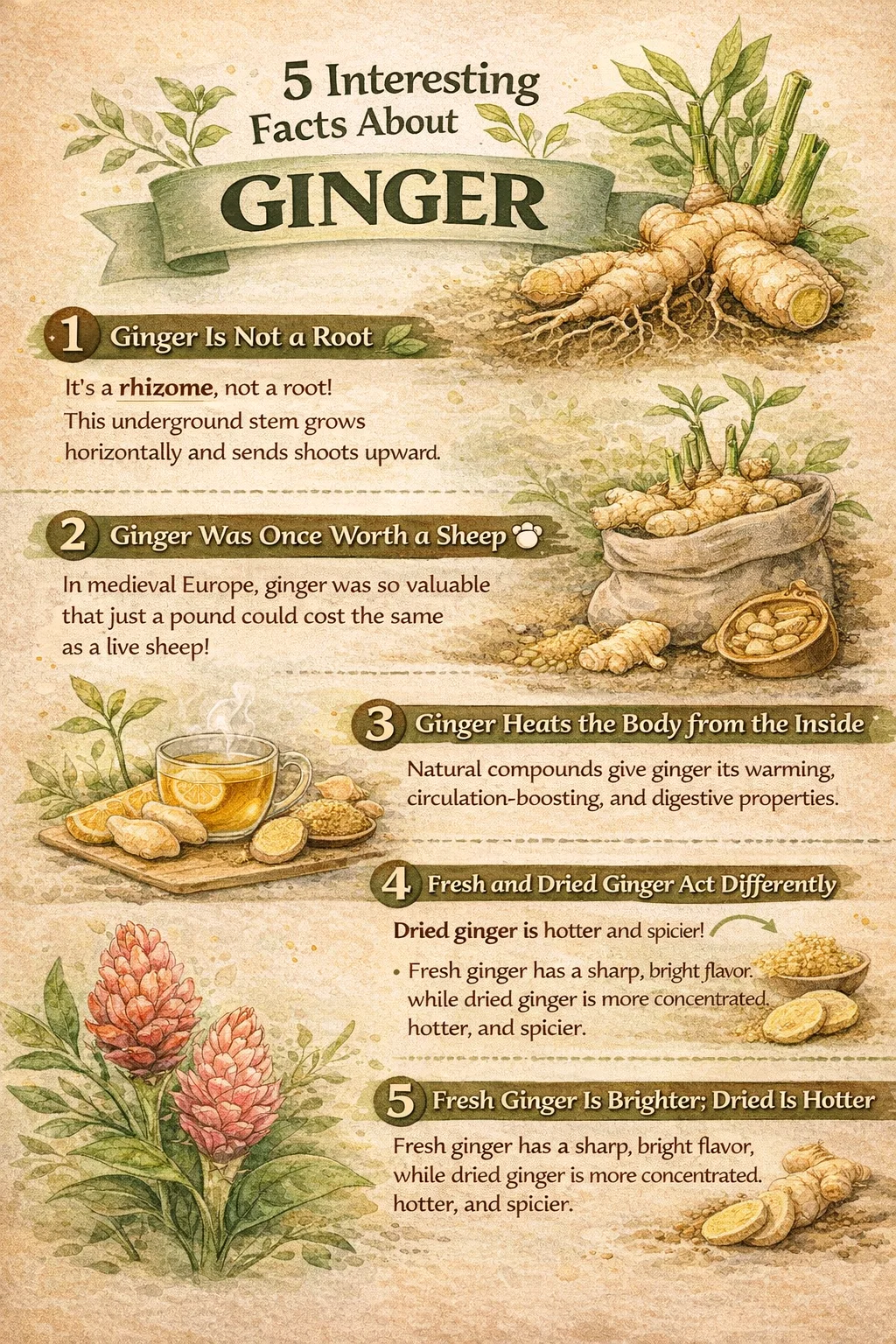
One of the most common misconceptions in the culinary world is the classification of ginger as a root. If you have ever called it ginger root, you are in good company, but botanically speaking, you are referring to a rhizome. To understand the difference, we have to look at how the plant grows beneath the soil. While a true root grows downward to anchor the plant and absorb water, a rhizome is actually a modified underground stem. It grows horizontally, creeping through the earth like a quiet architect building a network of tunnels. This horizontal growth allows the plant to store energy and send up new vertical shoots, which eventually become the leafy green stalks we see above ground.
The botanical name for this fascinating plant is Zingiber officinale. The fact that it is a stem rather than a root explains why it is so packed with nutrients and essential oils. Stems are the primary transit system for plants, carrying life-sustaining resources back and forth. When you grate ginger into your morning tea, you are accessing a concentrated powerhouse of biological energy that the plant designed to sustain itself through various seasons. This unique structure is exactly what gives ginger its dense, fibrous texture and its ability to stay fresh for long periods when stored correctly.
How the Rhizome Functions in Nature
In its natural habitat, the ginger rhizome acts as a survival mechanism. Because it grows horizontally just under the surface, it can quickly spread across an area, creating a lush colony of plants. Each knobby segment or thumb of the ginger can potentially sprout a new plant, which is why it is so easy to grow at home. If you have ever left a piece of ginger on your counter and noticed small green eyes or buds forming, you are witnessing the rhizome attempting to send up its next generation of shoots. This resilience and vitality are mirrored in the potent chemical compounds found within the flesh of the plant.
A Spice Worth Its Weight in Gold and Sheep
Today, ginger is an affordable luxury available at almost any grocery store, but there was a time in history when it was a symbol of immense wealth and status. During the medieval period in Europe, spices were the ultimate high end commodity. Ginger traveled thousands of miles along the grueling Silk Road and maritime spice routes from Asia, passing through many hands before reaching Western markets. By the time it arrived, the price had skyrocketed. It is a staggering historical fact that at one point, one pound of ginger could cost the equivalent of a whole live sheep.
This incredible value meant that wealth in the Middle Ages had a specific scent, and that scent was spicy. Only the elite could afford to season their meats or create the early versions of sweets and gingerbread that we still enjoy today. Beyond its flavor, ginger was highly prized for its preservative qualities. In an age before refrigeration, the ability of ginger to help preserve meat and mask the flavors of aging food was revolutionary. It was more than just a seasoning; it was a tool for survival and a marker of social standing that helped shape the global economy for centuries.
The Internal Heat: Gingerols and Shogaols
If you have ever taken a sip of ginger tea and felt a spreading warmth through your chest, you have experienced the physiological power of gingerols and shogaols. These are the primary bioactive compounds responsible for the signature heat and medicinal properties of the plant. Ginger is unique because it doesn’t just taste warm; it actually encourages blood flow and stimulates circulation throughout the body. This is why ginger has been a staple in traditional medicine for thousands of miles and thousands of years.
Gingerols are the main component in fresh ginger. They are known for their powerful anti-inflammatory and antioxidant effects. However, a fascinating chemical transformation happens when ginger is dried or cooked. Through a process of dehydration, gingerols are converted into shogaols. Shogaols are even more pungent and potent than gingerols, which explains why dried, ground ginger has a much deeper, sharper heat than the bright and citrusy zing of the fresh rhizome. This chemical shift is the reason why a pinch of ginger powder in a spice cake feels much hotter and more concentrated than a few slices of fresh ginger in a stir fry.
Traditional Uses for Physical Wellness
- Cold Weather Support: Because it stimulates circulation, ginger is the perfect natural remedy for warming up on a chilly day. It helps the body maintain its internal temperature and provides a sense of comfort.
- Nausea Relief: Ginger is perhaps most famous for its ability to settle the stomach. Whether it is motion sickness or general digestive upset, the compounds in ginger help regulate the digestive tract.
- Digestive Stimulation: Ginger encourages the production of digestive enzymes, helping the body break down food more efficiently and reducing that heavy feeling after a large meal.
Fresh vs. Dried: Choosing the Right Ginger for the Job
Understanding the difference between fresh and dried ginger is the key to mastering its use in both the kitchen and the medicine cabinet. As we discovered with the transformation of gingerols to shogaols, these two forms behave very differently. Fresh ginger is bright, sharp, and carries a hint of citrus. It is best used in dishes where you want a refreshing kick, such as in seafood recipes, dressings, or as a garnish for cocktails. Its high water content makes it perfect for juicing or steeping into a light, uplifting tea.
Dried ginger, on the other hand, is the soul of baking and heavy spice blends. It offers a deeper, more grounded warmth that can stand up to the long cooking times of stews and roasts. When you use ground ginger in gingerbread or pumpkin spice, you are looking for that lingering heat that stays on the palate. Knowing when to use each form allows you to control the flavor profile of your cooking. If you want a quick, medicinal tea to settle your stomach, fresh is usually best. If you want a therapeutic, warming tonic to fight off a winter chill, a blend that includes dried ginger will provide a more intense physiological response.
The Art of Incorporating Ginger into Your Daily Life
Bringing more ginger into your routine does not have to be a chore. In fact, it can be one of the most flavorful upgrades you make to your lifestyle. Start small by adding a few thin slices of fresh rhizome to your water bottle for a refreshing and detoxifying drink. If you are a fan of morning smoothies, a small knob of peeled ginger can add a surprising brightness that balances out sweet fruits like pineapple or mango. For those who enjoy gardening, ginger is a rewarding plant to grow indoors. Since it is a rhizome, you can simply plant a piece of organic ginger in a wide pot with well draining soil and watch as the tropical leaves emerge, providing you with a constant supply of fresh spice.
Beyond the kitchen, ginger can be used in self care rituals. A ginger infused bath or a foot soak can help soothe tired muscles and improve circulation after a long day. The spicy scent is naturally energizing, making it a great alternative to caffeine when you need a mid afternoon pick me up. By embracing both the ancient history and the modern science of this plant, you can tap into a tradition of wellness that has supported humanity for generations.
Embracing the Wisdom of the Rhizome
The journey of ginger from an exotic Asian plant to a global superstar is a testament to its incredible versatility and power. It is a plant that challenges our definitions, moving horizontally through the earth and changing its chemical makeup to better serve our needs. Whether you value it for its historical significance as a medieval treasure, its biological uniqueness as a rhizome, or its scientifically proven health benefits, there is no denying that ginger deserves a permanent place in our homes.
Next time you see those knobby pieces in the market, remember that you are looking at a quiet architect of health and history. Take a moment to appreciate the warmth it provides and the centuries of trade and tradition that brought it to your kitchen. By understanding the nuances between fresh and dried, and the way gingerols and shogaols interact with our bodies, we can use this ancient spice to its fullest potential. Ginger is a reminder that some of the most powerful tools for our well being are grown right in the earth, waiting for us to discover their secrets. Save this knowledge for later, share it with a friend, and let the spicy scent of ginger inspire your next culinary or wellness adventure.