Hair Porosity Guide Tips for Low, Medium, and High Porosity Hair Care Routine Hair Goals
Understanding your hair is the first step toward achieving the luscious, healthy locks you have always dreamed of. While many people focus on their curl pattern or hair thickness, there is a much more critical factor at play beneath the surface: hair porosity. This biological trait determines how your hair strands absorb and retain moisture. If you have ever felt like your expensive hair products just sit on top of your hair or that your hair stays wet for hours on end, you are likely dealing with specific porosity challenges. In this comprehensive guide, we will dive deep into the science of hair porosity, how to test your own hair at home, and the best regimens to ensure your hair stays hydrated and vibrant.
What Exactly Is Hair Porosity
At its core, hair porosity refers to the ability of your hair to soak up and hold onto moisture. Your hair is made up of a protein called keratin, and the outermost layer is known as the cuticle. Think of the cuticle as a series of overlapping shingles on a roof. The way these shingles lay determines your porosity level. When the cuticles are tightly packed, it is difficult for water to get in. When they are raised or damaged, water enters easily but escapes just as fast. Understanding where you fall on this spectrum allows you to stop guessing and start giving your hair exactly what it needs to thrive.
The Three Main Types of Porosity
Generally, hair falls into one of three categories: low, medium, or high. Low porosity hair has cuticles that are very tightly closed. While this hair is usually healthy, it is moisture-resistant. Medium porosity, often called normal porosity, is the gold standard. The cuticles are slightly raised, allowing the perfect amount of moisture to enter and stay trapped inside. High porosity hair has cuticles that are wide open or even have gaps and holes. This is often the result of heat damage, chemical processing, or genetics. While it takes in water instantly, it loses it just as quickly, leading to chronic dryness and frizz.
The Water Test: How to Identify Your Type
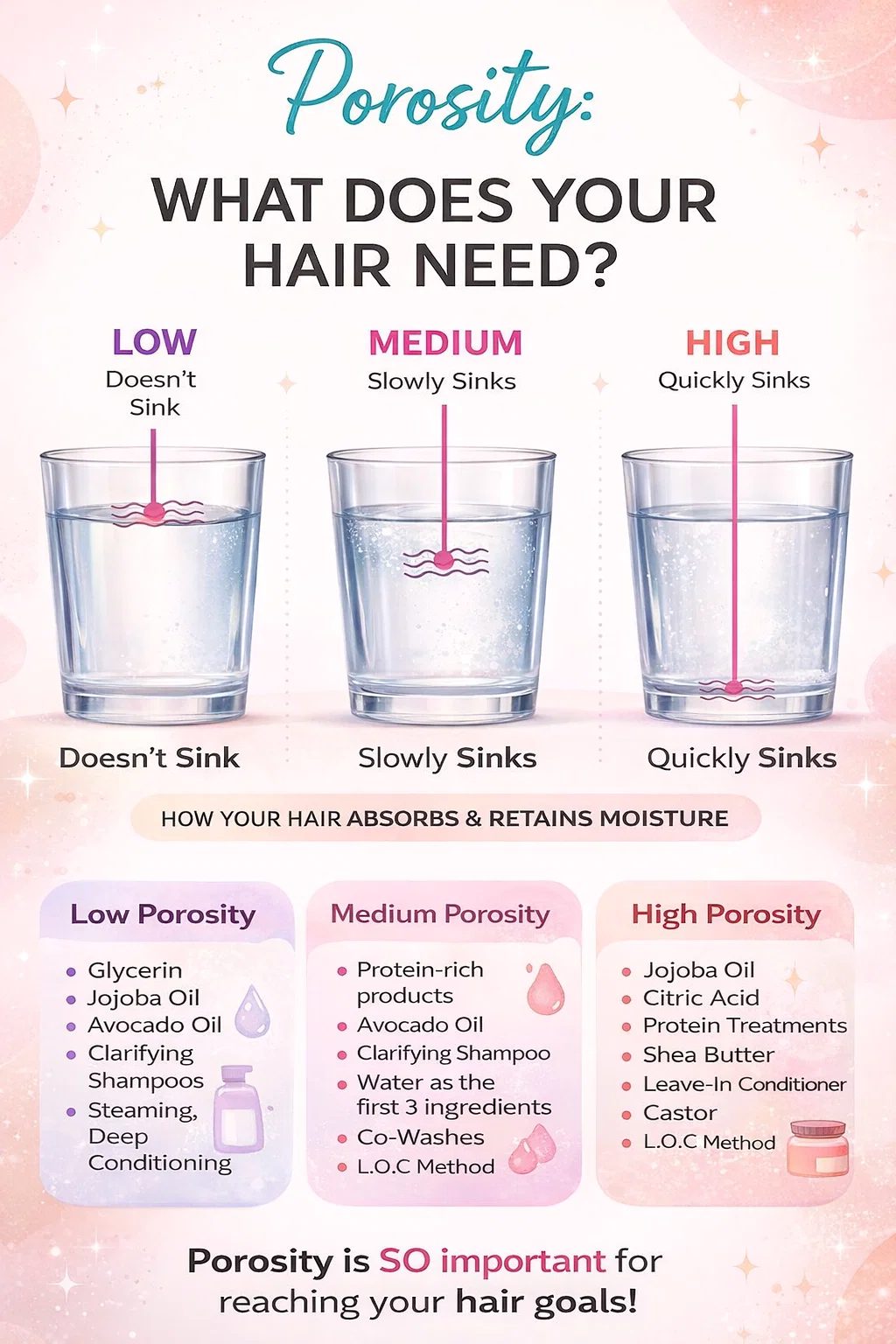
You do not need a laboratory to figure out your hair type. One of the most popular and effective methods is the Float Test. To do this, start with clean, product-free hair. Take a single strand of hair and drop it into a clear glass of room temperature water. Observe what happens over the next few minutes. This simple visual cue tells you everything you need to know about your hair structure.
- Low Porosity: If the hair strand stays floating on the surface of the water and refuses to sink, you have low porosity hair. This means the cuticles are so tight that the water cannot penetrate the strand to weigh it down.
- Medium Porosity: If the hair floats for a moment and then slowly drifts toward the middle of the glass, you have medium porosity. This indicates a healthy balance of moisture absorption.
- High Porosity: If the hair sinks to the bottom of the glass almost immediately, you have high porosity hair. The water rushed into the open cuticles, making the strand heavy enough to sink quickly.
Caring for Low Porosity Hair
If your hair tested as low porosity, your main struggle is getting moisture past those stubborn, closed cuticles. People with low porosity hair often notice that products like oils and creams just sit on the surface, making the hair feel greasy or weighed down. To fix this, you need to use techniques that gently open the cuticle layer.
Heat Is Your Best Friend
Because the cuticles are closed, you need a bit of warmth to coax them open. When applying a deep conditioner, use a steamer or a heated thermal cap. The gentle heat allows the moisture to actually enter the hair shaft. You should also wash your hair with warm water rather than cold water to ensure the cleansing process is effective.
The L.C.O Method
For low porosity, the order in which you apply products is vital. Many experts recommend the L.C.O method: Liquid (or Leave-in), Cream, and then Oil. Start with a water-based leave-in conditioner. Follow up with a light cream, and finish with a very small amount of a lightweight oil like Jojoba or Avocado oil. Avoid heavy butters like shea butter as a primary sealant because they can cause significant buildup on low porosity strands.
The Balance of Medium Porosity Hair
If you have medium porosity hair, consider yourself lucky. Your hair requires the least amount of maintenance because the cuticles are naturally positioned to hold onto hydration. However, this does not mean you can ignore your hair care routine. The goal here is maintenance and prevention of damage that could turn your hair into high porosity hair.
Focus on Maintenance
Use protein-rich products occasionally to maintain the structural integrity of the hair. Since your hair absorbs moisture well, you can use a variety of products. Water should always be one of the first three ingredients in your moisturizers to ensure the hair stays hydrated from the inside out. Incorporating co-washes between regular shampoos can also help keep your moisture levels consistent without stripping the natural oils away.
Reviving High Porosity Hair
High porosity hair is often the most fragile. Because the cuticles are constantly open, this hair type is prone to tangling and breakage. If you have color-treated hair or use flat irons frequently, you likely fall into this category. The mission for high porosity hair is to fill in the gaps in the cuticle and seal the moisture in tight.
The Power of Proteins and Heavy Sealants
High porosity hair loves protein treatments. These treatments help fill the holes in the cuticle layer, temporarily strengthening the hair. Unlike low porosity hair, high porosity hair can handle heavy ingredients. Shea butter, castor oil, and thick leave-in conditioners are excellent choices because they create a physical barrier that prevents moisture from evaporating into the air.
The L.O.C Method
For this hair type, the L.O.C method is often superior: Liquid, Oil, and then Cream. The oil layer helps to seal the liquid into the porous gaps, and the thick cream provides a final protective coating. Using cold water for your final rinse after conditioning can also help physically lay the cuticles down as much as possible.
Universal Solutions for Every Hair Type
While porosity dictates your specific routine, some ingredients are universal wins for hair health. Natural oils like Jojoba and Avocado are highly regarded because they mimic the natural sebum produced by your scalp. Additionally, using clarifying shampoos once or twice a month is essential for everyone. Clarifying removes the buildup of minerals and old products, giving your hair a fresh start so it can receive new moisture properly.
The Importance of Scalp Health
No matter your porosity level, healthy hair starts at the scalp. Using growth oils or scalp-specific treatments can stimulate blood flow and ensure that the hair growing out is as healthy as possible. Consistent scalp massages and choosing products free of harsh sulfates can prevent your porosity from shifting toward the high-damage end of the spectrum.
Final Thoughts on Your Hair Journey
Learning your hair porosity is like being given a roadmap to your best hair days. It takes the guesswork out of the beauty aisle and helps you understand why certain viral products might work for your friend but not for you. Remember that hair can change over time due to weather, age, and chemical treatments, so it is a good idea to perform the water test every few months. By listening to what your hair needs and adjusting your routine to match your porosity, you are investing in the long-term strength and beauty of your natural crown. Embrace the process, be patient with your strands, and enjoy the confidence that comes with a perfectly tailored hair care routine. Your hair goals are well within reach now that you have the knowledge to achieve them.