Healing Is When You Stop Telling The Story That Broke You Growth Mental Health Quote
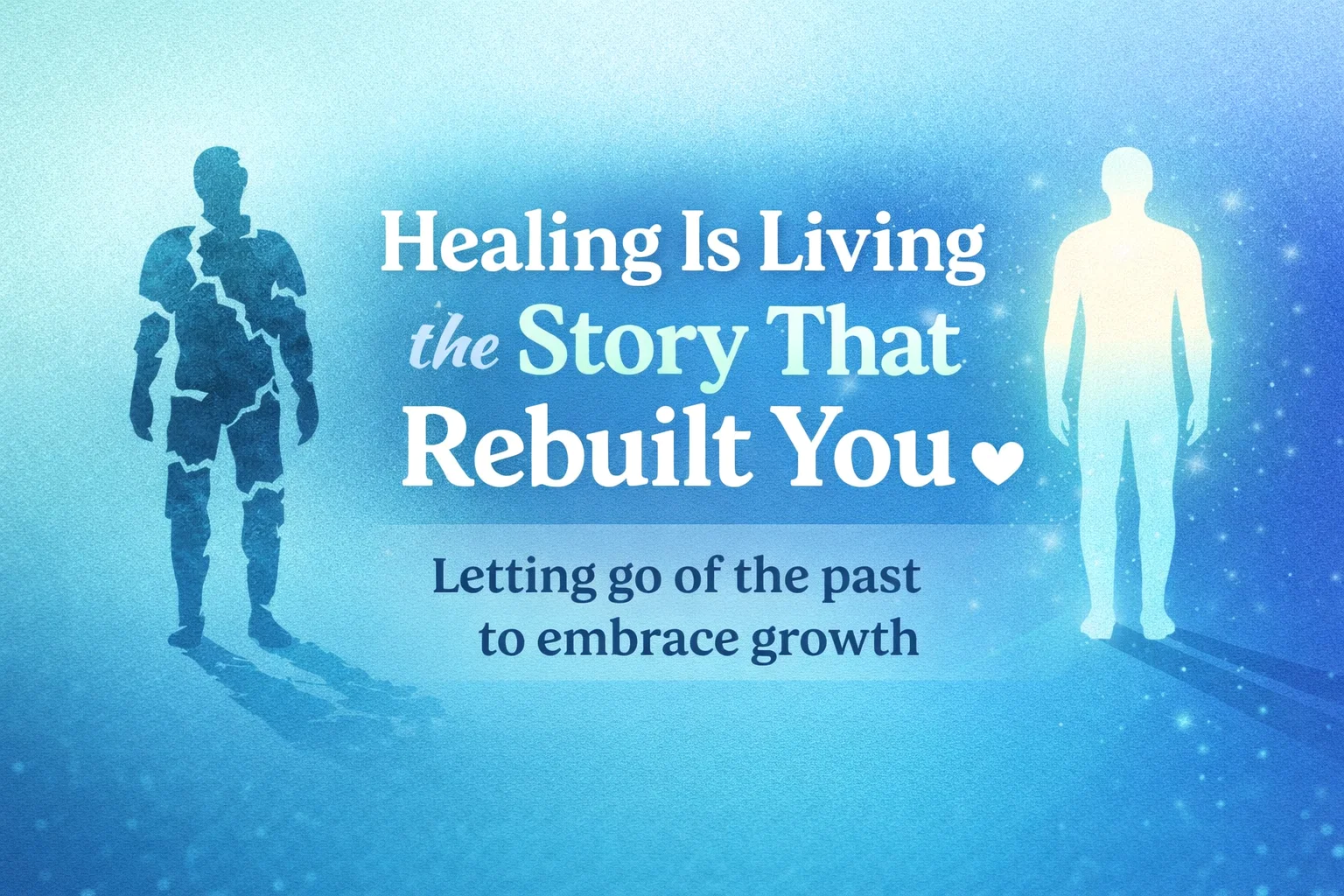
True healing is rarely a loud or sudden event. It does not usually happen with a bang or a finish line that you cross to receive a trophy. Instead, healing is a quiet, steady shift in the narrative you tell yourself every single morning. When you look at the image of that simple blue note, the message is clear: healing is the moment you stop repeating the story that broke you and start living the story that rebuilt you. This transition from victimhood to authorship is one of the most profound experiences a human being can go through. It marks the end of a cycle of pain and the beginning of a life defined by resilience, strength, and new purpose.
Understanding the Cycle of the Broken Story
We all have stories that have hurt us. These might be stories of a failed relationship, a career setback, a childhood trauma, or a personal mistake that felt like it defined our entire identity. For a long time, these stories serve a purpose. They help us make sense of our pain and give us a reason for why we feel the way we do. However, there comes a point where the story that once explained our pain begins to keep us trapped in it. This is the broken story.
The broken story is repetitive. It plays on a loop in the back of your mind, reminding you of what went wrong, who let you down, or how you failed. It acts as a heavy anchor, preventing you from sailing into new waters because you are too busy staring at the place where you crashed. Breaking free from this loop requires a conscious decision to put down the pen of the past and start writing something entirely new.
The Psychology of Ruminating on Pain
Psychologically, humans are wired to focus on negative experiences as a survival mechanism. This is known as the negativity bias. We remember the things that hurt us more vividly because our brains want to protect us from being hurt in the same way again. While this was helpful for our ancestors dodging predators, it can be incredibly damaging when we are trying to recover from emotional or mental wounds.
When we ruminate on the story that broke us, we are essentially re-traumatizing ourselves. Every time you retell the story of your heartbreak or your failure, your body reacts as if it is happening all over again. Your stress levels spike, your mood drops, and your perspective narrows. Healing begins when you recognize that while the event happened, the story does not have to continue being the lead headline of your life.
The Power of Rebuilding Your Narrative
Living the story that rebuilt you is an act of reclamation. It is about taking the fragments of what was lost and using them as the foundation for something stronger. This is not about forgetting what happened or pretending that the pain never existed. Rather, it is about shifting the focus from the wound to the scar and the strength it represents. A scar is proof that you were hurt, but it is also proof that you healed.
The story of being rebuilt is much more dynamic than the story of being broken. It involves action, growth, and self-discovery. It is the story of how you learned to set boundaries, how you discovered your own worth, and how you found joy in the small things again. This new narrative is built on the choices you make today, not the circumstances that were forced upon you yesterday.
Shifting Your Focus from Why to How
One of the biggest hurdles in healing is the obsession with the word why. Why did this happen to me? Why did they do that? Why wasn’t I enough? These questions rarely have satisfying answers, and searching for them often keeps you tethered to the broken story. To start living the story that rebuilt you, you must shift your focus from why to how.
- How can I use this experience to help others who are going through something similar?
- How has my perspective on life changed for the better since I went through that hardship?
- How am I showing up for myself today in ways I never could before?
By focusing on the how, you empower yourself. You move from a passive observer of your pain to an active participant in your recovery. You start to see yourself as a survivor and an architect of your own future.
Practical Steps to Stop Telling the Old Story
It is one thing to decide to change your story, but it is another thing entirely to do it in practice. The old story is comfortable, even if it is painful, because it is familiar. Stepping into a new story requires courage and intentionality. Here are some practical ways to start the process of letting go.
Audit Your Conversations
Notice how often you bring up your past traumas or difficulties in casual conversation. Are you constantly introducing yourself through the lens of your struggle? Try to go a whole day, and then a whole week, without mentioning the event that broke you. Observe how it feels to interact with the world without that identity. You might find that you have much more to offer than just your survival story.
Journaling for Transformation
Instead of just writing about what happened, use your journal to write about who you are becoming. Write a letter from your future self to your current self, describing the life you have built after the healing is complete. This helps your brain visualize a reality where the pain is no longer the central focus. It gives you a roadmap for the story that is currently rebuilding you.
Embracing the Messiness of Growth
Rebuilding is not a linear process. There will be days when the old story feels louder than the new one. There will be moments when a song, a smell, or a word triggers a memory that makes you feel broken all over again. This is perfectly normal. Healing does not mean the total absence of pain; it means the presence of a new way to handle that pain.
When you have a setback, do not view it as a failure of your healing. Instead, view it as a chapter in your rebuilding story. Even the most beautiful buildings have moments during construction where they look like a mess of scaffolding and dust. You are currently under construction, and that is a beautiful place to be.
Finding Beauty in the Scars
In Japanese culture, there is a practice called Kintsugi, where broken pottery is repaired with gold. The idea is that the piece is more beautiful and valuable because it was broken and repaired. Your life is much the same. The cracks and breaks in your story are not flaws to be hidden. They are the places where the gold of your character, your empathy, and your wisdom shines through.
Creating a Supportive Environment for Your New Story
The people you surround yourself with play a massive role in which story you tell. If you are constantly around people who only want to talk about the past or who view you through the lens of your old wounds, it will be much harder to move forward. Seek out communities and individuals who celebrate your growth and encourage your new direction.
Your environment should reflect the person you are becoming. This might mean decluttering your physical space, unfollowing social media accounts that trigger negative comparisons, or spending more time in nature. Anything that reinforces the idea of renewal and growth will help solidify your new narrative.
The Role of Forgiveness in Rebuilding
Forgiveness is often the final piece of the puzzle in living the story that rebuilt you. This does not mean excusing what happened or saying it was okay. Forgiveness is the act of releasing the debt you feel the past owes you. When you hold onto anger or resentment, you are still telling the broken story. Forgiveness is the period at the end of that chapter, allowing you to finally turn the page.
Building a Future Defined by Hope
As you move further into your rebuilding story, you will find that hope becomes your primary motivator. You start to look forward to the future with curiosity rather than fear. You begin to realize that the most exciting chapters of your life haven’t even been written yet. The story that broke you was just a few pages in a much larger book.
Living the rebuilt story means you are no longer defined by what was taken from you, but by what you have cultivated within yourself. You are the hero of this narrative. Every step you take toward joy, every boundary you set, and every dream you pursue is a testament to the fact that you are no longer broken. You are whole, you are evolving, and you are just getting started.
Conclusion: The Choice is Yours
The note in the image is a reminder that healing is a choice we make every single day. It is a commitment to leave the ghost of the past behind and walk into the light of the present. While the story that broke you might be a part of your history, it does not have to be your destiny. You have the power to pick up the pen and write a story of triumph, peace, and incredible resilience.
Take a deep breath and acknowledge how far you have already come. The very fact that you are looking for ways to heal and rebuild is proof that the old story no longer has the power it once did. Embrace the new narrative. Live the story that rebuilt you, and watch as your world transforms into something more beautiful than you ever imagined possible.