Health Benefits of Dates Essential Nutrients and Minerals Infographic for Survival Diet
Imagine a single food item so nutritionally dense that it could potentially sustain human life when paired with nothing but water. It sounds like something out of a survival movie or an ancient legend, yet the humble date palm fruit has held this reputation for thousands of years. In many cultures, particularly across the Middle East and North Africa, dates are not just a sweet treat served at the end of a meal. They are a fundamental pillar of health, a portable energy source for desert travelers, and a biological marvel packed with an array of essential minerals and vitamins.
When we look at the chemical composition of a date, we see a complex map of human biological needs. From bone-strengthening calcium to the neurological support of potassium, these small fruits offer a concentrated dose of what our bodies require to function at peak performance. In an era where processed snacks and synthetic supplements dominate the market, returning to the simplicity of the date offers a refreshing and highly effective way to nourish ourselves. This article explores the profound science behind the nutrition of dates and why they remain one of the most respected superfoods on the planet.
The Science of Survival: Can You Really Live on Dates and Water?
The claim that a person can live on only dates and water is a bold one, but it is rooted in historical practice and nutritional science. While a modern balanced diet usually requires a wider variety of fats and specific proteins for long term health, dates come remarkably close to providing a complete survival profile. They are incredibly high in carbohydrates, primarily in the form of natural sugars like glucose and fructose, which provide immediate and sustained energy. Unlike refined sugar, the energy from dates is released slowly thanks to their high fiber content.
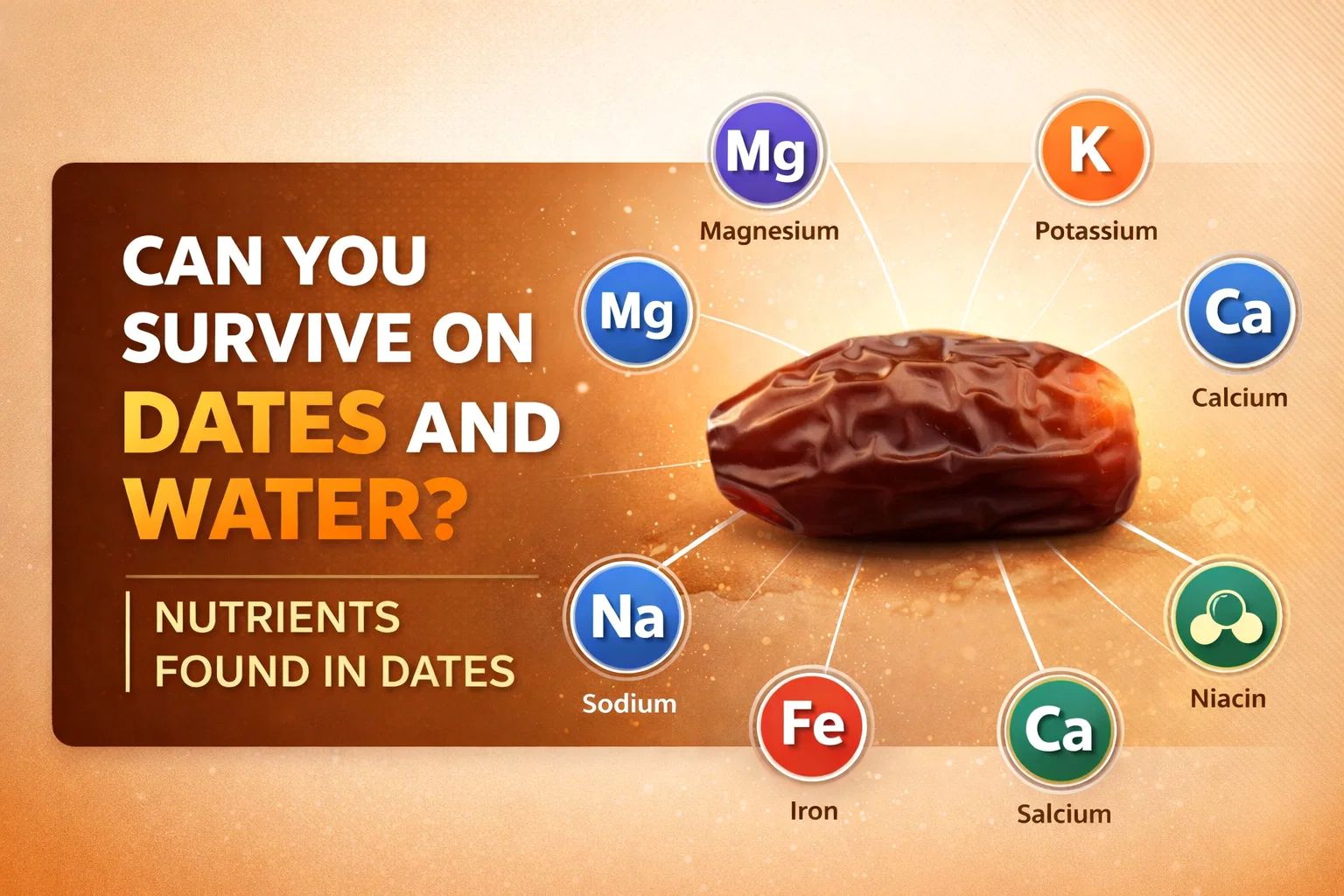
Beyond just calories, the mineral profile of a date is what truly sets it apart. As seen in the various elements linked to the fruit, it contains a spectrum of minerals that regulate everything from heart rhythm to muscle contraction. In a survival situation, the primary risks are dehydration and electrolyte imbalance. Dates provide the sugar for energy and the minerals like sodium and potassium to maintain electrolyte levels, while water provides the hydration. Together, they form a symbiotic duo that has sustained nomadic tribes and travelers for centuries.
Breaking Down the Mineral Map: What is Inside a Date?
To truly appreciate the power of this fruit, we have to look at the specific elements it provides. Each mineral plays a distinct role in keeping our systems running smoothly. Let us take a closer look at some of the key components identified in the nutritional profile of a date.
The Power of Potassium and Sodium
Potassium is perhaps the most famous nutrient found in dates. It is an essential electrolyte that facilitates nerve signals and regulates fluid balance throughout the body. For athletes or those living in hot climates, potassium is vital for preventing muscle cramps and maintaining a steady heartbeat. When combined with the small, natural amounts of sodium found in the fruit, dates become a natural version of an isotonic sports drink.
Building Blocks: Calcium and Magnesium
We often think of dairy as the primary source of calcium, but dates offer a plant-based alternative that supports bone density and dental health. Alongside calcium, dates are rich in magnesium. This mineral is a quiet workhorse in the human body, involved in over 300 biochemical reactions, including protein synthesis and blood glucose control. Magnesium also plays a significant role in relaxation and sleep quality, making dates a great evening snack for those looking to wind down.
Oxygen Transport and Blood Health: Iron and Copper
Iron deficiency is one of the most common nutritional issues worldwide, leading to fatigue and anemia. Dates are a fantastic natural source of iron, which is necessary for the production of hemoglobin. Hemoglobin is the protein in red blood cells that carries oxygen from the lungs to the rest of the body. Furthermore, the presence of copper in dates helps the body absorb that iron more efficiently. This internal synergy makes dates a highly bioavailable food source for maintaining healthy blood levels.
Vitamins for Vitality: Thiamin and Niacin
While minerals often take the spotlight in date nutrition, the B-vitamin complex present in the fruit is equally important. Vitamins like Thiamin (B1) and Niacin (B3) are crucial for metabolic processes. They help the body convert the carbohydrates and fats we eat into actual energy that our cells can use. Niacin, specifically, is known for its ability to improve cholesterol levels and support brain function. Without these vitamins, the energy stored in the fruit would be much harder for our bodies to access, making them essential for the overall effectiveness of the date as a food source.
The Role of Trace Elements: Manganese and Sulfur
The image highlights several trace elements that are often overlooked in standard diets. Manganese, for example, is essential for bone formation and the metabolism of amino acids. It also acts as a component of an antioxidant enzyme that protects cells from damage. Sulfur and sulfurs, also noted in the profile, play a role in the synthesis of certain proteins and help maintain the health of skin, hair, and connective tissues. Even in small amounts, these elements are the “fine-tuning” components of a healthy body.
Health Benefits Beyond Basic Nutrition
Nutrition is not just about avoiding deficiency; it is about thriving. Incorporating dates into your daily routine offers several benefits that go beyond just checking off a list of minerals.
- Digestive Health: Dates are packed with dietary fiber. This prevents constipation and promotes regular bowel movements by adding bulk to the stool. A healthy gut is the foundation of a strong immune system.
- Brain Power: Studies have suggested that dates may help lower inflammatory markers in the brain and reduce the risk of neurodegenerative diseases. The antioxidants in dates, such as flavonoids, are known for their ability to protect brain cells.
- Natural Labor Induction: For pregnant women, dates have been traditionally used and scientifically studied for their ability to promote cervical dilation and reduce the need for induced labor when consumed in the final weeks of pregnancy.
- Natural Sweetener: Dates are the perfect substitute for white sugar. They can be blended into pastes or used whole in baking, providing sweetness along with fiber and nutrients rather than empty calories.
How to Incorporate Dates into a Modern Diet
Knowing that dates are a nutritional goldmine is one thing, but figuring out how to eat them regularly is another. Fortunately, their naturally sweet, caramel-like flavor makes them incredibly versatile. You do not have to be wandering the Sahara to enjoy the benefits of this fruit.
The Perfect Morning Boost
Try chopping up two or three dates and adding them to your morning oatmeal or yogurt. The natural sugars provide an immediate energy lift to start your day, while the fiber ensures you stay full until lunch. Because they are so sweet, you likely will not need to add any honey or syrup to your breakfast.
Pre-Workout Fuel
If you need a quick snack before hitting the gym, a date stuffed with a little bit of almond butter is the ultimate fuel. You get the quick carbs from the date and a bit of protein and healthy fat from the nut butter. It is easy on the stomach and provides a steady stream of energy for your workout.
Guilt-Free Desserts
Dates are often called nature’s candy for a reason. You can blend them with cocoa powder and nuts to make raw “energy balls” that taste exactly like brownies. This is a great way to satisfy a sweet tooth while actually feeding your body the minerals like magnesium and iron it craves.
The Importance of Quality and Variety
Not all dates are created equal. While the nutritional map remains similar across varieties, the texture and flavor profiles can vary significantly. Medjool dates are often called the king of dates because of their large size, soft texture, and rich taste. Deglet Noor dates are firmer and more translucent, making them great for cooking and baking. When shopping for dates, look for ones that are plump and have a slight shine to their skin. Avoid those that have crystallized sugar on the surface, as this usually indicates they are older, though they are still perfectly safe to eat.
It is also important to remember that because dates are so concentrated in sugar and calories, moderation is key. While they are incredibly healthy, eating a large quantity can lead to a high caloric intake. Sticking to three to five dates a day is usually more than enough to reap the nutritional rewards without overdoing it.
Conclusion: A Timeless Superfood for the Modern World
The more we learn about nutrition, the more we realize that the ancients had it right. The date palm was called the tree of life for a reason. By providing a dense collection of minerals like calcium, potassium, magnesium, and iron, alongside essential B-vitamins, the date serves as a complete nutritional package designed by nature. It is a testament to the idea that the best fuel for our bodies often comes in the simplest forms.
Whether you are looking to improve your heart health, boost your energy levels, or simply find a healthier way to enjoy something sweet, dates are an unbeatable choice. They remind us that survival and health are not just about complex supplements, but about finding the right balance of natural elements. So, the next time you reach for a snack, consider the humble date. It is not just a fruit; it is a tiny, edible powerhouse that has been supporting human life for millennia. Save this information and make dates a staple in your pantry today.