Heritage vs Modern Crops Heirloom Storage Varieties vs Uniform Produce Breeding Comparison
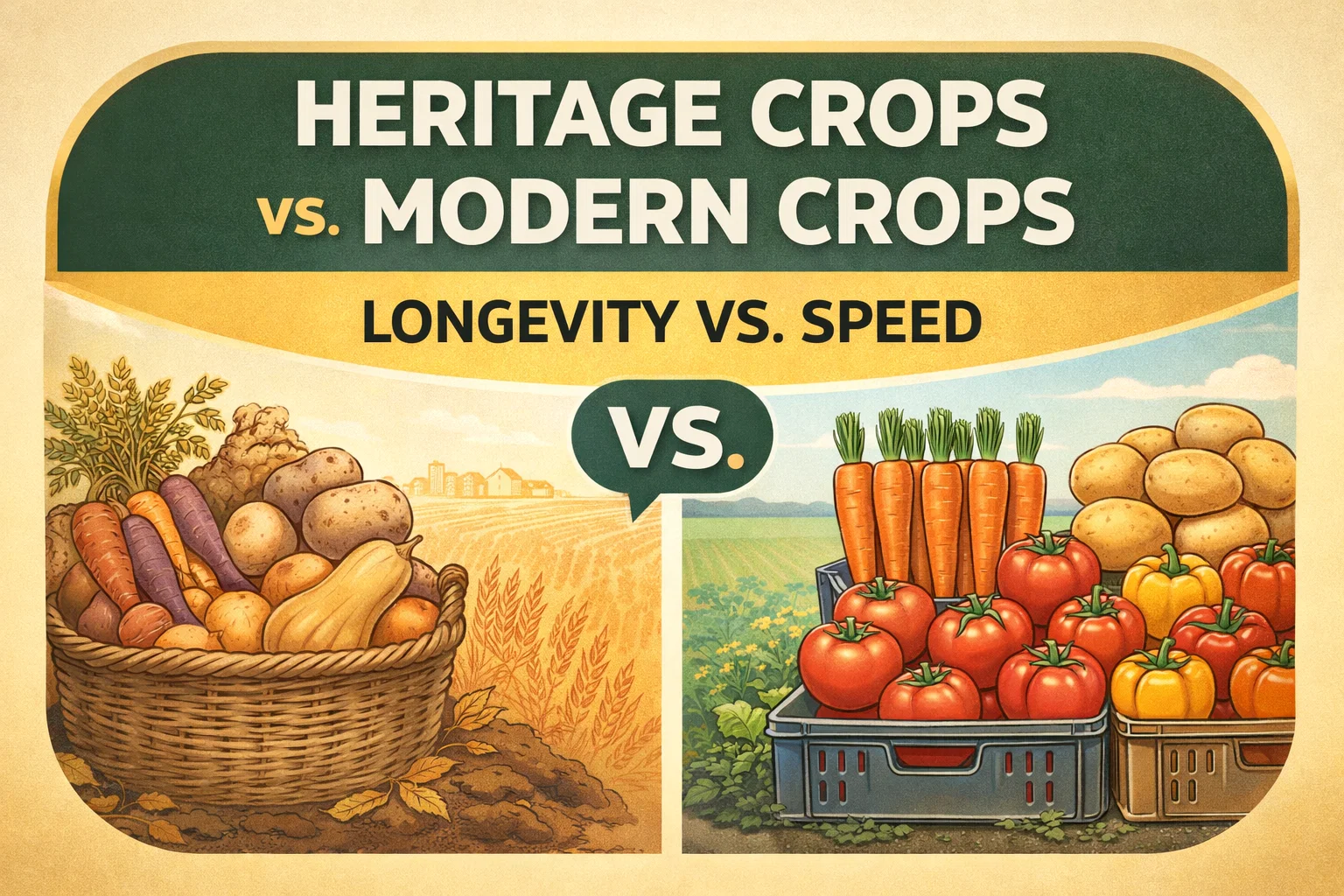
Walking through a modern supermarket can feel like a masterclass in geometry. The aisles are lined with perfectly spherical tomatoes, carrots that are all exactly the same length, and onions that look like they were turned on a lathe. It is a visual triumph of consistency. However, if you have ever bitten into one of those flawless tomatoes only to find it tastes like crunchy water, you have experienced the hidden trade-off of modern agriculture. The image we are looking at today provides a profound visual history of how our food has changed, contrasting the rugged, resilient heritage storage varieties of 1893 with the uniform, high-speed produce of the modern era.
The Evolution of the Harvest: Understanding Heritage vs. Modern Crops
To understand where our food is going, we have to look at where it started. The left side of our visual analysis shows heritage storage varieties, often referred to as heirloom crops. In the late 19th century, farming was not just about profit; it was about survival. If a crop could not last through a brutal winter in a root cellar, a family might go hungry. Therefore, breeding was focused on durability, thick skins, and high sugar content, which acts as a natural antifreeze and preservative.
On the right, we see the modern equivalent. These crops are bred for the “just in time” supply chain. They are designed to grow fast, ripen all at once, and look beautiful on a grocery store shelf. While this has made food more affordable and accessible, it has fundamentally changed the biology of the plants we eat. We have traded the ability to “last” for the ability to “move.”
The Secret of the Root Cellar: Why Heritage Varieties Look Different
Notice the carrots in the heritage section. They are twisted, varied in color, and still have their earthy tops attached. These were not bred to fit into a plastic bag; they were bred to be tucked into crates of sand. The purple and deep orange hues indicate a high concentration of anthocyanins and beta-carotene, which are powerful antioxidants. In 1893, “beauty” was measured by how much nutrition a vegetable could provide during the lean months of February and March.
The potatoes and onions in the heritage basket also tell a story. They are irregular in shape because they were grown in living, uncompressed soil. Their skins are often thicker, providing a natural barrier against rot and mold. These varieties were the result of centuries of “saving the best,” where farmers would keep the seeds of the plants that stayed firmest and sweetest in storage the longest.
Modern Breeding: The Need for Speed and Uniformity
Modern breeding shifted the goalposts entirely. As the population moved into cities and global shipping became the norm, the “shelf life” of a vegetable was no longer measured by how long it stayed in a cellar, but by how well it survived a 2,000-mile truck ride. To achieve this, scientists and breeders focused on a few key traits: uniformity, thick cell walls for transport, and rapid maturation.
If you look at the modern produce display, the peppers and tomatoes are stacked in crates. They are uniform in size so they can be packed efficiently without wasting space. This uniformity also allows for mechanical harvesting. A machine cannot distinguish between a small tomato and a large one, so we bred the plants to produce fruit that is identical in size and reaches ripeness at the exact same moment. The cost of this convenience, however, is often the loss of the complex flavor compounds that heritage varieties are famous for.
The Impact of Fast Breeding on Nutrient Density
There is a biological limit to how much a plant can do at once. When a plant is bred to grow twice as fast as its ancestors, it often struggles to pull the same amount of minerals and phytonutrients from the soil. This is known as the “dilution effect.” Modern crops may be larger and prettier, but pound for pound, they frequently contain fewer vitamins and minerals than the heritage varieties of the 19th century. The focus on speed means the plant spends its energy on water retention and bulk rather than developing the complex sugars and secondary metabolites that define heirloom flavors.
Why Heritage Crops are Making a Massive Comeback
We are currently witnessing a “Heirloom Renaissance.” Home gardeners, homesteaders, and gourmet chefs are looking backward to move forward. People are tired of flavorless produce and are rediscovering the joy of a Brandywine tomato or a Black Nebula carrot. But the reason for this comeback goes deeper than just taste.
- Genetic Diversity: Heritage crops are a genetic goldmine. They have built-in resistance to local pests and weather patterns that modern monocultures lack.
- Food Security: Learning to grow and store heritage varieties means you are less dependent on the global supply chain. If you can store your own squash and potatoes for six months, you have true food independence.
- Environmental Adaptation: Heirlooms are often “open-pollinated,” meaning you can save the seeds year after year. The plants actually adapt to your specific backyard soil and climate over several generations.
The Art of Storage: Bringing Back the Basket
The image shows a wicker basket filled with a bounty of mixed vegetables, sitting on a bed of hay. This was the original “refrigerator.” Storing vegetables in cool, dark, and slightly humid environments allowed our ancestors to have fresh food all year. Modern produce often lacks the structural integrity for this kind of storage. If you put a modern supermarket onion in a cellar, it might sprout or rot within weeks, whereas a true storage variety onion can stay firm for nearly a year.
Practical Tips for Integrating Heritage Varieties into Your Life
You do not need to be a professional farmer to appreciate the benefits of heritage crops. Even if you only have a small balcony or a windowsill, you can start incorporating these “time-traveling” vegetables into your lifestyle. Here is how to get started:
1. Buy from Local Farmers Markets
Local growers are the primary guardians of heritage seeds. When you shop at a farmers market, look for the “ugly” vegetables. The bumpy tomatoes, the multi-colored carrots, and the irregularly shaped potatoes are where the flavor and nutrition are hidden. Ask the farmer if they grow heirloom varieties and how those crops handle storage.
2. Start Your Own Heirloom Garden
Seed companies now offer hundreds of varieties from the 1800s. Look for labels that say “Pre-1900” or “Storage Variety.” If you are a beginner, start with something easy like radishes or beans. If you are looking for winter food, try growing butternut squash or “long keeper” tomatoes that are specifically bred to be picked green and ripened slowly on a shelf.
3. Learn Traditional Preservation Techniques
The heritage method was not just about growing; it was about keeping. You can recreate a “mini root cellar” in a cool basement or even a dedicated drawer in your pantry. Using breathable containers like the wicker basket shown in the image allows air to circulate, which prevents the buildup of ethylene gas that causes spoilage.
The Future of Food is Rooted in the Past
As we face challenges like climate change and soil depletion, the “modern” way of farming is being put to the test. The heavy reliance on chemical fertilizers and high-speed growth is proving to be less sustainable than the rugged methods of 1893. By supporting heritage crops, we are preserving the history of our food and ensuring that future generations have access to plants that are resilient, nutritious, and incredibly delicious.
The “Archived Oct 26, 1893” stamp on our image is a reminder that we once had a very different relationship with the earth. We bred crops to last because we respected the seasons. Today, we have the opportunity to blend that ancient wisdom with modern knowledge. We can choose produce that does not just look good in a crate, but actually nourishes our bodies and connects us to the land.
Conclusion: A Return to Quality Over Quantity
Whether you are a gardener, a cook, or simply someone who cares about what is on their dinner plate, the comparison between heritage and modern crops is eye-opening. We have gained convenience and visual perfection, but we have lost a degree of resilience and a world of flavor. The shift back toward heritage storage varieties is more than just a trend; it is a movement toward a more sustainable and flavorful way of living.
The next time you are at the store or planning your garden, think about that basket from 1893. Think about the thick skins of the potatoes and the deep colors of the heritage carrots. By choosing quality over quantity and nutrition over speed, we can reclaim a piece of our agricultural heritage. It is time to bring the “storage variety” back to the table and enjoy food that was truly built to last.