Heritage vs. Modern Crops Why Heirloom Storage Varieties Last Longer Through Winter
Understanding the difference between heritage storage varieties and modern uniform produce is more than just a history lesson. It is a vital piece of the puzzle for anyone looking to build a resilient, self-sufficient kitchen or garden. When we look at the way our ancestors grew food, we see a deliberate focus on survival through the coldest months of the year. Today, the grocery store provides us with perfect looking carrots and onions year round, but that convenience has come at a significant cost to the longevity and nutritional density of our food. By examining the shift from crops bred for the cellar to those bred for the shipping container, we can reclaim the traditional wisdom of food storage.
The Evolution of Breeding: From Cellars to Supermarkets
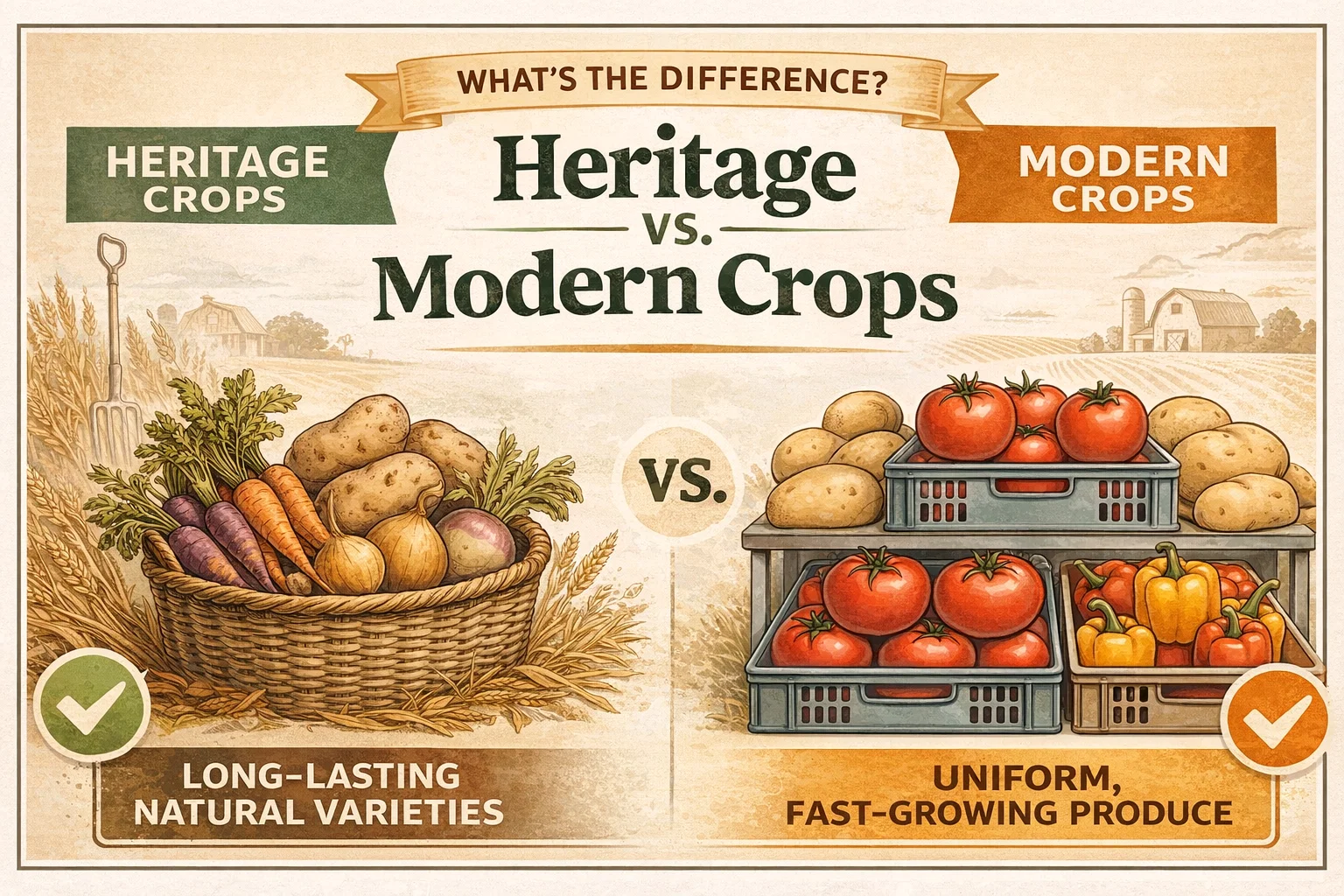
In the late 19th century, specifically around the era of the archived comparison in our image, the primary goal of a farmer or a home gardener was storage. If your potatoes sprouted in November or your onions rotted by December, your family faced a very difficult winter. Consequently, heritage varieties were selected for their ability to enter a deep state of dormancy. They often featured thicker skins, lower moisture content, and a higher density of solids. These physical traits acted as a natural defense against the fluctuations of temperature and humidity found in a traditional root cellar.
As the industrial food system took hold, the priorities of plant breeders shifted dramatically. Instead of asking how long a carrot could stay crisp in a box of sand, the industry began asking how fast it could reach maturity and how uniformly it would fit into a plastic bag. Modern breeding prioritized speed, high water weight for higher profits by pound, and a uniform shape that accommodates mechanical harvesting. While this has made produce more affordable and accessible, it has also resulted in vegetables that begin to degrade the moment they are pulled from the soil.
Characteristics of Heritage Storage Varieties
When you look at heirloom or heritage crops, you immediately notice a lack of uniformity. In a single harvest of heritage carrots, you might see deep purples, vibrant oranges, and pale yellows, often with twisted shapes or thick shoulders. These are not defects. In fact, these variations often correlate with a complex nutritional profile. The anthocyanins in purple carrots or the high beta-carotene in deep orange varieties are part of the plant’s natural toolkit for health and preservation.
Natural Resistance and Thick Skins
One of the most important features of a storage crop is its protective outer layer. Heritage onions are known for having many layers of tight, papery skin that seal out moisture and pathogens. Similarly, heritage squash varieties like the Hubbard or the Long Island Cheese pumpkin have shells so hard they require a heavy knife or even a mallet to open. This armor is what allows them to sit on a shelf for six months without losing their internal moisture or succumbing to rot.
Dormancy and Sprout Inhibition
Modern potatoes are often treated with chemical sprout inhibitors because they have lost much of their natural dormancy. In contrast, heritage potatoes like the Russet Burbank or the Yukon Gold were originally prized for their ability to stay “quiet” in a cool, dark place. They do not rush to grow into new plants as soon as the calendar turns to January. This deep dormancy is a biological trait that has been largely bred out of many commercial varieties in favor of quick-start seeds that germinate rapidly in a greenhouse setting.
The Trade-Off: Speed vs. Substance
Modern produce is designed to grow fast. A modern hybrid carrot can reach harvestable size in a fraction of the time it takes an heirloom variety. While this is great for turnover, it means the plant has less time to pull minerals from the soil and less time to develop the complex sugars and starches that provide flavor. This is why a store-bought tomato often tastes like water compared to a garden-grown heirloom. The modern tomato is literally full of more water, which makes it heavy on the scale but weak on the palate and poor for preservation.
Furthermore, uniform produce is bred for “shelf life” in a commercial sense, which is different from “storage life.” Commercial shelf life means the vegetable stays looking pretty under grocery store lights for a week or two. Storage life means the vegetable remains edible and nutrient-dense for an entire season. A modern bell pepper might look shiny and firm for ten days, but it lacks the structural integrity to be dried or kept in a cellar for the long haul.
Why Diversity Matters in Your Garden
If you are growing your own food, the image of the heritage basket versus the modern crate serves as a powerful guide. Relying on uniform, modern hybrids makes your food supply more vulnerable. If a specific pest or disease hits a crop of identical hybrids, the entire harvest is often lost. Heritage crops, with their genetic diversity, offer a form of biological insurance. Some might be smaller, some larger, some earlier, and some later, ensuring that you always have something to put in the basket.
Flavor as a Function of Storage
There is a fascinating chemical process that happens in many storage crops. For example, starches in heritage parsnips and carrots actually convert to sugars when exposed to cold temperatures. This was a natural way for our ancestors to have a source of sweetness during the winter. Modern varieties, bred for consistent sweetness from day one, often lack this dynamic transformation. When you eat a heritage root vegetable that has been properly stored, you are tasting the results of months of slow, internal ripening that no laboratory can replicate.
Practical Tips for Winter Food Storage
If you want to move away from the modern “speed-based” model and toward a heritage storage model, you need to understand the basics of the “three Cs”: Cold, Clean, and Covered. Even if you do not have a 19th-century root cellar, you can mimic these conditions at home to keep your heritage produce fresh for months.
- Humidity Control: Root vegetables like carrots and beets prefer high humidity. Storing them in containers of damp sand or sawdust keeps them from shriveling.
- Temperature Stability: Aim for a consistent temperature just above freezing. Basements, unheated garages, or even insulated pits in the ground can work.
- Ventilation: Onions and garlic need air circulation to prevent mold. Hanging them in mesh bags or braiding their tops is the traditional and most effective method.
- Darkness: Light is the enemy of storage. It triggers sprouting in potatoes and bitterness in onions. Always keep your storage area pitch black.
The Nutritional Value of Traditional Crops
Research consistently shows that older varieties of vegetables often contain higher levels of protein, calcium, phosphorus, iron, and vitamin C than their modern counterparts. Because they grow more slowly and develop more robust root systems, they are more effective at mining the soil for trace minerals. When we choose to eat heritage crops, we are not just eating for flavor; we are eating for a level of nourishment that has been diluted in the age of industrial farming. The “Uniform Produce” in the modern crate might look identical and perfect, but it is often a hollow version of what nature intended.
Conclusion: Reclaiming the Heritage Harvest
The comparative analysis between heritage storage varieties and modern uniform produce highlights a fundamental shift in our relationship with food. We have traded resilience for appearance and longevity for speed. However, the beauty of this knowledge is that we can choose to go back. By seeking out heirloom seeds, supporting local farmers who grow heritage varieties, and learning the simple arts of food preservation, we can bring the wisdom of the 1893 archive into our modern lives.
Building a pantry that lasts through the winter is an empowering act of self-sufficiency. It connects us to the cycles of the seasons and ensures that our families are fed with the most nutrient-dense, flavorful food possible. Whether you are starting a small backyard garden or just changing the way you shop at the farmers market, prioritizing storage-capable heritage crops is a step toward a more sustainable and delicious future. Let us value the thick skins, the odd shapes, and the slow growth that characterize true heritage produce, for these are the traits that have sustained humanity for generations.