Heros Journey Explained 12 Stages of the Monomyth for Storytelling Writing
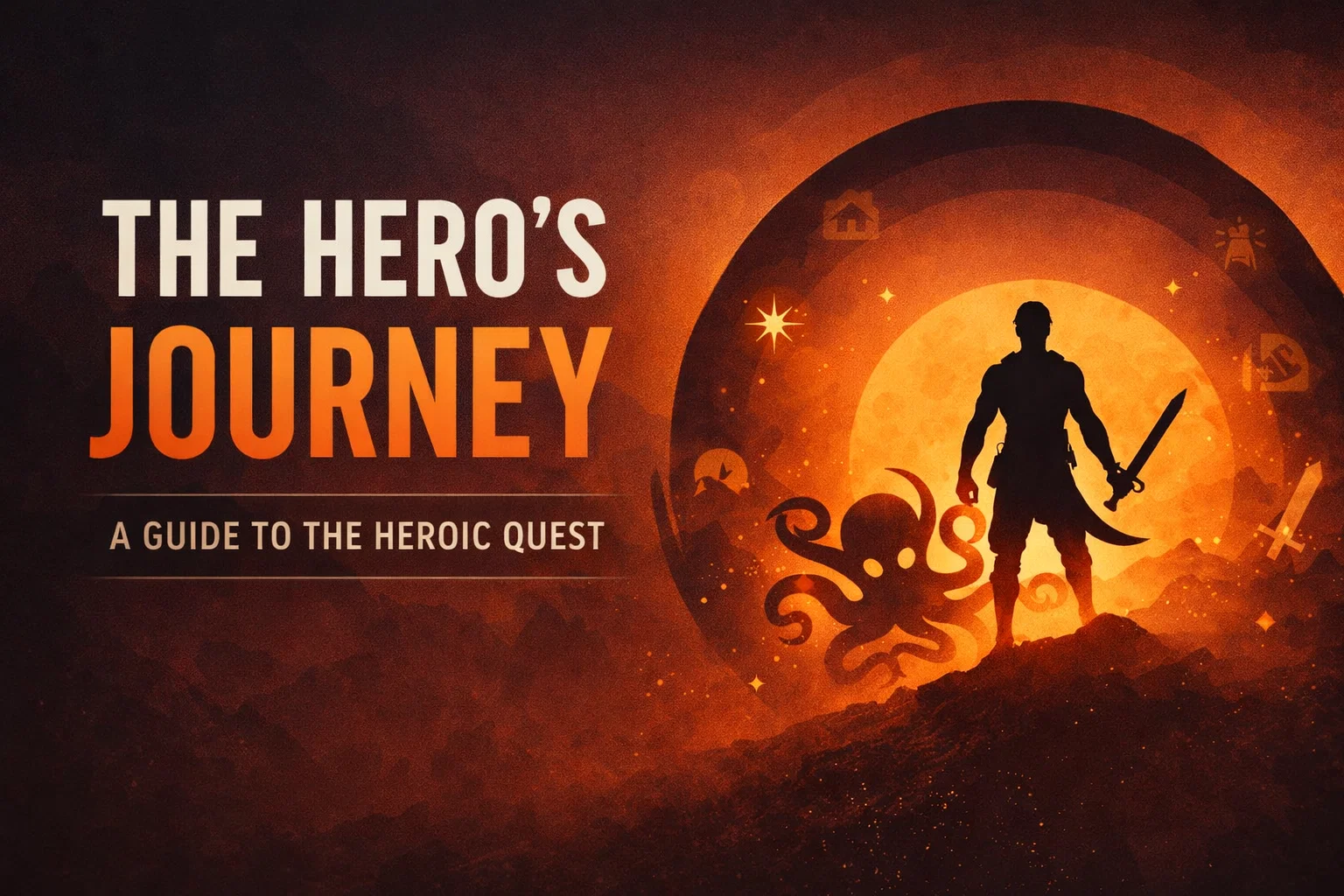
Every great story follows a heartbeat. Whether you are watching a blockbuster movie, reading a classic novel, or even listening to a friend recount a particularly dramatic weekend, there is a rhythm to the narrative that feels almost biological. This structure is not a modern invention or a coincidence; it is a fundamental pattern of human experience known as the Hero’s Journey. Also called the Monomyth, this concept suggests that all stories, across all cultures and eras, share a common DNA. By understanding the twelve distinct stages of this journey, you can unlock the secret to creating compelling content that resonates with your audience on a primal level.
The Origins of the Monomyth
The term Monomyth was popularized by Joseph Campbell in his seminal work, The Hero with a Thousand Faces. Campbell was a mythologist who noticed striking similarities between the legends of ancient Greece, the folk tales of indigenous tribes, and the religious texts of the East. He realized that while the names, settings, and monsters changed, the emotional and psychological arc of the protagonist remained remarkably consistent. In the late 20th century, screenwriter Christopher Vogler further refined these concepts for modern storytelling, making them accessible to writers, filmmakers, and digital creators.
The Hero’s Journey is essentially a metaphor for personal transformation. It represents the process of leaving one’s comfort zone, facing fears, gaining wisdom, and returning home changed. This is why it is so powerful in marketing and blogging; when you frame your brand or your message within this journey, you are not just selling a product or sharing information. You are inviting your audience into a transformation.
Stage 1: Life in the Ordinary World
Every adventure must start somewhere grounded. The Ordinary World is the hero’s starting point, where we see them in their natural habitat. This stage is crucial because it establishes the “before” state. It shows us the hero’s limitations, their unfulfilled desires, and the mundane reality they are about to leave behind. In a blog post or a brand story, this is where you empathize with your reader’s current pain points or everyday challenges.
Stage 2: The Call to Adventure
The status quo cannot last forever. The Call to Adventure is the moment a problem or opportunity arises that disrupts the Ordinary World. It could be a mysterious letter, a sudden crisis, or a deep internal realization that something needs to change. This is the “inciting incident” that sets the wheels in motion. For your audience, the Call to Adventure might be the moment they realize they need a better skincare routine, a more efficient workflow, or a deeper spiritual practice.
Stage 3: Assistance and the Mentor
Rarely does a hero succeed alone. Usually, they encounter a Mentor figure who provides guidance, equipment, or a much-needed pep talk. Think of Obi-Wan Kenobi or Gandalf. The Mentor represents the wisdom the hero lacks. In the context of your WordPress site, you or your brand often play the role of the Mentor. You are providing the tools and knowledge the reader needs to navigate their own journey.
Stage 4: Departure and Crossing the Threshold
This is the point of no return. The hero commits to the adventure and physically or metaphorically leaves the Ordinary World. They step into the Special World, where the rules are different and the stakes are higher. This transition is often marked by a sense of excitement mixed with fear. It is the moment your reader decides to finally hit “buy,” “subscribe,” or “start” on their new project.
Stage 5: Trials, Allies, and Enemies
Once in the Special World, the hero must learn the ropes. This is typically the longest part of the story. The hero faces a series of tests, meets new companions, and identifies those who wish to see them fail. These trials serve to build the hero’s skills and resolve. In content creation, this is where you provide the “how-to” steps, troubleshooting tips, and advice on overcoming common obstacles that your readers might face.
Identifying Your Internal and External Trials
Trials are not always external monsters. Often, the greatest hurdles are internal, such as self-doubt or procrastination. When writing for your audience, acknowledging these internal struggles makes your content feel more human and relatable. You are showing them that the path to success is rarely a straight line, and that setbacks are a natural part of the process.
Stage 6: The Approach to the Inmost Cave
The hero has survived the initial trials, but the greatest challenge still lies ahead. The Approach represents the preparation for the main battle. The hero may take a moment to regroup, seek further counsel, or face their mounting anxiety. This is the buildup of tension. In your writing, this is where you tackle the most complex or intimidating aspects of your topic, preparing your reader for the “big win.”
Stage 7: The Battle and the Ordeal
This is the climax of the internal journey. The hero faces their greatest fear or a deadly foe in the Inmost Cave. It is a moment of death and rebirth; the old version of the hero must “die” so a stronger version can emerge. While this sounds dramatic, in a practical sense, it represents the most difficult part of any process, like the middle of a grueling marathon or the final stages of a massive business launch. It is the make-or-break moment.
Stage 8: The Crisis and the Turning Point
Directly linked to the Ordeal, the Crisis is the point where all seems lost. The hero hits rock bottom. However, it is through this vulnerability that they find the strength to persevere. This stage teaches us that failure is often a prerequisite for ultimate success. Sharing stories of failure in your blog posts can be incredibly inspiring because it validates the reader’s own struggles.
Stage 9: The Reward and Seizing the Sword
Having survived the Ordeal, the hero earns a reward. This might be a physical object, like a magic sword or a treasure, but more often it is knowledge, a new skill, or a shifted perspective. The hero has accomplished what they set out to do, but the journey is not quite over. For your reader, this is the “Aha!” moment where your advice finally clicks and they see the results they were looking for.
Stage 10: The Road Back
The hero must now return to the Ordinary World with their prize. However, the Special World doesn’t always want to let them go. There might be one last chase or a final obstacle to overcome. This stage represents the challenge of integrating new lessons into daily life. It is one thing to learn a new habit during a weekend retreat; it is another to maintain it when you return to the chaos of the office.
Stage 11: Reborn and the Resurrection
Before the hero can truly return, they face a final test. This is a “final exam” to prove they have actually changed. It is the ultimate confirmation of their growth. The hero emerges from this final conflict purified and reborn. In your content, this can be framed as a long-term success story or a case study that proves the effectiveness of the methods you’ve shared.
Stage 12: New Life and the Result
The hero returns home, but the Ordinary World looks different because the hero is different. They bring back the “Elixir,” which could be peace, prosperity, or simply a better way of living. They have closed the loop. This is the final result of the transformation. Your reader has now solved their problem, reached their goal, and is living a better version of their life thanks to the guidance you provided.
Why Your Blog Needs the Hero’s Journey
Using this framework in your WordPress content does several things for your SEO and engagement:
- Emotional Connection: It taps into universal human emotions, making your readers feel understood.
- Increased Dwell Time: Storytelling naturally keeps people reading longer as they want to see how the journey ends.
- Brand Authority: Positioning yourself as the Mentor builds trust and positions your brand as a reliable guide.
- Memorability: People forget facts, but they remember stories. A narrative structure makes your information stick.
Implementing the Structure in Your Next Post
You don’t need to follow all twelve stages literally in every single post. However, keep the general flow in mind. Start with the problem (Ordinary World/Call to Adventure), offer your expertise (Assistance/Mentor), guide them through the process (Trials), and describe the final benefit (New Life/Result). This simple shift in perspective can transform a dry tutorial into a compelling narrative adventure.
Final Thoughts on the Storyteller’s Path
The Hero’s Journey is more than just a writing tool; it is a map of the human soul. It reminds us that every struggle has a purpose and every challenge is an opportunity for growth. By applying these stages to your content creation, you are doing more than just filling a page with words. You are providing a roadmap for your readers to follow, helping them navigate their own obstacles and achieve their own “New Life.” Start looking at your topics through the lens of the monomyth, and you will find that the stories you tell become more powerful, more engaging, and infinitely more meaningful. Your audience is waiting for their call to adventure; it is time for you to be the mentor they need.