How a Round Chicken Coop Improves Bird Health Ends Bullying Sustainable Farming Tips
Stepping into the world of backyard farming often feels like a balancing act between tradition and modern technology. However, every so often, a design comes along that reminds us that nature already has the best blueprints. The concept of a round chicken coop is not just a quirky aesthetic choice; it is a profound shift in how we manage flock dynamics and avian health. By leaning into animal behavior rather than fighting against it, this circular sanctuary provides a sustainable, low-tech solution for anyone looking to raise healthier, happier birds without a garage full of expensive equipment.
The Psychology of the Circle: Why Corners Cause Trouble
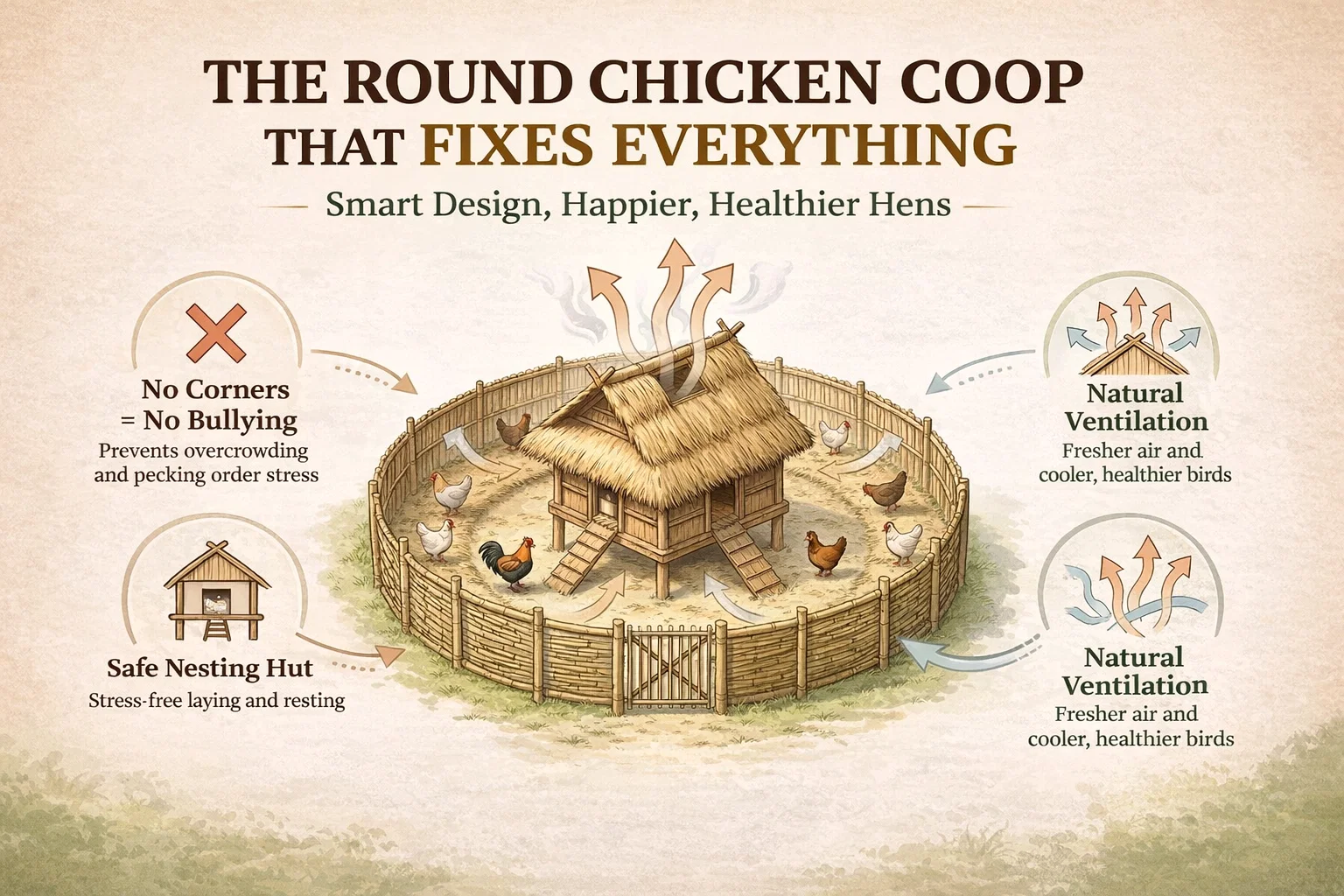
To understand why a round coop is superior, we first have to look at the limitations of the standard rectangular coop. In a traditional square structure, corners represent dead space. In the world of poultry, these corners often become aggression zones. When a dominant bird decides to pick on a lower-ranking member of the flock, the victim often finds itself literally backed into a corner with no line of sight for escape. This leads to high stress levels, feather pecking, and a breakdown of the social order.
Eliminating the Bullying Zone
In a circular environment, there are no sharp angles for a bird to get trapped in. The continuous flow of a round perimeter encourages constant movement. If a conflict arises, the bird being chased can simply keep moving along the curve until the aggressor loses interest or the social tension diffuses. This layout promotes what experts call smarter behavior, where the birds remain in a state of flow rather than a state of confrontation. By removing the physical triggers for bullying, you are left with a much more harmonious flock.
Natural Ventilation: The Breath of a Healthy Coop
Respiratory issues are among the leading causes of illness in backyard chickens. Standard coops often struggle with stagnant air pockets or, conversely, harsh drafts that can chill birds in the winter. A round coop with a central raised nesting hut naturally facilitates a chimney effect that is incredibly efficient at regulating temperature and air quality.
How the Chimney Effect Works
As the birds rest in the central hut, their body heat rises. In a circular structure with a vented peak, this warm, moist air is pulled upward and out through the roof. This creates a low-pressure vacuum that draws fresh, cool air in through the bottom perimeter. This constant, gentle exchange of air prevents the buildup of ammonia from droppings and keeps the bedding dry. Dry bedding is the first line of defense against mites, mold, and foot infections like bumblefoot.
The Central Nesting Hut: A Safe Haven
The heart of this design is the raised central nesting hut. Positioning the sleeping and laying quarters in the center of the circle, rather than against a wall, serves several functional purposes. First, it provides a 360-degree buffer zone. Predators are less likely to surprise the birds when there is a clear, open space between the outer fence and the inner sanctuary.
Ease of Access and Maintenance
For the farmer, a central hut means you can access the nesting boxes from all sides without having to squeeze into tight corners or disturb the entire flock. The raised design also protects the birds from ground dampness and allows for easy cleaning. You can simply sweep debris outward toward the perimeter where it can be collected and composted, making your daily chores much faster and more ergonomic.
Building with Local Materials: Sustainable and Cost-Effective
One of the most beautiful aspects of this round coop design is its accessibility. You do not need a degree in architecture or a massive budget to build one. It is designed to be constructed from local, sustainable materials that are often available for free or at a very low cost. Whether you are using bamboo, reclaimed timber, thatch, or woven branches, the structural integrity of a circle is inherently stronger than a rectangle.
Low-Tech Tools for High-Level Results
This is sustainable farming without the need for fancy power tools or specialized hardware. A simple weave of flexible branches can create a sturdy, breathable outer wall. Thatch roofing provides excellent insulation and sheds water naturally. By using what is available in your immediate environment, you reduce the carbon footprint of your farm and create a structure that blends seamlessly into the natural landscape.
Ethical Space Leads to Better Birds and Better Eggs
We often talk about the quality of eggs in terms of what we feed our chickens, but the environment plays just as large a role. A stressed chicken produces fewer eggs, and those eggs often have thinner shells or less vibrant yolks. When birds have the room to move freely and the security of a well-designed home, their immune systems strengthen naturally.
Stronger Immunity Through Movement
The circular path encourages the birds to forage and move throughout the day. This physical activity builds muscle and improves circulation. When combined with the superior air quality provided by natural ventilation, your birds become more resilient to common poultry ailments. In the long run, this means fewer vet bills and a more self-sustaining ecosystem on your homestead.
A Step Towards Regenerative Agriculture
Adopting a round coop design is a small but significant step toward regenerative agriculture. It moves us away from the industrial mindset of “containment” and toward the ecological mindset of “stewardship.” By observing how animals actually want to live, we can design systems that work with nature. This approach saves time, saves money, and ultimately results in a more rewarding experience for the keeper and the kept.
Integrating the Coop into Your Garden
Because the round coop is so aesthetically pleasing and compact, it fits perfectly into a permaculture garden layout. You can even use a “chicken tractor” variation of this design to move the birds around your property, allowing them to fertilize the soil and manage pests in a controlled, circular area. This creates a closed-loop system where the birds benefit the land and the land provides for the birds.
The Practicality of Circular Fencing
Beyond the coop itself, the circular fencing provides a more efficient use of materials. Mathematically, a circle encloses the most amount of area with the least amount of perimeter. This means you spend less on fencing wire or wood while giving your chickens more room to roam. It also makes the structure more resistant to high winds, as the air flows around the curved surface rather than slamming into a flat wall.
Conclusion: Simple Design, Profound Impact
The round chicken coop is a perfect example of how smart design can fix age-old problems. By eliminating corners, prioritizing natural ventilation, and using sustainable materials, you create an environment where your flock can truly flourish. It is a testament to the fact that we do not always need more technology; sometimes, we just need a better shape. Whether you are a seasoned farmer or just starting your backyard journey, choosing a circular layout is a commitment to ethical, healthy, and sustainable poultry keeping. Your birds will thank you with peace in the flock and plenty of fresh eggs on the table.
Would you like me to generate a list of the best local materials for building a round coop in your specific climate?