How Chronic Stress Affects Your Thyroid Cortisol, T3 Conversion Hashimotos Relief
Have you ever felt like you were doing everything right for your health, yet your body still felt like it was running on a dying battery? You have cleaned up your diet, you are taking the expensive supplements, and you have cut out the processed sugar. Yet, the scale won’t budge, your hands are always cold, and that afternoon brain fog feels like a thick wall you just can’t climb over. If this sounds familiar, the missing piece of your puzzle might not be what you are eating, but how you are living. The connection between your nervous system and your endocrine system is profound, and for many people, the thyroid is the first organ to suffer when stress becomes a permanent resident in their lives.
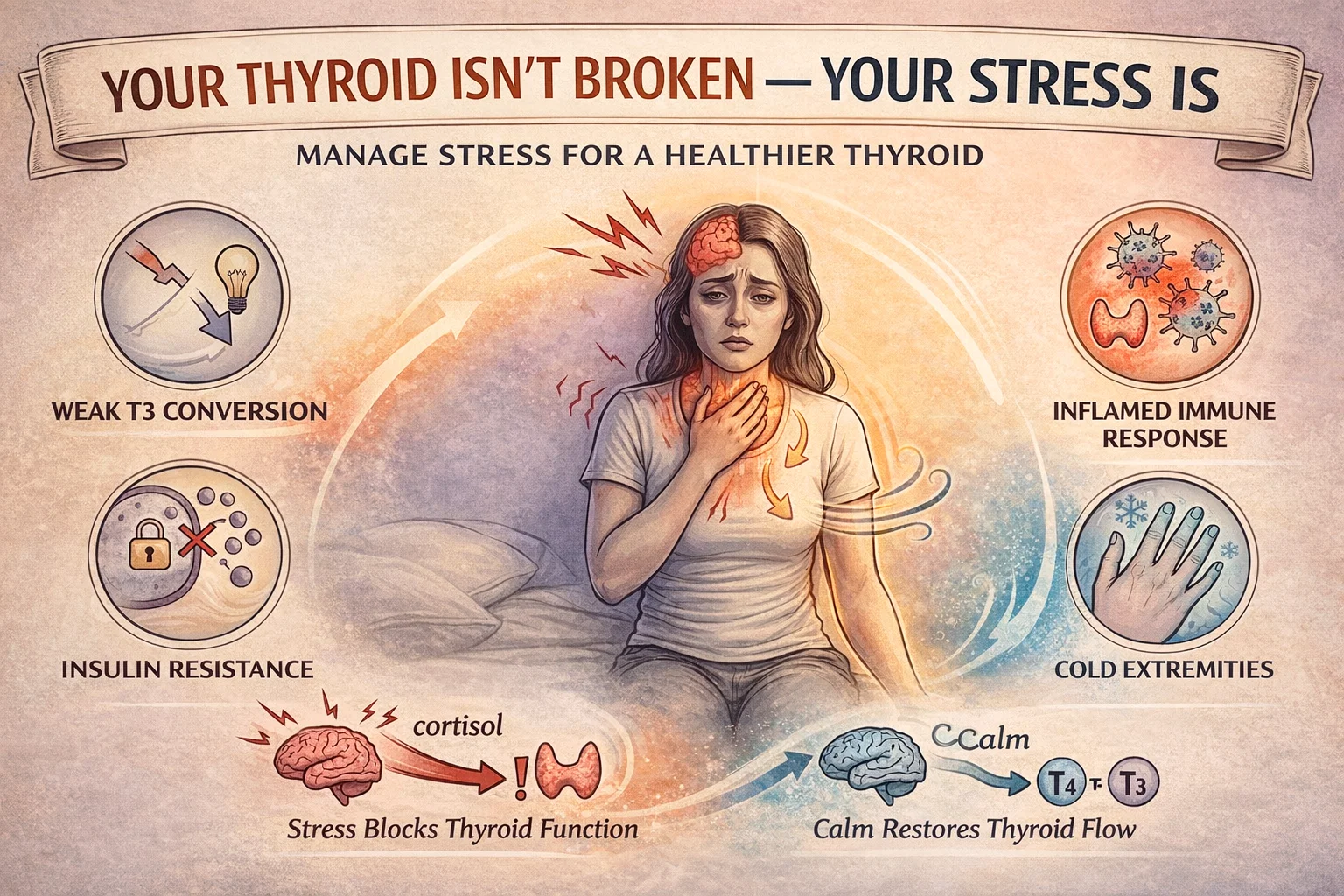
When we think of thyroid issues, we often blame the gland itself. We call it “broken” or “sluggish.” But as the visual representation of the human body under pressure shows us, your thyroid often isn’t the problem; it is the messenger. It is reacting perfectly to a high-stress environment. When your brain perceives a constant threat, whether that is a demanding job, emotional turmoil, or lack of sleep, it prioritizes survival over metabolism. This shift has a massive ripple effect on everything from your T3 conversion to your insulin sensitivity. It is time to stop looking at the thyroid in isolation and start looking at the internal environment it lives in.
The Cortisol Connection: Why Stress Blocks Your Thyroid Signals
To understand why your thyroid feels “locked,” we have to look at the primary hormone of the stress response: cortisol. Produced by your adrenal glands, cortisol is essential for life. It helps you wake up in the morning and gives you the energy to handle immediate challenges. However, the human body was never designed to handle the chronic, low-grade stress of the modern world. When cortisol remains elevated for weeks or months at a time, it begins to interfere with the communication lines between your brain and your thyroid.
Think of your thyroid signals like a radio broadcast. Under normal conditions, the signal is clear and the body receives the message to burn energy and stay warm. But high cortisol acts like static on the line. It can actually suppress the production of Thyroid Stimulating Hormone (TSH) at the source. Even if your TSH levels look “normal” on a standard lab test, high cortisol can prevent the thyroid hormones you do have from entering your cells effectively. This is why many people have every symptom of hypothyroidism but are told by their doctors that their blood work is fine. The signal is being sent, but the stress is blocking it from being received.
The T4 to T3 Conversion Trap
The thyroid gland primarily produces T4, which is an inactive storage form of the hormone. For you to feel energetic and healthy, your body must convert that T4 into T3, the active form that your cells actually use. A huge portion of this conversion happens in the liver and the gut. Chronic stress is a major disruptor of this process. When you are in a “fight or flight” state, your body chooses to conserve energy rather than spend it. Instead of making active T3, your body starts producing Reverse T3 (rT3).
Reverse T3 is like a placeholder that sits in the thyroid receptors but doesn’t do any of the work. It effectively “clogs” the system. This leads to what many practitioners call “weak T3 conversion.” You might have enough hormone in your blood, but because it is in the wrong form or blocked by rT3, you still experience low energy, thinning hair, and a slow metabolism. This is the body’s way of protecting you from burning out during a crisis, but when the “crisis” is just your everyday life, it becomes a recipe for chronic fatigue.
The Invisible Symptoms of a Stressed Thyroid
When stress begins to dominate your physiology, the symptoms are rarely limited to just feeling “tired.” The impact spreads across multiple systems, creating a complex web of health challenges that can feel impossible to untangle. By recognizing these signs, you can start to see the bigger picture of how your lifestyle is impacting your cellular health.
- Cold Extremities and Slow Metabolism: If your hands and feet feel like ice even in a warm room, your thyroid might be struggling to regulate your internal thermostat. A stressed thyroid slows down the basal metabolic rate to save resources.
- The “Stress Belly” and Insulin Resistance: High cortisol levels tell your body to store fat, specifically around the midsection. This isn’t just about calories; it is about how cortisol impacts insulin. Constant stress makes your cells less responsive to insulin, leading to sugar cravings and stubborn weight gain.
- Hashimotos Flares and Immune Response: For those with autoimmune thyroid issues, stress is often the primary trigger for an inflamed immune response. Stress weakens the gut lining and puts the immune system on high alert, making it more likely to attack thyroid tissue.
Why Calm Equals Better Thyroid Function
The good news is that the body is incredibly resilient. Just as stress can shut down thyroid function, finding “calm” can restore it. When you transition from the sympathetic nervous system (fight or flight) to the parasympathetic nervous system (rest and digest), your body receives the safety signal it needs to start functioning properly again. In a state of safety, T4 to T3 conversion improves, the gut heals, and the inflammation that drives autoimmune flares begins to subside.
Actionable Steps to Regulate Your Nervous System
If you want to help your thyroid “breathe” again, you have to move beyond just changing your diet. You have to change the signals your brain is sending to your body. This requires a multi-pronged approach to nervous system regulation. Here are several ways to start lowering those cortisol levels and restoring your hormonal flow:
1. Prioritize Circadian Biology
Your thyroid is highly sensitive to light and dark cycles. Cortisol should be high in the morning and low at night. To support this rhythm, try to get natural sunlight in your eyes within 30 minutes of waking up. This sets your internal clock and helps regulate hormone production for the rest of the day. Similarly, avoiding blue light from screens before bed prevents a late-night cortisol spike that can disrupt your sleep and your thyroid health.
2. Supportive Movement, Not Exhausting Exercise
If your thyroid is already struggling due to stress, doing high-intensity interval training (HIIT) or long-distance running can actually make things worse. These activities are healthy for some, but for a stressed-out body, they are just another “threat” that raises cortisol. Switch to restorative movements like walking in nature, gentle yoga, or Pilates. These activities help lower stress while still keeping your lymphatic system moving.
3. Mineral Replenishment
Stress burns through minerals at an alarming rate. Magnesium, potassium, and sodium are essential for the adrenal glands and the thyroid to communicate. Instead of just focusing on vitamins, focus on “adrenal cocktails” or mineral-rich foods like coconut water, sea salt, and leafy greens. When your minerals are balanced, your body can handle stress much better without it crashing your thyroid.
The Role of Digestion and Gut Health
As mentioned earlier, much of your thyroid hormone conversion happens in the gut. If you are constantly stressed, your body diverts blood flow away from your digestive system. This leads to “leaky gut” and poor nutrient absorption. You could be eating the most nutrient-dense food in the world, but if your nervous system is stuck in “fight” mode, you aren’t absorbing the selenium and zinc your thyroid desperately needs. Practicing mindful eating and taking a few deep breaths before every meal can significantly improve your thyroid conversion by simply putting your body in a state where it can actually digest its food.
Breaking the Cycle of “Always On”
We live in a culture that rewards being busy, but your thyroid rewards being still. Learning to say no to extra commitments and carving out “white space” in your calendar isn’t a luxury; it is a clinical necessity for hormonal health. When you stop the constant rush, you give your endocrine system the chance to recalibrate. Deep breathing exercises, meditation, or even just sitting quietly for ten minutes a day can lower your heart rate and signal to your brain that the “lion” isn’t chasing you anymore.
Conclusion: Healing is a Holistic Journey
It is easy to get caught up in the latest thyroid-friendly diet or the newest supplement trend. While those things have their place, they are often just Band-Aids if the underlying stress response isn’t addressed. Your thyroid is a highly sensitive environmental sensor. It is constantly “listening” to the world around you to decide if it is safe to grow, reproduce, and burn energy. If your life is a constant storm of stress, your thyroid will naturally hunker down to protect you.
Healing your thyroid is about more than just a lab result or a number on a scale. It is about creating an internal environment of safety and ease. By focusing on nervous system regulation, prioritizing rest, and understanding the deep connection between your mind and your hormones, you can break the cycle of exhaustion. Remember, your thyroid isn’t broken. It is waiting for you to find the calm so it can finally do the job it was designed to do. Take a deep breath, prioritize your peace, and watch how your body responds when it finally feels safe enough to thrive again.
Would you like me to generate a meta description or a list of SEO keywords to go along with this blog post?