How to Blanch Veggies Ice Bath Science for Perfect Texture and Color
Have you ever spent time carefully selecting the freshest organic broccoli or vibrant snap peas at the farmers market, only to have them turn a depressing shade of army green by the time they hit your plate? It is a common frustration for home cooks and meal prep enthusiasts alike. We often blame the stove or the timing, but the real culprit is usually something much simpler: residual heat. When you pull vegetables out of boiling water, they do not stop cooking. Instead, the internal temperature continues to rise, breaking down cell walls and destroying the very nutrients you were trying to preserve. This is where the science of the ice bath shock comes in, transforming your kitchen results from mushy and dull to professional grade with one simple, cold step.
The Hidden Danger of Slow Air Cooling
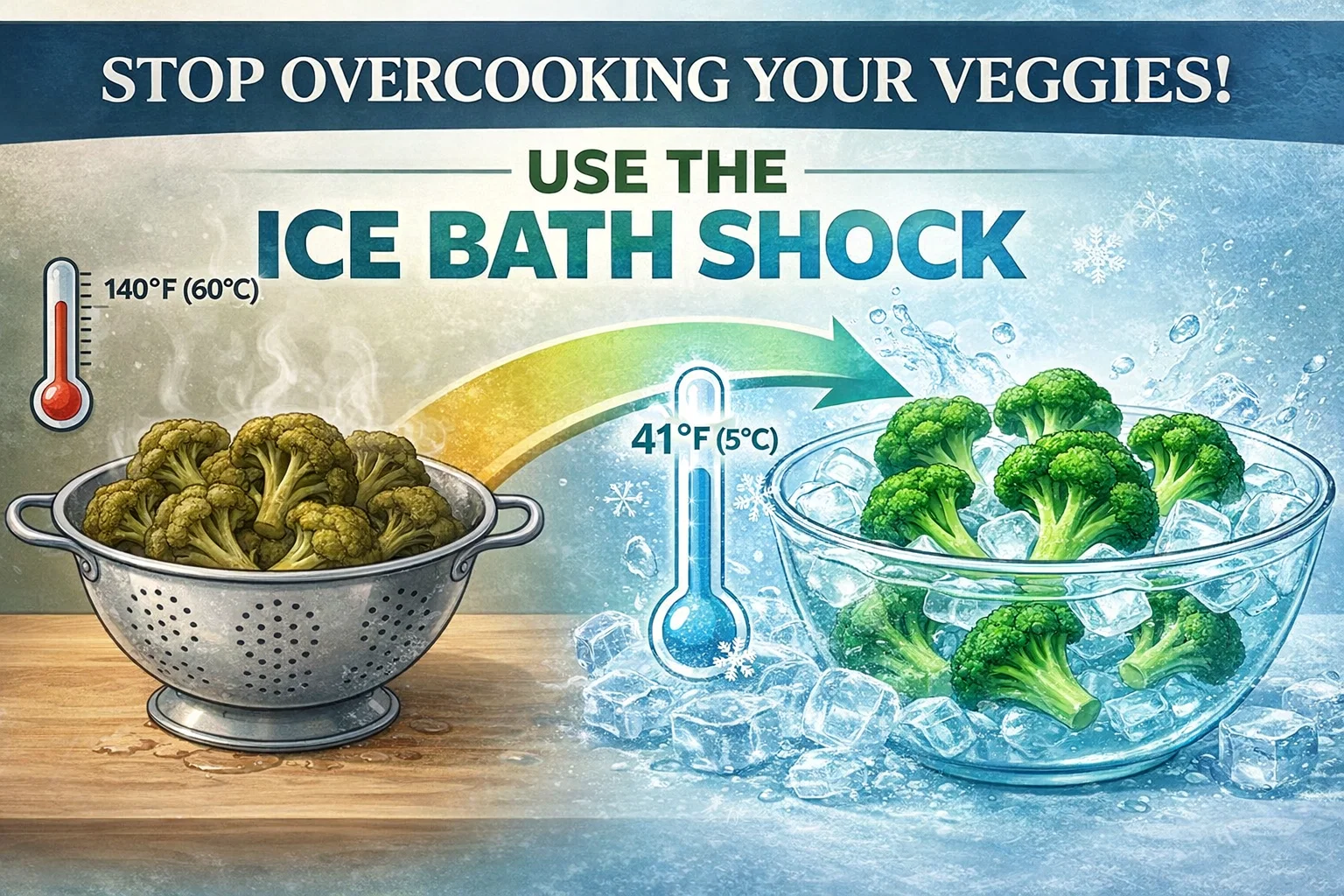
Most home cooks follow a standard routine: boil the water, cook the veggies until they look right, and then drain them in a colander on the counter. While this seems logical, it is actually the biggest mistake you can make if you value texture and color. This process is known as slow air cooling, and it triggers a chain reaction of culinary failures. Because air is a poor conductor of heat, your vegetables sit in a cloud of their own steam. The temperature remains well above 140 degrees Fahrenheit for several minutes, allowing carryover cooking to continue long after the heat is turned off.
Thermal Degradation and Nutrient Loss
When vegetables are subjected to prolonged heat, they undergo thermal degradation. This is not just about aesthetics; it is about the actual chemical makeup of your food. Sensitive vitamins, particularly Vitamin C and various B vitamins, are heat-unstable. The longer your broccoli sits in that colander steaming itself, the more these essential nutrients degrade. If you are focused on holistic wellness and getting the most out of your produce, skipping the cold shock is essentially leaving nutrition on the table.
The Science Behind the Mushy Texture
If you have ever bitten into a vegetable that felt limp or “soggy” despite being cooked for the correct amount of time, you have experienced cell wall collapse. Plant cells are held together by pectin and cellulose. Extended exposure to heat weakens these structures. By the time your veggies have air-cooled, the “snap” is gone, replaced by a soft, unappealing texture that fails to satisfy the palate. The ice bath prevents this by firming up those structures the moment they reach perfect doneness.
Enter the Master Technique: The Thermal Shock
The ice bath is more than just a bowl of cold water; it is a precision tool used by professional chefs to “lock in” the exact state of a vegetable. By plunging blanched produce into water kept at or below 41 degrees Fahrenheit, you create a thermal shock. This immediate drop in temperature halts all enzymatic and thermal action instantly. You are effectively hitting the “pause” button on the cooking process, ensuring that the vegetable you take out of the ice is exactly as crisp and bright as the moment it left the pot.
Chlorophyll Stabilization and Color Lock
One of the most noticeable benefits of the ice bath is the color. Green vegetables contain chlorophyll, which gives them their appetizing glow. However, when heat is applied for too long, a chemical reaction occurs where the magnesium in the chlorophyll is replaced by hydrogen. This transforms the vibrant green into a dull, brownish-olive color known as pheophytin. The thermal shock stabilizes the chlorophyll, ensuring your meal looks as good as it tastes. This is especially important if you are hosting a dinner party or documenting your recipes for Pinterest or a blog.
The Pro Tips for a Perfect Blanch and Shock
While the concept is simple, the execution requires attention to detail to achieve the best results. Following a few scientific principles will ensure your vegetables come out perfectly every time. From the volume of water used to the way you dry them, every step plays a role in the final quality of your dish.
Why Volume Matters
A common mistake is using a small bowl with just a few ice cubes. When you add a pound of hot, boiling broccoli to a small amount of water, the water temperature rises rapidly. If the water becomes lukewarm, the “shock” factor is lost. The golden rule is to use at least one gallon of water and one pound of ice for every pound of vegetables. This ensures that the water stays cold enough to do its job without being overwhelmed by the heat of the produce. Also, avoid overcrowding the bowl; the veggies need space for the cold water to circulate around every floret and stem.
Mastering the Timing
Timing is perhaps the most critical element of the blanching process. A great rule of thumb for beginners is the “one-to-one” ratio. If you blanched your green beans for three minutes in boiling water, they should spend exactly three minutes in the ice bath. Cooling them for too little time allows the core temperature to stay high, while cooling them for too long can lead to waterlogged vegetables that lose their flavor. Set a timer for both steps to maintain consistency.
The Importance of Inactivating Enzymes
For those who love gardening and preserving their own food, blanching and shocking is a mandatory step before freezing. Vegetables contain enzymes that continue to work even in the freezer, leading to loss of flavor, color, and texture over months of storage. Blanching uses heat to inactivate these enzymes, while the ice bath stops the heat from overcooking the produce. This dual action is the secret to having “fresh” tasting garden peas in the middle of winter.
Completing the Process: Dry Thoroughly
Once your vegetables are chilled and crisp, your work is not quite done. Drying is the final, often overlooked stage of the process. If you are prepping veggies for a salad or a stir-fry, excess water will dilute your dressings and sauces, making the final dish taste bland. If you are freezing the produce, excess moisture will lead to ice crystals and freezer burn. Use a clean kitchen towel or a salad spinner to pat the vegetables completely dry after they come out of the shock. This ensures that when you add oil or seasoning, it sticks to the vegetable rather than sliding off in a puddle of water.
Creative Uses for Your Perfectly Blanched Veggies
Now that you have mastered the technique, what can you do with your professional-grade produce? Blanched and shocked vegetables are the backbone of high-quality meal prepping. You can keep a container of crisp, bright broccoli in the fridge for quick additions to grain bowls, or use perfectly snapped green beans for a classic Nicoise salad. Because the texture is preserved, these veggies hold up much better to reheating than those that were air-cooled and already mushy.
A Sustainable and Holistic Approach to Cooking
Adopting the ice bath method fits perfectly into a lifestyle focused on mindful eating and waste reduction. When food tastes better and stays fresh longer, you are less likely to let it go to waste in the back of the refrigerator. Furthermore, the preservation of nutrients aligns with a holistic approach to health, ensuring that the fuel you give your body is as potent and beneficial as possible. It is a small change in your kitchen workflow that yields massive returns in both flavor and wellness.
Level Up Your Kitchen Routine Today
The transition from a novice cook to a kitchen pro often involves understanding these small, scientific “hacks” that change the chemistry of food. Stopping the overcooking of your vegetables is one of the easiest ways to improve the quality of your meals overnight. By respecting the heat and mastering the cold shock, you ensure that every bite is filled with the crunch, color, and vitamins that nature intended. Next time you reach for the steamer basket or the boiling pot, make sure you have your bowl of ice water standing by. Your taste buds, and your health, will thank you for it.
Whether you are a seasoned gardener looking to preserve your harvest or a busy professional trying to make your meal prep more appetizing, the ice bath is a technique that belongs in your culinary repertoire. It is simple, effective, and backed by food science. Give it a try during your next kitchen session and see the vibrant difference for yourself. Happy cooking!