How to Boost Real Dopamine Habits for Creativity, Motivation Self-Love
In our modern, ultra-connected world, we’re constantly bombarded by quick, digital “hits” of dopamine. From the instant gratification of social media likes to the short-lived thrill of online shopping, our brains are frequently in a state of high-intensity, short-duration stimulation. This constant seeking of easy rewards can leave us feeling drained, unfocused, and, ironically, less motivated in the long run. The good news is that there’s a better way to fuel your brain: by focusing on “real” dopamine—the sustained sense of accomplishment and genuine well-being that comes from meaningful activities, deep connection, and consistent self-care.
What Exactly is Real Dopamine and Why Do We Need It?
You may think of dopamine simply as the “pleasure chemical” in your brain, but its role is far more complex and vital. It’s a neurotransmitter, a chemical messenger, that plays a critical role in your brain’s reward system. Its primary job is to motivate behavior by creating feelings of pleasure and anticipation for a reward. However, the type of reward matters immensely.
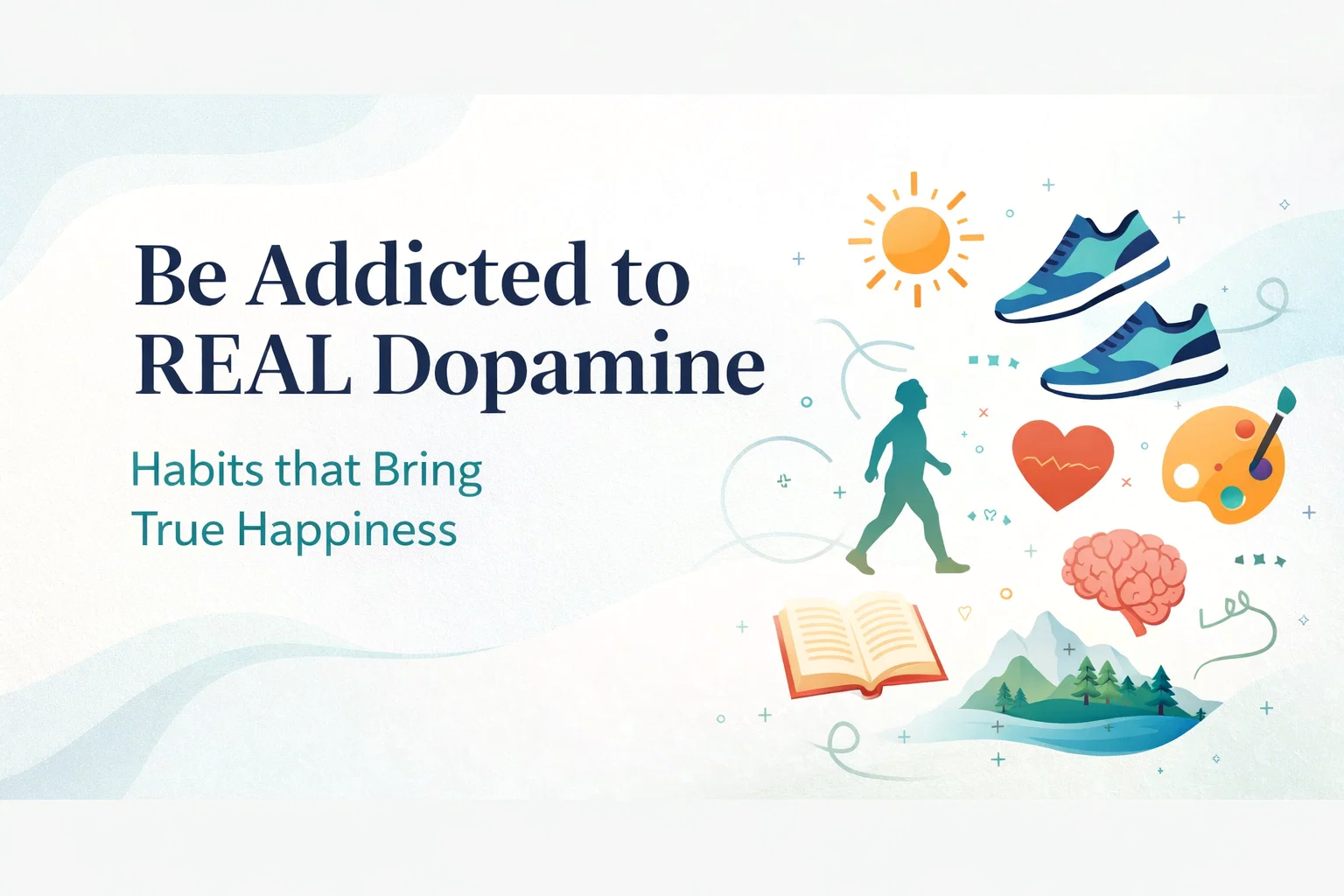
“Real” dopamine, as referenced in the inspiring image at the top of this post, isn’t about the fleeting high of a snack or a funny video. Instead, it’s the slow-burn, profound reward that your brain produces after you’ve engaged in activities that genuinely contribute to your well-being, personal growth, and social connection. Unlike the crash that follows artificial dopamine, this genuine dopamine builds a foundation for lasting motivation and a stronger sense of self.
Decoding the “Fake” Dopamine Economy
To truly understand how to seek the real thing, we must first understand its counterpart. The digital age has expertly hijacked our brain’s reward pathways. App developers, social media companies, and even marketing strategies are all designed to trigger quick dopamine releases. This creates a powerful cycle of wanting and receiving, leading to what some call “dopamine chasing.”
The Problem With Easy Rewards
When our brains get accustomed to getting pleasure with minimal effort, our baseline for reward threshold shifts. It starts requiring more and more stimulation to feel the same level of satisfaction. This can manifest as an inability to focus on longer-term projects, a constant need to check your phone, and a sense of chronic boredom when you’re not actively being stimulated by technology. In essence, it burns out your reward receptors, making genuine achievement feel less rewarding.
Cultivating Real Dopamine: 15 Practical Habits for a Rewarding Life
The image we started with serves as a powerful checklist. Let’s break down these items and explore exactly how these real-world activities stimulate your brain to produce genuine well-being and fuel your creativity.
1. Basking in Morning Sunlight
Stepping outside in the morning sunlight does far more than just wake you up. Natural light, especially early in the day, is a potent trigger for your brain to produce serotonin and dopamine. It regulates your circadian rhythm, which is your body’s internal clock. A healthy, synchronized circadian rhythm is foundational for good mood, strong energy levels, and focused attention throughout the day. This simple, free act sets the stage for a productive and naturally motivated day.
2. Moving Your Body Regularly
Exercise is one of the most effective and well-documented ways to boost dopamine levels. It’s not just about getting fit or losing weight; it’s about altering your brain chemistry. The powerful effect known as “runner’s high” isn’t just endorphins; it’s heavily influenced by the sustained release of dopamine in response to physical exertion. The best part is that it doesn’t have to be a high-intensity workout. Regular, consistent movement—whether it’s a brisk walk, a yoga session, or dancing in your living room—will all contribute to a healthier, more reward-sensitive brain.
3. Celebrating the Progress You Worked For
Perhaps one of the most classic sources of dopamine is achievement. However, it’s not just about the final win. The brain’s reward system is designed to reward you throughout the process of working toward a goal. When you work consistently on a challenging project and see tangible, incremental progress, your brain releases dopamine in anticipation and celebration of the smaller milestones. This keeps you engaged, motivated, and resilient through the tough parts.
4. Engaging in Deep Conversations and Genuine Connection
We are social beings. Forging genuine connections with others is a fundamental human need and a potent source of real dopamine. Deep, meaningful conversations where you feel heard, understood, and validated create a sense of belonging and release oxytocin and dopamine. This is not about surface-level interactions or accumulating a high “friend” count online. It’s about vulnerability, shared understanding, and building real-world social bonds. Making time for distraction-free connection with loved ones is essential for your mental and emotional well-being.
5. Setting a Goal and Showing Up Every Day
Dopamine is intimately linked with anticipation and goal-directed behavior. The very act of setting a clear, achievable goal (and even better, a small, tangible micro-goal) signals to your brain that something rewarding is on the horizon. When you then pair that goal with the daily discipline of taking even a small, consistent step towards it, you create a beautiful cycle. You are constantly providing your brain with reasons to release dopamine—both from the satisfaction of consistent action and from seeing your dream come closer to reality.
6. The Creative Act: Reading, Writing, or Making Something from Scratch
Creating something where nothing existed before is a powerfully rewarding experience. This isn’t just for artists. Writing a journal entry, solving a difficult puzzle, learning to knit, or even meticulously assembling a piece of furniture all activate your brain’s problem-solving and accomplishment pathways. The focus, problem-solving, and ultimate completion required by creative flow offer a huge dopamine payout.
7. Cooking Real Food and Savoring It
We have a complex relationship with food, often turning to convenient, highly processed options for a quick dopamine hit. However, preparing and eating “real,” whole foods provides a more sustained sense of well-being. The process of cooking—the smells, the tactile engagement, the sense of crafting something nurturing—can be its own reward. When you finally sit down to eat a healthy meal you’ve prepared, taking the time to truly savor the flavors, textures, and nourishment, you create a rich, sensory experience that’s deeply satisfying on a core level.
8. Finding Solace in Nature Walks and Hikes
Spending time in nature has a profound, scientifically validated effect on our brain and stress levels. It lowers cortisol, the stress hormone, while naturally boosting serotonin and dopamine. The varied, non-overwhelming sensory inputs of nature—the sound of birds, the rustle of leaves, the vastness of the landscape—allow our brains to rest from the artificial, high-intensity stimulation of urban and digital environments. This restoration makes us more sensitive to the simple, authentic pleasures of life.
9. Listening to Music That Gives You Chills
We all know the powerful emotional response that music can evoke. That literal “chill” you feel up your spine during a powerful musical passage is a direct indicator of a large dopamine release in your brain’s nucleus accumbens, a core part of the reward system. Music can instantly shift your mood, evoke powerful memories, and motivate action, making it one of the most universally accessible and enjoyable ways to experience a powerful, natural dopamine spike.
10. Entering a Creative Flow
The state of “flow” is when you are so deeply absorbed in an activity that time seems to disappear. This state is often found during deeply creative work—like painting, playing an instrument, or complex coding—but can also be experienced during physically engaging sports or deep problem-solving. It’s not just a subjective feeling; it’s a distinct physiological state marked by a powerful release of several neurotransmitters, including a sustained and potent flow of dopamine. When in a flow state, your brain is functioning at an optimal level, and the experience itself is deeply intrinsically rewarding.
11. Doing Hard Things and Realizing You Can Handle Them
We are designed for growth. Our brains are not meant to just take the path of least resistance. There is a specific kind of satisfying, enduring dopamine release that comes from voluntarily choosing to do a difficult task, struggling through it, and ultimately realizing you are capable of handling that challenge. This builds self-confidence, competence, and resillience, showing you that you are not just a passive recipient of your environment, but an active, competent force in your own life.
12. Practicing Quiet Focus Without Notifications
Our phones are designed to hijack our attention with constant beeps, buzzes, and pop-ups. Each one promises a new bit of stimulation—a fake dopamine opportunity. Practicing deliberate, undisturbed focus on a single task—whether it’s reading a difficult book, working on a complex project, or just being present in the moment—is like taking a “dopamine detox.” In that space of quiet focus, your brain becomes recalibrated. It learns that it doesn’t need constant external stimulation to be engaged and satisfied, leading to a much higher level of real-world fulfillment.
13. Experiencing Laughter That Hurts Your Cheeks
Genuine, uncontrollable laughter is perhaps one of the most potent, natural sources of dopamine. It lowers stress hormones and releases a powerful cocktail of neurotransmitters that boost your mood and create strong social bonds. Laughing with friends or loved ones, sharing stories, and finding the humor in life isn’t just a diversion—it’s essential for your emotional health and provides a large, immediate, and genuinely joyful dopamine reward.
14. Finding Real Rest and Deep Sleep
It’s easy to mistake watching TV or doom-scrolling with rest. But real rest, and crucially, deep sleep, is when your brain does its deep-level cleaning, memory consolidation, and neurotransmitter replenishment. During slow-wave sleep and REM cycles, your brain effectively recharges its batteries. Going to bed on time and creating a strong sleep hygiene routine ensures you wake up with a well-rested brain, ready to produce and utilize dopamine efficiently. A well-rested brain is a motivated, happy brain.
15. Helping Someone Without Expecting Anything in Back
The most powerful form of real dopamine is often the quietest. Acts of genuine, altruistic kindness, where you give your time, effort, or support to another person without any expectation of a return, trigger your brain’s social reward pathways in a unique way. It builds a sense of purpose, community connection, and profound intrinsic worth. Knowing you’ve made a real, positive difference in someone’s life provides a lasting, meaningful satisfaction that no digital reward can ever match.
Conclusion: Crafting a Life You Are Truly Addicted To
The choice is simple, but not necessarily easy. You can either be a passive consumer in the dopamine-seeking economy, always chasing the next easy fix and feeling perpetually drained. Or, you can be an active, conscious creator of your own well-being. By filling your days with the meaningful actions outlined above, you can build a more rewarding, satisfying, and inspired life, rooted not in fleeting pleasures but in genuine, lasting accomplishment.