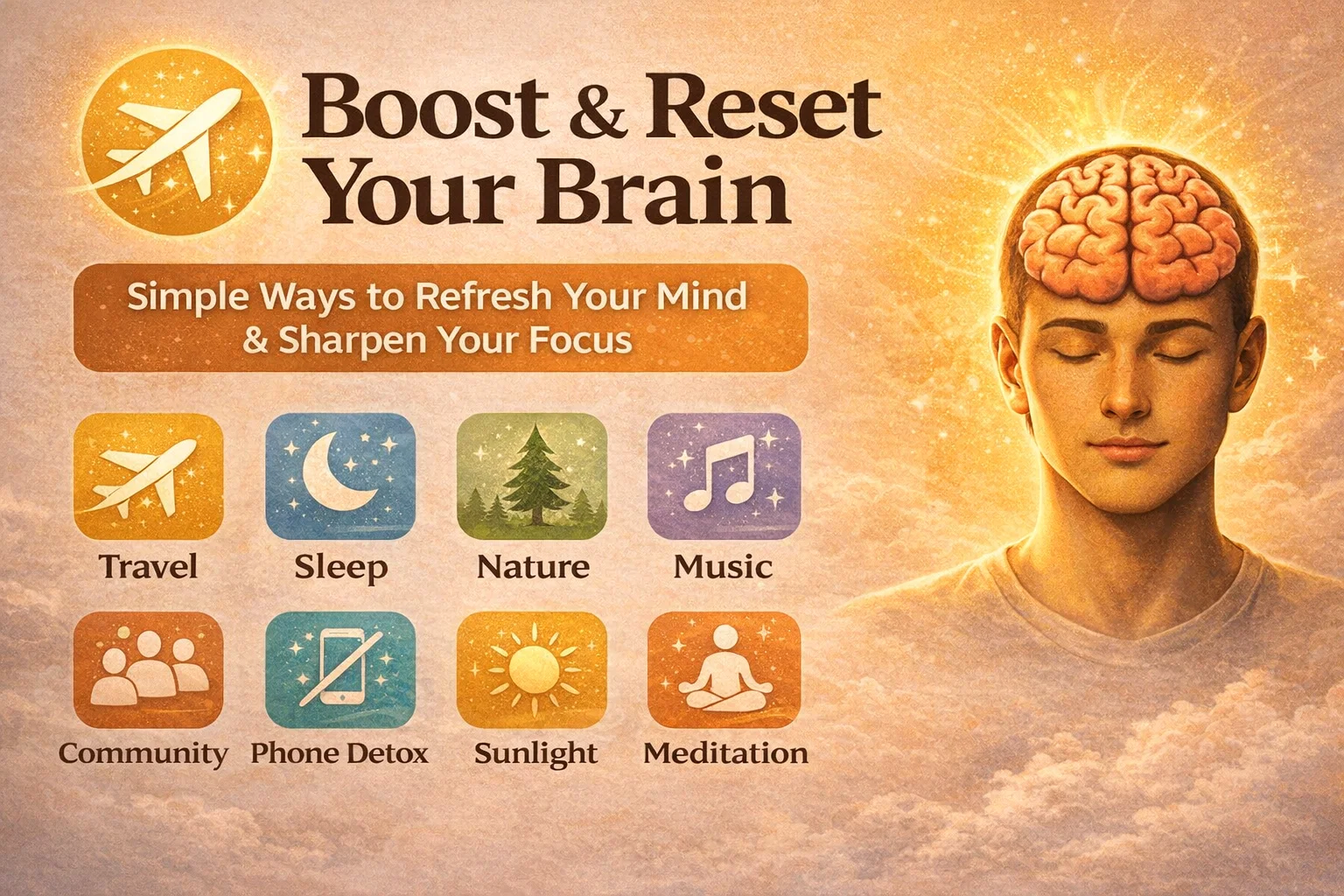
How to Boost Reset Your Brain Mental Health Tips Wellness Facts Printable
In a world that never stops buzzing, your brain is the most hardworking processor you own. From the moment you wake up to the late-night scroll on your phone, your mind is navigating a constant stream of data, emotions, and decisions. However, just like any sophisticated system, it can become overloaded. Brain fog, persistent fatigue, and a lack of creative spark are often the internal signals that you are overdue for a system reboot. Learning how to reset your neural pathways isn’t just a luxury for the weekend; it is a fundamental pillar of holistic health that allows you to show up as your best self every single day.
The Science of Neural Regeneration and Mental Clarity
Understanding the ways to boost and reset your brain starts with acknowledging neuroplasticity. This is the incredible ability of the brain to reorganize itself by forming new neural connections throughout life. When we engage in specific “reset” activities, we aren’t just resting; we are actively helping our brains prune away the stress of the day and strengthen the pathways that lead to focus and calm. By intentionally choosing habits that nourish the mind, you move from a state of survival into a state of thriving.
How Travel Expands Your Cognitive Horizons
There is a reason why a change of scenery feels so refreshing. Travel forces your brain to step out of its “autopilot” mode. When you navigate a new city, hear a different language, or simply see a landscape you have never encountered before, your brain creates a flurry of new synapses. This cognitive flexibility helps keep your mind sharp and resilient. You do not always need a plane ticket to achieve this; even taking a new route to work or visiting a local park you have ignored can trigger that same sense of expansion and wonder.
The Power of Laughter and Uplifting Your Spirit
Laughter is often called the best medicine, and neurologically, that is quite accurate. A deep, genuine belly laugh triggers a release of endorphins and reduces levels of cortisol, the primary stress hormone. By lowering stress, you are essentially clearing the “noise” in your brain, allowing for a natural reset. It shifts your perspective and reminds your nervous system that you are safe, which is a prerequisite for any meaningful mental recovery.
Daily Habits for a Resilient and Focused Mind
You do not need a massive lifestyle overhaul to start seeing results. Small, intentional shifts in your daily routine can act as a series of mini-reboots that prevent burnout before it starts. The key is consistency and a willingness to step away from the digital noise to reconnect with your physical self.
The Influence of Music on Brain Waves
Music has a direct line to our emotional and cognitive centers. Whether it is upbeat tracks to boost dopamine during a workout or ambient lo-fi beats to help you enter a flow state while working, music influences the frequency of your brain waves. Classical music, for instance, has long been associated with the “Mozart Effect,” potentially enhancing spatial-temporal reasoning. By curating your environment with sound, you can steer your brain toward the specific state you need to achieve.
Hugging and the Soothing Power of Touch
Physical touch, particularly a warm hug, releases oxytocin, often known as the “cuddle hormone.” This chemical helps lower blood pressure and heart rate, signaling to the brain that it can move out of “fight or flight” mode and into “rest and digest.” In a digital-first world, prioritizing real, physical connection with loved ones or even pets provides a deep sense of security that soothes the amygdala and resets your emotional baseline.
Nature as the Ultimate Neural Reset
Humans were not designed to spend 100 percent of their time indoors under artificial lighting. Our brains are deeply attuned to the natural world, and returning to it provides a restorative effect that no app or supplement can truly replicate. If you feel stuck or mentally sluggish, the answer is often waiting just outside your door.
Forest Walking and the Magic of Phytonicides
The Japanese practice of Shinrin-yoku, or forest bathing, is backed by significant research. Trees and plants emit organic compounds called phytonicides, which have been shown to boost our immune systems and reduce stress. When you walk through a forest, the visual complexity of the leaves and the organic sounds of nature engage your “soft attention.” This allows your “directed attention”—the kind used for screens and hard tasks—to rest and fully recover.
Sunlight and the Circadian Rhythm
Morning sunlight is perhaps the most underrated brain hack available. When natural light hits your eyes, it signals your brain to stop producing melatonin and start producing serotonin. This sets your internal clock, ensuring you are alert during the day and ready for deep sleep at night. Without adequate sunlight, your brain can feel perpetually “laggy,” as if it never truly woke up or never truly went to sleep.
Digital Detox and the Necessity of Silence
In the modern era, our brains are constantly bombarded by notifications, pings, and infinite scrolls. This creates a state of “continuous partial attention” where we are never fully present. To truly reset, we must learn to be comfortable with the quiet.
Phone Detoxing to Clear Mental Clutter
Every time your phone vibrates, your brain performs a task switch. These micro-switches are exhausting and drain your cognitive energy. A phone detox—even if it is just for two hours before bed—allows your brain to stop reacting to external stimuli and start processing internal thoughts. This clarity is where your best ideas and most profound reflections usually hide.
The Profound Benefits of Silence
Silence is a rare commodity today, yet it is essential for the brain to process information. Research suggests that just two minutes of silence can be more relaxing than listening to “relaxing” music. Silence allows the brain to enter the “default mode network,” which is the state where we integrate our experiences, think about the future, and engage in creative problem-solving. Make it a goal to spend five minutes a day in total silence, observing your thoughts without judgment.
Physical Foundations of Brain Health
You cannot have a high-functioning mind if you are neglecting the biological vessel it resides in. Mental health is physical health, and the way you treat your body directly dictates the “processing power” of your brain.
Deep Sleep as the Brain’s Cleaning Service
While you sleep, your brain is far from inactive. It activates the glymphatic system, which essentially “washes” away metabolic waste products that build up during the day. Deep sleep is also when memory consolidation happens. Without it, your brain becomes like a computer with too many tabs open and a full cache; it eventually slows down and crashes. Prioritizing seven to nine hours of quality rest is the single most effective way to reset your brain daily.
Hydration and Stretching for Mental Flow
Your brain is about 75 percent water. Even mild dehydration can lead to headaches, irritability, and a significant drop in concentration. Drinking a glass of water is often a faster cure for a mid-afternoon slump than a second cup of coffee. Pair this with gentle stretching to improve blood flow to the head and neck. Physical movement breaks up the stagnation in your body, which in turn breaks up the stagnation in your thoughts.
The Creative and Emotional Reset
Finally, resetting your brain involves giving it healthy outlets for expression. When we bottle up stress or ignore our creative impulses, our mental energy becomes blocked. Using simple tools like a pen and paper can be surprisingly transformative for your neurological well-being.
Reading to Strengthen Neural Pathways
Reading is a complex cognitive task that engages multiple parts of the brain simultaneously. Unlike watching a video, reading requires you to visualize scenes, follow complex narratives, and empathize with characters. This mental “workout” strengthens the white matter in your brain and improves overall connectivity. It is a form of active meditation that pulls you away from your own stressors and into a different world.
Journaling as an Emotional Release
Journaling acts as a manual reset for your emotional state. By putting your thoughts onto paper, you move them from the swirling, disorganized space of your mind into a structured, external format. This process, known as “affect labeling,” helps reduce the activity in the amygdala, making your problems feel more manageable. It turns vague anxieties into concrete tasks or reflections that you can actually address.
Conclusion: Crafting Your Personal Reset Routine
Boosting and resetting your brain is not a one-time event but a continuous practice of self-awareness. By incorporating a variety of these habits—from the stillness of meditation to the physical release of a forest walk—you create a resilient mind that can handle the pressures of modern life with grace. Start small. Perhaps today you choose to sit in silence for five minutes, or you decide to leave your phone in another room while you read a book. Over time, these small acts of neural kindness compound, leading to a clearer, more vibrant, and more energetic version of you. Your brain is a masterpiece; treat it with the care and attention it deserves.
Would you like me to generate a specific 7-day “Brain Reset” challenge schedule based on these points to include as a downloadable or supplementary section?