How to Build a DIY Underground Greenhouse Grow All Winter With No Heater
Imagine walking into a lush, green sanctuary filled with thriving vegetables and vibrant herbs while the ground outside is covered in a thick layer of frost. For most gardeners, winter signifies a period of dormancy and the end of the harvest, but there is a centuries-old secret that allows you to defy the seasons. The underground greenhouse, also known as a Walipini, is a revolutionary approach to sustainable gardening that harnesses the steady temperature of the earth to grow food all year round without the need for expensive heaters or massive electricity bills.
The Magic of Thermal Mass and Natural Insulation
The core philosophy behind an underground greenhouse is remarkably simple yet incredibly effective. While the air temperature above ground can fluctuate wildly between day and night or season to season, the temperature of the earth remains remarkably stable once you go a few feet below the surface. By excavating a pit and topping it with a solar-facing glass or plastic roof, you create a controlled environment that stays warm in the winter and cool in the summer.
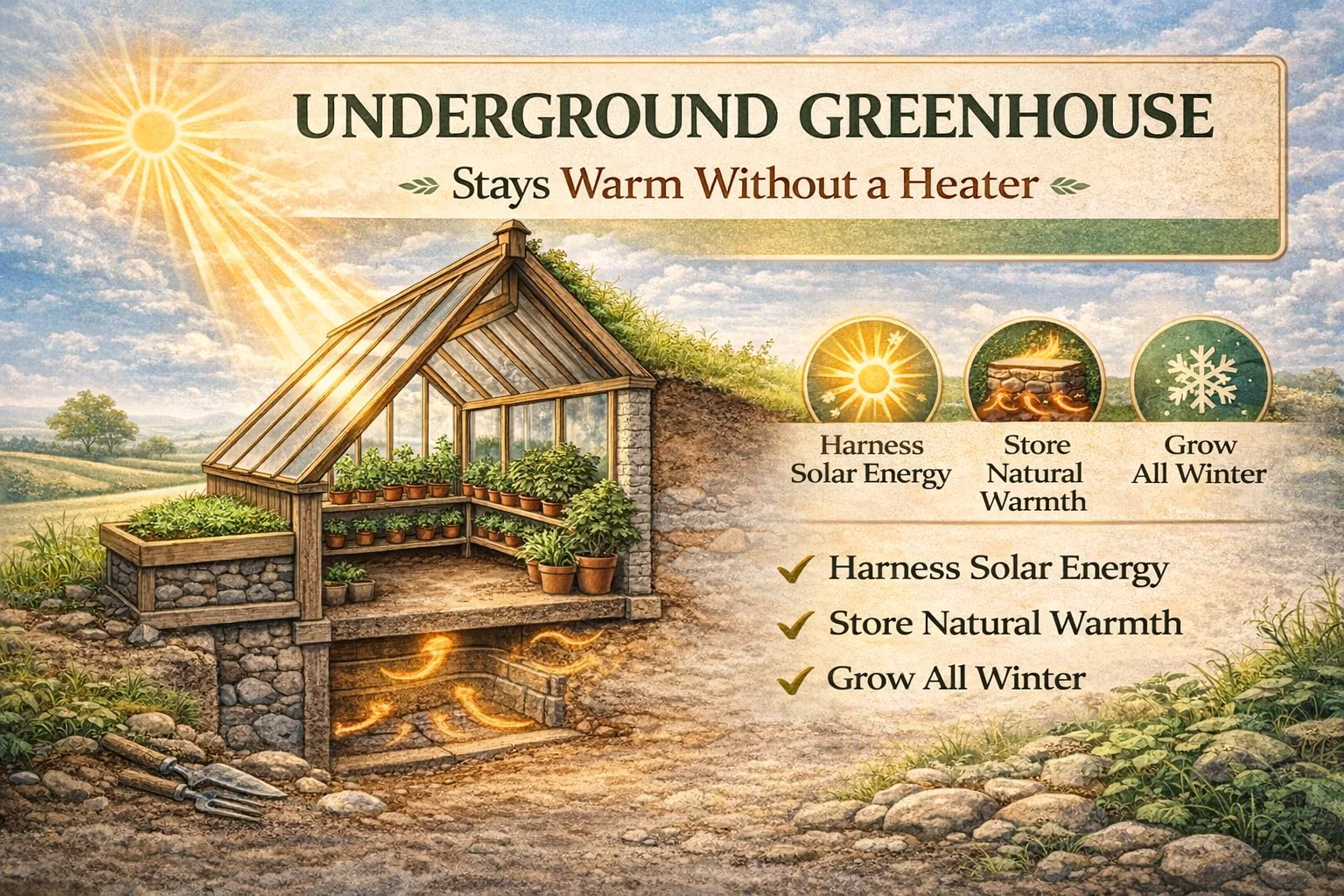
At the heart of this design is the concept of thermal mass. In a standard above-ground greenhouse, heat escapes rapidly through the walls as soon as the sun goes down. In an underground model, the surrounding soil and stone act as a massive battery. During the day, the sun beats down through the angled roof, heating up the interior. This heat is absorbed by the dense walls and a specialized stone and soil heat pit located beneath the floor. When the sun sets and the outside air turns frigid, those stones and walls slowly radiate that stored warmth back into the greenhouse, keeping your plants safe and cozy.
Designing for Maximum Solar Gain
To make the most of this natural heating system, the positioning of the roof is critical. A solar-facing roof, typically angled toward the south in the northern hemisphere, is designed to capture the maximum amount of sunlight during the shorter days of winter. This angle ensures that the sun’s rays hit the glass directly, penetrating deep into the pit to reach the growing trays and the thermal storage area below. This setup does not just provide light for photosynthesis; it acts as a high-efficiency heater fueled entirely by the sun.
Key Components of a High-Performing Walipini
Building an underground greenhouse involves more than just digging a hole. To create a truly productive space that lasts for years, several structural elements must work in harmony. From ventilation to moisture control, every detail contributes to the health of your plants and the longevity of the structure.
- The Insulated North Wall: While the south side is open to the sun, the north wall is typically reinforced and heavily insulated. This wall serves as a shield against cold northern winds and provides additional thermal protection. Using natural stone or earth-filled bags for this wall adds even more thermal mass to the system.
- The Vent System: Even in the winter, an underground greenhouse can get surprisingly hot during a sunny afternoon. A properly placed vent at the highest point of the roof allows excess heat to escape, preventing your plants from wilting and ensuring adequate air circulation to prevent mold and mildew.
- Removable Growing Trays: Efficiency is key in a sunken garden. Using removable trays allows for easy access to your plants and makes it simpler to aerate the soil. This setup also allows you to rotate crops based on their sunlight needs as the seasons shift.
- Stone and Soil Heat Pit: Located beneath the walking path or the growing beds, a layered stone pit is the engine of the greenhouse. This area is specifically designed to trap heat during the day and release it during the night, acting as a natural radiator that maintains a consistent growing climate.
Managing Moisture and Drainage
One of the biggest challenges with underground structures is managing water. Since the greenhouse is built into the earth, it is vital to have a solid drainage plan. This often involves digging the pit slightly deeper than the floor level and filling the base with gravel to allow water to seep away from the roots. Additionally, ensuring that the roof has a proper overhang will prevent rainwater from cascading down the dirt walls and causing erosion or flooding inside your growing space.
Sustainable Benefits of Sunken Gardening
The move toward underground gardening is not just a trend; it is a response to the growing need for food security and sustainable living practices. When you remove the reliance on fossil fuels or the power grid to maintain a growing environment, you gain a level of independence that is hard to match with traditional gardening methods.
Because the environment is so stable, you can often grow crops that would never survive in your local climate. Imagine harvesting citrus fruits or sensitive leafy greens in a region known for harsh winters. Furthermore, the humidity levels in an underground greenhouse tend to stay higher than in above-ground structures, which reduces the amount of watering required. It is a closed-loop system that respects the environment while providing an abundance of fresh, organic produce for your family.
Choosing the Best Plants for Your Underground Oasis
While almost anything can grow in a well-regulated Walipini, some plants truly thrive in this unique environment. Because you are working with a combination of high humidity and stable warmth, you can experiment with a wide variety of crops throughout the year.
Cold-Hardy Staples
During the peak of winter, leafy greens like kale, spinach, and Swiss chard are incredibly productive. These plants appreciate the protection from the wind and the consistent soil temperature. Root vegetables like carrots, beets, and radishes also perform exceptionally well, as the earth surrounding them prevents the soil from freezing, allowing for a continuous harvest.
Warm-Season Extensions
With the added heat from the stone pit, you can start your summer crops like tomatoes, peppers, and cucumbers much earlier than your neighbors. In some climates, you can even keep these plants producing well into the late autumn or early winter. The key is to monitor the internal temperature and use the vents to keep the air moving during the transition between seasons.
Step-by-Step Considerations for Construction
If you are inspired to build your own underground greenhouse, preparation is your best friend. You will need to start by checking your local water table to ensure that your pit won’t turn into a pond during the rainy season. Once you have cleared that hurdle, the excavation process begins.
Many homesteaders choose to use reclaimed materials for their roof, such as old sliding glass doors or polycarbonate sheets, which keeps the project budget-friendly. When building the walls, consider using local stone or even cob for a truly natural look that blends into the landscape. Remember to slope the floor slightly toward a drainage point and never skip the insulation on the northern side. It is the combination of these small details that transforms a simple hole in the ground into a high-tech, low-energy food factory.
The Importance of Soil Quality
Since your plants are growing below the natural ground level, you have the opportunity to create the perfect soil mix from scratch. Filling your growing beds with a rich blend of compost, peat moss, and organic matter will ensure that your plants have all the nutrients they need to grow strong. Because the greenhouse stays warm, the microbial activity in the soil remains high, which means your compost will continue to break down and feed your plants even when the world outside is frozen solid.
A Path Toward Self-Sufficiency
There is a profound sense of peace that comes from stepping down into an underground greenhouse. The air is earthy and sweet, the light is filtered and warm, and the outside world seems to disappear. It is more than just a place to grow food; it is a testament to human ingenuity and our ability to work with nature rather than against it. By utilizing the heat of the sun and the insulation of the earth, we can create a resilient food system that stands the test of time and weather.
Whether you are looking to save money on your grocery bill, reduce your carbon footprint, or simply enjoy the therapeutic benefits of gardening all year long, an underground greenhouse is an investment that pays off in every season. It challenges the idea that we are limited by our climate and invites us to rethink how we interact with the land around us.
Embracing the Future of Year-Round Gardening
As we look for ways to live more sustainably, the lessons provided by the Walipini are more relevant than ever. This design proves that we do not need complex machinery or high energy consumption to achieve incredible results. All we need is a bit of digging, a clear view of the sun, and a deep respect for the natural thermal properties of our planet.
If you have a corner of your yard and a desire to see green leaves in January, the underground greenhouse is calling your name. It is a project that requires sweat equity and careful planning, but the reward of a fresh salad in the middle of a snowstorm is absolutely priceless. Start small, plan carefully, and watch as the earth provides everything you need to grow a bountiful harvest every single day of the year. The journey to a more self-sufficient lifestyle starts just beneath the surface.