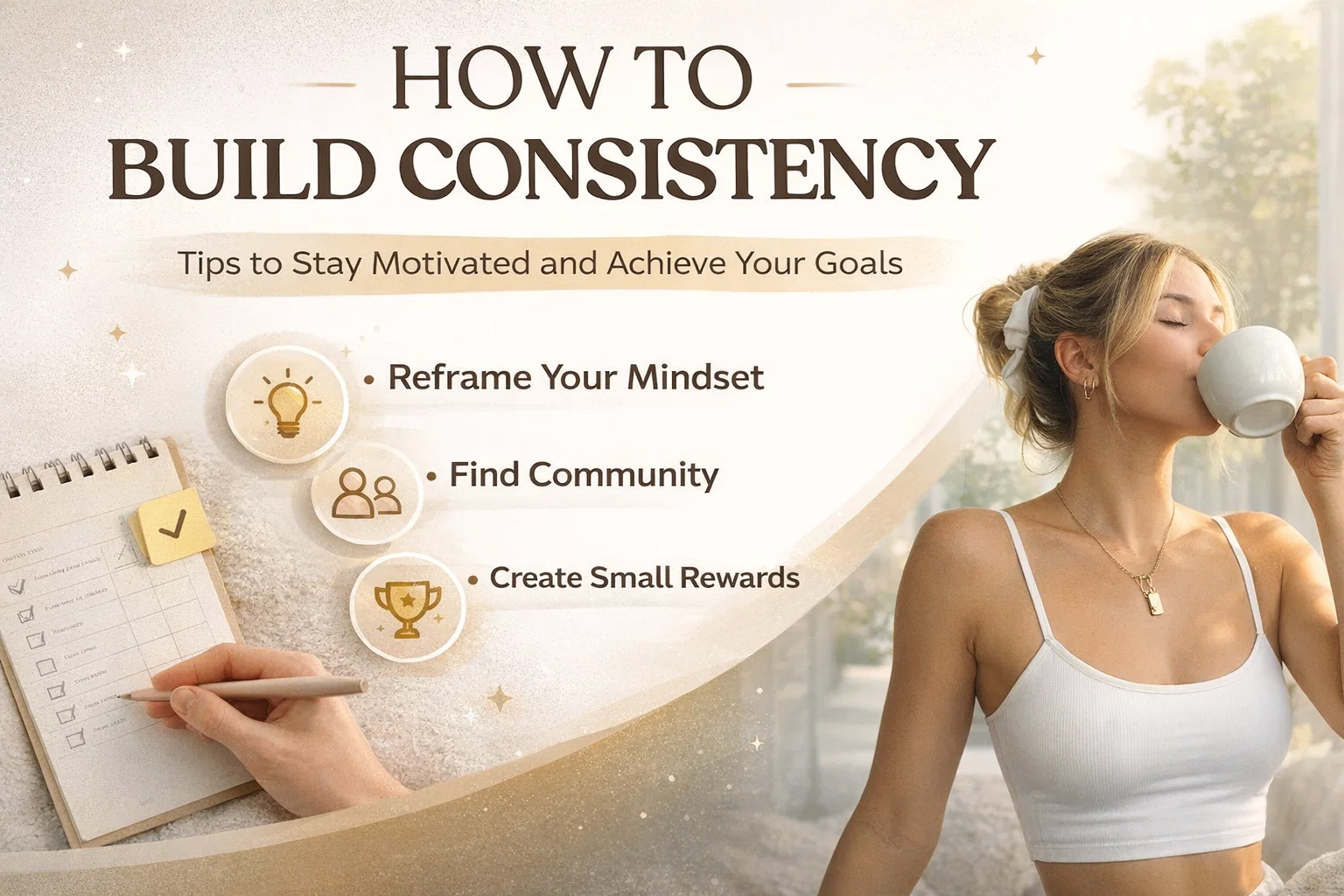
How to Build Consistency 6 Science-Backed Tips for Habits, Discipline Self-Improvement
The journey toward reaching your highest potential is rarely about a single, massive leap. Instead, it is built on the quiet, repeated actions you take every single day. Consistency is the invisible thread that connects your current reality to the version of yourself you are striving to become. While motivation is a wonderful spark that gets the engine running, it is often fleeting and unreliable. To truly transform your life, you need a system that operates even when your energy is low or your schedule is packed. By understanding the psychology of habit formation and leveraging small, manageable shifts in your daily routine, you can move from a cycle of starting and stopping to a lifestyle of sustainable progress.
The Power of the Cognitive Reframe
Most people fail to remain consistent because they view their new habits as a form of punishment or a restrictive chore. If you tell yourself that you have to wake up early or you have to eat a specific way, your brain naturally begins to resist. To overcome this, you must master the art of the cognitive reframe. This involves changing the internal narrative surrounding your goals.
From Obligation to Opportunity
Instead of saying “I have to do this,” try shifting your language to “I deserve to do this.” This simple change in vocabulary transforms an obligation into a reward. You deserve to feel energetic. You deserve to live in an organized home. You deserve the mental clarity that comes from a disciplined morning. When you frame your habits as a gift to your future self, the friction of starting begins to dissolve.
Identifying Your Deepest Why
Surface level goals like losing ten pounds or making more money are often not enough to sustain you through the difficult days. You need to dig deeper into your purpose. Ask yourself why these goals matter on a fundamental level. Perhaps you want to be healthy so you can play with your children without getting tired, or you want to be disciplined so you can finally have the freedom to pursue a passion project. Your “why” is the anchor that keeps you steady when the initial excitement of a new goal wears off.
Building a Supportive Community
Growth does not have to be a lonely endeavor. In fact, humans are biologically wired to seek social validation and connection. By integrating community into your consistency plan, you create a layer of external accountability that makes it much harder to quit.
The Role of Accountability Partners
Having someone who expects you to show up can be a powerful motivator. This could be a friend you text after every workout or a mentor who checks in on your professional milestones. The key is to find someone who is equally committed to their own growth. When you know someone is watching your progress, you are less likely to let yourself slide on the days when willpower is lacking.
Curating Your Digital Environment
In the modern world, your community is not just the people you see in person. It is also the content you consume daily. If your social media feeds are filled with negativity or distractions, your subconscious mind will mirror that energy. Actively curate your digital space by following accounts that inspire you, joining online forums dedicated to your interests, and consuming educational content that reinforces your new identity. Surrounding yourself with virtual peers who are also on a self-improvement journey provides a constant stream of motivation.
Designing for Ease and Removing Friction
One of the biggest mistakes in habit formation is relying purely on willpower. Willpower is a finite resource that gets depleted throughout the day. A more effective strategy is to design your environment so that the right choices are the easiest ones to make.
The Magic of Preparation
Reduce the number of decisions you have to make in the moment. If you want to exercise in the morning, set your clothes out the night before. If you want to eat healthier, spend an hour on Sunday prepping your ingredients. By removing the small obstacles that stand between you and your task, you make it much more likely that you will follow through. This is often referred to as “lowering the barrier to entry.”
The Strategy of Habit Stacking
Habit stacking is a technique where you pair a new habit with one that is already firmly established in your routine. For example, if you want to start a daily stretching routine, do it immediately after you brush your teeth. Because your brain already has a strong neural pathway for brushing your teeth, it can easily “piggyback” the new habit onto the old one. This creates a natural flow to your day and eliminates the need to remember to do something new.
Leveraging Your Internal Brain Chemistry
Understanding how your brain processes rewards can give you a significant advantage in building consistency. Dopamine is the neurotransmitter responsible for motivation and the feeling of reward. If you can learn to trigger dopamine in a healthy way, you can train your brain to crave the very habits that help you grow.
Creating Your Dopa-Menu
A “dopa-menu” is a list of activities that provide a quick boost of positive energy and dopamine without being destructive. This might include a five minute stretch, listening to a favorite song, sipping a delicious tea, or spending a few moments in the sun. When you feel your motivation dipping, choose an item from your menu to reset your brain. This prevents you from reaching for “cheap” dopamine like scrolling through social media or eating sugary snacks.
Focusing on Momentum Wins
Big goals can feel overwhelming, which often leads to procrastination. To combat this, focus on achieving “momentum wins.” Start with the smallest possible version of your task. If you want to write a book, commit to writing just one paragraph. Once you start, the psychological resistance typically fades away, and you find it much easier to keep going. The goal is to get the ball rolling, no matter how small the initial push.
The Shift in Identity
True and lasting behavior change happens at the identity level. You aren’t just a person who is “trying” to be organized; you are an organized person. When your actions are aligned with who you believe you are, consistency becomes natural rather than forced.
Updating Your Personal Narrative
Stop identifying with your past failures. If you used to be the person who struggled with discipline, tell yourself that you aren’t that person anymore. Use affirmations and internal dialogue to reinforce your new identity. Phrases like “I am the kind of person who shows up for myself” or “I value my health and my time” help to cement this new version of you in your mind.
Embracing the Beginner Phase
Part of identity change is being okay with being “bad” at something for a while. Many people quit because they feel embarrassed about being a beginner. Remind yourself that every expert was once a novice. It is not “uncool” to be seen trying or practicing. In fact, the willingness to be seen as a beginner is a hallmark of a growth mindset. Allow yourself the grace to learn, fail, and improve without judgment.
Practicing Mindful Discipline
Discipline is often misunderstood as a rigid or harsh way of living. In reality, discipline is the ultimate form of self-care. It is the act of choosing what you want most over what you want right now. Like a muscle, discipline gets stronger the more you exercise it.
Tackling the Hardest Tasks First
There is a productivity concept often called “eating the frog.” This means identifying the most difficult or daunting task on your to-do list and completing it first thing in the morning. When you finish the task that causes you the most anxiety, you experience a massive sense of relief and accomplishment that carries you through the rest of the day. It prevents the mental drain that comes from dreading a task for hours on end.
Visualizing Your Progress
Sometimes, we feel like we aren’t making progress because the changes are incremental. Using visual tools can help you see how far you have truly come. Whether it is a sticker chart, a habit-tracking app, or a simple journal, seeing a streak of successful days provides a visual reward that encourages you to keep the chain going. Celebrate your wins, no matter how small they might seem to others.
Creating Your Path Forward
Consistency is not about perfection. It is about the direction you are heading. There will be days when you slip up or life gets in the way, and that is perfectly okay. The difference between those who succeed and those who don’t is simply the willingness to get back on track the very next day. You don’t need to wait for a Monday or a New Year to reset your habits. Every moment is an opportunity to choose your “why” and take a small step forward.
By combining a positive mindset with smart environmental design and a supportive community, you are setting yourself up for a lifetime of achievement. You are no longer at the mercy of your moods or your motivation. You are the architect of your own routine, and through the power of consistency, you are building a life that reflects your highest values and dreams. Remember that the journey is just as important as the destination. Embrace the process, love the growth, and keep showing up for the person you are becoming.