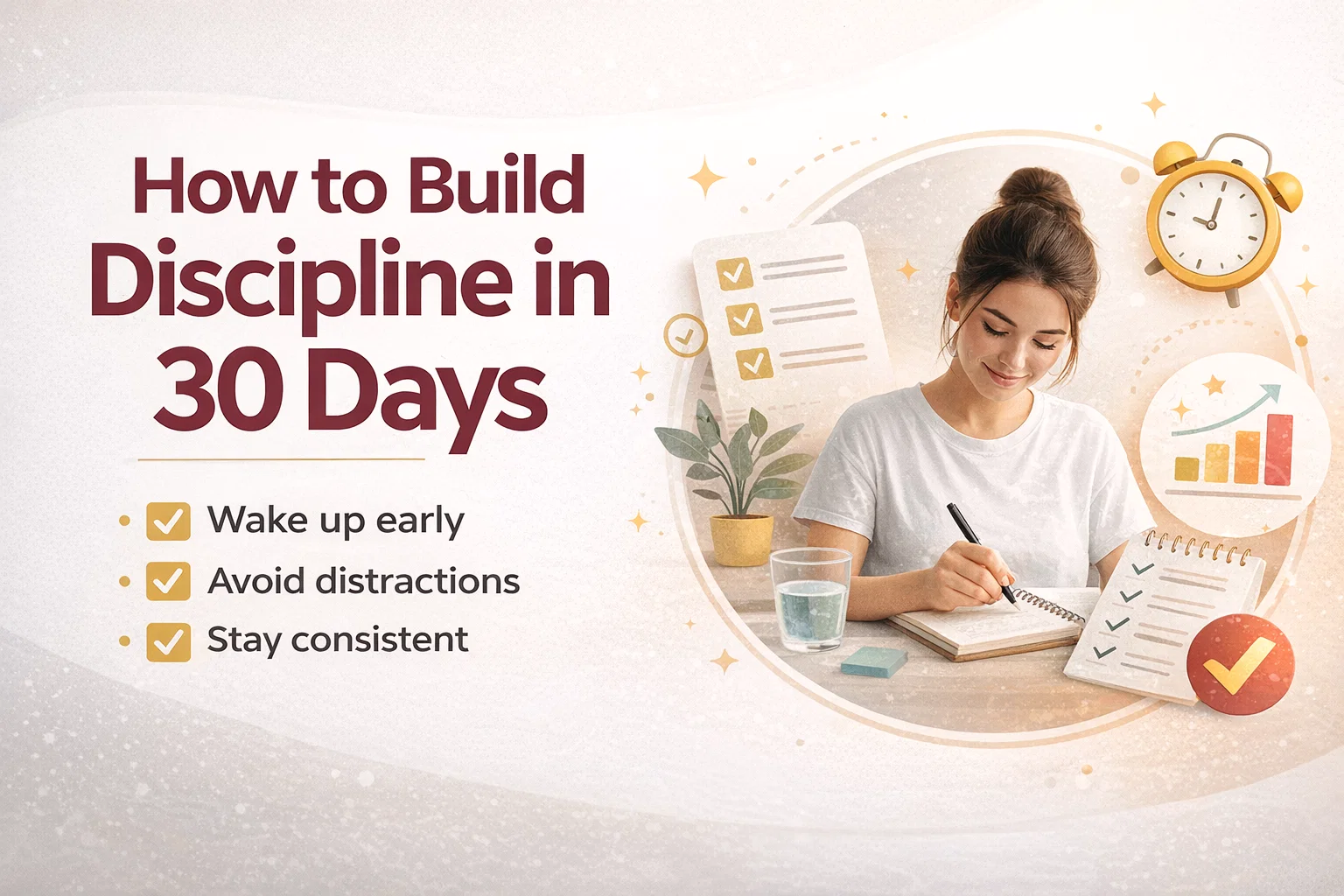
How to Build Self Discipline in 30 Days Daily Habits for Personal Growth and Productivity
We have all been there. You wake up with the best intentions to conquer the world, but by noon, the siren call of social media or the comfort of the couch has completely derailed your plans. It is not that you lack the talent or the desire to succeed; it is simply that your discipline muscles have not been trained yet. Discipline is not a personality trait that some people are born with while others are left behind. It is a skill, a habit, and a daily practice. In the next 30 days, you have the opportunity to rewire your brain and build a foundation of grit that will carry you through the toughest challenges of your life.
The Science of Small Wins
Most people fail at building discipline because they try to change everything at once. They want to go from a couch potato to a marathon runner in forty-eight hours. Science tells us that the brain resists massive, sudden changes. However, it thrives on small wins. When you complete a tiny task like making your bed or drinking water before your morning coffee, your brain releases a small hit of dopamine. This chemical reward makes you want to repeat the behavior. Over thirty days, these micro-habits stack on top of one another, creating a momentum that feels almost effortless. By focusing on a structured daily routine, you are effectively hacking your neurobiology to work for you instead of against you.
The Power of a Consistent Morning Routine
How you start your day determines how you finish it. If the first thing you do is reach for your phone and scroll through stressful news or curated social feeds, you are handing over the keys to your focus to someone else. A disciplined morning is about reclaiming your agency. Starting with a consistent wake-up time builds a sense of reliability within yourself. It tells your subconscious that your word is law.
Hydration and Physical Movement
Before you even think about caffeine, your body needs hydration. Drinking a full glass of water first thing in the morning flushes out toxins and wakes up your metabolism. Following this with even a ten minute workout is enough to get your blood flowing and your brain firing. You do not need a two-hour gym session to be disciplined. You just need to show up for yourself for ten minutes. This small act of physical movement signals to your body that today is a day of action, not passivity.
The Five Minute Journaling Habit
Mental discipline is just as important as physical discipline. Spending five minutes in the morning to journal helps clear the “mental fog” that often leads to procrastination. Use this time to write down your top three priorities. Not ten, not twenty, just three. When you narrow your focus, you eliminate the decision fatigue that often leads to doing nothing at all. By identifying what truly matters, you can direct your energy toward high-impact tasks rather than busy work.
Mastering Focus in a World of Distractions
We live in an economy that profits from our lack of attention. To be disciplined today is to be a rebel. It requires a conscious effort to say no to the constant pings and notifications that fragment our thoughts. Deep work is the ability to focus without distraction on a cognitively demanding task. It is a superpower in the modern workplace.
The No Phone Rule
One of the most effective habits you can adopt during this 30-day challenge is keeping your phone away for the first 30 minutes of the day. This creates a “sacred window” where your thoughts are entirely your own. Similarly, limiting screen time after 9 PM allows your brain to wind down naturally, ensuring that your discipline carries over into a healthy sleep cycle. Without quality sleep, your willpower will be depleted by the time you wake up, making it nearly impossible to stick to your goals.
Single Tasking Over Multitasking
Society often praises multitasking, but the truth is that multitasking is just a fancy word for doing several things poorly at once. Real discipline is found in the ability to finish what you start. When you commit to a task, stay with it until it is done. If you are reading, just read. If you are working on a report, close all other tabs. This practice of single-tasking strengthens your prefrontal cortex, the part of the brain responsible for executive function and self-control.
Building Resilience Through Discomfort
Discipline is often uncomfortable. It means doing the things you know you should do, even when you do not feel like doing them. To build this muscle, you must periodically seek out small amounts of discomfort to prove to yourself that you are in control.
The Cold Shower Challenge
Taking a cold shower is perhaps the ultimate metaphor for discipline. No one actually wants to step into freezing water, but the act of forcing yourself to do it anyway builds incredible mental toughness. It teaches you how to breathe through stress and stay calm when your instincts are telling you to run. This translates directly to your professional life; when a project gets difficult or a conversation becomes tense, you will have the practiced calm to see it through.
Practicing Patience and Silence
In our “instant gratification” culture, the ability to wait is a lost art. Practicing patience in a single situation every day, like waiting in a long line without checking your phone, builds the “waiting muscle” necessary for long term success. Furthermore, spending ten minutes in total silence allows you to confront your own thoughts. Many people avoid silence because it is where their anxieties live, but facing those thoughts is the only way to master them.
The Importance of Environment and Order
Your external environment is often a reflection of your internal state. If your desk is a mess and your sink is full of dishes, your mind will likely feel cluttered and overwhelmed. Discipline involves taking responsibility for the space around you.
The Small Area Cleaning Rule
You do not need to deep clean your entire house every day. Instead, commit to cleaning one small area. Maybe it is your desk, a single drawer, or your car. This habit reinforces the idea that you are a person who maintains order. It creates a visual reminder of your discipline, which in turn inspires you to keep going. A clean space reduces visual noise and allows you to focus more deeply on the work that matters.
Eating for Energy
Discipline extends to what you put in your body. Junk food and high sugar meals provide a temporary spike in energy followed by a massive crash. It is hard to stay disciplined when you are dealing with a “sugar fog.” By choosing to avoid junk food for at least one meal a day, you are making a conscious choice to prioritize your long term health over short term cravings. Try eating without distractions like the TV or your phone. This mindful eating helps you reconnect with your body’s hunger signals and prevents overeating.
Evening Reflections and Planning for Success
The disciplined person does not just react to the world; they plan their interactions with it. How you end your day is the blueprint for how the next one will begin. Reflections are the “data” you need to improve your performance over time.
Plan Tomorrow Before Bed
One of the biggest causes of morning procrastination is not knowing where to start. By planning your next day before you go to sleep, you allow your subconscious to work on those problems while you rest. You wake up with a clear roadmap, which eliminates the friction of starting. This simple five minute habit can double your productivity because it removes the “what should I do now?” phase of your morning.
The Gratitude and Learning Loop
End your night by practicing gratitude and reflecting on what you learned. Gratitude shifts your mindset from what you lack to what you have, reducing the stress that often leads to a breakdown in discipline. Reviewing your progress allows you to see how far you have come. If you had a bad day, do not beat yourself up. Discipline is not about being perfect; it is about being persistent. Identify where you slipped up, learn the lesson, and commit to doing better tomorrow.
Rewarding the Hard Work
If discipline feels like a punishment, you will eventually quit. It is essential to integrate rewards into your system. When you finish a particularly difficult task, give yourself a small reward. This could be a walk in the park, a favorite snack, or a few minutes of relaxation. By associating hard work with a positive outcome, you reinforce the neural pathways that make discipline feel like a winning strategy rather than a chore.
Maintaining Momentum Beyond 30 Days
The goal of a 30-day challenge is not just to reach the end of the month. It is to transform these actions into your new normal. By the time you reach the final week, you should find that you no longer have to “force” yourself to wake up early or journal; these things have become a part of who you are. Review your progress at the end of the month and set new goals for the next one. This constant evolution is the hallmark of a truly disciplined life.
Conclusion
Building discipline is a journey of a thousand small steps. By committing to these daily habits, you are doing more than just checking boxes; you are building a version of yourself that is reliable, resilient, and focused. Remember that some days will be harder than others, and that is okay. The secret is to never give up on the process. Stay consistent, stay patient, and watch as your life begins to transform from the inside out. You have the tools, the plan, and the potential. Now, all that is left is to take that first step and keep walking for the next thirty days.
Would you like me to generate some Python code that could automate the scheduling of these tips as social media posts or blog updates?