How to Choose the Right Cooking Oil Smoke Points and Best Uses for Healthy Cooking
Walking into the cooking oil aisle at the grocery store can feel a bit like stepping into a science lab. Between the rows of golden liquids, vibrant greens, and solid fats, there are dozens of choices that promise to make your meals taste better. But as any seasoned home cook knows, not all fats are created equal. The secret to a perfectly seared steak, a crisp stir-fry, or a delicate salad dressing lies in understanding one critical factor: the smoke point. When you understand how different oils react to heat, you unlock a new level of confidence in the kitchen that prevents burnt flavors and keeps your kitchen air clear.
What Exactly Is an Oil Smoke Point?
Before we dive into the specific uses for each oil, it is essential to understand the science behind the smoke point. In simple terms, the smoke point is the temperature at which a fat or oil begins to break down and produce a continuous bluish smoke. At this stage, the oil is no longer just hot; it is literally decomposing. This process is important because it changes the chemical structure of the oil, often leading to the release of free radicals and a bitter, scorched taste that can ruin an entire meal.
When an oil reaches its smoke point, it also loses the nutritional properties that made it healthy in the first place. For instance, the heart-healthy polyphenols in high-quality olive oil are destroyed if the oil is heated too high. By choosing the right oil for the right temperature, you ensure that your food remains nutritious and delicious.
Extra Virgin Olive Oil: The Finishing Touch
Extra Virgin Olive Oil, often referred to as EVOO, is perhaps the most beloved oil in the Mediterranean pantry. It is prized for its rich, peppery flavor and its high concentration of antioxidants. However, it has a relatively low smoke point compared to other fats. This means it is not the best candidate for high-heat frying or roasting at high temperatures.
The best way to use extra virgin olive oil is in its raw form or under low heat. It shines in homemade vinaigrettes, where its complex flavor profile can truly stand out. It is also the perfect finishing oil. Drizzling a bit of high-quality EVOO over a bowl of hot pasta, a fresh Caprese salad, or even a piece of grilled fish right before serving adds a luxurious depth that cooking simply cannot replicate. If you are sautéing vegetables at a low to medium temperature, EVOO works beautifully, but for anything more intense, you might want to reach for a different bottle.
Avocado Oil: The High-Heat Hero
If you love to sear meats or roast vegetables at 400 degrees and above, avocado oil should be your best friend. This oil has one of the highest smoke points of any plant-based fat, often reaching up to 520 degrees Fahrenheit. This makes it incredibly versatile and safe for almost any cooking method you can think of.
Beyond its heat stability, avocado oil is celebrated for its mild, slightly nutty flavor that does not overpower other ingredients. It is an excellent choice for making homemade mayonnaise or for use in baking when you want a heart-healthy fat that won’t make your cake taste like olives. Because it can handle the intense heat of a cast-iron skillet, it is the gold standard for achieving that perfect, crusty sear on a ribeye or scallops without filling your house with smoke.
The Reliability of Canola Oil
Canola oil is a staple in many professional kitchens because it is affordable, neutral, and has a high smoke point. Derived from the rapeseed plant, this oil is treated to be as flavorless as possible. While some people prefer more artisanal oils, canola oil is a practical workhorse for everyday cooking tasks.
Because it does not impart a strong flavor, it is the ideal choice for deep-frying or shallow-frying. Whether you are making crispy fried chicken or homemade doughnuts, canola oil provides a consistent medium that allows the natural flavors of the food to take center stage. It is also a favorite for baking, as it keeps cakes and muffins moist without adding any savory notes that might clash with chocolate or fruit.
Sesame Oil: The Secret to Depth and Aroma
Sesame oil comes in two main varieties: regular and toasted. Regular sesame oil has a medium smoke point and can be used for light sautéing, but toasted sesame oil is almost always used as a flavor enhancer. It has a lower smoke point and an incredibly intense, savory aroma that defines many East Asian dishes.
When working with sesame oil, think of it more as a seasoning than a cooking medium. It is perfect for stir-fries, but usually added toward the end of the cooking process to preserve its delicate aromatics. A small splash in a marinade or a dipping sauce for dumplings can transform a simple dish into something extraordinary. Its rich, amber color and toasted scent bring a level of complexity that other oils simply cannot provide.
Mastering the Stir-Fry
To get the best results when stir-frying, consider using a neutral, high-heat oil like grapeseed oil to do the actual cooking in the wok. Then, just before you pull the pan off the heat, toss in a teaspoon of toasted sesame oil. This technique gives you the benefit of high-heat cooking while maintaining the integrity of the sesame oil’s flavor.
Ghee: The Gold Standard for Sautéing
Ghee, or clarified butter, is a traditional staple in Indian cuisine that has gained massive popularity worldwide. It is made by simmering butter and removing the milk solids and water, leaving behind pure butterfat. Because the milk solids (which burn at low temperatures) are removed, ghee has a much higher smoke point than regular butter.
Ghee offers the best of both worlds: the rich, creamy, toasted flavor of butter and the high-heat stability of an oil. It is perfect for sautéing aromatics like onions, ginger, and garlic, as it infuses them with a deep, nutty richness. It is also incredible for pan-searing fish or basting a steak. If you have ever wanted that buttery restaurant flavor without the risk of the butter turning black in the pan, ghee is your solution.
Grapeseed Oil: The Neutral All-Rounder
Grapeseed oil is a byproduct of winemaking and has become a favorite for those who want a clean, light oil that won’t interfere with the ingredients. It has a high smoke point and a very thin consistency, which makes it feel less greasy than some other vegetable oils.
This oil is particularly good for “neutral” cooking. It is a fantastic base for herb-infused oils because it absorbs flavors beautifully without adding its own. It is also highly effective for searing or roasting when you want the natural taste of the vegetables or meat to be the star of the show. Many chefs prefer grapeseed oil for fondue or for making silky vinaigrettes that stay emulsified longer than those made with heavier oils.
Choosing the Right Fat for Your Health
While smoke points are vital for culinary success, many people also choose their oils based on nutritional profiles. Balancing your intake of different types of fats is a great way to support overall wellness. Here is a quick breakdown of why variety matters:
- Monounsaturated Fats: Found in high concentrations in olive and avocado oils, these are known for supporting heart health and reducing inflammation.
- Polyunsaturated Fats: Grapeseed and sesame oils contain these essential fats, including Omega-6 fatty acids, which play a role in brain function and cell growth.
- Saturated Fats: While ghee contains saturated fats, it is also a source of butyrate, a fatty acid that supports gut health.
By rotating the oils in your pantry, you are not just making your food taste better; you are also providing your body with a wider spectrum of beneficial nutrients. It is a holistic approach to cooking that treats every ingredient as a building block for health.
Pro-Tips for Storing Your Oils
To ensure your oils perform at their best, you must store them properly. Light, heat, and air are the enemies of fresh oil. When oils are exposed to these elements, they can become rancid, which produces an off-smell and a bitter taste.
Keep it Dark and Cool
Store your oils in a cool, dark place, such as a pantry or a cupboard away from the stove. While it might be convenient to keep your olive oil right next to the burners, the constant heat will cause it to degrade much faster. For delicate oils like sesame or walnut oil, you might even consider keeping them in the refrigerator to extend their shelf life.
Check the Harvest Date
Whenever possible, look for harvest dates on bottles of extra virgin olive oil. Freshness is key to flavor and antioxidant content. Most oils are best used within six months to a year of opening. If an oil smells like crayons or old cardboard, it is a sign that it has gone rancid and should be replaced.
Conclusion: Cooking with Confidence
Mastering the art of the smoke point is a fundamental skill that transforms the way you approach every recipe. Instead of simply grabbing the nearest bottle, you can now make an informed decision based on the heat of your stove and the flavors you want to achieve. Whether you are reaching for the high-heat reliability of avocado oil, the rich aroma of sesame oil, or the classic elegance of extra virgin olive oil, you now have the tools to cook with precision.
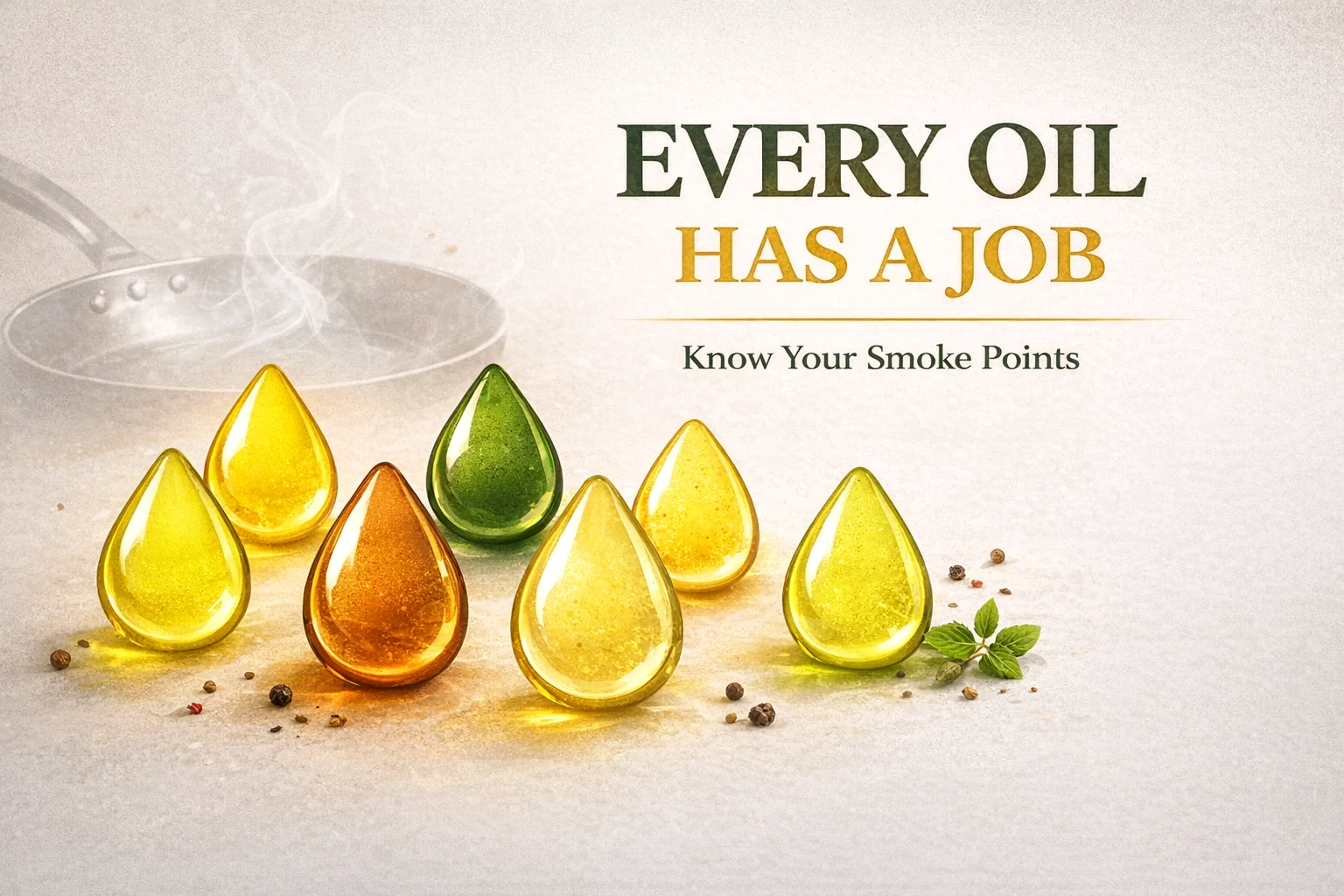
The kitchen is a place for experimentation and joy. By understanding how “every oil has a job,” you remove the guesswork and the stress of burnt pans. So, the next time you prepare a meal, take a moment to consider your smoke points. Your taste buds, your family, and your kitchen air quality will thank you. Happy cooking!