How to Cold Smoke Meat Traditional Methods Guide for Speck, Kielbasa and Ham
Stepping into the world of traditional cold smoking is like entering a time machine. It is a culinary art form that predates modern refrigeration, relying on the delicate balance of salt, air, and cool whispers of smoke to transform raw meat into something extraordinary. When you look at the heritage of European charcuterie, from the rugged mountains of Montenegro to the dense forests of Germany, you see a shared devotion to this slow, transformative process. Cold smoking is not just about flavor; it is about patience, precision, and a deep respect for the ingredients. If you have ever tasted a true Black Forest ham or a perfectly cured piece of Speck, you know that the depth of flavor achieved through this method is simply unmatched by any modern industrial shortcut.
Understanding the Mechanics of a Traditional Cold Smokehouse
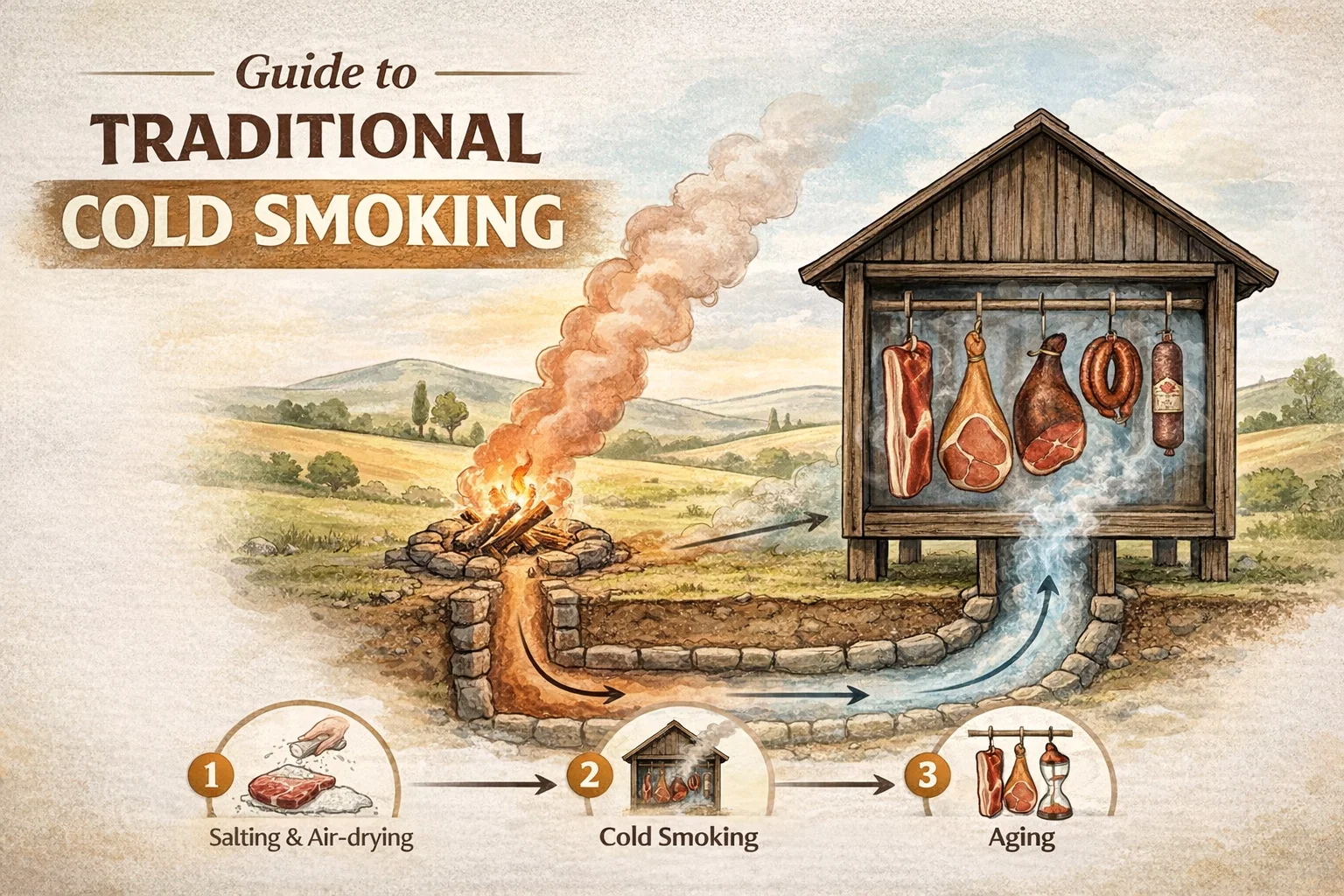
The image of a traditional smokehouse reveals a clever piece of engineering that has remained largely unchanged for centuries. Unlike hot smoking, where the meat is cooked by the heat of the fire, cold smoking requires the smoke to be cooled before it ever touches the product. To achieve this, the fire pit is located several meters away from the actual smoking chamber. The smoke travels through an underground trench or a long pipe, which acts as a natural heat exchanger. By the time the smoke reaches the hanging meats, it has dropped to a temperature below 30 degrees Celsius. This ensures the fat does not melt and the proteins do not denature, allowing the smoke to penetrate deep into the fibers over several days or even weeks.
The choice of wood is the heartbeat of this process. In traditional European methods, specific woods are selected to create signature regional profiles. Beech provides a mild, nutty sweetness that is a staple for many German hams. Oak offers a stronger, more classic smoke profile that pairs beautifully with beef or heavy pork cuts. Juniper berries or branches are often added to the fire to provide a sharp, gin-like botanical aroma that defines specialized alpine meats. Each puff of smoke carries the essence of these woods, slowly layering complexity onto the salted meat.
The Essential Three-Step Journey of Cold Smoking
Creating world-class cured meats is a marathon, not a sprint. The process is generally divided into three distinct phases, each as critical as the last. Skipping or rushing any of these steps will not only result in a poor-quality product but can also lead to safety concerns.
1. Salting and Air-Drying
Before the smoke even enters the picture, the meat must be properly cured. This usually involves a dry rub of sea salt, sugar, and various spices like black pepper, garlic, or bay leaves. The salt serves two purposes: it draws out moisture and creates an environment where harmful bacteria cannot thrive. After the salting period, which can last from a few days to several weeks depending on the size of the cut, the meat is rinsed and hung to air-dry. This drying phase is crucial because it develops a tacky surface called a pellicle. Without a proper pellicle, the smoke will not adhere correctly to the meat, resulting in an uneven and lackluster flavor.
2. The Intermittent Cold Smoking Phase
Cold smoking is rarely a continuous process. In traditional settings, the fire is often lit for a few hours and then allowed to die down, giving the meat time to rest and breathe. This intermittent approach prevents the surface from becoming bitter or over-saturated with soot. Depending on the specific recipe, this cycle can repeat for a few days for lighter items like sausages, or up to several weeks for large, dense hams. The goal is a steady, translucent blue smoke that gently kisses the meat rather than a thick, white cloud that can leave a creosote aftertaste.
3. Maturing and Long-Phase Aging
Once the smoking is complete, the meat enters the final maturation stage. This takes place in a temperature and humidity-controlled environment, often referred to as a “curing cellar.” During this time, the flavors move from the surface into the center of the meat, and the texture becomes firmer as more moisture evaporates. For premium hams like Dalmatinski Pršut, this aging process can last for over a year. It is during this quiet phase that the magic happens, and the sharp smoke mellows into a sophisticated, savory profile.
Iconic Meats Shaped by the Cold Smoke
Different cultures have mastered the use of cold smoke to create unique regional identities. Understanding these varieties helps you appreciate the versatility of the smokehouse. Here are some of the most famous examples depicted in traditional smoking guides:
- Speck: Originating from the South Tyrol region, this is a distinct dry-cured ham that is lightly smoked. It strikes a perfect balance between the saltiness of Mediterranean prosciutto and the smokiness of northern European hams.
- Kielbasa: While there are many types of Polish sausage, the traditional cold-smoked versions are prized for their snap and deep mahogany color. They are often smoked for 3 to 5 days using fruitwoods or oak.
- Black Forest Ham: This German treasure is seasoned with garlic, coriander, and juniper before being cold-smoked over fir or pine sawdust. The result is a dark, almost black exterior and a rich, spicy interior.
- Budapesti Téliszalámi: Also known as Winter Salami, this Hungarian classic undergoes a long, cold smoking process followed by a unique mold-ripening phase that gives it a signature white coating and tangy flavor.
The Importance of Temperature Control and Food Safety
Because cold smoking does not cook the meat, food safety is the number one priority. The “danger zone” for bacterial growth is typically between 4 and 60 degrees Celsius. However, because the meat has been salted and dried, it is much more stable than raw meat. Still, it is vital to keep the smoking chamber below 30 degrees Celsius. If the temperature rises too high, you risk the meat spoiling or the fat becoming rancid. Professional and dedicated home smokers use thermometers to monitor both the internal temperature of the smokehouse and the ambient air. High humidity is also necessary to ensure the meat dries evenly from the inside out, preventing a hard crust from forming on the outside which would trap moisture inside.
Choosing the Right Environment
Traditional cold smoking is best done in the cooler months of the year. This is why many heritage recipes are associated with winter. Cold ambient temperatures make it much easier to keep the smokehouse cool while the fire is burning. If you are attempting this in a warmer climate, you may need to use ice or modern cooling systems to ensure the smoke remains at the appropriate temperature. Modern technology like pellet smokers and smoke generators has made this more accessible, but the principles of the underground trench remain the gold standard for many purists.
Why You Should Embrace the Art of the Slow Smoke
In a world of fast food and instant gratification, cold smoking is a radical act of slow living. It connects us to our ancestors and to the natural world. There is a profound sense of satisfaction in hanging a piece of meat you prepared yourself, tending to a small fire, and watching the seasons change as your ham matures. The flavor you get from a home-cured, cold-smoked product is infinitely better than anything you can buy in a plastic package at the grocery store. It is richer, more complex, and tells a story of craftsmanship.
Beyond the taste, cold smoking is a gateway to self-sufficiency. Learning how to preserve food without electricity is a valuable skill that empowers you to take control of your food supply. It encourages you to source high-quality meat from local farmers and to experiment with local hardwoods, creating a flavor profile that is entirely unique to your backyard.
Conclusion: Starting Your Own Smoking Tradition
The journey of traditional cold smoking is one of discovery and delicious rewards. While the process may seem daunting at first glance, it is built on simple principles that have been refined over thousands of years. By understanding the relationship between the fire pit and the smokehouse, mastering the three stages of curing, and respecting the science of temperature control, you can produce gourmet meats that will be the highlight of any charcuterie board. Whether you start with a simple smoked sausage or aim for a year-long aged ham, the key is to begin with patience and a passion for quality. The smoke is waiting, so why not start your own tradition today? Your taste buds will certainly thank you for the effort.
I can help you further by creating a specific supply list or a step-by-step blueprint for a DIY cold smoke generator. Would you like me to do that for you?