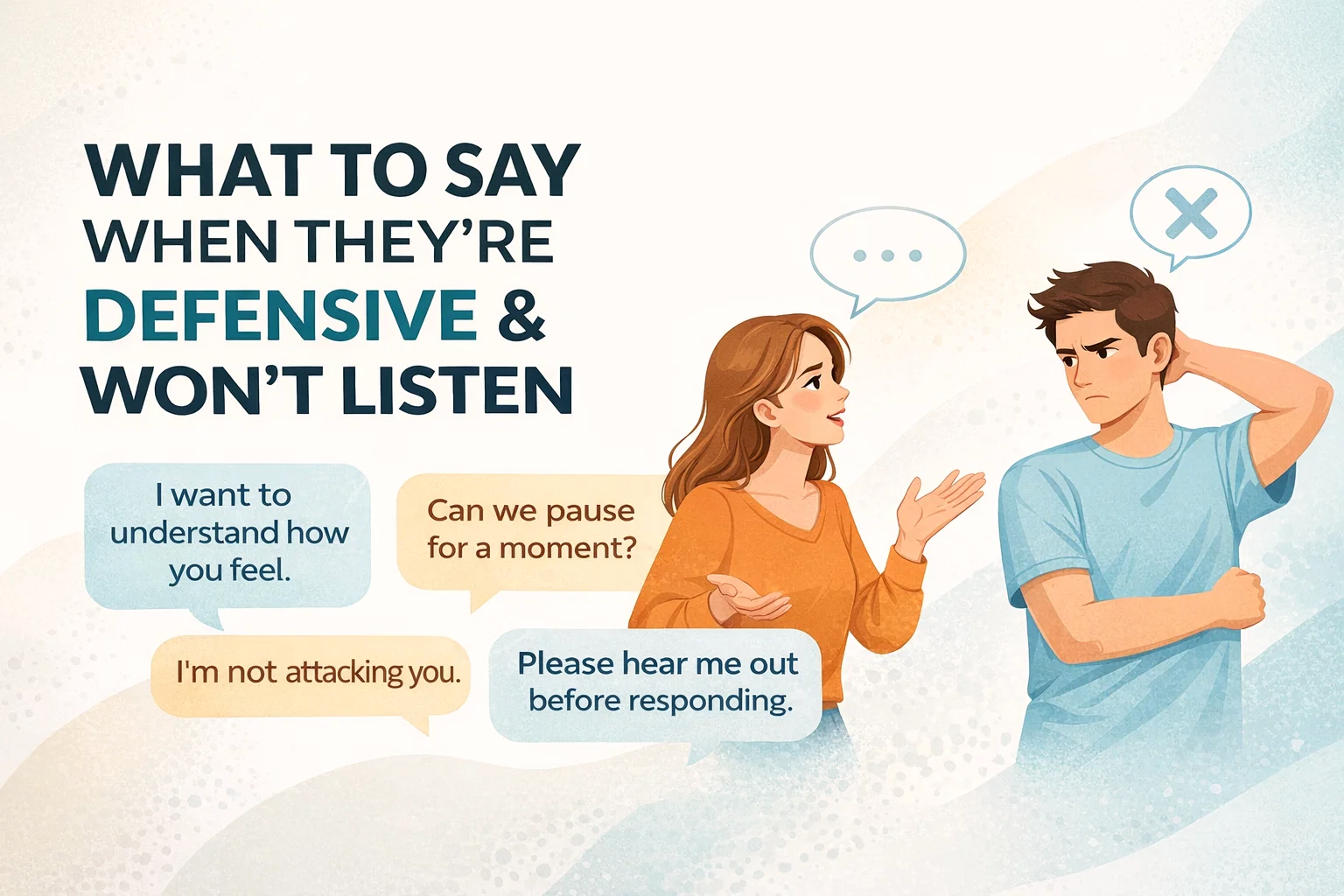
How to Communicate Effectively When Your Partner Is Defensive
Communication is the heartbeat of every meaningful relationship, yet it is often the very thing that breaks down when we need it most. We have all been there: you try to bring up a concern or share how you feel, and before you can even finish your sentence, the other person has already put up their shields. Defensiveness is a natural human response to feeling attacked, but it acts like a brick wall between two people who actually need to connect. When the person you love stops listening and starts building a case against you, the conversation shifts from seeking understanding to winning a trial. Breaking this cycle requires more than just good intentions; it requires a specific set of linguistic tools designed to lower heart rates and open ears.
Understanding Why Defensiveness Happens
To change how we communicate, we first have to understand what is happening in the brain of a defensive person. When someone feels criticized, their nervous system often perceives it as a threat. This triggers the fight or flight response. In a verbal context, the fight response looks like counter attacking, bringing up the past, or minimizing your feelings. They are not necessarily trying to be difficult; they are trying to protect their ego or their sense of safety. By recognizing that defensiveness is often a mask for fear or inadequacy, we can approach the conversation with more compassion and strategy. Instead of pushing harder against the wall, we can learn how to invite them to step around it.
The Power of Soft Startups
The first three minutes of a conversation usually determine how the entire interaction will end. If you start with a harsh tone or a finger pointed at the other person, the result is almost guaranteed to be a shutdown. A soft startup involves lead-in phrases that emphasize your own vulnerability rather than the other person’s perceived failures. Using phrases like I am feeling or I would love your help with makes it much harder for the listener to justify a defensive stance. You are not coming at them; you are inviting them into your inner world.
Phrases That De-Escalate Conflict Instantly
The image provided highlights some of the most effective scripts for turning a potential explosion into a productive dialogue. These are not just words; they are psychological anchors that ground the conversation in safety. Let us break down why these specific phrases work so well in the heat of the moment.
I am not attacking you, I need you to hear how this affected me
This is a powerful clarification. Often, a partner hears your pain as a list of their sins. By explicitly stating that you are not attacking them, you give them permission to lower their guard. You are separating their identity from their actions. This allows them to listen to the impact of the situation without feeling like they are a bad person.
Can we hit pause? I want to talk about this, not fight about it
Sometimes the momentum of an argument is too strong to stop without a conscious intervention. Asking to hit pause is a sign of emotional maturity. It acknowledges that the current trajectory of the conversation is destructive. It re-aligns the goal: the goal is the talk, the understanding, and the resolution, not the victory of one person over the other.
We are on the same team
In the middle of a disagreement, it is easy to view your partner as the adversary. Reminding yourselves that you are on the same team is a total game changer. It shifts the perspective from you versus me to us versus the problem. This simple mental shift can dissolve tension almost instantly because it restores the foundational bond of the relationship.
The Importance of Listening Without Defending
Communication is a two way street, but someone has to go first in modeling the behavior they want to see. If you want your partner to listen without defending, you must be willing to do the same when they speak. This involves active listening, where you are not just waiting for your turn to speak or building your rebuttal while they talk. It means staying present with their words even if they feel unfair or inaccurate in the moment.
Validating the Feeling Not the Fact
One of the biggest hurdles in avoiding defensiveness is the urge to correct the facts. If your partner says you always ignore them, your instinct is to list the five times you listened today. However, validation is not about agreeing with the facts; it is about acknowledging the feeling. You can say, I hear that you feel ignored, and that sounds really lonely. This does not mean you agree that you always ignore them, but it shows you care about their emotional experience. Once a person feels validated, they are much more likely to listen to your side of the story.
Creating a Safe Environment for Difficult Conversations
Beyond the words you use, the environment and timing of your conversation play a huge role. Trying to have a deep, vulnerable talk when one person is tired, hungry, or distracted by work is a recipe for disaster. Professional communicators often suggest scheduling a time to talk. While this might feel clinical or unromantic, it ensures that both parties are emotionally prepared to engage. It prevents the feeling of being blindsided, which is a major trigger for defensive behavior.
The Role of Body Language
Your words can say I love you, but if your arms are crossed and your eyes are rolling, your partner will only hear the hostility. Positive body language includes maintaining soft eye contact, keeping an open posture, and staying at the same physical level as the other person. If one person is standing and the other is sitting, it creates a power imbalance that can feel threatening. Sitting down together signifies equality and mutual respect.
How to Respond When You Feel Yourself Getting Defensive
Self awareness is your best friend in conflict resolution. When you feel that heat rising in your chest or that urge to snap back with a sarcastic comment, that is your signal to slow down. You can actually narrate your internal state to your partner. Saying something like, I am starting to feel really defensive right now because I feel criticized, can be incredibly helpful. It brings the hidden process into the light and allows your partner to adjust their approach as well.
The Three Second Rule
Before responding to a statement that stung, count to three. This tiny gap between stimulus and response allows your logical brain to catch up with your emotional brain. It gives you the space to choose a constructive response rather than a reactive one. In those three seconds, remind yourself of the goal: connection, not protection.
Moving From Understanding to Solutions
As the image suggests, sometimes we are not looking for solutions, just understanding. It is helpful to clarify this at the start of a talk. You might say, I just need to vent and feel heard right now, I am not looking for a fix yet. This takes the pressure off the listener to solve the problem and allows them to focus purely on empathy. Once the emotional air has been cleared and both people feel understood, you can then move into a collaborative problem solving phase.
Building a Vocabulary of Needs
Often we get defensive because we do not know how to express what we actually need. Instead of saying you never help with the dishes, try saying I feel overwhelmed with the housework and I would really value some extra help this week. Shifting from complaints to requests for help changes the dynamic entirely. It gives your partner a clear path to succeed in loving you, rather than a list of ways they have failed you.
Conclusion and Final Thoughts
Mastering the art of communication is a lifelong journey. It is not about never having a fight; it is about learning how to fight well. By using the scripts and strategies discussed today, you can transform your relationship from a battlefield into a sanctuary. Remember that the goal of every difficult conversation should be to leave the other person feeling seen, heard, and valued, even if you do not see eye to eye on every detail. When you prioritize the relationship over the ego, defensiveness begins to melt away, making room for the deep, secure love that everyone deserves. Start small, use the phrases from the guide, and watch how the atmosphere in your home begins to change for the better. Communication is a gift you give to yourself and those you care about most. Practice it with patience and grace.