How to Deal with Pot Stirrers Protect Your Peace and Maintain Your Boundaries
Have you ever had a conversation that started off feeling perfectly normal, only to have someone suddenly steer it toward a painful event from your past? You were moving forward, feeling good, and then, with one comment, you felt as if old wounds were being ripped open again. It is a frustrating, draining experience. In the world of relationships and personal development, these individuals are often called “pot stirrers.”
They might mask their behavior under the guise of being helpful, concerned, or just “keeping it real.” However, the effect is rarely helpful for your peace of mind. Instead, it serves to keep irritation and conflict alive long after you have chosen to release them. Recognizing this behavior is the first step toward reclaiming your serenity. Understanding why this happens and how you can respond is essential for your emotional well-being.
What Does It Mean to Be a Pot Stirrer?
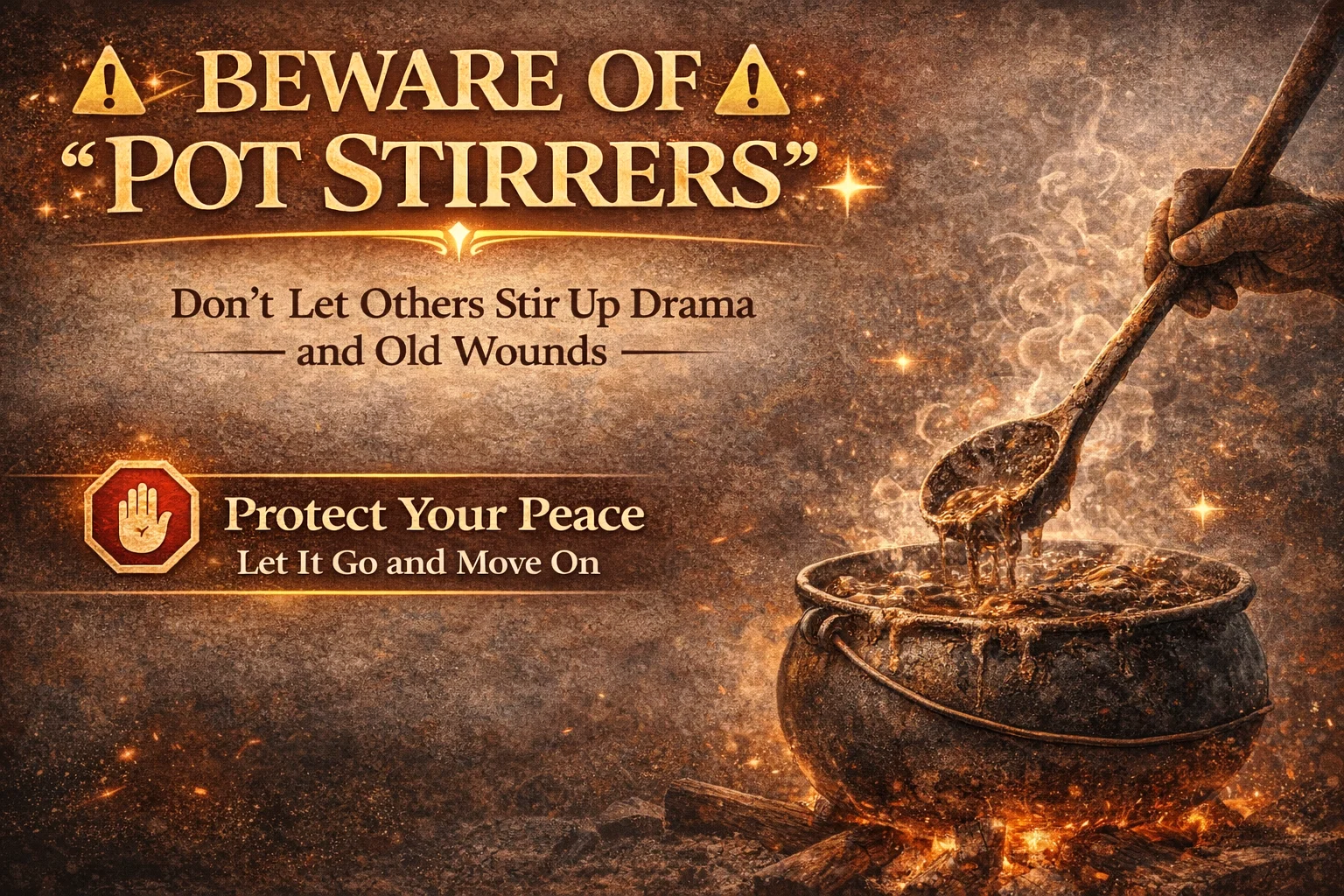
A pot stirrer is someone who thrives on or creates unnecessary drama. They are the individuals who cannot seem to let a sleeping dog lie. In any group setting or one on one relationship, they are the ones who bring up past conflicts, remind you of hurts you have already processed, and stir up emotions that have long since settled. They might frame these interruptions as helpful feedback, a trip down memory lane, or an attempt to “resolve” things that they believe were never truly finished.
The core issue here is not that they are trying to help you. It is that their own inability to find closure or their need for chaotic energy causes them to disrupt your path forward. They are comfortable in the soup of past emotions, and they want you to jump back into that soup with them. When you recognize that their goal is not your growth, you can start to see their actions for what they truly are: a disruption of your peace.
The Disguise of Being Helpful
The most dangerous type of pot stirrer is the one who sounds completely caring. They might say things like, “I am just bringing this up because I care about you,” or “Don’t you think we should revisit what happened last year just to be sure it is resolved?” It is difficult to set boundaries with these people because they hide behind a veneer of kindness. It makes you feel guilty for being annoyed or defensive.
However, true care respects your boundaries. If you have clearly moved on from a situation, a person who truly cares about you will honor that. They will not continuously push you to revisit painful topics. When someone constantly forces you to look backward, they are not helping you heal. They are keeping the irritation alive, preventing you from fully focusing on your present and future.
Why Protecting Your Peace Is Not Negotiable
Your mental and emotional energy is a finite resource. Every time you engage in drama, revisit old wounds, or argue about things that no longer matter in your current life, you are draining your battery. Protecting your peace is not a selfish act. It is a necessary act of self-preservation. When you prioritize your tranquility, you are ensuring that you have the strength to handle the things that actually matter in your life today.
Think of your mental space as a sanctuary. You have put in the work to organize it, clean it up, and make it a place where you can feel secure and happy. When a pot stirrer enters that space and starts throwing around old trash, they are violating your sanctuary. You have every right to protect that space by limiting access, setting firm boundaries, or choosing not to engage in conversations that do not serve your growth.
The Anatomy of Letting Go
Letting go is a powerful, intentional process. It involves acknowledging what happened, feeling the associated emotions, learning the lessons, and then consciously choosing to leave those emotions behind. It is not about pretending that nothing happened. It is about deciding that the event no longer dictates your mood, your behavior, or your worth.
When you have truly let something go, you are at peace with it. It no longer has a hold on you. When a pot stirrer tries to bring it up, they are trying to break that connection. They are testing whether your closure is authentic or just a mask. By staying committed to your decision to release the past, you prove to yourself that your peace is stronger than their need for drama.
How to Respond Without Burning the Soup
You do not need to be aggressive, defensive, or get pulled into an argument to protect yourself. In fact, getting angry or trying to defend your position often gives the pot stirrer exactly what they want: engagement. They want you to stir the pot, because that keeps the energy active and chaotic. The best response is usually short, firm, and final.
Consider using a phrase like, “I have moved on from that.” This sentence is powerful because it establishes a boundary without inviting further discussion. You are not explaining yourself. You are not asking for their permission to move on. You are simply stating a fact about where you currently stand. It shuts down the conversation because there is nowhere for it to go.
Mastering the Art of the Simple Response
Sometimes we feel pressured to explain why we have moved on or to defend our emotional state. We might say, “Well, I don’t think it’s relevant anymore because of x, y, and z.” This provides the pot stirrer with more material to work with. If you give them a reason, they will debate that reason. If you give them an explanation, they will find a loophole.
Keep your responses simple. Here are a few examples of how to handle the situation:
- “I appreciate your concern, but I’ve already processed that and I’m choosing to focus on other things.”
- “I’ve moved on from that, and I’m not looking to revisit it.”
- “That’s in the past for me, and I’d prefer to keep it there.”
These responses are respectful but firm. They clearly indicate that the topic is closed. If they continue to push, you are well within your rights to end the conversation entirely by physically leaving or changing the subject to something completely unrelated.
Choosing Calm Over Conflict
Life will always present us with challenges. We cannot control the behavior of others, including the pot stirrers in our lives. We cannot stop them from talking, and we cannot prevent them from attempting to stir up drama. However, we have total control over our reaction. You can choose to be the calm center of the storm, or you can join in the chaos.
Choosing calm is a conscious decision you make every single day. It means choosing to value your own tranquility more than you value winning an argument or trying to convince someone else that you are right. It means understanding that you do not need their validation to know that you are healing correctly. You are the only authority on your own healing journey.
The Benefits of Choosing Closure
When you stop allowing people to stir your pot, you will notice a significant shift in your daily experience. You will have more energy for the things that you actually enjoy. Your relationships with people who do respect your boundaries will become deeper and more meaningful because you are no longer distracted by the noise of the pot stirrers.
Closure is not a destination you reach and stay at; it is a mindset you maintain. By consistently choosing to walk away from drama, you strengthen your ability to stay closed to what is harmful and open to what is beneficial. This is a vital skill that will serve you well in every area of your life, from your professional career to your closest personal friendships.
Conclusion: Protecting Your Peace is Your Power
You have worked hard to heal, to grow, and to find a place of peace within yourself. Never let someone else’s desire for drama undermine that hard work. Pot stirrers will continue to exist, but their impact on your life depends entirely on your willingness to participate in their games. By recognizing the pattern, setting firm and simple boundaries, and choosing to protect your own inner sanctuary, you maintain your power.
Remember that you have the right to move on from whatever you choose to leave behind. You do not owe anyone a discussion about your past, and you do not need their permission to live your present in peace. Keep your focus on your growth, your goals, and your happiness. Choose calm, choose closure, and above all, choose your own peace. When you protect your peace, you are ensuring that your own life remains soup that is nourishing and peaceful, not something that is constantly being burned by the chaos of others.