How to Lead Different Generations in the Workplace
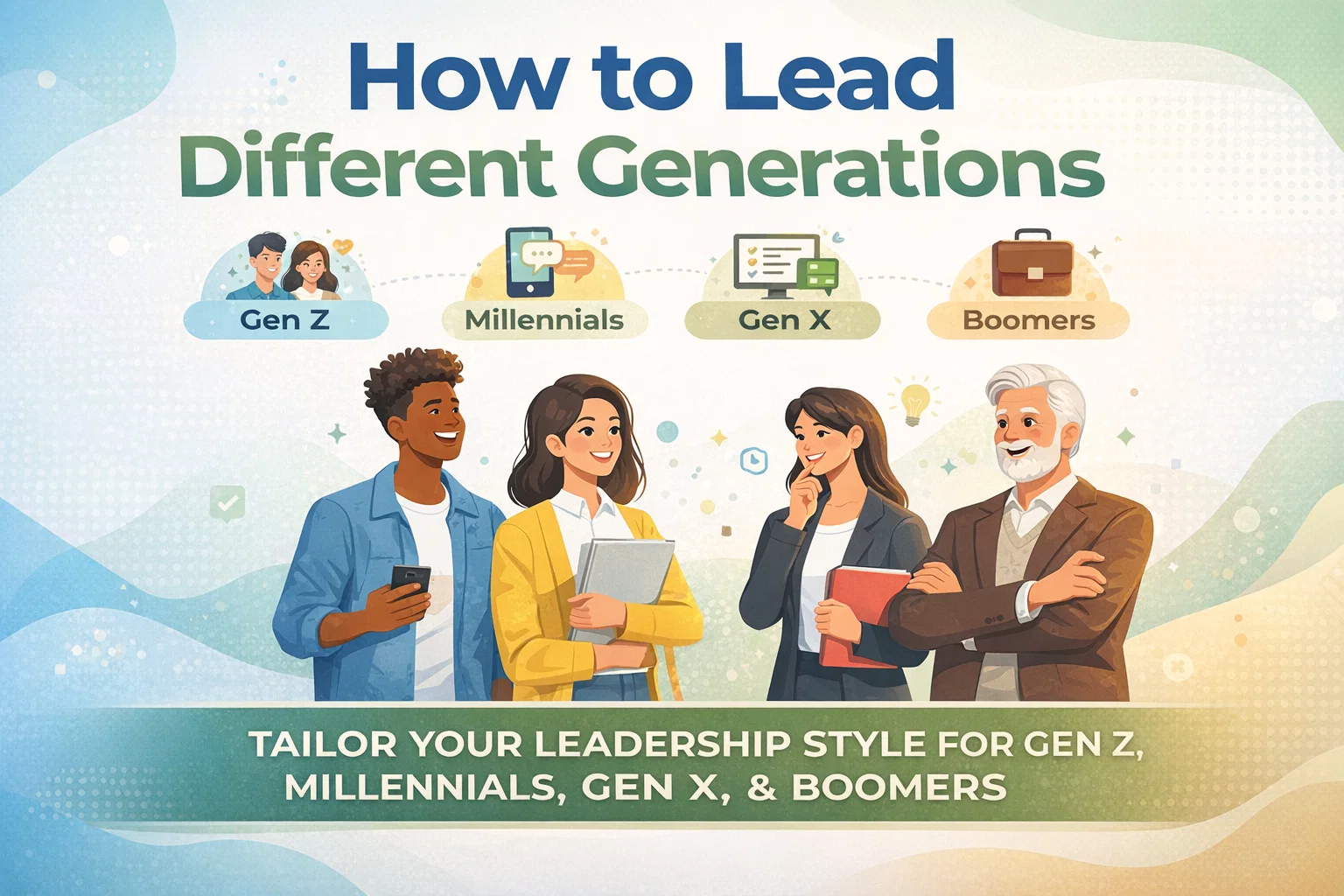
Have you ever walked into a team meeting and noticed the stark differences in how your colleagues communicate, problem-solve, and approach their daily tasks? For the first time in modern history, we are seeing four distinct generations working side by side in the workplace. From the fresh-faced Gen Z employees entering the workforce to the seasoned Boomers who have seen it all, today’s managers are tasked with an unprecedented challenge. Leading a multi-generational team can sometimes feel like trying to speak four different languages at once. However, when managed effectively, this diversity in age and experience becomes a company’s greatest asset.
Understanding how to lead different generations is not about placing people into rigid boxes. It is about recognizing that the era in which we grow up shapes our expectations of work, authority, and communication. If you want to build a thriving, cohesive team, you need to step away from the stereotypes and learn what truly drives each group. Let us dive deep into the unique characteristics of Gen Z, Millennials, Gen X, and Boomers, and explore actionable strategies to bring out the absolute best in every single team member.
The Hidden Superpower of Age Diversity
Before we can effectively lead, we have to unlearn the common misconceptions that plague our office breakrooms. It is incredibly easy to brush off a younger employee as entitled or an older employee as out of touch. These assumptions create toxic work environments and stifle productivity. The truth is much more nuanced and infinitely more promising. Every generation brings a unique set of skills, life experiences, and perspectives to the table.
A team composed solely of young innovators might move fast but lack the historical context to avoid past mistakes. Conversely, a team of only seasoned veterans might have perfected their processes but could miss out on disruptive new technologies. When you blend these groups, you create a powerhouse of innovation tempered by wisdom. By shifting our mindset from frustration to fascination, leaders can transform potential conflicts into powerful collaborative moments. The key is adaptable leadership.
Gen Z (1997 to 2012): The Purpose-Driven Pioneers
Decoding the Gen Z Mindset
Gen Z is the newest addition to the workforce, and they are already making a massive impact. Often misunderstood as being too soft, overly entitled, or perpetually glued to their smartphones, this generation is actually redefining workplace boundaries. They are incredibly clear on what they will and will not accept, making them powerful advocates for healthy work environments. Far from being lazy, Gen Z employees are eager to fix broken systems, champion inclusive practices, and learn at lightning speed. They grew up with the world at their fingertips, and they expect their workplaces to be just as agile and forward-thinking.
Navigating Common Gen Z Conflicts
Managers often express frustration when Gen Z employees ask questions like why they need to show up at a specific time when their tasks are already complete. For Gen Z, the focus is entirely on output rather than hours logged at a desk. Another common friction point is retention. When older managers complain that young hires quit after six months, Gen Z responds that career growth simply matters more to them than blind company loyalty. If a company cannot provide a clear path forward, they will find one that can. Even their communication style causes waves. While older generations might crave formal emails, Gen Z prefers moving fast and meeting people where they are, often utilizing direct messages and emojis to get the point across quickly and effectively.
Actionable Leadership Strategies for Gen Z
- Explain the why, not just the what: Do not just hand down tasks blindly. Gen Z needs to understand the purpose behind the project and how their specific contribution moves the needle for the company.
- Provide early and frequent feedback: Annual performance reviews are simply not enough for this fast-paced group. Offer continuous, actionable feedback to help them grow and course-correct in real time.
- Encourage them to question the status quo: Let them challenge outdated workflows. Their fresh eyes and digital-native background can spot inefficiencies that seasoned veterans might overlook.
- Offer absolute flexibility in how they work: Focus strictly on the results. As long as the work gets done beautifully and on time, be flexible about how, when, and where they complete it.
Millennials (1981 to 1996): The Collaborative Innovators
Understanding the Millennial Drive
Millennials have been in the workforce long enough to take on middle management and senior leadership roles, yet they still face outdated stereotypes. They are frequently misunderstood as indecisive, overly sensitive, or constantly hungry for praise. In reality, Millennials are exceptionally strong collaborators. Having weathered significant economic shifts and rapid technological advancements, they are incredibly resilient under pressure. They are highly meaning-driven and possess a native understanding of the digital landscape that makes them invaluable in today’s tech-centric business world.
Resolving Millennial Workplace Friction
You might hear older leaders grumble about Millennials wanting a trophy for everything they do. The reality is quite different. Millennials do not want empty flattery; they crave constructive feedback and ongoing coaching to improve their skills. Another point of contention is their desire for both flexibility and rapid promotions. To a Millennial, you do not have to trade a balanced life for a successful career. They believe you can have both. Furthermore, their tendency to seek group decisions is often viewed by independent workers as a weakness. But for this generation, collaboration is a smart, strategic way to ensure all bases are covered and the best ideas win out over ego.
How to Best Lead Millennials
- Connect their work to a broader purpose: Show them how their daily tasks contribute to the company’s overarching mission or broader societal progress. They need to know their work matters.
- Offer coaching alongside autonomy: Give them the reins to lead projects, but make sure you are available as a supportive mentor to guide them through complex challenges.
- Provide clarity on career paths: Be completely transparent about what it takes to move up within the organization. They want to know their hard work will lead to tangible advancement and new opportunities.
- Create space for ideation: Give them a platform to share their ideas. More importantly, act on the good ideas to show that their voice truly impacts the company’s direction.
Gen X (1965 to 1980): The Independent Operators
Uncovering the Gen X Work Ethic
Often referred to as the forgotten generation sandwiched between two massive cohorts, Gen X quietly and effectively keeps the corporate gears turning. They are sometimes misunderstood as checked-out, resistant to change, or emotionally distant from their peers. However, this generation is simply fiercely self-reliant. Raised in an era of latchkey kids, they are highly focused on results and incredibly loyal when they feel trusted by leadership. When a crisis hits the office, Gen X is the group that remains calm under pressure, rolls up their sleeves, and gets the job done without unnecessary panic.
Addressing Gen X Pain Points
Conflicts with Gen X often stem from their intensely independent nature. Coworkers might notice they rarely speak up in brainstorming meetings. Gen X workers do not talk just to hear their own voices; they wait to speak until they have something meaningful and pragmatic to add. Others might accuse them of being stuck in their ways, but Gen X has watched countless corporate fads come and go over the decades. They prefer to stick to methods that have proven to work reliably. If they seem like they want to be left alone, it is because they deeply desire trust and absolutely despise being micromanaged by their superiors.
Strategies for Leading Gen X
- Empower them with start-to-finish project ownership: Let them own a project from its inception all the way to the finish line. They thrive when given full responsibility and the freedom to execute.
- Skip the fluff and get to the point: Communicate directly and efficiently. Get straight to the heart of the matter without unnecessary corporate jargon or lengthy preambles.
- Ask for their input directly: Because they will rarely self-promote or interrupt a noisy meeting, you have to actively seek out their expertise and give them the floor to share their insights.
- Respect their work-life boundaries: Honor their time off. When they log off for the day, let them truly disconnect so they can recharge and return focused for the next shift.
Boomers (1946 to 1964): The Seasoned Mentors
Recognizing the Value of Boomers
As the most experienced generation currently in the workforce, Boomers hold a wealth of institutional knowledge that cannot be easily replicated. Unfortunately, they are frequently misunderstood as technophobic, entirely inflexible, or stubbornly stuck in the past. If you look past these superficial stereotypes, you will find incredibly strong, long-view thinkers. Boomers are deeply loyal to their organizations and excel at building strong, lasting interpersonal relationships. They are wise mentors who can offer historical context and strategic foresight that younger generations simply have not yet developed.
Bridging the Gap with Boomers
Communication tools are often the biggest source of conflict when working alongside Boomers. Younger employees might wonder why a Boomer insists on a phone call instead of a quick email or text. For Boomers, picking up the phone is the absolute best way to build trust and convey nuance voice to voice. If they seem slow to adopt platforms like Slack or Microsoft Teams, it is not because they are incapable. They are open to new technology but want someone to clearly show them how it actually improves the workflow. When they resist sudden organizational changes, it is usually because their extensive experience has taught them to ask critical questions before abandoning systems that are currently working well.
Leading and Honoring Boomers
- Tap into their rich experience: Before you rewrite the company playbook or overhaul a department, consult with them to understand why certain processes were established in the first place.
- Blend tradition with innovation: Introduce new digital methodologies while still respecting and incorporating the foundational business practices they deeply value.
- Invite them to coach others: Leverage their decades of experience by asking them to mentor younger employees. This gives them a profound sense of purpose and strengthens the capability of the whole team.
- Lead with respect first: Always lead interactions with respect. Acknowledge their vast contributions over the years and validate their perspectives during important team discussions.
Bringing It All Together for Workplace Harmony
Building a cohesive, high-performing team out of four distinct generations is absolutely possible. It requires managers to drop the outdated, one-size-fits-all approach and adopt a more fluid, empathetic style of leadership. When you take the time to understand why Gen Z values boundaries, why Millennials crave a deeper purpose, why Gen X needs true autonomy, and why Boomers prioritize voice-to-voice relationships, you unlock a tremendous competitive advantage for your organization.
The most successful companies of the future will not necessarily be the ones with the newest technology or the fanciest office spaces. They will be the ones that figure out how to harmonize these incredibly diverse age groups. By fostering an environment of mutual respect, active listening, and tailored management strategies, you can create a workplace where every generation feels valued, understood, and highly motivated to do their absolute best work. Start implementing these insights today, and watch your multi-generational team transform into an unstoppable force.
Would you like me to suggest some engaging meta descriptions or tags to accompany this blog post for your WordPress site?