How to Make and Use Activated Charcoal for Survival A Complete Guide
Imagine having a single tool in your survival kit that can purify your drinking water, soothe a bloated stomach, and even help treat a venomous insect bite. It sounds like something out of a modern high-tech lab, but this miracle substance has actually been used for centuries. We are talking about activated charcoal, one of the oldest and most powerful survival tools known to man. Whether you are a dedicated prepper, a homesteading enthusiast, or someone just looking for natural ways to support your health, understanding the versatility of activated charcoal is a total game changer. In this guide, we will dive deep into why this black powder deserves a permanent spot in your pantry and your bug out bag.
What Exactly is Activated Charcoal?
Before we look at its many uses, it is important to understand what makes activated charcoal different from the leftover briquettes in your backyard grill. While both start as organic material, activated charcoal undergoes a specific process to increase its surface area. By heating wood or coconut shells to very high temperatures in a controlled, oxygen-limited environment, the material develops millions of tiny pores.
These pores are the secret to its power. Activated charcoal does not work by absorbing toxins; instead, it works through a process called adsorption. In adsorption, elements like chemicals, toxins, and gases chemically bind to the surface of the charcoal. Because the surface area is so vast (a single gram can have a surface area of over 3,000 square meters), it acts like a massive magnet for impurities.
The History of a Timeless Survival Tool
Ancient civilizations were well aware of the benefits of charcoal long before modern science could explain the molecular mechanics. There are records of Egyptian papyri from 1500 B.C. describing the use of charcoal to adsorb the unpleasant odors of festering wounds. By the time of Hippocrates, the famous Greek physician, charcoal was being used to treat a wide range of ailments including epilepsy and dizziness.
In the maritime world, sailors used to scorch the inside of wooden water barrels to keep their drinking water fresh during long voyages across the Atlantic. They might not have known the term “adsorption,” but they knew that the charred wood kept the water from spoiling. Today, we see this same principle applied in everything from high-end countertop water filters to life saving equipment in emergency rooms.
Top Survival Uses for Activated Charcoal
If you find yourself in a survival situation or simply away from modern conveniences, activated charcoal becomes an essential multi-tool. Here are the primary ways it can be used to keep you safe and healthy.
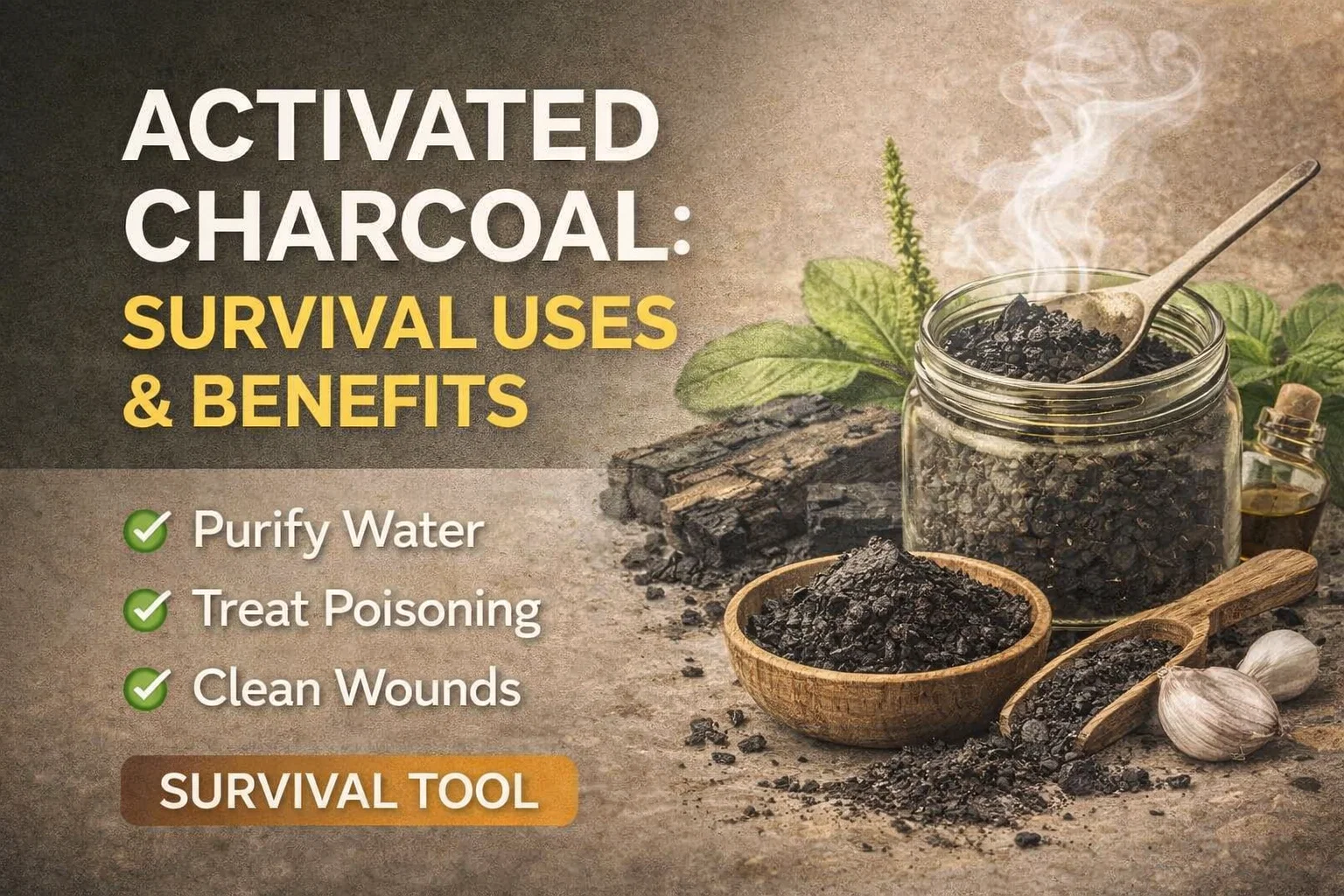
1. Water Purification
Access to clean drinking water is the most critical factor in any survival scenario. Activated charcoal is a primary component in almost every effective water filtration system. It excels at removing organic compounds, chlorine, and heavy metals. While it should ideally be used in conjunction with other methods to ensure the removal of all bacteria and viruses, it is unsurpassed at improving the taste and safety of found water sources.
2. Treating Poisoning and Overdose
In many emergency rooms today, activated charcoal is still the go-to treatment for certain types of oral poisoning. It binds to the toxins in the digestive tract, preventing them from being absorbed into the bloodstream. In a wilderness or survival setting where medical help is far away, having charcoal on hand could quite literally be a lifesaver if someone accidentally ingests something toxic.
3. Digestive Support: Gas and Bloating
We have all been there, eating something that just does not sit right. Activated charcoal is incredibly effective at neutralizing the gases produced during digestion. It helps to alleviate the discomfort of bloating and indigestion by binding the gas-starting byproducts in your gut. It is a gentle yet powerful way to settle a stomach after a questionable meal.
4. Wound Care and Skin Infections
Beyond internal use, activated charcoal is a fantastic topical remedy. When mixed into a paste, it can be applied to wounds or infected skin to “draw out” impurities. This is particularly useful for bee stings, spider bites, or even skin rashes caused by poisonous plants. The charcoal helps to reduce swelling and neutralize the venom or irritants on the skin’s surface.
How to Make Your Own Activated Charcoal
While you can easily buy activated charcoal in capsule or powder form, knowing how to make it yourself is a vital primitive skill. The process involves two main stages: creating the charcoal and then “activating” it.
Step 1: The Burn
You want to start with hardwoods like oak, hickory, or maple. Avoid softwoods like pine, as the resins can be problematic. Place your wood in a metal container with a small hole in the lid. This creates a “retort” where the wood is heated without being fully consumed by flames. You burn a fire around this container for several hours until smoke stops coming out of the vent hole. This leaves you with pure, high-quality charcoal.
Step 2: The Activation
Once you have your charcoal, you need to open up those pores to make it “activated.” In a laboratory, this is done with steam or chemicals, but you can do a DIY version using a calcium chloride solution or even simple lemon juice. You soak the crushed charcoal in the acidic solution for 24 hours, then rinse it thoroughly and bake it in an oven or over a fire to dry it out completely. This process expands the surface area and readies the charcoal for use.
Essential Safety and Storage Tips
As powerful as activated charcoal is, it must be used with respect and knowledge. Because it is so good at binding things, it does not discriminate between “bad” toxins and “good” nutrients or medications. If you take activated charcoal too close to your regular medications or supplements, it may prevent your body from absorbing them.
Important Precautions
- Not for Daily Use: Activated charcoal should be used as a targeted remedy, not a daily supplement, as it can interfere with nutrient absorption over time.
- Hydration is Key: Because charcoal can be drying to the digestive tract, it is vital to drink plenty of water when taking it internally to avoid constipation.
- Professional Advice: Always consult a healthcare professional before using charcoal for serious conditions or if you are on life-sustaining medications.
Long-Term Storage
One of the best things about activated charcoal for preppers is its shelf life. If you store it in an airtight container away from moisture, it can last for 10 years or even longer. It does not “go bad” in the traditional sense; it just needs to be kept sealed so it doesn’t start adsorbing odors and moisture from the air around it. Keeping a jar in your survival kit is a set-it-and-forget-it way to stay prepared.
Traditional Uses and Folklore
In many cultures, charcoal has a spiritual or ritualistic component alongside its physical uses. From “anointing” rituals to its use in traditional folk medicine, the black powder is often seen as a symbol of purification and protection. In a modern context, we can view this as a beautiful bridge between ancient wisdom and practical science. Using charcoal connects us to a long line of ancestors who relied on the forest to provide for their most basic needs.
Creating a Charcoal First Aid Paste
One of the most practical ways to use your charcoal is by making a “black drawing salve” or a simple paste. This is a must-know recipe for anyone who spends time outdoors. Simply mix a tablespoon of activated charcoal powder with a small amount of water or a carrier oil like coconut oil until it reaches a thick, spreadable consistency.
Apply this paste directly to a bug bite or a splinter that is difficult to remove. Cover it with a bandage and let it sit for a few hours. The charcoal works to pull the foreign object or the venom toward the surface, making it much easier to manage. It is a simple, effective, and chemical-free way to handle minor skin emergencies.
The Environmental Impact of Charcoal
Choosing activated charcoal is also a win for the environment. It is a natural, biodegradable substance that replaces many synthetic chemicals and plastic-heavy filtration systems. By learning to make your own from local hardwoods, you are reducing your carbon footprint and becoming more self-reliant. It is a sustainable solution that honors the cycle of the forest: wood becomes fire, fire becomes charcoal, and charcoal protects life.
Final Thoughts on This Ancient Remedy
Activated charcoal is much more than just a dusty black powder. It is a testament to the power of nature and the ingenuity of human tradition. From the depths of the digestive tract to the clarity of a mountain stream, its ability to purify and protect is truly unmatched. Whether you are building a professional-grade survival kit or just want to explore the world of natural healing, activated charcoal is a tool that will never let you down.
By keeping some on hand and knowing how to use it, you are taking a significant step toward self-sufficiency. It provides peace of mind, knowing that you have a powerful ally against toxins and impurities, no matter where your journey takes you. So, the next time you see a piece of charred wood or a jar of charcoal powder, remember that you are looking at one of the most effective survival tools in history.
Would you like me to generate a specific recipe for a charcoal-based skin detox mask or perhaps a detailed guide on building a DIY charcoal water filter?