How to Make DIY Rice Water for Skin Natural Toner to Brighten, Tone Soothe
Discovering the secret to a radiant and porcelain-like complexion doesn’t always require a trip to a high-end beauty boutique or a massive investment in synthetic chemicals. Sometimes, the most effective skincare solutions are hiding right in your kitchen pantry. Rice water has been a cornerstone of traditional beauty rituals across Asia for centuries, prized by women in Japan, China, and Korea for its ability to transform the texture and tone of the skin. If you have been looking for a natural, cost-effective way to achieve that sought-after glass skin glow, you have come to the right place.
This ancient beauty elixir is packed with vitamins, minerals, and amino acids that work in harmony to soothe irritation and brighten dull spots. In this comprehensive guide, we will break down exactly how to create your own DIY rice water at home, explore the science behind why it works, and provide tips on how to integrate it into your daily skincare routine for maximum results. Get ready to embrace a simpler, cleaner way to care for your skin.
The Science of Rice Water: Why Your Skin Loves It
Before we dive into the step-by-step process, it is essential to understand what makes rice water such a powerhouse for the skin. When rice is soaked or boiled, many of its beneficial nutrients leach into the water. This liquid becomes a concentrated solution of skin-loving compounds.
Rich in Antioxidants
Rice contains powerful antioxidants such as ferulic acid and phytic acid. These compounds help to neutralize free radicals caused by environmental stressors like pollution and UV rays. By fighting oxidative stress, rice water can help prevent premature aging and keep your skin looking youthful and resilient.
Vitamins and Minerals
Rice water is naturally abundant in Vitamin B, Vitamin E, and various minerals. Vitamin B (specifically inositol) is known for its ability to promote cell growth and stimulate blood flow, which contributes to a healthy, vibrant complexion. Vitamin E acts as a moisturizing agent that strengthens the skin barrier, ensuring that your face stays hydrated throughout the day.
Natural Skin Brighteners
One of the most famous benefits of rice water is its ability to brighten the skin. It contains enzymes that have a gentle exfoliating effect, helping to slough away dead skin cells and reduce the appearance of dark spots or hyperpigmentation. Over time, regular use can lead to a more even and luminous skin tone.
Step-by-Step Guide: How to Make DIY Rice Water
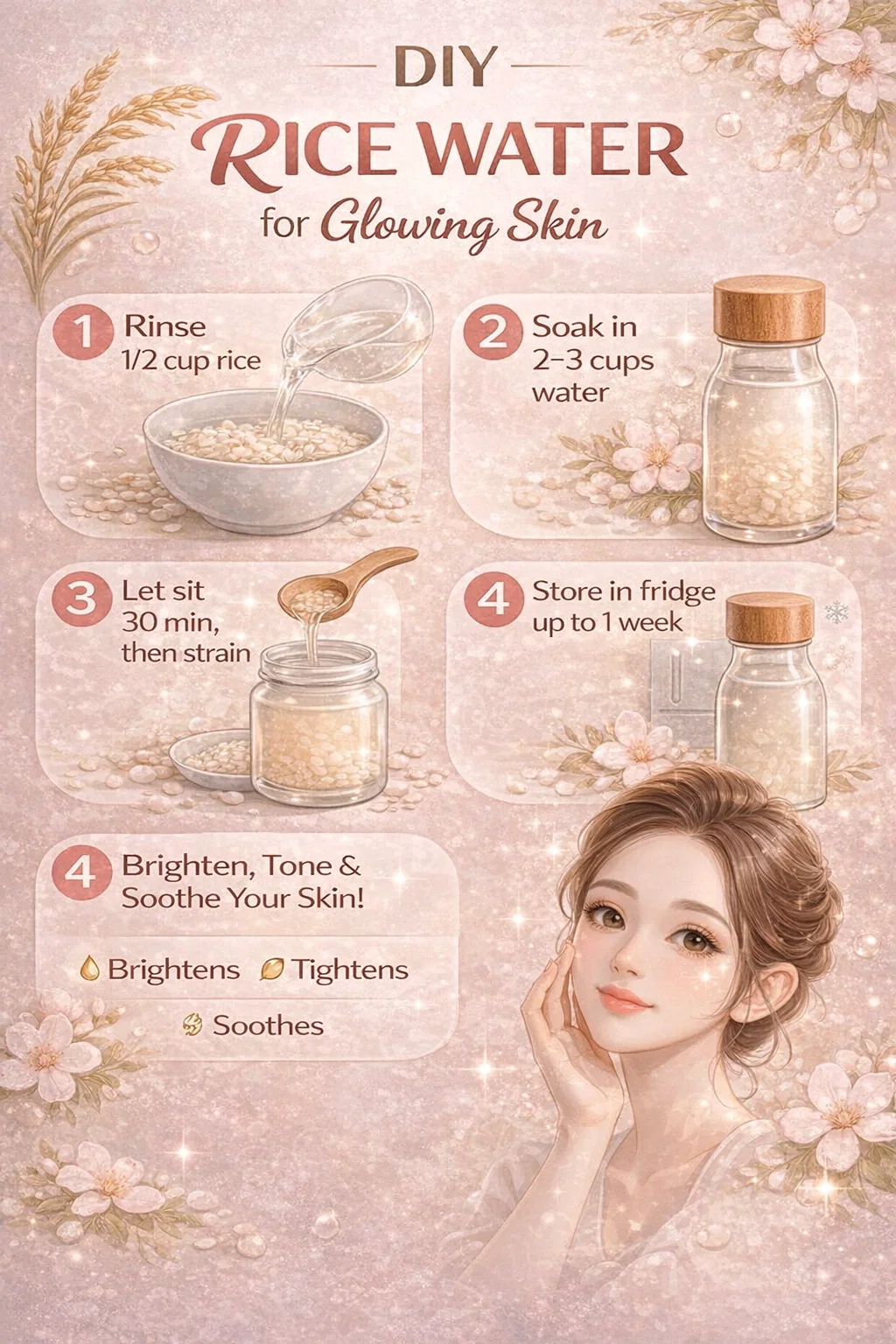
Creating your own rice water toner is incredibly simple and requires only two ingredients: rice and water. According to our visual guide, here is the most effective way to prepare it at home to ensure it is clean and potent.
Step 1: The Initial Rinse
Start by measuring out half a cup of rice. You can use white rice, jasmine, or basmati, but organic options are often preferred to avoid pesticides. Place the rice in a bowl and pour in enough water to cover it. Swirl the rice around with your fingers to remove any dust or impurities. Strain this first batch of water and discard it. This ensures that the final product you put on your face is as pure as possible.
Step 2: The Soaking Process
Once your rice is clean, place it back into a clean bowl or a glass jar. Add two to three cups of fresh, filtered water. Use a spoon to give it a quick stir. You will notice the water starting to turn a milky, cloudy white. This is exactly what you want to see, as it indicates that the nutrients are being released into the liquid.
Step 3: Patience is Key
Let the rice soak in the water for about 30 minutes. This gives the water enough time to absorb the vitamins and minerals from the grains. If you want a more potent version, some people choose to let it sit for a few hours, but 30 minutes is the standard timeframe for a daily-use toner. After the time is up, use a fine-mesh strainer to separate the liquid into a clean glass jar or spray bottle.
Step 4: Proper Storage
Because this is a fresh, natural product without preservatives, it must be stored correctly. Keep your rice water in the refrigerator. The cold temperature not only preserves the liquid but also provides a refreshing, depuffing sensation when you apply it to your face. Your DIY toner will stay fresh for up to one week. If it starts to smell sour before then, it is time to discard it and whip up a fresh batch.
Three Ways to Use Rice Water in Your Beauty Routine
Now that you have your homemade rice water, how do you use it? The versatility of this liquid makes it a fantastic addition to any regimen, regardless of your skin type.
As a Soothing Toner
This is the most common application. After cleansing your face, soak a cotton pad in the chilled rice water and gently swipe it across your skin. Alternatively, you can put the rice water in a spray bottle and mist it directly onto your face. It helps to balance the pH of your skin and tighten the appearance of pores, creating a smooth canvas for your moisturizer.
As a Refreshing Face Mask
If your skin is feeling particularly irritated or red, you can create a DIY sheet mask. Take a few clean cotton rounds or a compressed paper mask and soak them thoroughly in the rice water. Lay them over your face and let them sit for 10 to 15 minutes. The soothing properties of the rice water will help reduce inflammation and leave your skin feeling incredibly soft.
As a Final Rinse
After you have finished your entire skincare or even hair care routine, you can use rice water as a final rinse. Splashing your face with cold rice water helps to seal in hydration. Many people also use the leftover water to rinse their hair, as the proteins in the rice help to strengthen the hair shaft and add a beautiful shine.
The Benefits of Fermented Rice Water
While the standard soaking method is wonderful, some beauty enthusiasts swear by fermented rice water. Fermentation slightly lowers the pH of the liquid, making it more compatible with the natural pH of your skin. This process also produces a substance called Pitera, which is a famous ingredient in many high-end commercial skincare brands.
To ferment your rice water, simply leave the strained liquid at room temperature for 12 to 24 hours until it develops a slightly sour smell. Once it begins to ferment, move it to the fridge immediately to stop the process. Because fermented rice water is more concentrated, you may want to dilute it with a little plain water before applying it to sensitive skin.
Tips for Different Skin Types
One of the best things about DIY rice water is that it is generally safe for everyone. However, you can tailor your usage based on your specific needs.
Oily and Acne Prone Skin
Rice water has a natural astringent effect that can help reduce excess oil production. If you struggle with breakouts, the soothing properties can help calm the redness associated with acne. Using it as a toner twice a day can help keep the shine at bay without stripping the skin of its essential moisture.
Dry and Sensitive Skin
For those with dry skin, rice water provides a gentle layer of hydration. It is much less irritating than many store-bought toners that contain alcohol. If you have sensitive skin, always perform a patch test on your inner arm first to ensure you don’t have a rare reaction to the rice proteins.
Mature Skin
If your goal is anti-aging, focus on the antioxidant benefits. Regular use can help improve skin elasticity and minimize the appearance of fine lines. The brightening effect also helps to combat age spots, giving the skin a more youthful and uniform appearance.
Common Mistakes to Avoid
Even though this process is simple, there are a few pitfalls to watch out for to ensure your skin stays healthy and happy.
Using Dirty Rice
Never skip the initial rinse. Rice often travels a long way before reaching your kitchen, and it can carry dust, dirt, or residues. Washing the rice first ensures that you are only putting beneficial nutrients on your face, not environmental pollutants.
Keeping it Too Long
Because there are no preservatives, rice water can grow bacteria if left out or kept too long. Always stick to the one-week rule and keep it refrigerated. If the water looks murky in a way that seems off or develops a strong, unpleasant odor, throw it out immediately.
Over-Fermenting
If you choose to ferment your rice water, do not leave it out for more than two days. Excessive fermentation can make the liquid too acidic, which might irritate the skin rather than help it. Balance is the key to a successful DIY beauty treatment.
The Importance of Consistency
Like any natural remedy, you won’t see dramatic changes overnight. The magic of rice water happens over time. Most users report seeing a noticeable difference in their skin texture and brightness after about two to three weeks of consistent daily use. Incorporate it into your morning and evening rituals, and treat it as a moment of self-care.
By choosing a DIY approach, you are not only saving money but also reducing your environmental impact. You are avoiding the plastic waste and chemical runoff associated with mass-produced beauty products. It is a win for your skin and a win for the planet.
Wrapping Up Your Rice Water Journey
Embracing a DIY skincare routine is a powerful way to take control of what goes onto your body. Rice water is a testament to the fact that some of the best beauty secrets are simple, natural, and accessible to everyone. By following the easy steps of rinsing, soaking, and straining, you can create a potent toner that rivals expensive products found on store shelves.
Whether you are looking to brighten dark spots, soothe sensitive areas, or simply add a healthy glow to your complexion, rice water is a versatile tool that delivers results. So, the next time you are preparing a meal, set aside half a cup of rice and treat yourself to a spa-like experience right at home. Your skin will thank you for the extra boost of vitamins and the gentle, nurturing care that only nature can provide.