How to Make Fermented Mango with Lime Gut-Friendly Tropical Probiotic Recipe
Have you ever looked at a perfectly ripe mango and wondered if there was a way to elevate its natural sweetness into something even more beneficial for your body? Most of us are familiar with the standard fruit salad or the classic mango smoothie, but there is an ancient culinary secret that is currently taking the modern wellness world by storm. Fermenting fruit, specifically the tropical pairing of mango and lime, creates a powerhouse of nutrition that tastes like a vacation in a jar. This process does not just preserve the fruit; it transforms it into a living, probiotic rich food that supports your gut, boosts your energy, and satisfies those tangy cravings without processed sugars.
The Magic of Fruit Fermentation
Fermentation might sound like a complex laboratory process, but it is actually one of the oldest traditions in human history. At its core, fermentation is the work of beneficial bacteria and wild yeasts that break down the natural sugars in the fruit. When we talk about fermenting mango with lime and a pinch of sea salt, we are engaging in a process called lacto-fermentation. This creates lactic acid, which acts as a natural preservative and gives the mango that signature mouth watering tang.
Unlike fermented vegetables like sauerkraut or kimchi, fruit fermentation happens much faster because of the higher sugar content. Within just two to four days, your mango cubes will transition from simple fruit to a complex, fizzy, and deeply flavorful condiment. It is the perfect entry point for beginners because it requires minimal equipment and yields results almost instantly.
The Incredible Health Benefits of Fermented Mango
Why should you bother fermenting your mango instead of just eating it fresh? While fresh mango is undeniably healthy, the fermentation process unlocks a whole new level of bio-availability. Here is why this specific recipe is a must have for your kitchen repertoire.
Superior Gut Health Support
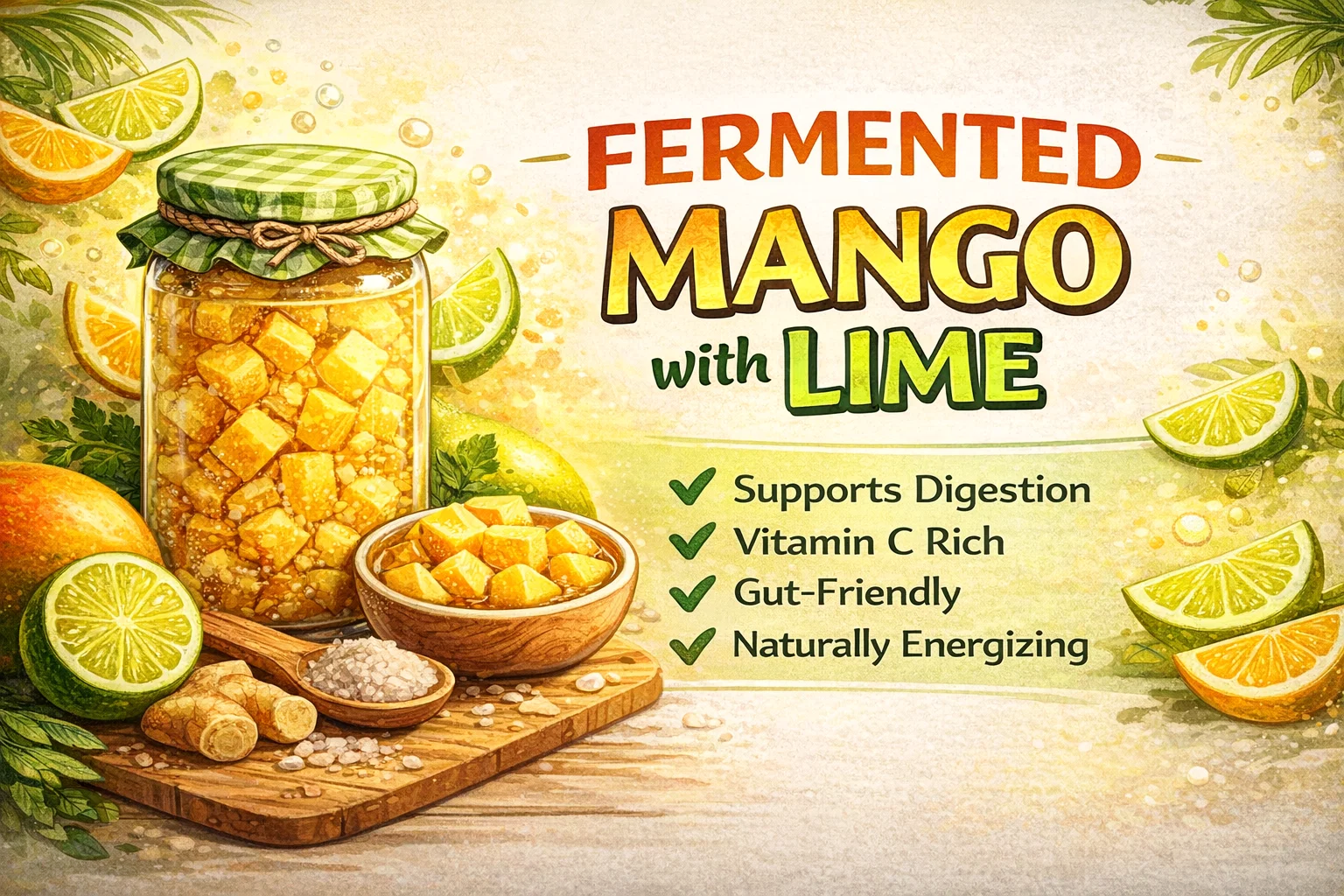
We now know that the gut is the center of our immune system and overall well being. Fermented mango is teeming with live probiotics. These friendly bacteria help balance your microbiome, which can lead to better digestion, reduced bloating, and even improved mental clarity. By eating a small portion of fermented fruit daily, you are essentially seeding your gut with the reinforcements it needs to function at its peak.
A Vitamin C Powerhouse
Both mangoes and limes are naturally high in Vitamin C, but fermentation can actually increase the levels of certain vitamins and make them easier for your body to absorb. This recipe is an excellent way to support your skin health and immune system. The combination of the citrus from the lime and the enzymes in the mango creates a synergistic effect that helps fight oxidative stress in the body.
Natural Energy and Metabolism Boost
Instead of reaching for a sugary energy drink or a second cup of coffee, many people find that fermented foods provide a natural, sustained energy lift. Because the bacteria have already started the work of breaking down the fruit sugars, your body can process the nutrients more efficiently. It is a clean, whole food way to stay energized throughout a busy afternoon.
Essential Ingredients for Success
One of the best things about this recipe is its simplicity. You do not need a long list of expensive supplements or rare additives. Everything you need is likely already in your kitchen or available at your local farmers market.
- Fresh Mango Cubes: Choose mangoes that are ripe but still firm. If they are too mushy, the ferment can become overly soft. Firm cubes hold their shape beautifully during the two to four day process.
- Fresh Lime Juice: Use real limes rather than bottled juice. The fresh enzymes and oils in the lime zest and juice are crucial for the flavor profile and the fermentation environment.
- Sea Salt: A small pinch of high quality sea salt or Himalayan salt is vital. Salt suppresses the growth of “bad” bacteria while allowing the beneficial lactic acid bacteria to thrive.
- Filtered Water: If your tap water is heavily chlorinated, it can sometimes stall the fermentation. Using filtered water ensures the microbes stay happy and active.
Step by Step Instructions to Fermenting at Home
Ready to get started? Follow these simple steps to create your own jar of tropical goodness. Remember that fermentation is an art as much as a science, so do not be afraid to trust your senses along the way.
Step 1: Preparation
Start by peeling your mangoes and cutting them into uniform cubes, about half an inch in size. Place them in a clean bowl. Squeeze the juice of half a lime over the cubes and sprinkle in your pinch of sea salt. Toss everything gently so the mango is well coated. The salt will immediately start to draw out some of the juices from the fruit.
Step 2: Packing the Jar
Transfer the mixture into a clean glass jar. Use a spoon to press the mango down firmly. You want to eliminate as many air pockets as possible. If there isn’t enough natural juice to cover the mango, you can add a tablespoon or two of filtered water. It is important that the fruit stays submerged under the liquid to prevent any mold from forming on the surface.
Step 3: The Fermentation Period
Seal the jar with a lid, but do not tighten it too much, as gases will need to escape. Place the jar on your kitchen counter, away from direct sunlight. Let it sit for two to four days. During this time, you might see small bubbles forming or notice the liquid becoming slightly cloudy. This is a great sign that the bacteria are doing their job.
Step 4: Testing and Storage
After forty eight hours, give it a taste. If it has a pleasant tang and a slight fizz, it is ready! If you want it more sour, let it go another day. Once you are happy with the flavor, tighten the lid and move the jar to the refrigerator. The cold temperature will slow down the fermentation process, allowing you to enjoy your creation for several weeks.
Creative Ways to Use Your Fermented Mango
Now that you have a jar of tangy, tropical fermented mango, what do you do with it? The possibilities go far beyond eating it straight from the jar.
The Perfect Breakfast Topping
Spoon a few cubes over your morning Greek yogurt or chia seed pudding. The acidity of the fermented mango cuts through the richness of the dairy perfectly. It also makes a fantastic addition to overnight oats, adding a bright pop of flavor that wakes up your palate.
A Vibrant Salsa Substitute
Chop the fermented mango cubes into smaller pieces and mix them with some fresh cilantro, red onion, and a bit of chili. This creates a quick probiotic salsa that tastes incredible on grilled fish, chicken tacos, or even just with some grain free tortilla chips. The fermentation adds a depth of flavor that a standard fresh salsa simply cannot match.
The Ultimate Smoothie Booster
Instead of using plain frozen mango in your smoothies, drop in a spoonful of the fermented version. Not only will it add a unique zing, but it will turn your standard smoothie into a probiotic powerhouse. It pairs exceptionally well with coconut milk, ginger, and turmeric for an anti inflammatory tonic.
Tips for Fermentation Beginners
If this is your first time fermenting, you might feel a little nervous about leaving food on the counter. Here are a few professional tips to ensure your experience is successful and safe.
First, always start with clean equipment. You do not need to sterilize everything in boiling water, but a good wash with hot, soapy water is essential. Second, trust your nose. Fermented mango should smell bright, citrusy, and slightly vinegary. If it ever smells foul or “off,” discard it and start over. Finally, keep an eye on the temperature. Fermentation happens faster in a warm kitchen and slower in a cool one. Adjust your timing based on the season.
Common Questions About Fermented Fruit
Is fermented fruit alcoholic? While fermentation does produce trace amounts of ethanol, the short two to four day window for this recipe means the alcohol content is negligible, similar to what you would find in a very ripe banana. It is safe for all ages to enjoy.
Can I use other fruits? Absolutely! Once you master mango and lime, you can try the same process with pineapple, papaya, or even berries. Each fruit has its own sugar content and will ferment at a slightly different rate, making the journey of discovery endless.
Embracing a Probiotic Lifestyle
Incorporating fermented foods like this mango and lime recipe into your daily routine is one of the simplest things you can do for your health. It is not about a restrictive diet; it is about adding living, vibrant foods to your plate. These “folk medicines” have been used for generations for a reason. They work with your body to foster resilience and vitality.
The beauty of the fermented mango recipe lies in its accessibility. It proves that you do not need a pharmacy to support your digestion or an expensive grocery store to find “superfoods.” With just a few minutes of prep and a couple of days of patience, you can create a culinary masterpiece that nourishes your soul and your gut. So, grab a mango, slice some lime, and start your fermentation journey today. Your body will thank you for the tropical, tangy boost!