How to Make Homemade Rose Water 2 Easy DIY Methods for Natural Skin Hair Care
Stepping into a room filled with the delicate, ethereal scent of fresh roses is an experience that instantly calms the mind and lifts the spirit. For centuries, rose water has been cherished as a botanical treasure, used by ancient civilizations for everything from royal beauty rituals to culinary masterpieces. The good news is that you do not need to scour high-end boutique shelves to find high-quality rose water. In fact, the most potent and pure floral water is often the kind you craft right in your own kitchen. By taking control of the process, you ensure that your rose water is free from synthetic fragrances, harsh preservatives, and mysterious additives, leaving you with a bottle of pure, liquid nature.
The Timeless Appeal of Rose Water
Rose water is far more than just a pleasant scent. It is a hardworking multitasker that fits seamlessly into a modern wellness routine. Historically, it was a staple in Middle Eastern and Indian cultures, valued for its anti-inflammatory properties and its ability to balance the skin’s natural oils. Today, as we lean further into clean beauty and DIY remedies, rose water has seen a massive resurgence. Whether you are looking to soothe a sensitive scalp, set your makeup with a natural glow, or simply add a touch of luxury to your evening wind-down, this floral hydrosol is the perfect solution. Making it yourself allows you to connect with the seasons and appreciate the simple beauty of the botanical world.
Choosing the Best Roses for Your DIY Project
The quality of your finished rose water depends almost entirely on the quality of the petals you start with. Not all roses are created equal when it comes to extraction. If you are harvesting from your own garden, ensure that you have not used any chemical pesticides or fertilizers on the plants. If you are buying roses, look for food-grade or organic labels. Standard florist roses are often treated with chemicals to help them stay upright in a vase, which is not something you want on your skin or in your hair.
Which Varieties Smell the Best?
While any fragrant rose will work, certain varieties are prized for their high oil content and deep aroma. Rosa damascena, also known as the Damask rose, is the gold standard in the perfume industry. It has a complex, spicy-sweet scent that lingers beautifully. Another excellent choice is Rosa centifolia, the Cabbage rose, which offers a softer, more honey-like fragrance. If you cannot find these specific types, simply go for the most fragrant red or pink roses you can find, as deeper colors often yield a more vibrant-looking water.
Essential Tools and Ingredients
Before you begin, gather your supplies to make the process smooth and enjoyable. Luckily, you likely already have most of these items in your pantry or cabinets. You will need a large pot with a lid, a heat-resistant glass bowl (for the distillation method), plenty of ice cubes, and sterilized glass bottles for storage. Most importantly, you need distilled water. Using tap water can introduce minerals or bacteria that shorten the shelf life of your rose water and may irritate sensitive skin. Distilled water acts as a clean slate, allowing the rose essence to be the star of the show.
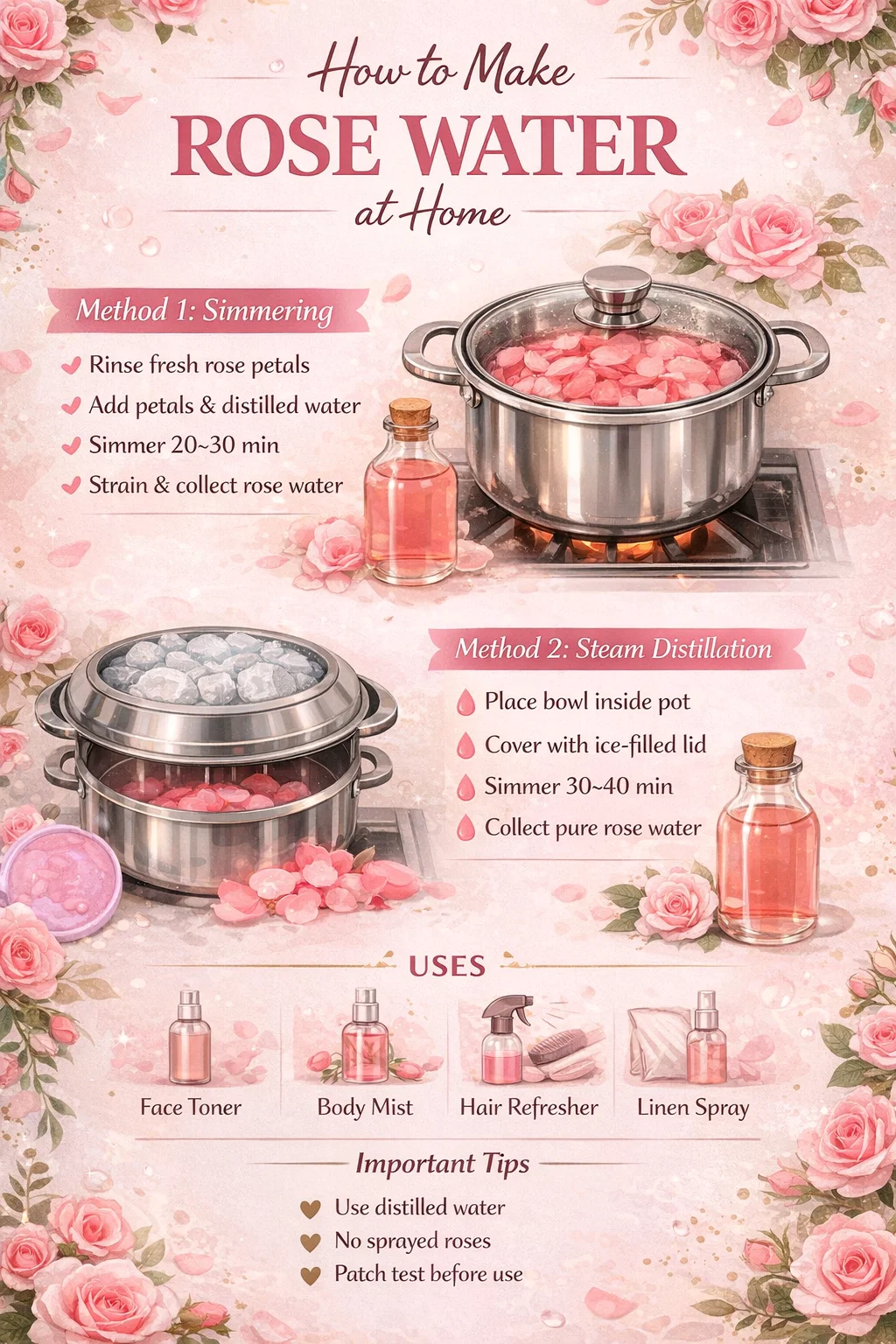
Method 1: The Simmering Technique
The simmering method is the easiest and fastest way to create rose water. It results in a beautifully colored liquid that is rich in the water-soluble components of the petals. This version is perfect for those who want a quick batch for immediate use.
Step-by-Step Simmering Instructions
- Rinse the Petals: Gently wash your fresh rose petals in cool water to remove any dust or small hitchhiking insects.
- Combine in the Pot: Place the petals in a pot and pour just enough distilled water over them to cover them completely. Do not add too much water, or you will dilute the potency of the final product.
- Low and Slow: Place the pot on the stove over low heat. It is crucial not to let the water reach a rolling boil, as high heat can destroy the delicate aromatic compounds.
- Simmer: Let the mixture simmer for about 20 to 30 minutes. You will know it is ready when the petals have lost most of their color and the water has taken on a lovely pink or red hue.
- Strain and Cool: Use a fine-mesh strainer or cheesecloth to separate the liquid from the spent petals. Allow the water to cool completely before transferring it to a glass bottle.
Method 2: The Steam Distillation Technique
If you are looking for a more professional, clear, and shelf-stable product, steam distillation is the way to go. This process creates a true hydrosol. As the water boils, the steam rises through the petals, picking up the essential oils, and then condenses back into a liquid. This method requires a bit more patience but produces a very high-quality result.
Shutterstock
Explore
How to Set Up Your Home Still
- The Center Bowl: Place a small, heat-resistant glass bowl in the center of your large pot. Scatter your rose petals around the outside of the bowl, but keep the inside of the bowl empty.
- Add Water: Pour distilled water over the petals around the bowl, ensuring no water gets inside the empty center bowl.
- The Inverted Lid: Place the lid on the pot upside down. This creates a concave shape that will direct the condensation toward the center.
- The Ice Factor: Pile ice cubes on top of the inverted lid. The cold surface will cause the rising steam to condense rapidly, dripping down into the center bowl.
- Collect the Magic: Simmer the water for 30 to 40 minutes, replacing the ice as it melts. The clear liquid that collects in the center bowl is your pure, distilled rose water.
Creative Ways to Use Your Homemade Rose Water
Once you have your fresh batch of rose water, the possibilities are endless. Because it is a natural humectant, it is incredible for adding moisture back into the body. Here are some of the best ways to incorporate it into your daily life.
A Refreshing Face Toner
Rose water helps to maintain the skin’s pH balance and controls excess oil. Simply soak a cotton pad with the water and swipe it over your face after cleansing. It helps to tighten pores and reduce redness, making it a dream for those with acne-prone or sensitive skin. You can even keep a small spray bottle in your bag for a midday pick-me-up during hot weather.
Hydrating Hair Refresher
Is your hair feeling a bit dull or dry? Rose water is a fantastic natural conditioner. You can mist it directly onto your scalp to soothe irritation or spray it throughout your tresses to add shine and a subtle floral scent. Many people find that it helps reduce frizz without the weight of heavy oils or silicone-based products.
Soothing Body Mist and Linen Spray
After a shower, misting your body with rose water provides a light layer of hydration and a soft fragrance that isn’t as overpowering as perfume. You can also spray it on your pillows and bed linens before sleep. The natural scent of roses has been shown to reduce cortisol levels and promote a sense of relaxation, helping you drift off into a peaceful slumber.
Important Tips for Success
To get the most out of your DIY experience, keep a few safety and quality tips in mind. First, always perform a patch test on a small area of your skin before applying it widely, especially if you have allergies to flowers. Second, remember that because this contains no artificial preservatives, it is best kept in the refrigerator. Cold rose water feels amazing on the skin and typically lasts for about two to four weeks when stored properly in a dark glass container.
The Spiritual and Emotional Benefits
Beyond the physical benefits, working with roses is often considered a heart-opening practice. In many spiritual traditions, the rose is a symbol of love, compassion, and divine grace. The act of carefully plucking petals, watching the colors bleed into the water, and inhaling the rising steam can be a form of moving meditation. Using rose water in your routine is a way of practicing self-love and taking a moment to appreciate the slow, intentional side of beauty.
Wrapping Up Your Rose Water Journey
Creating your own rose water at home is a rewarding ritual that connects you to the healing power of plants. Whether you choose the vibrant, colorful simmered version or the crystal-clear distilled hydrosol, you are providing your body with a gift that is as pure as it is effective. This simple DIY project proves that we don’t always need complex formulas or expensive packaging to achieve radiant skin and a calm mind. By using fresh, organic ingredients and a little bit of time, you can transform a handful of petals into a luxurious staple for your vanity. Give these methods a try and watch how a little splash of rose water can transform your daily self-care routine into something truly extraordinary. Don’t forget to share your results and experiment with different rose varieties to find your signature scent!