How to Make Rice Water for Skin DIY Natural Skincare Face Toner Guide
Achieving a radiant, glass skin complexion doesn’t always require a massive budget or a shelf full of expensive synthetic products. Sometimes, the most effective beauty secrets are sitting right in your kitchen pantry. Rice water has been a staple in Asian beauty rituals for centuries, particularly in Japan, China, and Korea, where it is revered for its ability to brighten, tighten, and soothe the skin. If you have been looking for a natural, sustainable, and incredibly affordable way to level up your skincare routine, you have found it. This ancient remedy is making a massive comeback in the modern DIY beauty world, and for a good reason. It works.
The Science Behind Rice Water for Skin
You might wonder how something as simple as the water used to wash rice can have such a profound impact on your skin. When rice soaks or boils in water, it releases a variety of beneficial compounds. These include vitamins, minerals, and amino acids that are essential for skin health. One of the most significant components found in rice water is inositol, a carbohydrate that helps repair damaged skin while protecting it from future environmental stressors.
Additionally, rice water contains ferulic acid, a powerful antioxidant that helps neutralize free radicals. This is particularly important for those living in urban environments where pollution can accelerate the aging process. By incorporating rice water into your daily regimen, you are essentially providing your skin with a natural shield against the elements. It also contains allantoin, which is known for its anti inflammatory properties, making it an excellent choice for individuals with sensitive or acne prone skin.
Key Benefits of Incorporating Rice Water
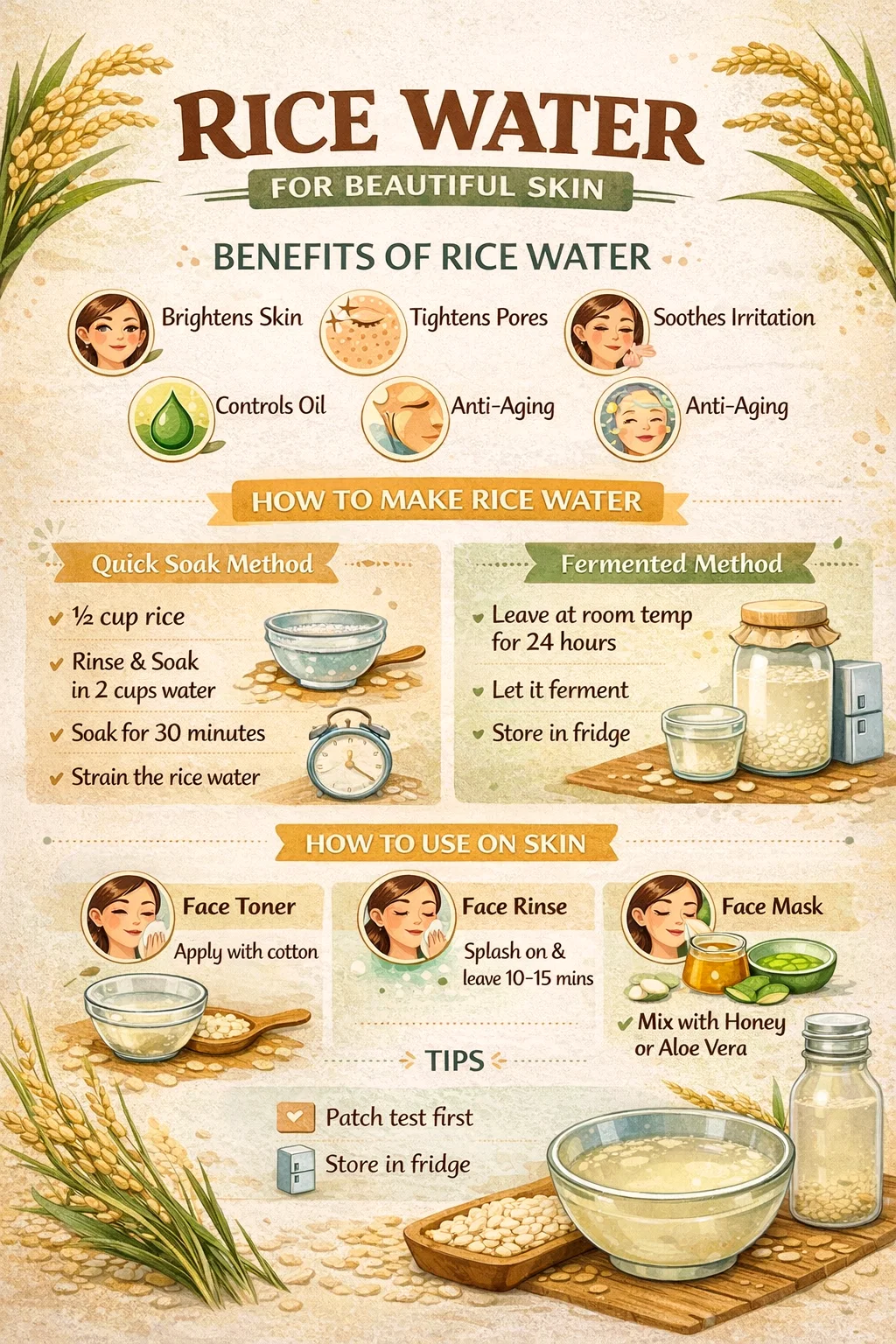
- Brightens the Complexion: Regular use can help fade dark spots and even out skin tone.
- Tightens Pores: It acts as a natural astringent, helping to minimize the appearance of large pores.
- Anti Aging Properties: The antioxidants help reduce the appearance of fine lines and wrinkles.
- Soothes Irritation: It is highly effective at calming redness and soothing sunburns or rashes.
- Controls Excess Oil: It helps balance the skin’s natural oils without stripping away moisture.
Method 1: The Quick Soaking Technique
If you are new to DIY skincare, the soaking method is the easiest way to start. It is fast, efficient, and requires almost no prep time. This version is perfect for those who want a fresh batch of rice water every few days without waiting for a fermentation process.
To begin, take half a cup of uncooked rice. Any variety will work, but organic white or jasmine rice is often preferred for skincare. First, rinse the rice thoroughly with plain water to remove any dirt, dust, or impurities. Once the rice is clean, place it in a bowl and add one to two cups of fresh water. Let the rice soak for about 20 to 30 minutes. During this time, you can lightly swirl the rice or press it with a spoon to help release the nutrients into the liquid.
After the time is up, strain the water into a clean glass jar or a spray bottle. The liquid should look slightly cloudy or milky. This is your fresh rice water toner. Because this method doesn’t involve fermentation or preservatives, you should store it in the refrigerator and use it within three to four days for the best results.
Method 2: The Fermented Rice Water Method
For those who want a more potent version of this beauty elixir, fermentation is the way to go. Fermented rice water has a lower pH level, which closely matches the natural pH of your skin. During the fermentation process, a substance called pitera is produced. Pitera is a clear liquid rich in vitamins and organic acids that promotes cell regeneration and keeps the skin looking youthful and vibrant.
Follow the same initial steps as the soaking method: rinse half a cup of rice and soak it in two cups of water. However, instead of straining it after 30 minutes, leave the rice and water in a jar at room temperature for 12 to 24 hours. You will know it is ready when it develops a slightly sour smell. This indicates that the fermentation process has begun.
Once fermented, strain the liquid into a clean container and store it in the fridge immediately to stop the fermentation process. Fermented rice water is much stronger than the soaked version, so if you have very sensitive skin, you may want to dilute it with a little bit of plain water before your first application.
Creative Ways to Use Rice Water on Your Face
Rice water is incredibly versatile and can be integrated into your routine in several different ways depending on your skin’s specific needs. It is not just a toner; it is a multi functional beauty tool.
As a Refreshing Face Toner
This is the most common use. After cleansing your face with your usual soap or cleanser, soak a cotton pad in chilled rice water and gently swipe it across your face and neck. This helps remove any lingering impurities, balances your pH, and preps your skin to better absorb serums and moisturizers. It feels incredibly refreshing, especially in the morning.
As a Soothing Face Rinse
If you prefer a more minimalist approach, you can use rice water as a final rinse during your washing routine. After washing your face, splash a generous amount of rice water over your skin. Instead of patting it dry immediately, let it sit for about 10 to 15 minutes. This allows the nutrients to really sink in. Rinse with lukewarm water afterward if you feel any stickiness, though many people prefer to leave it on.
As a Nourishing DIY Face Mask
For an intensive treatment, try making a rice water mask. You can soak a paper sheet mask or even clean gauze in the liquid and lay it over your face for 20 minutes. To boost the benefits, mix your rice water with other natural ingredients. Adding a teaspoon of honey will provide antibacterial properties and extra hydration. If you have inflamed skin, mixing it with fresh aloe vera gel creates a cooling mask that reduces redness instantly.
Pro Tips for the Best Results
To get the most out of your DIY skincare journey, there are a few professional tips to keep in mind. Quality and safety are paramount when you are making your own products at home.
First, always perform a patch test. Even though rice water is natural, everyone’s skin reacts differently. Apply a small amount to the inside of your wrist and wait 24 hours to ensure you don’t have any adverse reactions. Second, consistency is key. Using rice water once won’t transform your skin overnight, but using it two to three times a week will yield noticeable results over the course of a month.
Storage is also vital. Because there are no chemicals or preservatives in your homemade rice water, it can spoil. Always keep your rice water in the refrigerator. The cold temperature not only preserves the liquid but also provides a depuffing effect when applied to the skin. If the liquid starts to smell unpleasantly pungent or changes color significantly, it is time to discard it and make a fresh batch.
Why Natural Skincare Matters
Switching to DIY solutions like rice water is a great step toward a more sustainable lifestyle. Commercial toners often come in single use plastic bottles and contain alcohols or fragrances that can irritate the skin barrier. By making your own, you reduce waste and have total control over what goes onto your body. It is a mindful practice that connects you back to traditional beauty wisdom while respecting the environment.
Final Thoughts on the Rice Water Glow
Rice water is proof that you do not need to spend a fortune to achieve beautiful, healthy skin. Whether you choose the quick soak method for a daily refresh or the fermented method for a deep anti aging boost, the results speak for themselves. This simple, two ingredient recipe offers a path to a brighter, smoother, and more youthful complexion using the power of nature. Give your skin the nourishment it deserves and start your rice water journey today. Your glow is waiting.