How to Pause Before Reacting When Stressed Mindful Parenting Emotional Regulation Tips
We have all been there. Your heart starts racing, your chest feels tight, and before you know it, you have said something you instantly regret. Whether it is a chaotic morning with the kids or a high-pressure moment at work, stress has a way of hijacking our rational minds and replacing them with impulsive reactions. But what if you could build a literal circuit breaker between the trigger and your response? Learning how to pause before reacting when stressed is not just a personality trait for the naturally calm; it is a mechanical skill that anyone can master with the right toolkit. By identifying early physical signals and implementing a structured sequence of calming actions, you can transform your home environment from one of constant friction to one of intentional connection.
The Science of the Stress Response
To change how we react, we first need to understand what is happening inside our bodies. When we perceive a threat, even a minor one like a spilled glass of juice or a defiant toddler, our amygdala takes over. This is the part of the brain responsible for the fight or flight response. It works much faster than the prefrontal cortex, which is the area responsible for logic, reasoning, and impulse control. Essentially, when you are stressed, the logical part of your brain goes offline. The goal of the pause is to give your prefrontal cortex enough time to boot back up and take the wheel before you speak or act.
Recognizing Early Stress Signals
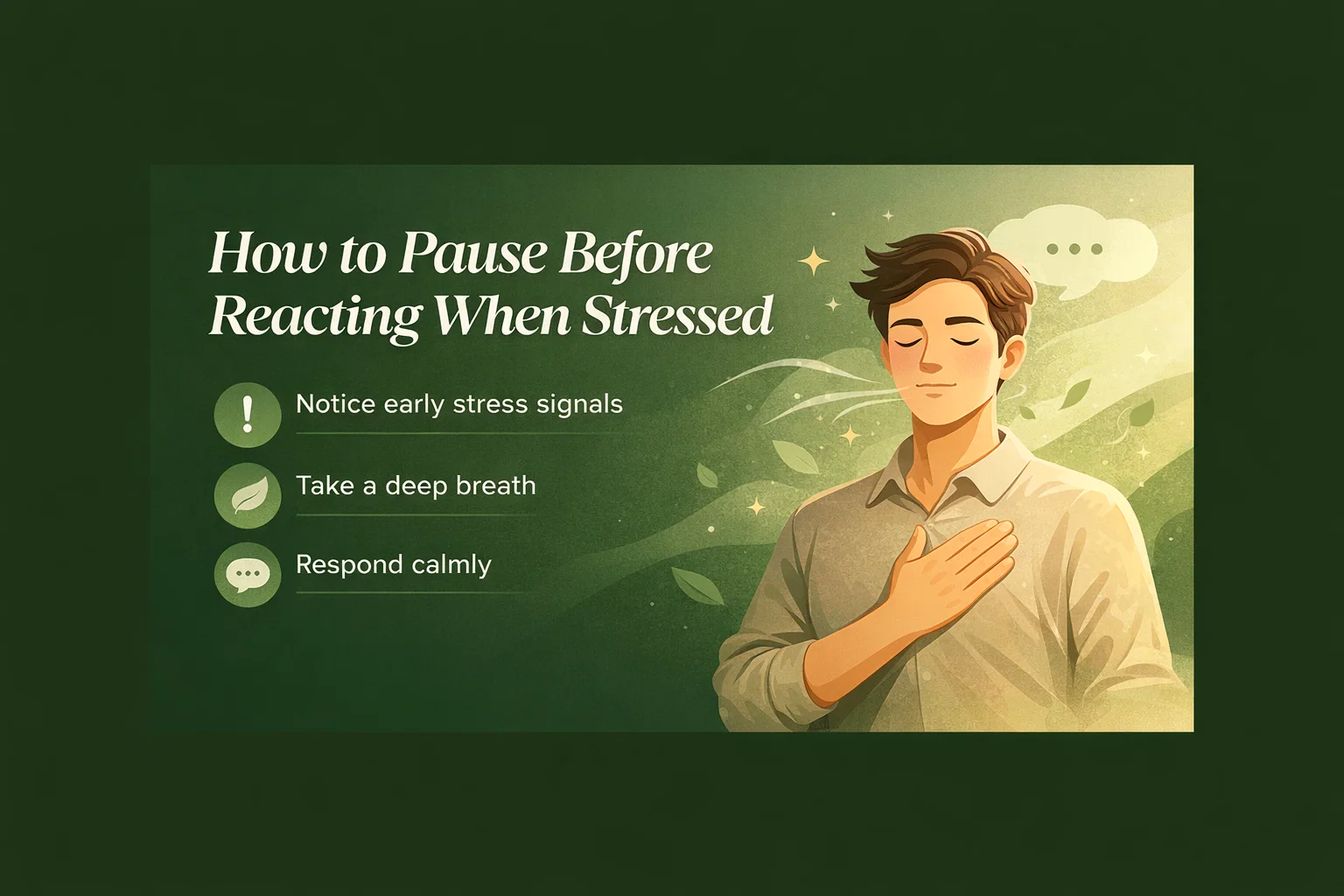
The secret to a successful pause is catching the stress before it reaches a boiling point. Your body usually sends out warning shots long before you lose your temper. These might include a clenched jaw, shallow breathing, or a sudden heat rising in your neck. By practicing self-awareness, you can learn to notice these early signals. Once you identify that your internal pressure is rising, you can consciously decide to stop your body first. This physical halt is the most critical step in breaking the cycle of reactivity.
Immediate Physical Techniques to Reset
When the internal alarm goes off, physical intervention is often more effective than mental willpower. You cannot simply think yourself into being calm when your nervous system is on fire. You have to lead with your body. Start by taking one deep breath. This sends a direct signal to your nervous system that you are safe. Follow this by intentionally lowering your voice. It is nearly impossible to remain in a state of high-intensity anger while speaking in a low, controlled whisper. This contrast forces your brain to recalibrate its emotional output.
The Power of Grounding and Movement
Grounding is a powerful tool to bring you back to the present moment. Try pressing your feet firmly into the floor and focusing on the sensation of the ground supporting you. This simple act shifts your attention away from the stressful thoughts and back into your physical reality. Additionally, try to reduce your movement speed. When we are stressed, we tend to move erratically and quickly. By slowing down your physical gestures, you are communicating to your brain that there is no immediate life-threatening emergency, which helps lower your cortisol levels.
Creating Mental Space for Better Decisions
Once you have addressed the physical urgency of stress, you need to create mental space. This involves a brief pause in speech. You do not have to respond immediately to every question or provocation. In fact, delaying your response intentionally is a sign of strength, not weakness. This gap allows you to move from a place of frustration to a place of intention. During this time, you can relax your facial muscles, specifically the area around your eyes and forehead, which often carries the weight of our tension.
Reassessing the Situation Calmly
With the initial wave of emotion subsiding, you can now look at the situation with fresh eyes. Ask yourself if the current problem is truly a catastrophe or simply an inconvenience. Often, when we are stressed, we lose perspective and treat minor mishaps like major crises. Reassessing the situation allows you to choose calmer words later. By choosing to wait, you avoid the “repair work” that inevitably follows a reactive outburst. It is much easier to hold your tongue for ten seconds than it is to spend ten hours trying to fix a relationship damaged by harsh words.
Modeling Self Control for the Next Generation
For parents, the way we handle stress is the primary blueprint our children use to develop their own emotional regulation skills. When you model self-control, you are teaching your children that it is possible to feel a big emotion without letting it control your behavior. This is far more impactful than any lecture on “staying calm.” By practicing the pause daily, you create a household culture where mistakes are handled with grace and communication is prioritized over conflict. You are showing them that even when things go wrong, the adults in the room remain a safe harbor.
The Importance of Repair and Reflection
No one is perfect, and there will be times when the pause fails. When this happens, the next step is to repair. This means acknowledging your reaction, apologizing if necessary, and discussing how you can handle it better next time. Following this with a period of reflection without guilt is essential. Guilt is a heavy emotion that often leads back to stress, creating a vicious cycle. Instead, view every missed pause as data. Ask yourself what the specific trigger was and how you can prepare for it in the future. Consistent practice is what builds the muscle memory of mindfulness.
Building a Daily Habit of Mindfulness
The pause is not something you only use during a crisis; it is a skill that should be practiced during calm moments too. Incorporate small mindfulness exercises into your daily routine. This might look like taking three deep breaths before you start your car or pausing for five seconds before you answer the door. These “micro-pauses” train your brain to find the gap between stimulus and response. Over time, this becomes your default mode, making it much easier to access when the stakes are high and the stress is real.
Ending Interactions Calmly
The final step in mastering the pause is learning how to end an interaction calmly. Even if the underlying issue has not been fully resolved, you can choose to step away and revisit the topic when everyone is in a better headspace. Ending on a note of calm prevents the lingering resentment that often follows a heated argument. It leaves the door open for productive problem-solving later on and ensures that the relationship remains intact despite the temporary stressor.
Conclusion
Mastering the art of the pause is a lifelong journey, but the rewards are immediate and profound. By noticing your body signals, slowing down your physical responses, and giving yourself permission to wait before speaking, you reclaim your power. You transition from being a victim of your circumstances to being the intentional architect of your reactions. Remember that the goal is not perfection, but progress. Each time you choose to breathe instead of shout, you are building a more peaceful life for yourself and everyone around you. Start small, stay consistent, and watch as your stress begins to lose its grip on your daily happiness.
Would you like me to generate a meta description or some alt-text for the image to go along with this post?