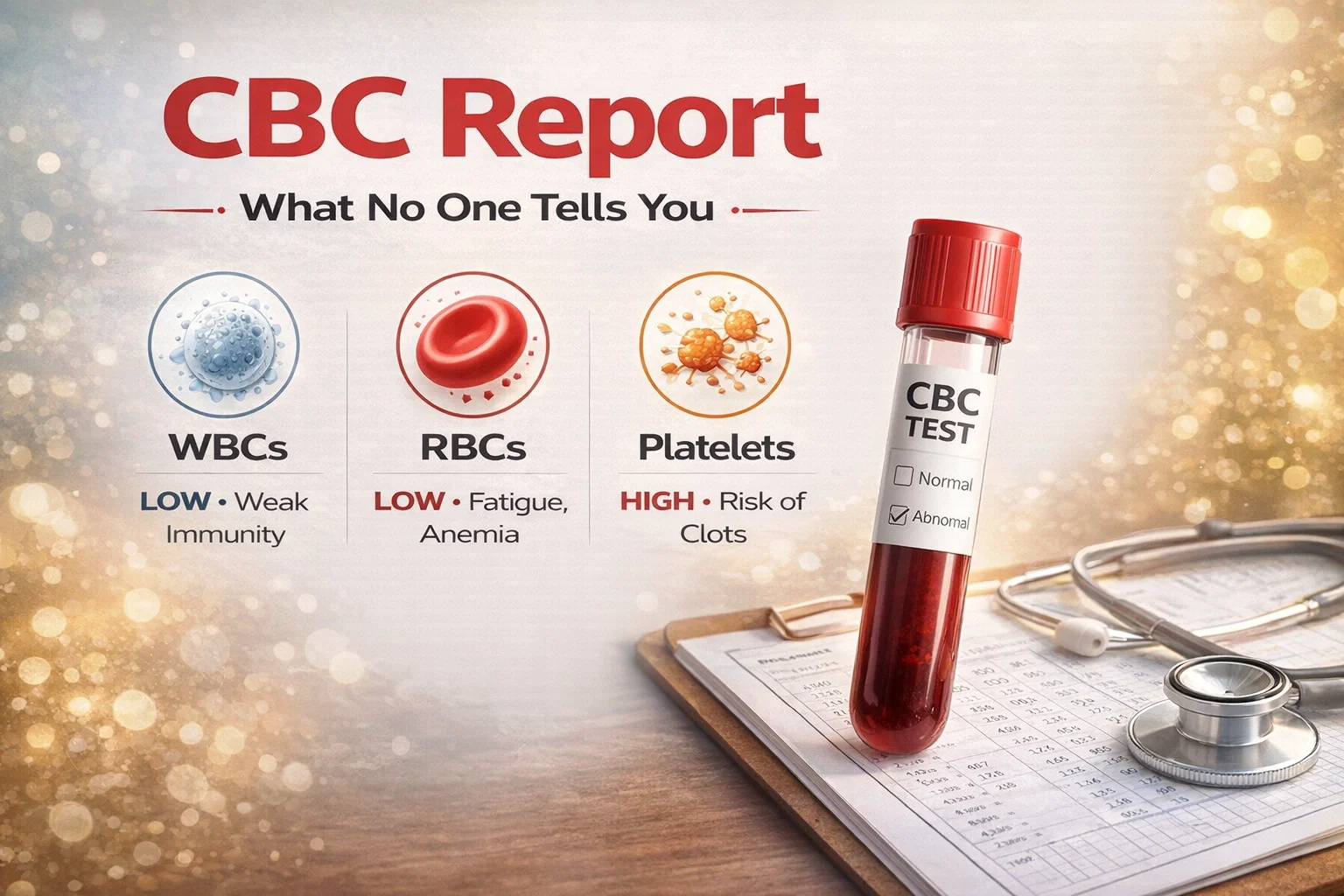
How to Read Your CBC Blood Test Results Guide to WBC, RBC, and Platelets
Understanding your health often starts with a single piece of paper: the Complete Blood Count, or CBC report. It is one of the most common medical tests in the world, yet for many of us, looking at that list of abbreviations and numbers feels like trying to read a foreign language. You see terms like Neutrophils, Basophils, and MCV, and while the numbers might be highlighted in bold or marked as high or low, the actual meaning behind those labels remains a mystery. Taking control of your wellness journey means moving beyond the numbers and understanding what your body is trying to communicate through its most vital fluid.
The blood flowing through your veins is a complex communication network. It carries oxygen to your brain, fights off microscopic invaders, and ensures that every organ has the resources it needs to function. When a doctor orders a CBC, they are essentially taking a census of your internal population. By looking at the balance of different cell types, we can gain incredible insights into our immune system strength, energy levels, and even our hydration status. This guide is designed to pull back the curtain on those clinical terms and help you become a more informed advocate for your own health.
The Foundation of Your Blood: Red Blood Cells and Hemoglobin
When you think of blood, the first thing that comes to mind is its deep red color. This color comes from the Red Blood Cells (RBCs), which are the primary transport vehicles of the body. Their main job is to carry oxygen from your lungs to every other cell in your body. If your RBC count is low, it is often a sign of anemia. This means your tissues aren’t getting the oxygen they need to thrive, which frequently results in that heavy, unshakable feeling of fatigue or weakness.
Inside those red blood cells is a specialized protein called Hemoglobin (Hb). This is the specific component that latches onto oxygen molecules. Monitoring your hemoglobin levels is crucial because even if you have enough red blood cells, if the hemoglobin itself is low, the transport system is inefficient. High hemoglobin levels, on the other hand, can sometimes point toward dehydration. When there is less fluid in the blood, the concentration of cells becomes artificially high. In rarer cases, it can indicate conditions where the body produces too many cells, making the blood thicker and harder to pump.
Understanding MCV, MCH, and MCHC
You might notice a small section on your report labeled with these three-letter acronyms. These are known as RBC indices. They don’t just count the cells; they describe their size and quality. MCV (Mean Corpuscular Volume) measures the average size of your red blood cells. If they are too large or too small, it can give your healthcare provider a massive clue about what kind of nutritional deficiency you might be facing. For example, very small cells often point toward an iron deficiency, while unusually large cells might suggest a lack of B12 or folic acid. These measurements are the fine details that help turn a general observation into a specific plan for recovery.
The Body’s Defense Force: White Blood Cells (WBC)
If the red blood cells are the transport system, the White Blood Cells (WBCs) are the military. Their entire existence is dedicated to identifying and destroying pathogens like bacteria, viruses, and fungi. A normal WBC count suggests that your internal security team is at a healthy baseline. However, when these numbers shift, it tells a very specific story about what your immune system is currently battling.
A high white blood cell count is frequently a sign of an active bacterial infection. Your body detects the invaders and rapidly produces more soldiers to meet the threat. In more serious and persistent cases, an extremely high count can be a red flag for bone marrow issues or leukemia, where the body begins overproducing these cells uncontrollably. Conversely, a low WBC count indicates a weakened immunity. This can happen during a viral infection that exhausts the body’s resources, or it can be a side effect of certain medications. When your white blood cell count is low, you are more vulnerable to getting sick, making it a critical metric for anyone focused on long-term wellness.
Meeting the Specialists: The WBC Differential
Not all white blood cells are the same. Your immune system employs different types of “specialists” to handle different types of threats. On your CBC report, this breakdown is usually called the Differential. Understanding these specific categories allows you to see exactly which branch of your immune system is currently on high alert.
Neutrophils: The First Responders
Neutrophils are the most abundant type of white blood cell. They are the first to arrive at the scene of an infection or injury. Because they are the primary defense against bacteria, a high neutrophil count almost always points toward a bacterial infection or significant internal inflammation. If these levels are low, it might suggest that a viral infection has cleared them out or that there is an underlying issue with the bone marrow where they are produced.
Lymphocytes: The Memory Keepers
Lymphocytes are the cells that remember past infections and produce antibodies. They are particularly active during viral infections. If you are coming down with the flu or a common cold, you will likely see your lymphocyte count rise. On the flip side, low levels can be caused by the long-term use of steroids or certain immune deficiency disorders. These cells are the reason vaccines work and why we often don’t get the same specific illness twice.
Getty Images
Explore
Eosinophils and Basophils: The Allergy Detectors
If you suffer from seasonal allergies or asthma, you might see your Eosinophil count jump. These cells are specialized for dealing with parasites and allergic reactions. Basophils are the rarest of the white blood cells, but they play a massive role in the inflammatory response. High basophil levels are often linked to thyroid disorders or severe allergic sensitivities. Together, these two cell types act as the body’s early warning system for irritants and allergens.
Platelets: Your Internal Repair Crew
Have you ever wondered why a small cut stops bleeding after a few minutes? You have platelets (PLT) to thank for that. These tiny, plate-shaped cell fragments are responsible for blood clotting. They are the repair crew that rushes to the site of a damaged blood vessel to plug the leak. Maintaining a balanced platelet count is a delicate act for the body.
If your platelet count is too low, you are at a higher risk of bruising easily or experiencing prolonged bleeding. Conditions like Dengue fever are notorious for causing a sharp drop in platelets, which is why medical professionals monitor this number so closely during such illnesses. However, having too many platelets is also a concern. A high count can lead to the formation of unnecessary blood clots within the veins or arteries, which can obstruct blood flow to vital organs. Keeping your platelets in the “Goldilocks zone” is essential for cardiovascular health and wound healing.
How to Use This Information for Better Health
Armed with the knowledge of what these markers mean, you can transform your next check-up into a collaborative conversation. Instead of just hearing “your labs look fine,” you can look at your results and notice trends. Perhaps your iron markers are within the normal range but on the very low end of that range. This could be the explanation for why you have been feeling slightly more tired lately, even if you aren’t clinically anemic yet.
It is also important to remember that a single lab result is just a snapshot in time. Your blood chemistry changes based on what you ate, how much water you drank, and how much stress you have been under in the days leading up to the test. This is why doctors look for patterns over months and years rather than reacting to one slightly elevated number. Collecting your reports in a dedicated health binder or digital folder allows you to see the “big picture” of your biological history.
Proactive Tips for Optimal Blood Health
While you cannot control every aspect of your blood chemistry, lifestyle choices have a profound impact on these numbers. Supporting your red blood cells starts with a diet rich in iron, folate, and B12. Think leafy greens, lentils, and lean proteins. To support your white blood cells and immune system, prioritize sleep and stress management, as chronic cortisol can suppress your immune response over time.
Hydration is perhaps the simplest and most effective way to keep your CBC markers accurate. Dehydration can “concentrate” your blood, making it look like you have more cells than you actually do, which can lead to confusion during a diagnosis. Aim for consistent water intake throughout the day to ensure your plasma volume stays at a healthy level. Additionally, regular movement and exercise help stimulate healthy bone marrow function, which is the “factory” where almost all of these cells are created.
The Role of Supplementation
If your CBC report shows a consistent deficiency, such as low MCV or low hemoglobin, supplementation might be necessary. However, it is vital to only start supplements like iron or B12 under the guidance of a professional. Excessive iron, for example, can be just as problematic as an iron deficiency. Your lab results act as the map that tells you exactly which nutrients your body is craving and which ones you already have in abundance.
Conclusion: Taking the Reins of Your Wellness
Your CBC report is one of the most powerful tools in your wellness toolkit. It is a detailed, data-driven look at the invisible processes that keep you alive and thriving every single day. By understanding the roles of Red Blood Cells, White Blood Cells, and Platelets, you move from a place of confusion to a place of empowerment. You no longer have to wonder why you feel fatigued or why your immune system seems to struggle during certain seasons; the answers are often right there in the data.
Remember that while this information is educational, your healthcare provider is the best person to interpret these results in the context of your unique medical history. Use this guide to prepare your questions, stay curious about your body, and keep a close eye on those trends. When you understand your blood, you understand your health at its most fundamental level. Here is to being proactive, staying informed, and taking the next step toward a more vibrant, energized version of yourself!
Would you like me to generate a set of SEO keywords or a meta description to go along with this post?