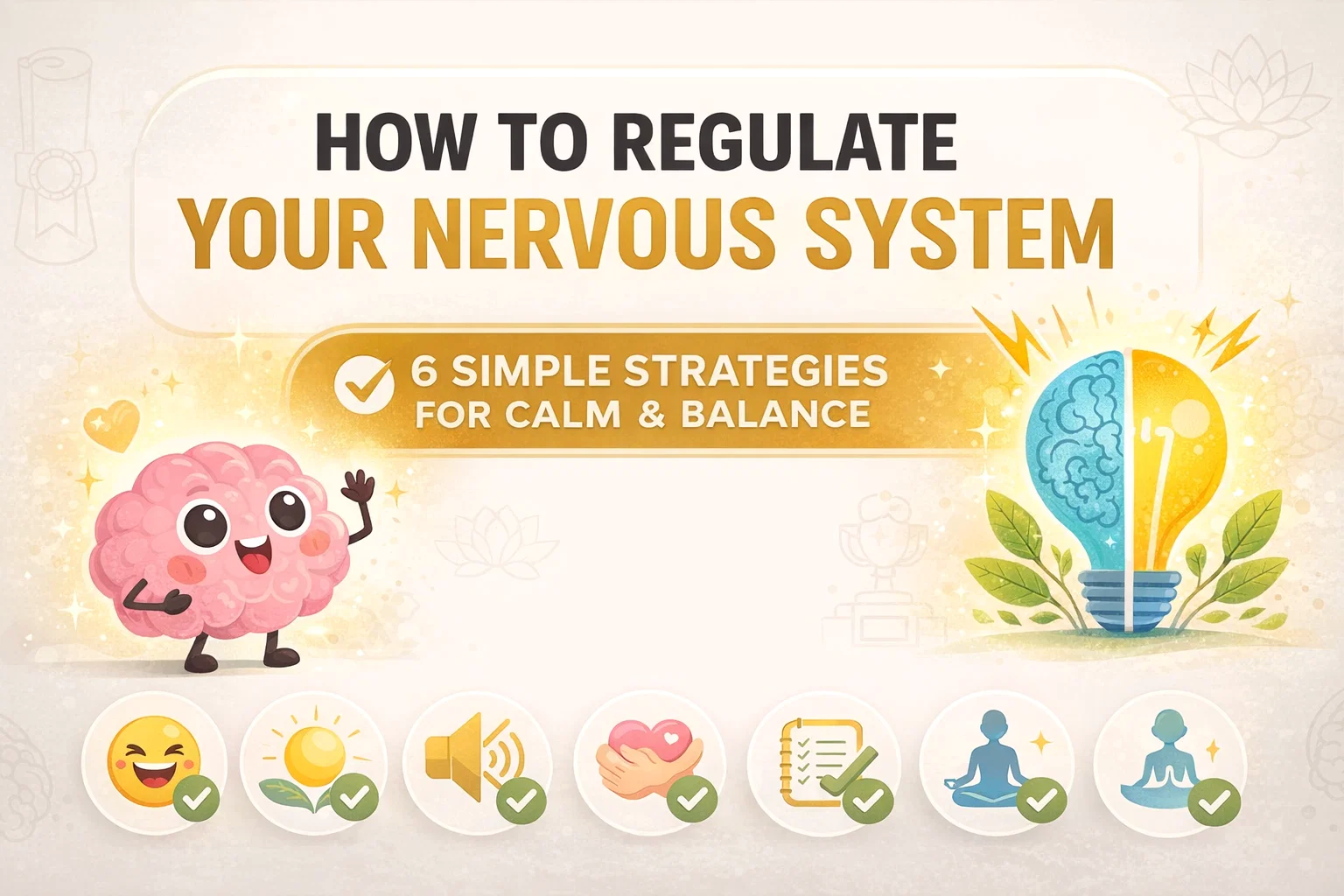
How to Regulate Your Nervous System 6 Tips for Stress Relief Anxiety Management
We have all been there. Your heart starts racing for no apparent reason, your thoughts begin to spiral into a loop of “what-ifs,” and suddenly, the world feels much louder and more chaotic than it did ten minutes ago. If you feel like you are constantly living on the edge of a breakdown or simply cannot find your “off” switch, you are not alone. What you are experiencing is a dysregulated nervous system, and understanding how to bring it back into balance is one of the most transformative skills you can ever learn for your mental and physical health.
Your nervous system is the command center of your entire human experience. It dictates how you breathe, how you digest food, and most importantly, how you respond to the world around you. When it is balanced, you feel resilient and calm. When it is out of sync, even the smallest tasks can feel like climbing a mountain. This guide will walk you through the essential science of nervous system regulation and provide you with actionable, natural strategies to reclaim your peace of mind.
Understanding the Autonomic Nervous System: The Gas and the Brake
To regulate your nervous system, you first have to understand the two main players involved: the Sympathetic Nervous System and the Parasympathetic Nervous System. Think of the sympathetic branch as the “gas pedal.” This is your fight or flight response. It is designed to save your life when you are in danger by pumping adrenaline through your body, increasing your heart rate, and sharpening your focus.
The problem in our modern world is that our bodies often mistake a stressful email or a traffic jam for a literal life-threatening predator. This keeps the gas pedal floored indefinitely. On the other side, we have the parasympathetic branch, often called the “rest and digest” system. This is your “brake pedal.” It tells your body that the danger has passed, allowing your heart rate to slow down, your muscles to relax, and your brain to enter a state of recovery. Regulation is the art of knowing how to hit the brakes when the gas has been on for too long.
Shutterstock
1. The Healing Power of Laughter and Comedy
It sounds almost too simple to be true, but laughter is one of the fastest ways to reverse a stress response. When you watch a comedy or share a genuine laugh with a friend, you are doing more than just enjoying a moment; you are physically altering your body’s chemistry. Laughter triggers the release of endorphins, which are the body’s natural feel-good chemicals. These endorphins promote an overall sense of well-being and can even temporarily relieve pain.
More importantly, the act of laughing forced a rhythmic contraction of the diaphragm. This movement stimulates the vagus nerve, which is the primary component of the parasympathetic nervous system. By stimulating this nerve, you send an immediate signal to your brain that it is safe to relax. If you feel the weight of the world on your shoulders, turn off the news and put on your favorite stand-up special. It is not an escape; it is a biological necessity.
2. Sunshine and Nature: Grounding Your Biological Clock
Human beings were not designed to spend 24 hours a day under flickering fluorescent lights or staring at blue-light-emitting screens. Our nervous systems are deeply tied to the natural world. Seeking out sunshine is essential for the production of serotonin, a hormone that stabilizes our mood and helps us feel focused and calm. Without adequate sunlight, our circadian rhythms get disrupted, leading to poor sleep and increased anxiety.
Nature itself acts as a powerful regulator. There is a concept called “fractals” in nature—the repeating patterns found in leaves, clouds, and waves. Research shows that simply looking at these natural patterns can reduce stress levels by up to 60 percent. Whether it is a walk in the woods or sitting in a local park, getting outside helps ground your energy and reminds your system that there is a world beyond your digital stressors.
The Benefits of Vitamin D and Serotonin
- Mood Regulation: Sunlight boosts serotonin levels, which helps ward off seasonal affective disorder and general anxiety.
- Improved Sleep: Morning sun exposure helps regulate melatonin production, ensuring you can actually “shut down” at night.
- Reduced Cortisol: Spending time in green spaces has been clinically proven to lower cortisol, the primary stress hormone.
3. Silencing the Noise to Activate the Parasympathetic System
We live in an era of “sensory overload.” Between the hum of the refrigerator, the ping of notifications, and the constant roar of traffic, our ears are rarely at rest. This “unnecessary noise” keeps the nervous system in a state of low-level hyper-vigilance. Your brain is constantly scanning these sounds for potential threats, even if you aren’t consciously aware of it.
Intentionally turning down the noise in your life is a direct invitation for the parasympathetic nervous system to take over. This might mean using noise-canceling headphones, practicing ten minutes of total silence in the morning, or simply turning off the background TV. When the external noise stops, your internal system can finally stop scanning for danger and start focusing on repair and maintenance.
4. Physical Connection: The Magic of a Hug
Human touch is a fundamental biological need. When we hug someone we trust, our bodies undergo a remarkable shift. The brain releases oxytocin, often called the “cuddle hormone” or “bonding molecule.” Oxytocin acts as a natural buffer against stress. it lowers blood pressure and reduces the production of norepinephrine, a chemical associated with the stress response.
A long hug—specifically one that lasts at least 20 seconds—is enough to signal to the nervous system that you are safe and supported. This physical reassurance “co-regulates” your system. If you are feeling isolated or anxious, reaching out for a hug or even petting an animal can provide the tactile feedback your brain needs to realize that the “emergency” is over. It is a simple, beautiful way to bring yourself back to center.
5. Breaking the Loop: Snapping Out of Rumination
Rumination is the act of playing a negative thought or event over and over in your mind like a broken record. It is a classic sign of a “stuck” nervous system. When you ruminate, your body reacts as if the negative event is happening in real-time, keeping your stress levels consistently high. To break this loop, you need a mental pattern interrupt.
One effective technique is to intentionally list 3 to 4 positive thoughts or things you are grateful for in that exact moment. This isn’t just about “being positive.” It is about forcing your brain to use different neural pathways. By shifting your focus from a perceived threat to a perceived benefit, you effectively “snap” the brain out of its survival-mode loop and return to the present moment. Presence is the enemy of anxiety.
Quick Tips for Positive Reframing
- Identify the Trigger: Recognize when you are “looping” and label it as rumination.
- Focus on the Senses: Name three things you can see, two you can smell, and one you can touch.
- Micro-Wins: Think of one small thing you accomplished today, even if it was just making the bed.
6. Deep Breathing: The Direct Line to Your Brain
Of all the tools available for nervous system regulation, breathing is the most powerful because it is the only autonomic function you can consciously control. When you are stressed, your breath becomes shallow and rapid, which tells your brain “there is an emergency!” By consciously slowing down and deepening your breath, you flip the script.
Deep, diaphragmatic breathing sends an immediate signal via the vagus nerve to the brain’s emotional center, the amygdala. It says, “There is no emergency going on.” This is why techniques like box breathing or the 4-7-8 method are used by high-performance athletes and special forces. You are manually overriding your body’s alarm system and forcing it into a state of calm. Just three deep breaths can be the difference between a panic attack and a moment of clarity.
Creating a Daily Regulation Routine
Regulation is not a one-time event; it is a lifestyle. You don’t wait for your car to overheat before you check the coolant, and you shouldn’t wait for a total burnout before you check in with your nervous system. Creating a daily routine that incorporates these elements ensures that your “baseline” stays calm and resilient.
Start your morning with five minutes of sunshine and three deep breaths. Throughout the day, check in with your environment—is there unnecessary noise you can eliminate? In the evening, prioritize laughter and physical connection. These small “micro-interventions” prevent stress from accumulating, allowing you to navigate life’s challenges with much more grace and ease.
Conclusion: Your Path to a Balanced Life
Regulating your nervous system is one of the greatest acts of self-care you can perform. It is the foundation upon which all other health goals are built. You cannot have good digestion, deep sleep, or clear focus if your body believes it is constantly under attack. By using the six strategies outlined today—laughter, sunshine, silence, connection, positive focus, and deep breathing—you are taking the controls back from your survival instincts.
Remember that your nervous system is incredibly plastic, meaning it can be retrained. If you have spent years in a state of high stress, it might take some time for your body to learn that it is safe to relax. Be patient with yourself. Every deep breath you take and every moment of laughter you enjoy is a step toward a more vibrant, peaceful, and regulated version of yourself. Start small, stay consistent, and watch as your world begins to feel a lot more manageable.
Would you like me to expand on any specific regulation techniques, or perhaps generate some Pinterest-style graphics to go along with these tips?