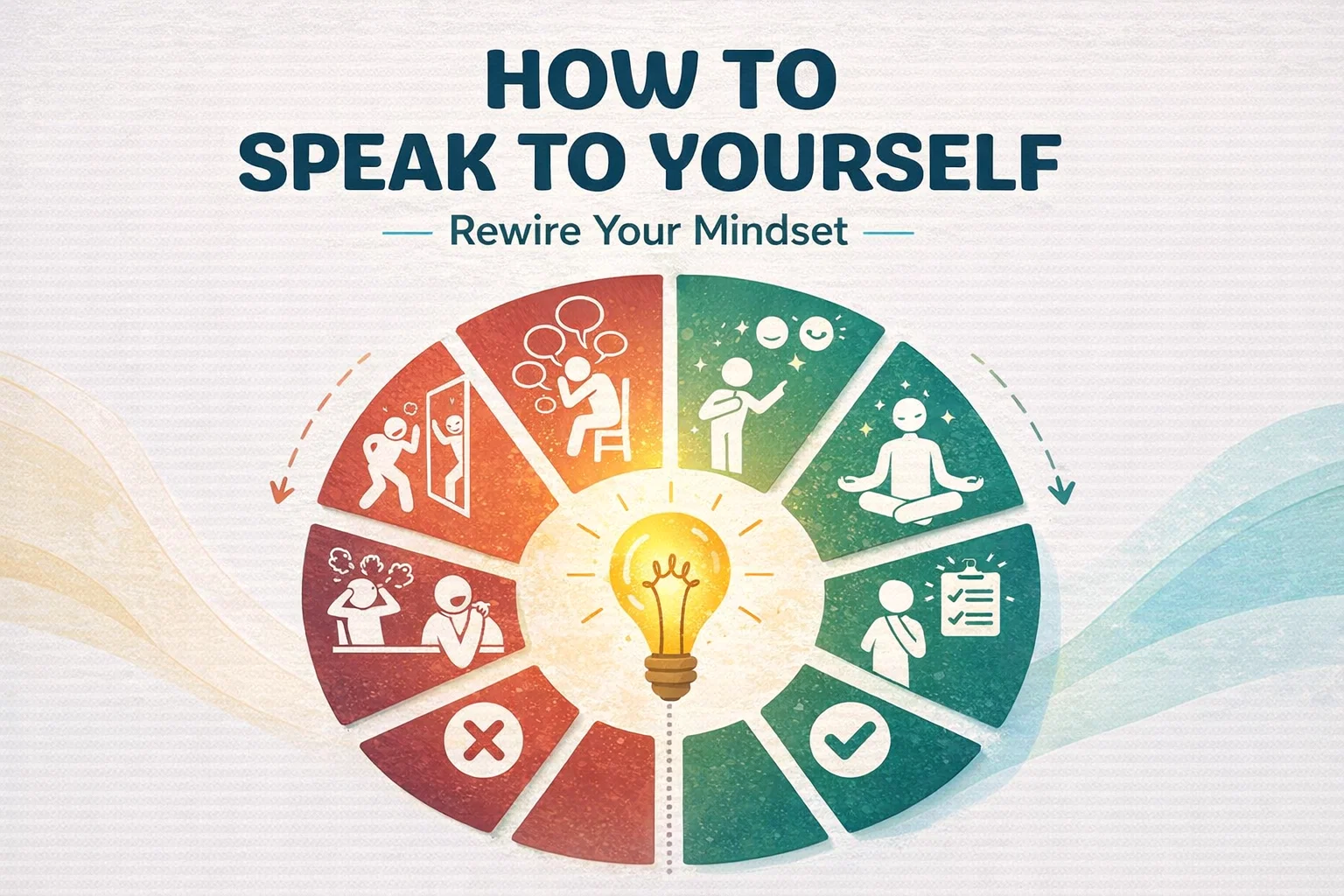
How to Speak to Yourself Rewire Your Mindset
Have you ever paused in the middle of a busy day just to listen to the constant stream of thoughts running through your mind? For many of us, that inner narrator is anything but kind. We often speak to ourselves in ways we would never dream of speaking to a dear friend or a beloved family member. We criticize our mistakes, dwell on our awkward moments, and anticipate the worst possible outcomes. But here is the incredible news: you are not permanently stuck with this critical inner voice. You possess the profound ability to rewire the way you think and completely transform your mental landscape.
Changing your self-talk is not about toxic positivity or pretending that everything is perfect all the time. It is about shifting from a state of constant mental friction to a state of supportive, constructive awareness. When you upgrade your internal dialogue, you are literally changing the physical structure of your brain. By building new mental habits, you can break free from the exhausting cycles of stress and step into a much more peaceful, empowered version of yourself.
The Science of Your Inner Voice
Before we explore the practical steps of changing our internal dialogue, it is helpful to understand why our brains behave this way in the first place. Human beings have a built-in evolutionary mechanism called the negativity bias. Thousands of years ago, paying close attention to potential threats and dangers kept our ancestors alive. While we no longer have to worry about predators in the wild, our brains are still wired to scan our environment and our own behaviors for potential pitfalls.
This evolutionary quirk means that negative thoughts tend to stick to our minds like Velcro, while positive experiences slide right off like Teflon. Every time you think a negative thought or criticize yourself, you are strengthening a specific neural pathway in your brain. Over time, this pathway becomes a well-worn superhighway, making it incredibly easy for your mind to travel down the route of self-doubt and harsh criticism by default. The goal of rewiring your mindset is to consciously stop using that old highway and start paving a brand new path toward self-compassion and emotional resilience.
Old Habits vs. New Perspectives: A Guide to Mental Rewiring
To truly change how we speak to ourselves, we must first identify the outdated, unhelpful habits we currently rely on. Let us break down five common mental traps and explore the powerful, new perspectives we can choose to adopt instead.
1. From Ruminating on Every Problem to Naming Without Dwelling
The Old Way: Think about the last time you made a minor mistake at work or had an awkward social interaction. If you are like most people, you probably replayed that exact scenario in your head dozens of times. You analyzed every word you said, imagining the judgment of everyone involved. This is called rumination. Replaying the story with everyone you meet or in the quiet of your own mind does not solve the problem. It only leaves you feeling more helpless, anxious, and stuck in the past with each replay.
The New Way: The antidote to rumination is the practice of naming without dwelling. The next time you find yourself stuck in a mental loop, consciously pause. Acknowledge the issue clearly and objectively. You might say to yourself, “I made an error on that presentation, and I feel embarrassed.” You have named the feeling, and now it is time to shift your focus immediately to what is workable. Ask yourself what you can actually control right now. Perhaps the workable solution is sending a brief apology email or simply making a note to double-check your work tomorrow. Acknowledge the reality, and then move forward into action.
2. From Speaking Harshly to Choosing Neutral Language
The Old Way: We are often our own worst critics. When things go wrong, our default reaction is frequently to use extreme, punishing language. If you spill a cup of coffee, your inner voice might shout, “You are such a clumsy idiot!” If you miss a deadline, you might tell yourself, “This is a complete disaster, and you are going to get fired.” Using language you would never say to someone you love creates a deeply hostile internal environment.
The New Way: You do not have to immediately jump from harsh criticism to glowing self-praise. That often feels fake and unattainable. Instead, aim for neutral language. Neutral language strips the intense emotional charge away from the event. Replace “This is a total disaster” with “This is a challenging situation.” Replace “I am a failure” with “I am currently struggling with this task.” By neutralizing the language, you prevent your brain from spiraling into a panic state, allowing you to handle the situation with clarity and grace.
3. From Complaining to Regulating Before Reacting
The Old Way: We live in a society that often glorifies venting. When we feel overwhelmed, our first instinct is often to call a friend or complain to a coworker to release the pressure. While expressing our feelings is healthy, habitual complaining to regulate stress is a trap. Venting might offer a fleeting moment of relief, but it often keeps your body firmly stuck in threat mode. You are continually reminding your nervous system of the stressor, which keeps your cortisol levels high and your muscles tense.
The New Way: True emotional intelligence requires us to regulate our bodies before we react to our circumstances.
Shutterstock
Explore
The brain and the body are deeply connected. When you feel triggered, your body goes into a fight, flight, or freeze response. You cannot think your way out of a physiological stress response. You must calm the body first so the brain can think clearly. When stress hits, try taking five slow, deep breaths. Go for a brisk walk around the block. Splash cold water on your face. Once your physical body feels safe, your mind will be much better equipped to handle the problem constructively.
4. From Expecting the Worst to Training a Solution Focus
The Old Way: Do you constantly find yourself scanning the horizon for danger? Many of us have a default setting that expects rejection, failure, or catastrophe at every turn. We convince ourselves that if we anticipate the worst possible outcome, we will not be disappointed when it happens. This defense mechanism is exhausting. It robs you of your current joy and forces you to live out negative scenarios that have not even happened yet.
The New Way: You can actively train your brain to adopt a solution focus. When you catch your mind spiraling into catastrophic “what if” scenarios, forcefully hit the pause button. Gently guide your attention away from the imaginary disaster and back to the present moment. Ask yourself one simple, highly effective question: “What is one helpful next step I can take today?” It does not have to be a massive leap. Even the tiniest step forward shifts your brain out of the passenger seat of anxiety and back into the driver’s seat of empowerment.
5. From Normalizing Mental Noise to Practicing Mental Awareness
The Old Way: It is incredibly common to accept a high level of background anxiety as a normal part of life. We normalize the constant mental noise, the running to-do lists, the underlying inner tension, and the resulting emotional fatigue. We drag ourselves through the day, assuming that feeling drained and mentally chaotic is simply the price of being a busy adult. This chronic state of tension prevents us from ever truly resting or experiencing deep contentment.
The New Way: The path to mental peace begins with the deliberate practice of mental awareness. You must learn to become the curious observer of your own mind. Notice your thought patterns as they arise, but try not to judge them. If you notice yourself slipping into a negative spiral, simply say, “Ah, there is that old worrying habit again.” Remember the fundamental rule of brain chemistry: what you repeat, you reinforce. If you repeatedly allow mental chaos to reign, it will grow stronger. But if you practice noticing your thoughts and gently redirecting them, you reinforce a brand new foundation of calm awareness.
Daily Practices to Cement Your New Mindset
Understanding these concepts is the first step, but real transformation requires daily practice. Rewiring your brain takes time, patience, and consistency. Here are a few practical ways to integrate these new habits into your everyday routine.
First, consider starting a simple thought journal. Dedicate five minutes each evening to write down the most prominent negative thought you had that day. Next to it, physically write out a neutral, workable alternative. Seeing the contrast on paper helps solidify the new neural pathways. It takes the abstract concept of self-talk and makes it tangible and actionable.
Second, establish a “pause protocol” for moments of high stress. Decide ahead of time what you will do when you feel overwhelmed. Perhaps your protocol is to step away from your computer, close your eyes, and take three deep breaths before you are allowed to speak or type a response. Having a predetermined plan prevents your old, reactive habits from taking over when your emotions are running high.
Finally, practice fierce self-compassion. You are going to mess up. You will have days where you ruminate, complain, and speak harshly to yourself. That is completely normal. The goal is not perfection. The goal is simply to notice when you fall back into old habits and gently guide yourself back to the new ones without adding guilt to the equation.
Embrace the Journey of Self-Transformation
Learning how to speak to yourself with kindness, neutrality, and constructive focus is one of the most important skills you can ever cultivate. It influences your relationships, your career, your physical health, and your overall happiness. By choosing to let go of harsh criticism and embracing a workable, solution-oriented mindset, you are giving yourself the greatest gift possible: a supportive and peaceful internal home.
The next time you catch your inner voice spiraling, remember that you hold the pen. You get to write the next sentence. Choose words that uplift you, ground you, and propel you forward. The process of rewiring your mind is a lifelong journey, but every single positive thought is a beautiful step in the right direction.