How To Stay Calm Manage Stress Daily Mindfulness Tips for Mental Health and Personal Growth
Life has a funny way of throwing everything at us at once. One moment you are cruising through your to-do list, and the next, you are staring at a blinking cursor, feeling the weight of a thousand unorganized thoughts. We have all been told to just breathe or try the latest bio-hacking trend to find our center, but sometimes the most effective solutions are the ones that require zero equipment and zero cost. Staying calm is not about escaping your reality; it is about changing how you interact with it in the moment.
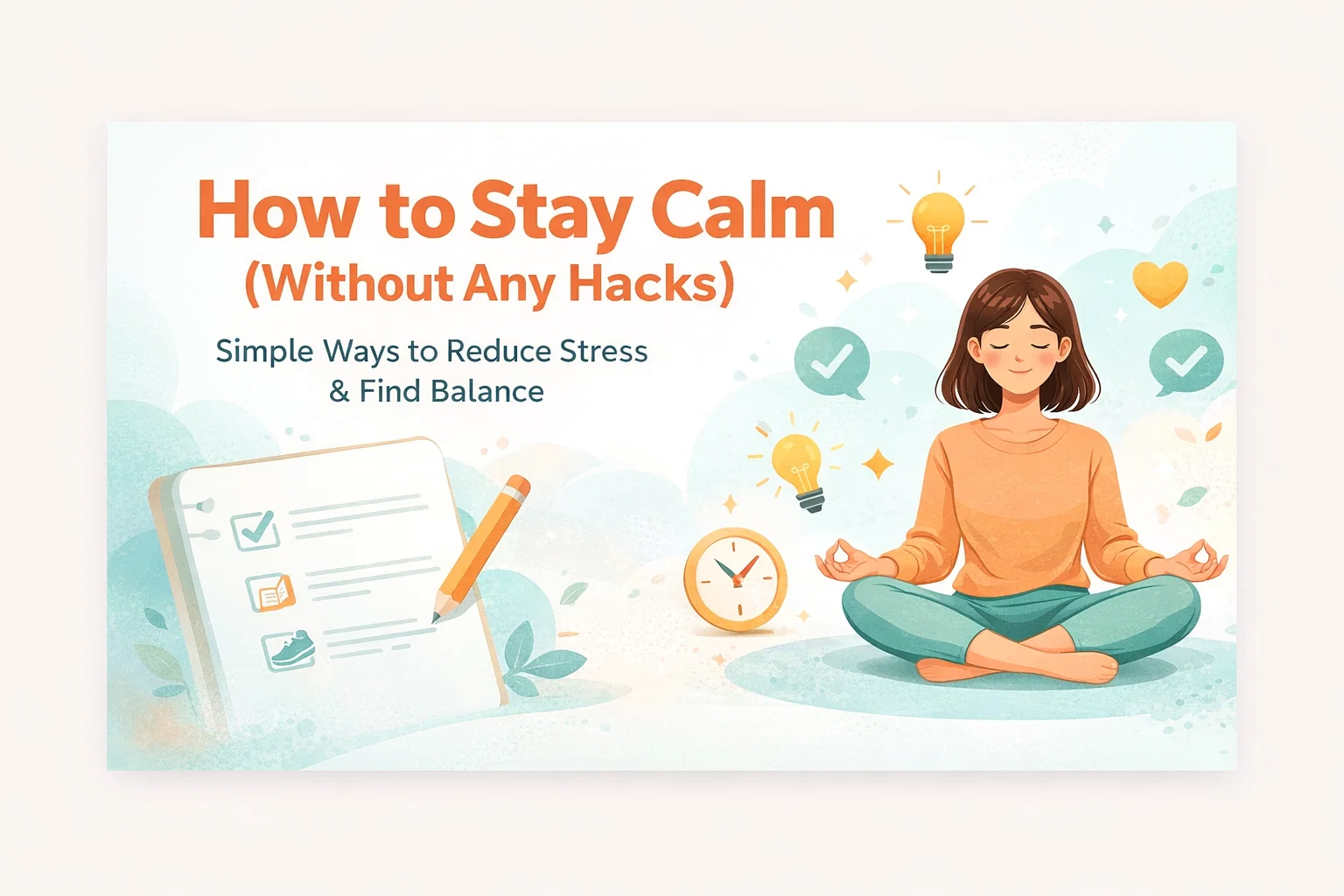
The image we are looking at today provides a brilliant roadmap for emotional regulation. It simplifies complex feelings into actionable steps. Instead of spiraling into a state of panic or stagnation, we can use these simple pivots to regain control. In this guide, we will dive deep into why these specific shifts work and how you can integrate them into a lifestyle centered on peace and productivity.
The Power of Action Over Analysis
One of the biggest hurdles to staying calm is the trap of over-analysis. When we feel a negative emotion, our instinct is often to sit with it until we understand every tiny detail of why it is happening. While self-reflection is great, there is a point where it turns into rumination. Rumination is the enemy of calm.
Moving from Overthinking to Writing
When your brain feels like a browser with fifty tabs open, you need to offload the data. Writing is a form of externalizing your internal world. By putting pen to paper or fingers to a keyboard, you are forcing your brain to organize chaotic thoughts into linear sentences. This simple act reduces the cognitive load on your mind, allowing you to breathe a bit easier. It turns a giant, scary monster of an idea into a few manageable sentences on a page.
Shifting from Stuck to Walking
If you have ever sat at your desk for three hours without making any progress, you know what being stuck feels like. The physical environment becomes a mirror of your mental state. By simply standing up and walking, you change your physiological state. Movement circulates blood flow and provides a fresh perspective. Often, the solution to a problem does not come from staring harder at it, but from walking away and letting your subconscious take over.
Navigating the Creative and Emotional Lulls
We often demand constant output from ourselves, but human beings are not machines. We have cycles of high energy and periods where we feel completely uninspired or confused. Understanding how to handle these lulls is the key to maintaining a long-term sense of peace.
From Uninspired to Reading
Inspiration is like a well; if you keep drawing from it without refilling it, eventually it runs dry. When you feel uninspired, it is a signal that you need new input. Reading is one of the most effective ways to feed your mind. Whether it is a professional development book, a piece of fiction, or a deep-dive article, you are inviting someone else’s perspective into your world. This cross-pollination of ideas is usually what sparks that next great thought.
From Confused to Asking
Ego often keeps us in a state of confusion. We feel like we should already know the answer, so we waste hours or even days trying to figure it out in isolation. Staying calm means having the humility to say, I do not know the answer to this. Asking a colleague, a mentor, or even a community group for help is an act of efficiency. It clears the fog of confusion and allows you to move forward with certainty.
Managing High-Intensity Emotions
Fear and frustration are high-energy emotions. They make our hearts race and our palms sweat. If we try to suppress them, they usually explode later. The trick is to give that energy a constructive place to go.
Turning Fear into Risk-Taking
Fear is often just misplaced anticipation. When we are scared, we are usually focused on a negative future outcome that has not happened yet. By taking a calculated risk, you are reclaiming your power. You are telling yourself that even if the outcome is uncertain, you are capable of handling the action. Courage is not the absence of fear, but the realization that something else is more important than fear.
Redirecting Frustration into Physical Movement
Frustration is a physical sensation. It feels like tension in the shoulders and heat in the chest. While overthinking requires writing, frustration requires movement. This does not necessarily mean a two-hour gym session. It could be ten minutes of stretching, a quick set of jumping jacks, or even just cleaning a room. By moving your body, you are processing the adrenaline that frustration creates, leaving you feeling much calmer once the physical energy is spent.
The Essential Role of Rest and Reflection
In our hustle-obsessed culture, rest is often seen as a weakness. However, according to the principles of long-term success, rest is a strategic requirement. You cannot stay calm if your nervous system is fried.
Treating Tiredness with Sleep
It sounds obvious, but many of us try to caffeinate our way out of tiredness. Lack of sleep mimics the symptoms of anxiety and depression. It lowers your threshold for stress, meaning things that wouldn’t normally bother you suddenly feel like a crisis. Sleep is the ultimate biological reset. When you are tired, the most productive thing you can do is go to bed. Everything looks better after eight hours of rest.
Addressing Burnout with a Day Off
Burnout is different from being tired. It is an emotional and mental exhaustion that comes from prolonged stress. If you feel like you are at the end of your rope, a single night of sleep might not be enough. Taking a full day off to completely disconnect from your responsibilities can prevent a total collapse. It allows your brain to enter a state of play and relaxation, which is where true recovery happens.
Reframing Your Mindset for the Long Haul
Finally, staying calm requires us to look at the big picture. When we lose our sense of time and purpose, we become impatient and unmotivated. These are often signs that we have drifted away from our core values.
Combatting Impatience by Reviewing Progress
Impatience is the feeling that you are not where you should be yet. It is a focus on the gap between your current reality and your ultimate goal. To stay calm during the long middle of a project or life stage, you must look backward. Reviewing how far you have come provides the evidence you need to trust the process. When you see the progress you have already made, the urge to rush disappears.
Igniting Motivation by Remembering Your Why
Motivation is a fickle friend. It comes and goes. When you feel unmotivated, it is usually because the daily tasks have become disconnected from your deeper purpose. Why did you start this blog? Why are you studying for that exam? Why are you building this business? When you reconnect with your “why,” the “how” becomes much easier to manage. Purpose provides the fuel that keeps the engine running when the initial excitement fades away.
Building a Personal Calmness Toolkit
The beauty of the advice in the image is that it is highly personalized. What works for one person when they are frustrated might be different for another. However, the underlying principle remains the same: identify the emotion and apply the specific antidote.
You might find it helpful to create your own version of this list. Think about the emotions that most frequently disrupt your peace. If you feel lonely, perhaps the antidote is to call a friend. If you feel insecure, perhaps the antidote is to list your recent wins. The goal is to create a set of “if-then” statements for your mental health. This removes the need for decision-making when you are already feeling stressed, making it much easier to stay calm.
The Science of Simple Shifts
Neuroscience tells us that we can actually train our brains to be more resilient. Every time you choose to write instead of overthink, or walk instead of staying stuck, you are strengthening the neural pathways associated with emotional regulation. Over time, these actions become your default response. You stop being a victim of your emotions and start being a manager of them.
Conclusion: Peace is a Practice, Not a Destination
Staying calm is not a state of being that you reach once and stay in forever. It is a series of small, intentional choices made throughout the day. By looking at the image provided, we see a blueprint for a more mindful existence. It reminds us that for every negative state of mind, there is a simple, physical, or mental pivot that can bring us back to center.
Do not wait until you are in the middle of a crisis to try these tips. Start small. The next time you feel a bit of impatience, stop and look at how much you have accomplished this week. The next time you feel a little uninspired, pick up a book for fifteen minutes. These tiny shifts build the foundation for a life that is not just productive, but peaceful and grounded. You have the tools you need to stay calm; you just have to choose to use them.
Which of these shifts do you find the most difficult to implement? Sometimes acknowledging the challenge is the first step toward overcoming it. Keep this list handy, and the next time life feels a bit too loud, let it guide you back to the quiet.