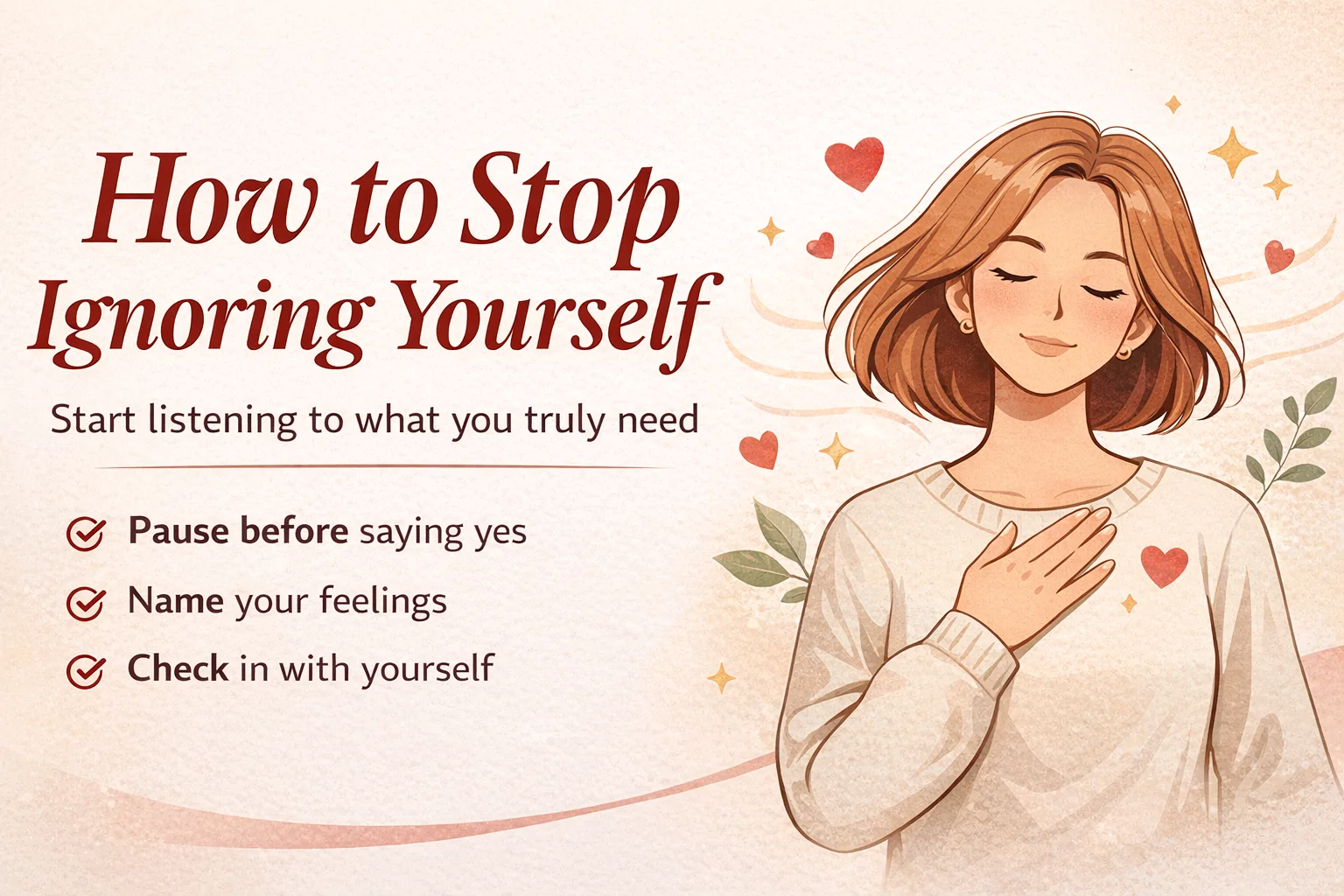
How to Stop Ignoring Yourself 4 Simple Steps to Rebuild Self-Trust and Inner Awareness
Have you ever reached the end of a long, exhausting day only to realize that you haven’t checked in with yourself once? Many of us move through life on autopilot, reacting to the needs of our bosses, our families, and our social circles while completely silencing our own inner voice. We often mistake this self-neglect for being productive or being a team player, but the truth is deeper. Ignoring yourself isn’t a sign of discipline; it is frequently a learned survival mechanism. If you feel disconnected from your own desires or find yourself constantly seeking permission to exist, it is time to stop the cycle of self-silencing and start the journey back to your own heart.
Understanding Why We Ignore Our Own Needs
The habit of ignoring ourselves rarely starts in adulthood. For many, it is a response to years of prioritizing others to stay safe or accepted. Perhaps you grew up in an environment where your emotions were seen as an inconvenience, or maybe you learned that being agreeable was the only way to receive praise. Over time, these patterns harden into a lifestyle where your own feelings are treated as background noise.
Psychologically, this is often linked to the concept of the fawn response. When we feel overwhelmed or unvalued, we try to please others to diffuse tension. We push through physical discomfort, skip meals because we are too busy working, and say yes to commitments that leave us feeling drained. Recognizing that this behavior isn’t laziness is the first step toward healing. You aren’t failing at life; you are simply operating out of an old script that no longer serves you.
The Subtle Signs You Are Ignoring Yourself
Self-neglect doesn’t always look like a dramatic breakdown. Often, it shows up in the quiet moments of your daily routine. Learning to recognize these red flags is essential for rebuilding self-trust. If these four patterns feel familiar, you might be ignoring your own intuition more than you realize.
1. Minimizing Persistent Feelings
Do you ever catch yourself saying things like, I shouldn’t feel this way, or, It could be worse? When you minimize your feelings, you are effectively telling your brain that your internal reality is not important. Whether it is a nagging sense of sadness or a gut feeling that a project is going south, persistent emotions are data. They are your body’s way of trying to communicate a need that isn’t being met.
2. Seeking External Validation for Every Decision
If you find it impossible to choose a lunch spot or make a career move without polling five different friends, you may be disconnected from your inner compass. When we ignore ourselves, we lose the ability to trust our own judgment. We look to others to tell us what is right because we have stopped listening to the part of us that already knows the answer.
3. Using Constant Busyness as a Shield
Staying busy is one of the most socially acceptable ways to avoid ourselves. If your calendar is packed from 6:00 AM to 10:00 PM, you never have to sit in the silence and hear what your soul is crying out for. This avoidance keeps you in a state of high-functioning anxiety where you are doing a lot but feeling very little.
4. Postponing Your Personal Needs
We often tell ourselves we will rest when the project is done or we will start that hobby once the kids are older. The problem is that the goalposts always move. Postponing your needs is a form of self-betrayal. It sends a message to your subconscious that everyone else’s timeline is more important than your own well-being.
How to Start Listening to Your Body and Mind
Relearning how to hear yourself is a skill, much like learning a new language. You wouldn’t expect to be fluent in a day, so be gentle with yourself as you practice these four foundational steps to inner awareness.
The Power of the Strategic Pause
Before you say yes to another favor or a new task, give yourself a moment to notice your body’s physical response. Tension is a form of information. Does your chest tighten? Do your shoulders hunch up toward your ears? That physical contraction is often a no that your mouth hasn’t caught up to yet. By pausing, you give your intuition enough space to speak up before your people-pleasing reflex takes over.
Naming Emotions Without Solving Them
We live in a fix-it culture. When we feel a negative emotion, our first instinct is to find a solution or push it away. However, emotions do not need solutions to be valid. Try simply naming the feeling: I feel lonely, or, I feel overwhelmed. By acknowledging the emotion without immediately trying to change it, you validate your own experience. This simple act of witnessing yourself is a powerful way to rebuild intimacy with your inner world.
Taking Small Actions Toward Self-Trust
Self-trust isn’t built through grand gestures; it is built through the small, daily choices you make to honor your needs. When you start following through on the things you tell yourself you will do, you begin to heal the relationship with your inner self.
- Act on one small need each day: If you are tired at 3:00 PM, take a ten-minute break instead of reaching for a third cup of coffee.
- Speak up when something feels off: You don’t have to be confrontational, but simply stating your boundary helps you feel empowered.
- Keep a small promise to yourself: Whether it is drinking enough water or reading five pages of a book, these micro-wins prove to your brain that you are reliable.
Checking In Like a Friend
Think about how you treat your closest friends. If they told you they were struggling, you wouldn’t tell them to get over it or call them lazy. You would ask, What do you need right now? Start asking yourself that same question several times a day. Take the answer seriously. If the answer is I need five minutes of quiet, do your best to make that happen. Treating yourself with the same compassion you offer others is the ultimate act of self-reclamation.
The Benefits of Living an Authentically Aligned Life
When you stop ignoring yourself, everything changes. You might find that your energy levels stabilize because you aren’t wasting effort pretending to be fine. Your relationships often become deeper and more honest because you are showing up as your true self rather than a curated version designed to please others. Most importantly, you gain a sense of peace that can only come from knowing that you have your own back.
Living an aligned life means that your internal values match your external actions. You no longer feel like a fraud or a ghost in your own life. You are present, you are grounded, and you are finally listening.
Conclusion: Your Journey Toward Self-Reclamation
Stopping the habit of self-neglect is a courageous act. It requires you to unlearn years of conditioning and brave the discomfort of setting boundaries. Remember that you are not being selfish by listening to yourself; you are being sustainable. You cannot pour from an empty cup, and you cannot truly care for others if you are constantly betraying your own needs. Start today by taking one deep breath and asking yourself, How am I really doing? Listen closely to the answer. That small voice is the key to a more vibrant, authentic, and fulfilling life. You have ignored yourself for long enough. It is finally time to come home to who you are.
Would you like me to create an SEO-optimized meta description or suggest some internal linking keywords for this post?