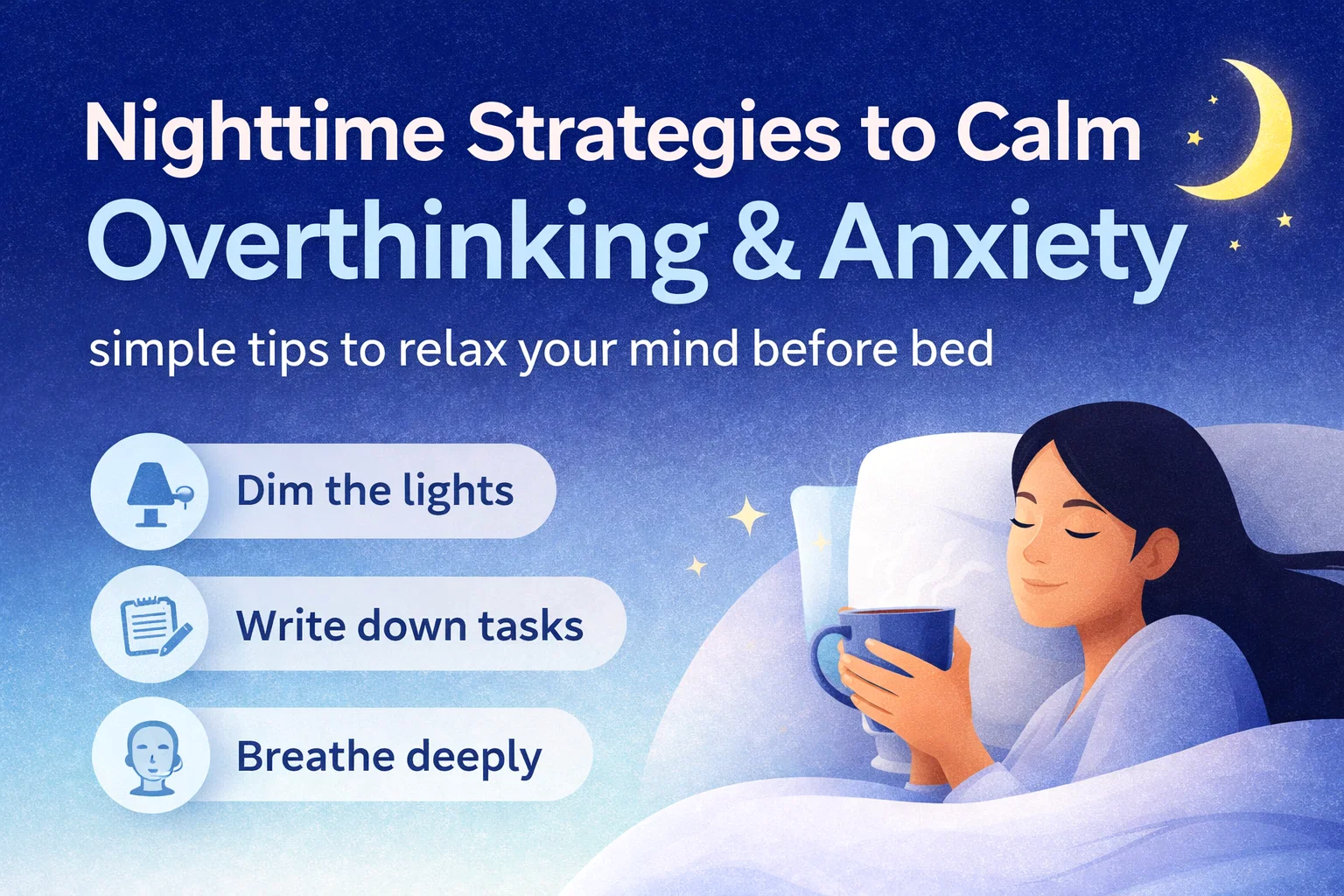
How to Stop Overthinking Calm Anxiety at Night Better Sleep Tips
Waking up at 3:00 AM with a racing heart and a mind full of “what ifs” is a shared human experience that can feel incredibly isolating. When the world goes quiet, our internal monologue often turns up the volume, replaying past mistakes or projecting future worries with startling clarity. This phenomenon, often called nighttime anxiety, can transform your bedroom from a sanctuary into a boardroom of stressful thoughts. Understanding how to navigate these restless hours is not just about getting more sleep; it is about reclaiming your peace of mind and honoring your need for true restoration.
The strategies we use to wind down in the evening act as a bridge between the chaos of the day and the stillness of the night. By intentionally slowing down our physical and mental systems, we signal to our brain that the time for problem solving has ended. Transitioning from a state of high alert to a state of calm requires more than just closing your eyes. It involves a holistic approach that addresses both the physical tension in our bodies and the energetic clutter in our minds.
The Science of Why We Overthink at Night
During the day, our brains are occupied with constant stimuli. Work tasks, social interactions, and digital notifications provide a continuous stream of distraction that keeps deeper anxieties at bay. However, once we lay down in the dark, those distractions vanish. This sensory deprivation allows suppressed thoughts to bubble to the surface. Furthermore, our biological clock and cortisol levels play a significant role. If we are overly stressed, our bodies may remain in a “fight or flight” state, making it neurologically difficult to enter the “rest and digest” phase necessary for sleep.
The Role of Melatonin and Light
One of the most effective ways to combat this biological hurdle is by managing our environment. Dimming the lights early in the evening is a simple yet profound strategy. Exposure to bright overhead lights or the blue light from smartphone screens can inhibit the production of melatonin, the hormone responsible for regulating our sleep-wake cycle. By lowering the light levels an hour or two before bed, you are essentially giving your brain a head start on the relaxation process.
Creating a Physical Environment for Peace
Your physical surroundings dictate your mental state more than you might realize. A cluttered room often leads to a cluttered mind. To combat nighttime anxiety, your bedroom should feel like a dedicated space for rest, free from the reminders of daily labor or unresolved chores. This means keeping the area quiet, cool, and comfortable.
The Power of Neutral Sounds
While some people prefer total silence, others find that a quiet room actually amplifies the sound of their own thoughts. In these cases, listening to calming neutral sounds can be a game changer. White noise, pink noise, or the gentle sound of rainfall can provide a steady “anchor” for your focus. These sounds occupy the auditory cortex just enough to prevent the mind from wandering into stressful territory without being stimulating enough to keep you awake.
Relaxation Through Movement and Sensation
Anxiety is not just a mental state; it lives in the body. You might notice that your shoulders are hiked up to your ears or your jaw is clenched tight. Incorporating gentle physical cues can help release this stored tension.
- Gentle Stretching: Spend five minutes performing slow, floor based stretches. Focus on the hips and neck, where many people carry the weight of their daily stress.
- Facial Muscle Relaxation: Intentionally soften your forehead, release your tongue from the roof of your mouth, and let your eyes sink back into their sockets.
- Warm Tea Ritual: Drinking a cup of caffeine free herbal tea, such as chamomile or valerian root, provides a sensory experience that grounds you in the present moment. The warmth of the mug and the slow rhythm of sipping act as a natural sedative for the nervous system.
Mental Strategies to Quiet the Mind
If your body is relaxed but your mind is still sprinting, you need cognitive tools to interrupt the loop of overthinking. Overthinking often stems from a desire for control or a fear of the unknown. By using specific mental frameworks, you can gently steer your thoughts back toward a neutral baseline.
The “Brain Dump” Technique
One of the most effective ways to stop replaying unfinished tasks is to move them from your head onto paper. Keep a notebook by your bed and write down everything you are worried about forgetting. Once it is written down, your brain no longer feels the pressure to maintain that information in its active memory. You can tell yourself, “It is safe on the paper; I will handle it tomorrow.”
Releasing Unresolved Conversations
We have all had those nights where we replay a conversation, thinking of the perfect comeback or worrying about how we were perceived. To find peace, you must practice the art of mental release. Remind yourself that the day is complete and that no amount of late night rumination can change the past. Visualizing those conversations drifting away like clouds can help create the emotional distance needed for sleep.
Breathwork: The Remote Control for Your Nervous System
If you only choose one strategy to combat anxiety, let it be breathwork. Your breath is the only part of your autonomic nervous system that you can consciously control. By changing the way you breathe, you can manually flip the switch from stress to relaxation.
Slow Breathing Exercises
Practice a slow breathing rhythm where your exhalations are longer than your inhalations. For example, breathe in for a count of four and out for a count of six. This specific pattern stimulates the vagus nerve, which sends a signal to your brain that you are safe and it is okay to rest. Focus entirely on the sensation of the air moving in and out of your lungs, treating it as a moving meditation.
Lowering the Pressure to Sleep
Ironically, worrying about not sleeping can become a primary source of anxiety. This “sleep effort” often keeps us awake longer. Instead of focusing on the goal of falling asleep, focus on the goal of simply resting. Remind yourself that even if you are awake, your body is still benefiting from the stillness. By lowering the pressure to perform “perfect sleep,” you often find that sleep arrives much more naturally.
Establishing a Consistent Nighttime Ritual
Consistency is the language of the nervous system. When you perform the same set of actions every night, you are training your brain to recognize the cues for sleep. This ritual does not need to be elaborate; it just needs to be intentional. You might choose to avoid heavy discussions after 8:00 PM, put your phone in another room, and spend ten minutes reading a physical book.
The “Tomorrow” Mindset
A major component of overthinking is the urge to solve tomorrow’s problems tonight. Practice the mantra: “Let tomorrow handle tomorrow’s worries.” Give yourself permission to be “off the clock.” You are not a machine that needs to be productive 24 hours a day. You are a human being who requires downtime to function effectively. By setting these mental boundaries, you protect your evening hours from the intrusion of daytime stress.
Thinking of Something Neutral
If you find your mind wandering toward stressful topics, intentionally pivot to something neutral and simple. Imagine a familiar walk through a park, or try to remember the details of a favorite movie scene. These neutral thoughts occupy the brain’s “workspace” without triggering an emotional response, making it easier to drift into a natural rest.
Finding Your Path to Rest
Overcoming anxiety and overthinking is a journey that requires patience and self compassion. Some nights will be easier than others, and that is perfectly okay. The goal is not to eliminate every single stressful thought, but to build a toolkit of strategies that make those thoughts feel less overwhelming. By addressing your environment, your body, and your mindset, you create a comprehensive support system for your mental health.
As you begin to implement these night time strategies, pay attention to which ones resonate most with you. Perhaps the warm tea is your favorite part of the night, or maybe the breathing exercises provide the most immediate relief. Over time, these small shifts will accumulate, leading to more restful nights and more energized days. Remember that you deserve rest, and your mind is capable of finding its way back to calm. Allow your body to unwind, trust the process, and let yourself drift into the restorative sleep you need. The day is done, and for now, that is enough.