How to Stop Overthinking in Relationships 20 Tips for Healthy Communication
We have all been there. It is late at night, and you are staring at a three-word text message from your partner, trying to decipher if the lack of an emoji means they are secretly angry at you. Your mind starts spinning a web of worst-case scenarios, and before you know it, you have convinced yourself that the entire relationship is on the brink of collapse. Overthinking is a silent thief that steals the present moment and replaces it with a heavy cloud of anxiety. In a world where digital communication is constant, the pressure to “read between the lines” has never been higher, but the cost to our mental health and our connections is significant.
Managing overthinking in a relationship is not about ignoring your intuition; it is about learning the difference between a valid gut feeling and an intrusive, fear-based thought. When we overanalyze every look, word, or silence, we stop interacting with our partner and start interacting with a version of them that only exists in our heads. This guide explores how to break those cycles, ground yourself in reality, and build a foundation of trust that can withstand the occasional misunderstanding.
The Anatomy of Relationship Overthinking
Before we can fix the habit, we have to understand what it actually is. Overthinking is often a defense mechanism. If we can predict every possible problem, we feel like we can protect ourselves from being blindsided by pain. However, this hyper-vigilance actually creates the very friction we are trying to avoid. It leads to “testing” partners, seeking constant reassurance, or withdrawing emotionally because we have already decided a negative outcome is inevitable.
Most overthinking stems from a few specific areas: past relationship trauma, an anxious attachment style, or simply a lack of clear communication. By identifying the root of your internal noise, you can begin to apply the right tools to quiet it. It is about moving from a state of suspicion to a state of observation.
Recognizing the Red Flags of Your Own Mind
How do you know when you are overthinking versus just being observant? One of the clearest signs is repetition. If you are rereading the same message five times or replay a five-second interaction in your head for an hour, you have crossed into overthinking territory. Another sign is the jump to “catastrophizing.” This is when a minor disagreement about dinner plans turns into a mental monologue about how you are fundamentally incompatible and bound for a breakup.
Effective Strategies to Ground Your Thoughts
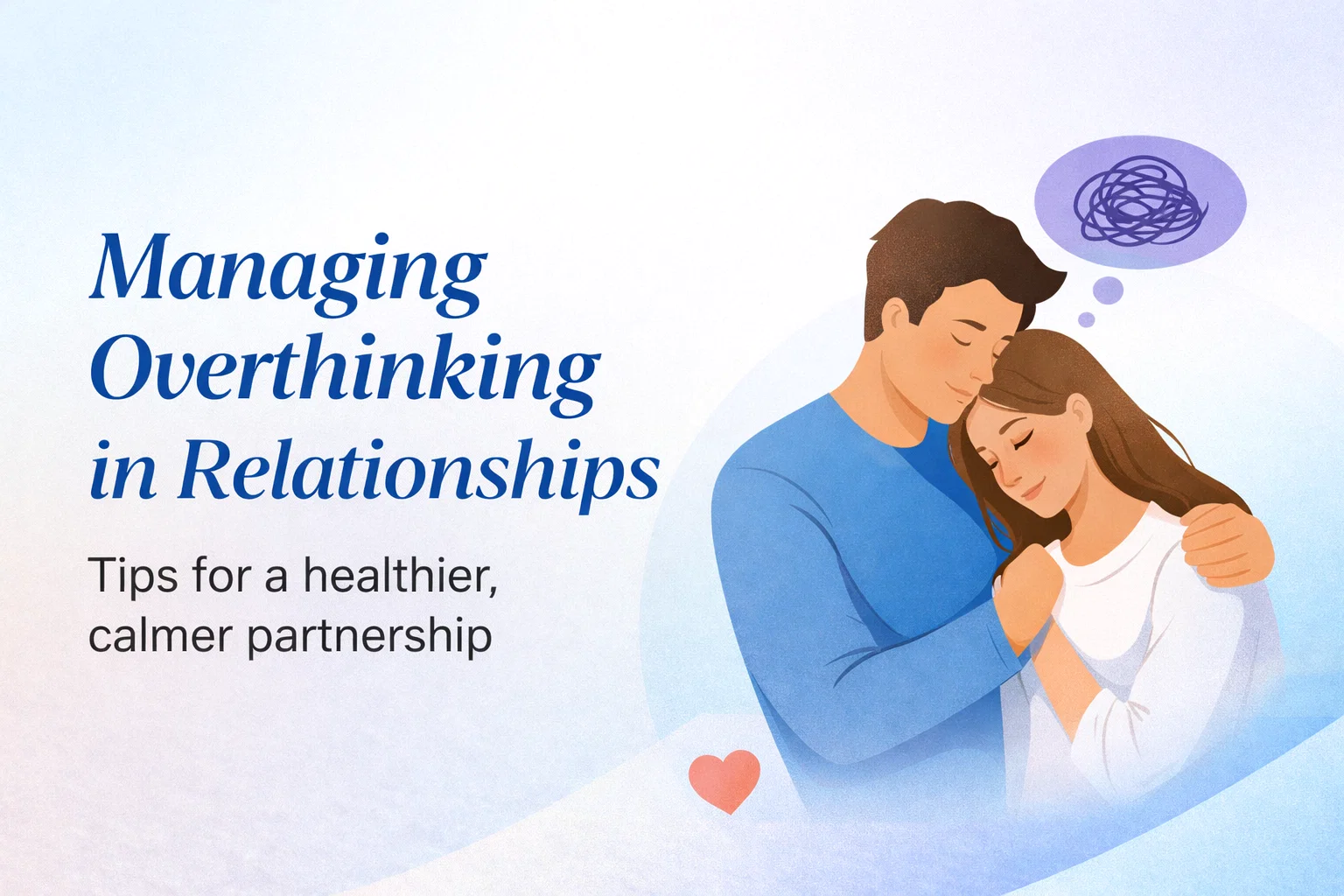
The image provided offers a brilliant checklist for staying grounded, and the first step is always directness. One of the most powerful phrases in a relationship is: I am feeling a bit anxious about X, can we talk about it? This removes the guesswork entirely.
- Ask directly instead of assuming: Your partner is not a mind reader, and you are not a psychic. If you are unsure of a meaning, ask for clarification immediately.
- Focus on consistent actions: If your partner shows up for you every day, helps you, and treats you with kindness, do not let one “off” afternoon outweigh months of consistent love.
- Give them time to respond: In our instant-gratification culture, we often view a delayed text as a sign of trouble. Remember that your partner has a life, a job, and a need for mental space that has nothing to do with their feelings for you.
Breaking the Digital Loop
Technology is perhaps the biggest fuel for relationship overthinking. We see “Read” receipts, we see them online on social media, and we analyze the punctuation in their replies. To manage this, you must set boundaries with your own devices. If you find yourself obsessively checking their location or their last active status, it is time to put the phone in another room.
Rereading messages is a particularly dangerous trap. Texting lacks tone, body language, and immediate feedback. When you reread a text while you are in a negative headspace, you will inevitably project that negativity onto the words. Try to save important or sensitive conversations for phone calls or face-to-face meetings where the human element is present.
The Power of the Emotional Pause
When an intrusive thought hits, your body often reacts first. Your heart might race or your stomach might knot up. Instead of reacting to that physical discomfort by sending a frantic or accusatory message, take a breath. This pause is your greatest ally. It allows the logical part of your brain to catch up with the emotional part. Ask yourself: Is there any concrete evidence for this fear right now? Usually, the answer is no.
Separating the Past from the Present
Many of us carry “ghosts” from previous relationships. If an ex-partner cheated or lied, you might find yourself looking for those same patterns in your current partner, even if they have given you no reason to doubt them. It is vital to acknowledge these fears without letting them drive your current behavior. Your current partner should not have to pay the “debt” for the mistakes of someone from your past.
Practice “fact-checking” your fears. When you feel a surge of suspicion, list three things your current partner has done this week to prove their commitment. This shifts your focus from a hypothetical threat to a present reality.
Building Trust Through Daily Actions
Trust is not a destination you reach; it is a house you build one brick at a time through daily consistency. For the overthinker, trust is the ultimate antidote. You build this by being reliable yourself and by choosing to believe in your partner’s integrity until they give you a factual reason not to.
The Importance of Clear Communication
Healthy communication is the bridge that carries you over the waters of doubt. This means expressing appreciation regularly and letting small misunderstandings stay small. Not every disagreement is a sign of a fundamental flaw. In fact, healthy couples disagree often; they just know how to do it without attacking each other’s character.
- Speak calmly and early: Do not let a small concern fester until it turns into a blowout argument.
- Listen fully before responding: Often, we are so busy preparing our defense that we do not actually hear what our partner is saying.
- Accept disagreements: It is okay to have different perspectives. It does not mean the relationship is failing.
The Role of Self-Esteem in Relationship Peace
Often, overthinking is less about the partner and more about our own sense of worth. If you do not believe you are worthy of a stable, loving relationship, you will constantly look for evidence that it is falling apart. Investing in your own hobbies, friendships, and self-care is a crucial part of managing relationship anxiety. When you have a full, vibrant life outside of your partnership, you are less likely to hyper-fixate on every minor shift in the relationship dynamic.
Stop comparing your relationship to what you see online. Social media is a highlight reel. You are comparing your “behind-the-scenes” footage to everyone else’s “best-of” compilation. Focus on the unique connection you have built, flaws and all.
Staying Present in the Moment
Mindfulness is a buzzword for a reason. It works. When you find your mind drifting into a future “worst-case scenario,” bring yourself back to the room. What do you see? What do you hear? What is your partner actually doing right now? If they are sitting next to you watching a movie, then the reality of the moment is peace, regardless of what your brain is trying to tell you.
Conclusion: Choosing Peace Over Patterns
Managing overthinking is a journey, not a switch you flip. There will be days when the “what ifs” feel louder than others, and that is okay. The goal is not to never have an anxious thought again, but to become so skilled at identifying them that they no longer have the power to dictate your actions. By choosing to ask instead of assume, focusing on consistent actions, and staying present, you create a space where love can actually breathe.
Your relationship should be a sanctuary, a place where you feel safe and supported. By quieting the internal noise, you allow yourself to fully experience the joy and connection that you deserve. Start small today: the next time you feel a “story” starting to build in your head, stop, breathe, and choose to trust the reality of the person standing right in front of you. Healthy communication is a skill that gets better with practice, and every time you choose clarity over overthinking, you are strengthening the bond that matters most.
Would you like me to create a printable checklist based on these points for you to keep on your phone or fridge?