How to Stop People Pleasing Why Its Actually Rooted in Fear How to Heal
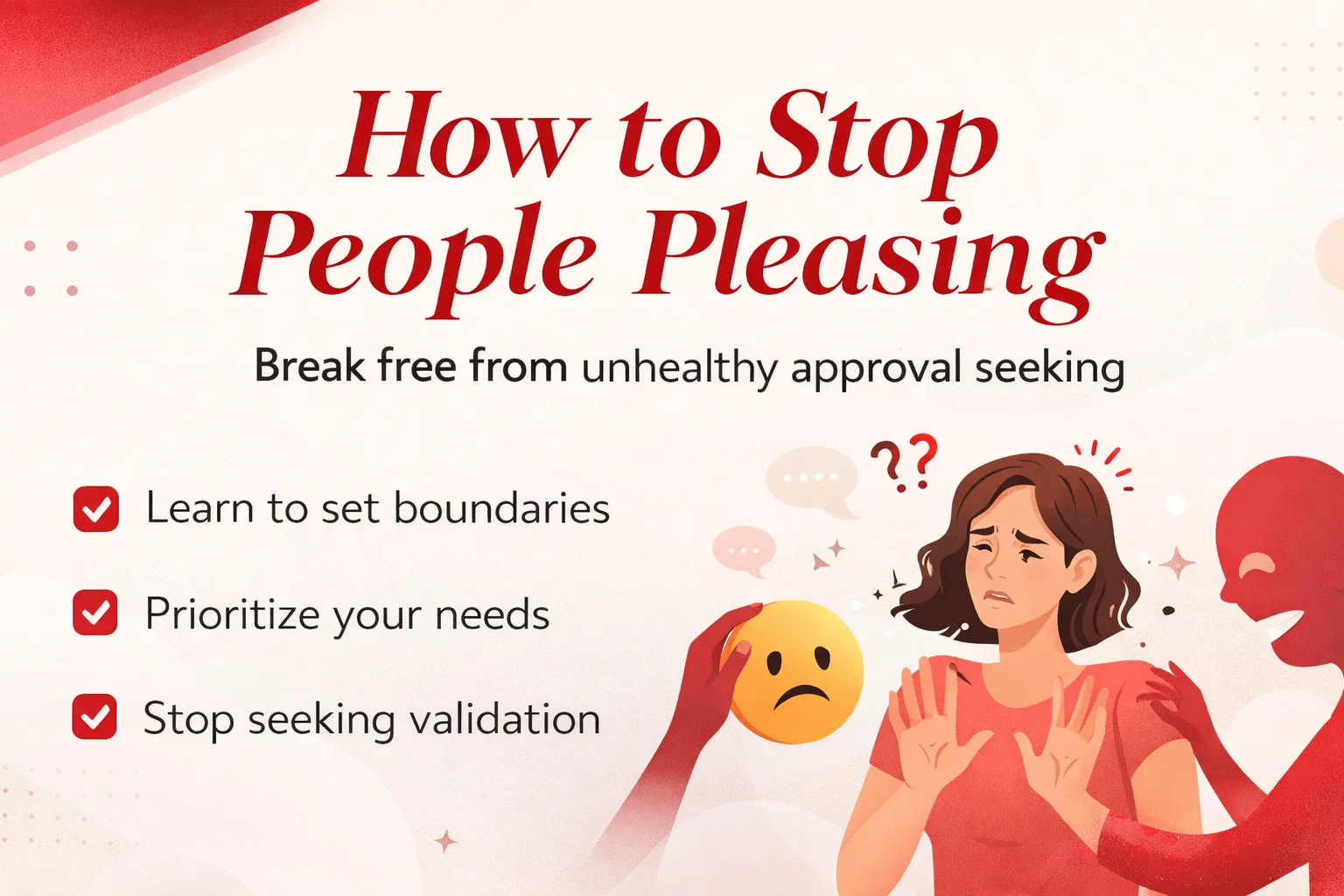
Do you ever find yourself saying yes to a favor before the other person even finishes asking? Maybe you spend your evenings replaying conversations in your head, wondering if that one joke you made accidentally offended someone. On the surface, we call this being a nice person. We tell ourselves we are just being helpful, flexible, or easygoing. But if we are being truly honest, that constant drive to keep everyone else happy feels less like a choice and more like a high stakes performance. It is exhausting, it is draining, and as the infographic suggests, it is not actually about kindness at all. It is about fear.
The transition from being a helpful friend to a chronic people pleaser happens quietly. It starts with small compromises and ends with a complete loss of self. When we prioritize the comfort of others over our own truth, we aren’t building bridges; we are building a cage. Understanding the mechanics of people pleasing is the first step toward breaking free and reclaiming your time, your energy, and your identity.
The Hidden Truth: Why People Pleasing is a Survival Mechanism
Most of us were raised to believe that being “good” meant being compliant. We were rewarded for staying quiet, sharing our toys even when we didn’t want to, and making sure the adults around us weren’t stressed. Over time, these childhood lessons morph into a survival strategy known as fawning. While fight, flight, and freeze are well known stress responses, fawning is the act of over-appeasing someone to avoid conflict or ensure safety.
When you scan a room for approval, you are essentially checking for predators. You are looking at faces, monitoring tones of voice, and adjusting your own personality to ensure that no one is upset with you. In your mind, an upset person is a threat to your social safety. This is why people pleasing feels so urgent. It is your brain trying to protect you from the perceived danger of rejection. However, the cost of this “safety” is your own authenticity.
Five Warning Signs You Are Sacrificing Yourself for Others
Identifying people pleasing behavior can be difficult because it often wears the mask of virtue. To begin your journey toward healing, you must look at the specific patterns that show up in your daily life. Here are the core indicators that your kindness has become a compulsion.
1. Saying Yes When Your Soul Is Screaming No
This is the most common hallmark of the people pleaser. You override your initial instinct to protect your time because you fear the awkwardness of a refusal. You might worry that saying no makes you look selfish or that the other person will stop liking you. The problem is that every dishonest yes is a lie to yourself. While you might keep the peace externally, you are creating a war internally. This leads to a slow, quiet build up of resentment that eventually poisons the very relationships you are trying to save.
2. Hyper-Vigilance and Approval Seeking
Do you find yourself constantly watching people’s faces for the slightest change in expression? This is called scanning for approval. People pleasers are emotional detectives. You measure your own value based on the current mood of the people around you. If a friend seems distant, you immediately assume you did something wrong. You adjust your tone, your posture, and even your vocabulary to stay in their good graces. This keeps you in a state of constant anxiety because you are trying to control something that is fundamentally uncontrollable: other people’s opinions.
3. Avoiding Disappointment at Any Cost
For a people pleaser, the thought of someone being disappointed in them feels like physical pain. You will go to extreme lengths to avoid this feeling, even when it costs you your sleep, your finances, or your physical health. You might take on extra projects at work when you are already burned out or attend social events when you are sick. When you live to avoid disappointing others, you inevitably end up disappointing yourself. You violate your own needs to preserve a version of yourself that everyone else finds convenient.
4. Shape Shifting and the Shrinking Personality
Have you ever noticed that you act like a completely different person depending on who you are with? This shape shifting is a defense mechanism. You soften your opinions so they don’t clash with the group. You blur your boundaries so you don’t seem “difficult.” Over time, your actual personality begins to shrink. You become a mirror reflecting what others want to see rather than a person with your own distinct colors and edges. When you are everything to everyone, you end up being nothing to yourself.
5. Carrying the Weight of Other People’s Emotions
One of the heaviest burdens of people pleasing is the feeling that you are responsible for how others feel. If a partner is upset, you feel a desperate need to fix it. If a coworker is uncomfortable, you adjust your behavior to soothe them. You take on the role of an emotional caretaker, often blaming yourself for things that have nothing to do with you. This creates a codependent dynamic where your stability is entirely dependent on the stability of those around you.
The Real Cost of Being Too Nice
While it might seem like people pleasing makes life smoother, the long term effects are devastating. Chronic people pleasers often experience high levels of burnout because they never allow themselves to rest. They feel a sense of invisible loneliness because, while they have many friends, they feel like no one truly knows the “real” them. Since they are always performing, they never feel truly seen or loved for who they actually are.
Furthermore, people pleasing attracts individuals who are happy to take advantage of your lack of boundaries. When you don’t have a “no,” your “yes” loses its value. You may find yourself surrounded by people who only value you for what you can do for them, rather than for your intrinsic worth. This reinforces the cycle of fear and makes it even harder to break away.
How to Start Choosing Yourself
Breaking the habit of people pleasing is not about becoming mean or cold. It is about becoming honest. It is about moving from a place of fear to a place of self-respect. Here are a few ways to start shifting your perspective and reclaiming your power.
- The Power of the Pause: When someone asks you for something, don’t answer immediately. Give yourself five minutes to check in with your body. If your stomach knots up, that is a sign your boundaries are being pushed.
- Start with Small No’s: Practice saying no in low stakes situations. Decline an invitation to a store you don’t like or say no to a small favor that doesn’t fit your schedule. Build your “no muscle” gradually.
- Acknowledge the Fear: When you feel the urge to please, name the fear. Tell yourself, I am feeling afraid of rejection right now, but I am safe. Validating your own feelings reduces their power over you.
- Redefine Kindness: Real kindness requires honesty. If you say yes to someone but feel resentful the whole time, you aren’t being kind; you are being deceptive. True kindness is showing up fully and authentically.
Embracing the Discomfort of Growth
As you begin to set boundaries, some people in your life might react negatively. They are used to the version of you that always says yes, and your new boundaries might feel like a personal attack to them. It is important to remember that their reaction is not your responsibility. Their discomfort is a sign that the old, unhealthy dynamic is changing. It is okay if people are disappointed. It is okay if you aren’t everyone’s favorite person. Your value is not a popularity contest.
Walking away from people pleasing is a journey toward freedom. You will find that you have more energy, more creativity, and more genuine connections. When you stop trying to manage everyone else’s world, you finally have the space to build your own. You will discover that the people who truly love you don’t want a shape shifter; they want you, in all your messy, honest, and beautiful glory.
Conclusion: Your Path Forward
Stopping the cycle of people pleasing is one of the most courageous things you can do for your mental health. It requires you to look at your fears head on and decide that your own peace of mind is worth more than a stranger’s approval. Remember that you are not a project to be managed or a tool to be used by others. You are a human being with valid needs, limits, and desires.
Start small today. Look at the areas of your life where you have been shrinking to fit in and take up a little more space. Speak your truth, even if your voice shakes. The more you practice authenticity, the more the fear will fade, replaced by a deep and unwavering sense of self-worth. You are allowed to be yourself, and you are allowed to say no. In fact, your life depends on it.